Haplogroups and Noble Lines Haplogroup G2a2b2a1a1a1 One of the clearest glimpses of Y-DNA haplogroup G2a2b2a1a1a1 in the ancient record comes from western Hungary, in the post-Roman landscape around Scarbantia, where sample HMU058 is dated to about AD 525. This was a frontier world after the end of Roman imperial rule in the West: old provincial structures By Sven • 5 min read
Haplogroups and Noble Lines Haplogroup E1b1b1a1b1a3 At Hegyko in western Hungary, in the old borderland once known as Scarbantia in Pannonia, two men dated to about AD 525 stand out for anyone tracing the Y-DNA haplogroup E1b1b1a1b1a3. They are recorded as HMU066 and HMU004, both from the post-Roman Barbaricum beyond the former imperial frontier. That is By Sven • 5 min read
Haplogroups and Noble Lines Haplogroup R1b1a1b1a1a2b2b1 At Felsina, the ancient city beneath modern Bologna, one paternal line turns up in a particularly revealing place: among the people buried as the old Etruscan world was changing. One individual from Archaic Etruscan Bologna, sample I34530, dated to around 500 BC, is associated here with the Y-DNA haplogroup R1b1a1b1a1a2b2b1. By Sven • 4 min read
Haplogroups and Noble Lines Haplogroup E1b1a1a1a1c1b In Palermo, at Castello San Pietro, one medieval burial stands out for what it quietly says about the Islamic Mediterranean. The individual labelled CSPBN2a, dated to about AD 925, carried the Y-DNA haplogroup E1b1a1a1a1c1b. That is a very specific paternal branch within the wider E1b1a family, a lineage most strongly By Sven • 5 min read
Haplogroups and Noble Lines Haplogroup M1a1a2a1 At Sigatoka on the island of Viti Levu in Fiji, one ancient burial stands out for anyone tracing the Y-DNA haplogroup M1a1a2a1. The individual identified as SIG023, dated to around AD 630, places this paternal line in the western Pacific in the early medieval period, long before European ships began By Sven • 5 min read
Haplogroups and Noble Lines Haplogroup NO1 At Shamanka II on the shores of Lake Baikal, one ancient male sample stands out for anyone interested in the deep history of Y-DNA haplogroup NO1. The individual DA250, dated here to around 5445 BC, belongs to an Early Neolithic world in Cis-Baikal that has become increasingly important in archaeogenetics: By Sven • 6 min read
Haplogroups and Noble Lines Haplogroup S1d At Sigatoka on Viti Levu in Fiji, three men buried around AD 650 have become unusually important for the history of Y-DNA haplogroup S1d. They are identified as SIG013, SIG020, and SIG012, and although the surviving public details are spare, the pattern itself is striking: the same paternal branch appears By Sven • 5 min read
Haplogroups and Noble Lines Haplogroup N1a2 At Shamanka II on the western shore of Lake Baikal, one early Neolithic male, sample DA362, places haplogroup N1a2 in a setting that is both very old and very specific: the hunter-gatherer world of Cis-Baikal around 5289 BC. That matters because N lineages are often discussed in broad strokes, as By Sven • 5 min read
Haplogroups and Noble Lines Haplogroup J2a1a1b At Castellucciana in Sicily, an Early Bronze Age man identified as I7796 has become one of the most interesting signposts for the Y-DNA haplogroup J2a1a1b. Dated to around 2300 BC, he belongs to a moment when the island was not some remote prehistoric backwater, but part of a wider Mediterranean By Sven • 5 min read
Haplogroups and Noble Lines Haplogroup I2a2a2 At Wetwang Slack in East Yorkshire, archaeologists uncovered an Iron Age burial belonging to the Parisi, a community long associated with the Arras culture of eastern Yorkshire. One of the men from that landscape, sample I36776, dated to around 225 BC, has been linked in the MyTrueAncestry record to the By Sven • 5 min read
Haplogroups and Noble Lines Haplogroup N1a1a1a1a1a1a7a3a One of the clearest named figures linked with the Y-DNA haplogroup N1a1a1a1a1a1a7a3a is Duke Bela of Macsó, dated to around AD 1272 and identified as sample BPDOM01. Bela was a member of the Arpad royal kindred in medieval Hungary, and his remains matter for more than courtly curiosity. They help By Sven • 5 min read
Haplogroups and Noble Lines Haplogroup J2a1a1a2b2a2b2b At Amiternum in Abruzzo, one early medieval man offers a sharp little lesson in how paternal lines survive political collapse. The individual known as ASM_S37, dated to around AD 864 at Santa Maria in Civitate, lived in a landscape that had once been thoroughly Roman and was then part By Sven • 5 min read
Haplogroups and Noble Lines Haplogroup J2a2a1a1a2 At Epila, at Las Lomas del Molino near Zaragoza, one man dated to around AD 574 stands out for anyone tracing the Y-DNA haplogroup J2a2a1a1a2. He appears in the record as sample I30931, from post-Roman medieval Spain: a period when Iberia was no longer Roman in government, but still full By Sven • 5 min read
Haplogroups and Noble Lines Haplogroup G2a2a2 At Las Lomas del Molino in Epila, near Zaragoza, one man from around AD 600 carries an unusually revealing paternal marker for the early medieval western Mediterranean. The individual identified as I30597, from post-Roman Spain, is reported here under Y-DNA haplogroup G2a2a2. That matters because G lineages are often associated By Sven • 5 min read
Haplogroups and Noble Lines Haplogroup R1b1a1b1a1a3a At Hatherdene Close in Cambridgeshire, an early Anglo-Saxon burial dated to around AD 500 produced one of the more useful little clues in the long history of Y-DNA haplogroup R1b1a1b1a1a3a. The individual known as HAD017 does not give us a legend, a dynasty, or a named man from the chronicles. By Sven • 5 min read
Haplogroups and Noble Lines Haplogroup I1a2a1a1d1b1 At Krakauer Berg in Peissen, in medieval Germany, two men buried nearly two centuries apart carry the same fine-grained Y-DNA line: I1a2a1a1d1b1. One is identified as KRA004X and dated around AD 1140; the other, KRA004, dates to about AD 1338. That is a small detail at first glance, but archaeologically By Sven • 5 min read
Haplogroups and Noble Lines Haplogroup J2b2a1a1a1a1a2a At Mursa in Roman-era Croatia, one excavated man dated to around AD 200, sample I26752, carries the very specific Y-chromosome line J2b2a1a1a1a1a2a. That matters because Mursa was not some remote village on the edge of events. It stood in a busy frontier world on the Drava, in a landscape shaped By Sven • 5 min read
Haplogroups and Noble Lines Haplogroup R1b1a1b1a1a1c2b2a1b1a4b2a2 In about AD 1170, one man was buried in Oxfordshire at Magdalen College's Longwall Quad. He appears in the ancient DNA record as C11119, a medieval individual from an English landscape already dense with churches, fields, market exchange, and layered memories of Roman and Anglo-Saxon Britain. For anyone By Sven • 5 min read
Haplogroups and Noble Lines Haplogroup J1a2a1a2d2b2b2c4d At Mursa in Roman-era Croatia, one ancient man dated to around AD 200, identified as I26749, carries an intriguingly specific paternal line in modern reporting: J1a2a1a2d2b2b2c4d. On its own, that string of letters and numbers is not a biography. But placed in its archaeological setting, it becomes a small but By Sven • 5 min read
Haplogroups and Noble Lines Haplogroup R1b1a1b1b3a1a1a At Gornji Kosinj in inland Croatia, the medieval cemetery of Saint Ana has yielded one of the more telling little clues in the history of Y-DNA haplogroup R1b1a1b1b3a1a1a: sample I35014, dated around AD 1100. On its own, one burial does not make a population. But placed beside earlier finds from By Sven • 5 min read
Haplogroups and Noble Lines Haplogroup E At Verteba Cave in western Ukraine, one ancient male known as I3151 was living or being buried around 3800 BC, in the world archaeologists associate with the Trypillian horizon. That matters because Verteba is not just any cave site: it has become one of the best-known windows into the farming By Sven • 5 min read
Haplogroups and Noble Lines Haplogroup Q At Qotakalli near Cusco, one ancient man dated to around AD 1425 was reported with Y-DNA haplogroup Q. He appears in the record as sample QKI-9-3, and although that single letter may look deceptively plain, it points to one of the most historically important paternal lineages in the ancient Americas. By Sven • 5 min read
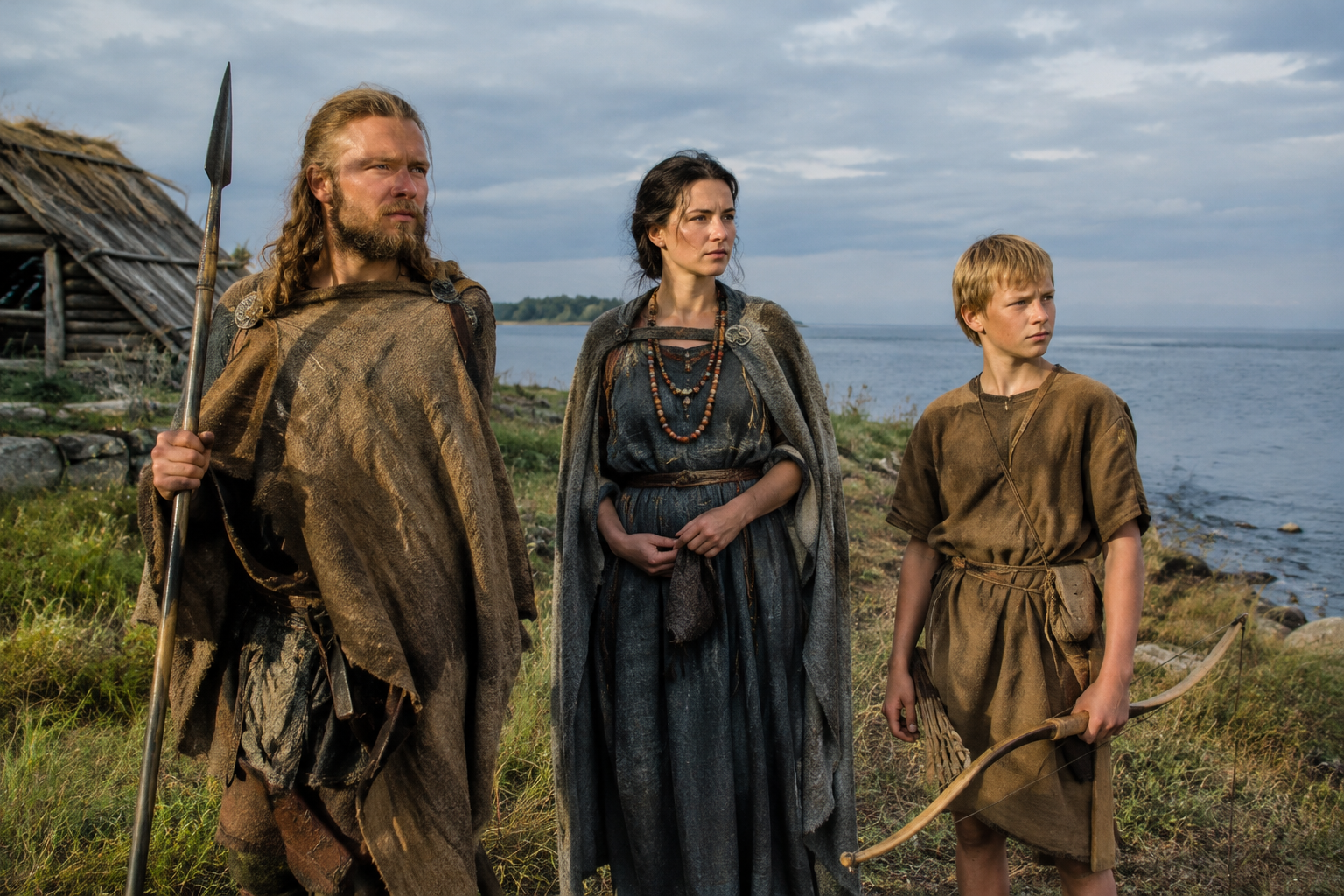
Haplogroups and Noble Lines Haplogroup N1a1a1a1a1a1a1b On the island of Oland, in the ringfort of Sandby borg, archaeologists uncovered one of the most unsettling snapshots of the Migration Period in Scandinavia: a community caught in catastrophe and left unburied. Among the individuals from this 5th-century massacre site is sample snb014, dated to about AD 475 and By Sven • 5 min read
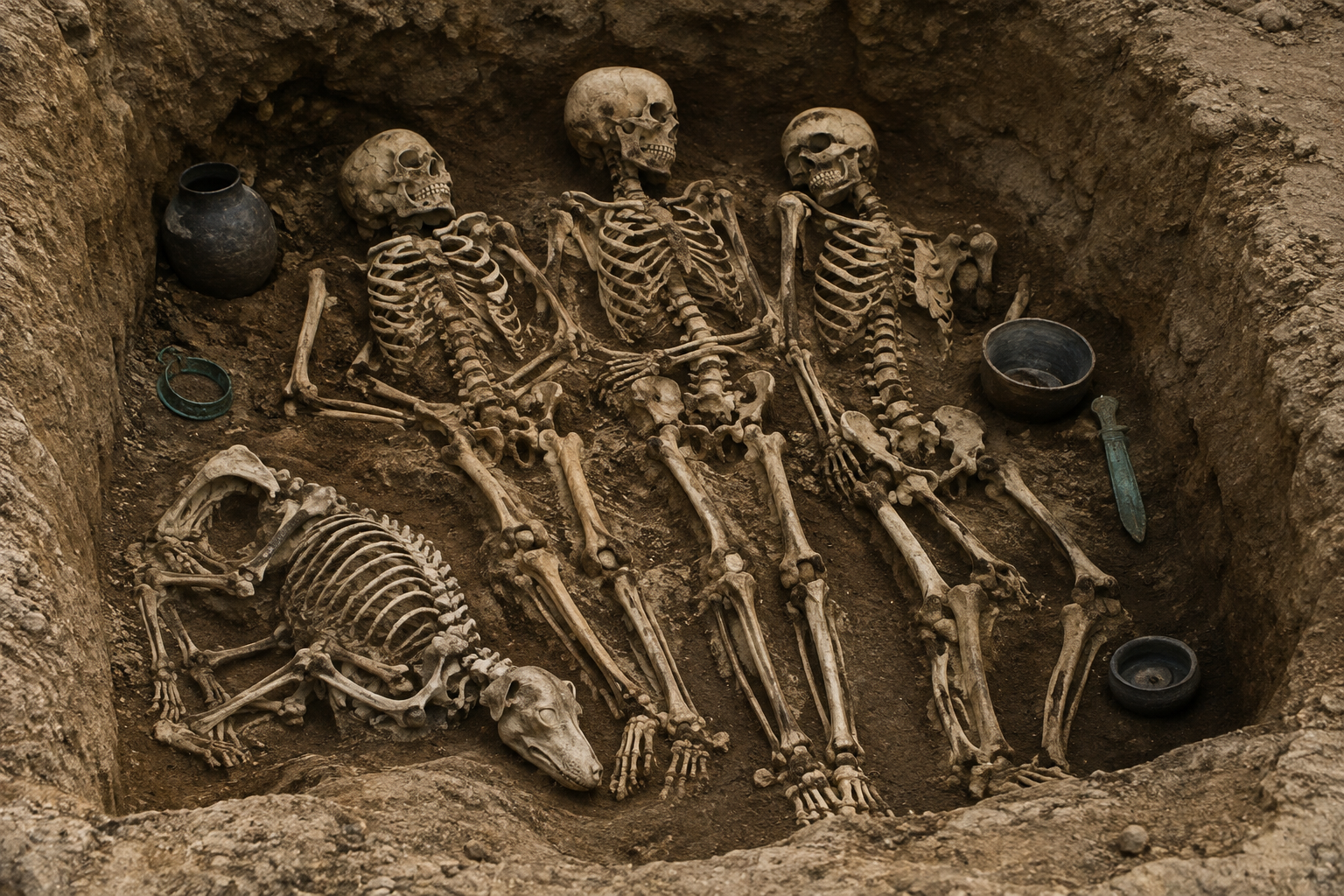
Haplogroups and Noble Lines Haplogroup R1b1a1b1a2a1 At Verona's Seminario Vescovile, archaeologists uncovered an Iron Age burial that is memorable not because it is grand, but because it is intimate. Around 300 BC, in territory associated with the Gallic Cenomani of northern Italy, a man was buried in a context that also included a dog. By Sven • 5 min read