Haplogroup J2a1a1b

– 5 min read


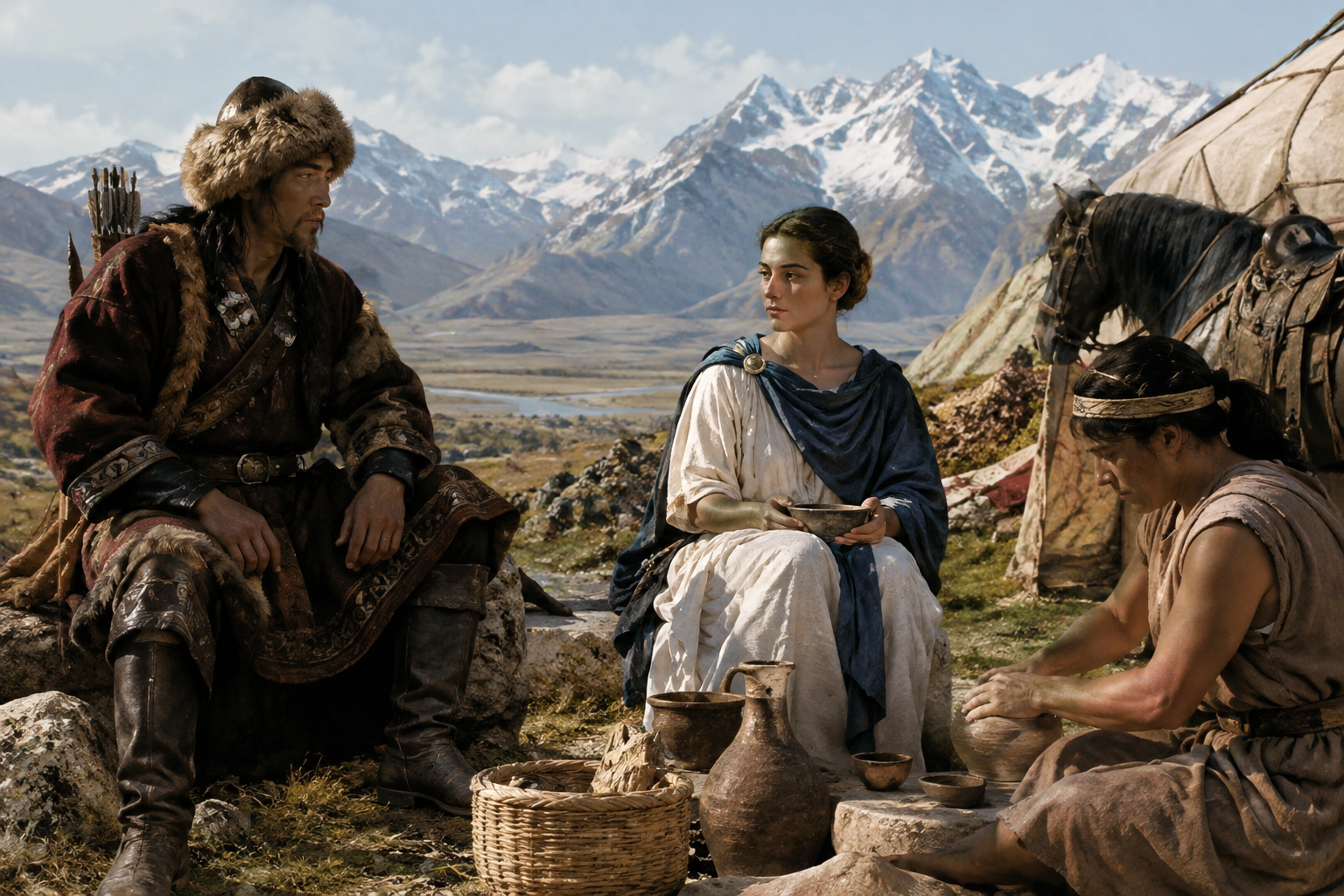
At Castellucciana in Sicily, an Early Bronze Age man identified as I7796 has become one of the most interesting signposts for the Y-DNA haplogroup J2a1a1b. Dated to around 2300 BC, he belongs to a moment when the island was not some remote prehistoric backwater, but part of a wider Mediterranean world in motion. For anyone carrying this paternal line today, that matters: it places one branch of the story not in legend, but in a real excavated Bronze Age community.
That single result does not mean all men of J2a1a1b came from Sicily, nor that one burial can stand in for an entire population. But it does give us something better than vague ancestral romance. It gives us a documented ancient foothold for this paternal line in a region where seafaring, exchange, and local continuity were already deeply entangled.
J2a1a1b is a direct paternal-line marker, passed from father to son. It tells us about one narrow line of descent, not a person's whole ancestry, language, or identity. In practice, that makes it most powerful when it appears in archaeological settings that can be dated and placed, as with the few ancient individuals linked here to this branch.
The wider J2 family is often associated with western Eurasia and especially with long-connected zones of the eastern Mediterranean, Anatolia, and the Near East. But one should be careful: the broad history of J2 is not automatically the history of the more specific branch J2a1a1b. What we can say securely from the samples here is that lineages associated with this branch appear in three very different settings: Bronze Age Sicily, Roman Anatolia, and Iron Age Kyrgyzstan.
The Sicilian sample I7796, from Early Bronze Age Castellucciana, is the earliest of the three ancient men listed here. That alone makes it valuable. Sicily in the third millennium BC sat at a strategic crossroads between the Italian peninsula, the central Mediterranean islands, and longer maritime networks extending east and west. A paternal line found there is not just a local curiosity; it belongs to a landscape shaped by movement, contact, and regional interaction.
Research on ancient island populations has helped show how misleading it is to imagine prehistoric islands as isolated. A study connected with these wider Sicilian and island questions can be found here: https://www.biorxiv.org/content/10.1101/584714v1. Without overclaiming what that publication says about this exact man, the broader archaeological point is solid enough: Bronze Age Sicily was a place where local communities participated in larger Mediterranean patterns.
So if J2a1a1b appears in this context, the implication is not a neat one-way migration story. It is something more historically plausible: this paternal line was already present within a connected Bronze Age world where ancestry could be layered, mobile, and stubbornly local at the same time.
The second sample, I16584, comes from Apollonia in Anatolia and is dated to around AD 150, in the Roman era. Now that is a very different setting indeed. We are no longer dealing with Bronze Age island communities, but with a province inside one of the most extensive empires the Mediterranean had ever seen.
Anatolia is precisely the sort of place where a lineage like J2a1a1b becomes historically interesting rather than merely technical. Roman rule did not erase older populations; it overlaid them with administration, military service, trade, urban life, and repeated movements of people. A man carrying this paternal line in Roman Anatolia might represent long local continuity, more recent regional mobility, or both at once. The point is not to force a single explanation, but to notice how naturally this haplogroup fits into a zone famous for deep demographic complexity.
That broader Roman-Anatolian reshaping of populations is part of the story explored in MyTrueAncestry's piece on eastern Mediterranean influence in Roman times.
There is also a wider scientific backdrop. Research published on ancient Mediterranean and Roman-period populations, including mobility across imperial spaces, can be approached through https://www.science.org/doi/10.1126/science.abm4247. It is useful here not because it magically explains one grave, but because it reinforces a central lesson of Roman archaeogenetics: imperial populations were often more mixed, and more regionally entangled, than old textbook categories suggested.
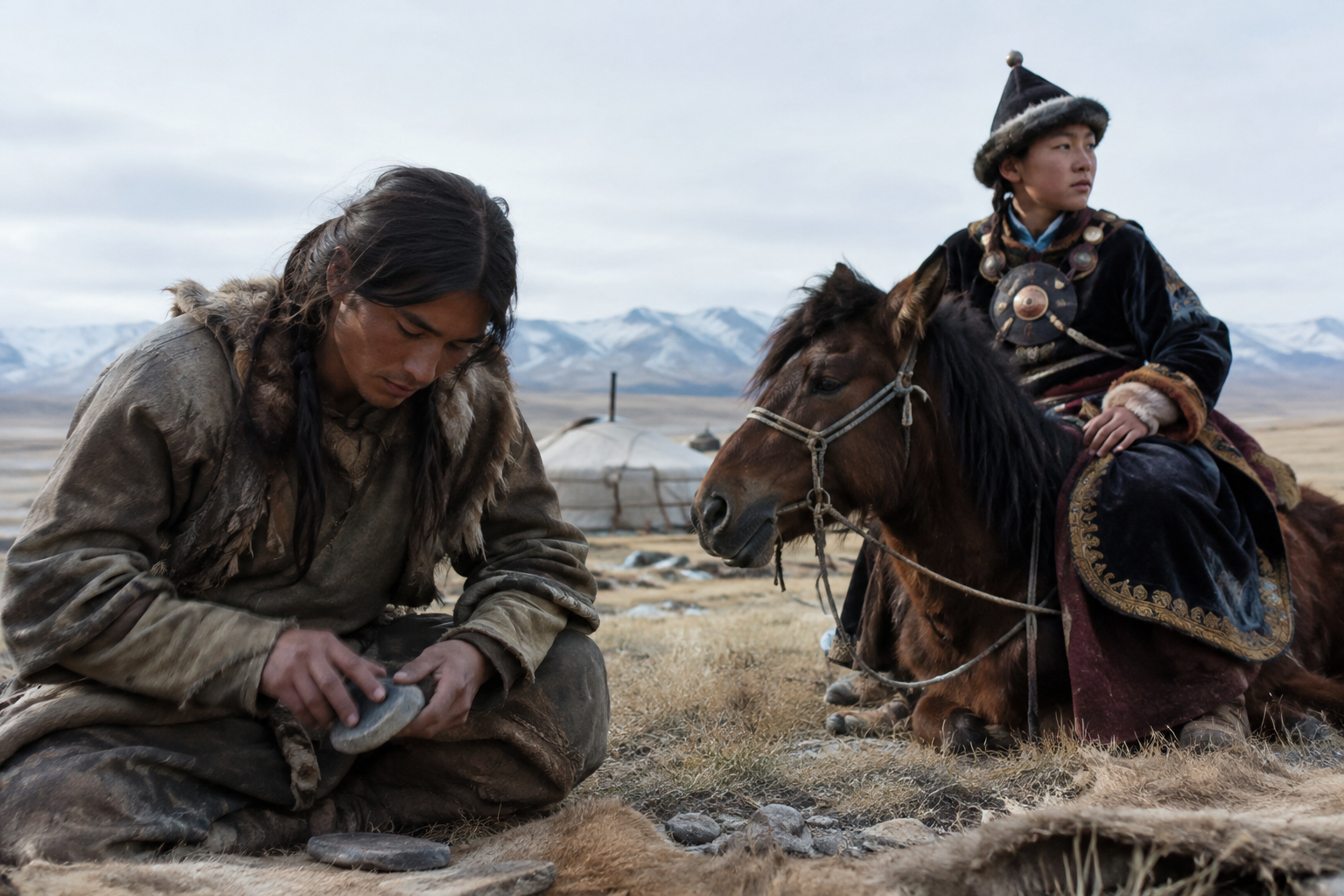
The third individual, DA58, comes from Kuibysheva 2 in the Tian Shan region of Kyrgyzstan and is dated to about 166 BC. The sample is identified as Saka Iron Age. That setting should make anyone pause, because it places a lineage associated here with J2a1a1b far beyond the central Mediterranean, in the world of Iron Age Inner Asia.
The Saka were not a single tidy ethnic block but part of a broader steppe horizon marked by mobility, exchange, and varied local histories. Finding this paternal branch in that environment does not mean J2a1a1b was a "Saka haplogroup" in any exclusive sense. It means that men bearing such lineages were present within steppe societies that linked Central Asia to Iran, the Black Sea, and ultimately to the trade corridors later called the Silk Roads.
That matters because it warns against overly provincial readings of paternal ancestry. A lineage seen in Sicily and Anatolia also appearing in Iron Age Kyrgyzstan is a reminder that ancient male lines could travel through pastoral confederations, marriage networks, military followings, trade routes, or older population substrata. The archaeological picture is not one of simple replacement, but of contact zones layered over centuries.
On paper, Early Bronze Age Sicily, Roman Anatolia, and Saka-period Kyrgyzstan can look almost absurdly far apart. But that is exactly why they are useful together. They do not tell a fairy-tale story of one heroic clan marching across Eurasia. They show something much more recognisable to archaeologists: a paternal branch turning up in different worlds connected by exchange, migration, and long-term demographic layering.
The central Mediterranean, Anatolia, and the Inner Asian corridor were all places where people met, settled, moved again, and absorbed newcomers without ceasing to be local communities. J2a1a1b, at least from these ancient appearances, seems at home in that sort of history. Not a line confined to one kingdom or one people, but one that surfaces where interaction mattered.
Readers interested in how ancient DNA keeps complicating neat regional labels may also find a useful comparison in work on Roman and later population mixtures in Mediterranean settings.
If your paternal line is J2a1a1b, these ancient samples suggest a history tied to some of the great contact zones of Eurasia: Mediterranean islands, Anatolian urban worlds, and the steppe corridor reaching into Central Asia. That is not a certificate of descent from any one ancient man, still less from a named tribe or dynasty. But it is real evidence that this branch was present in connected societies where mobility and local continuity lived side by side.
In other words, J2a1a1b looks less like a lineage locked to one homeland than one embedded in the busy human geography between sea lanes and land routes. That is a properly archaeological conclusion: modest, specific, and far more interesting than myth.

Comments