Haplogroup N1a1a1a1a1a1a7a3a

– 5 min read


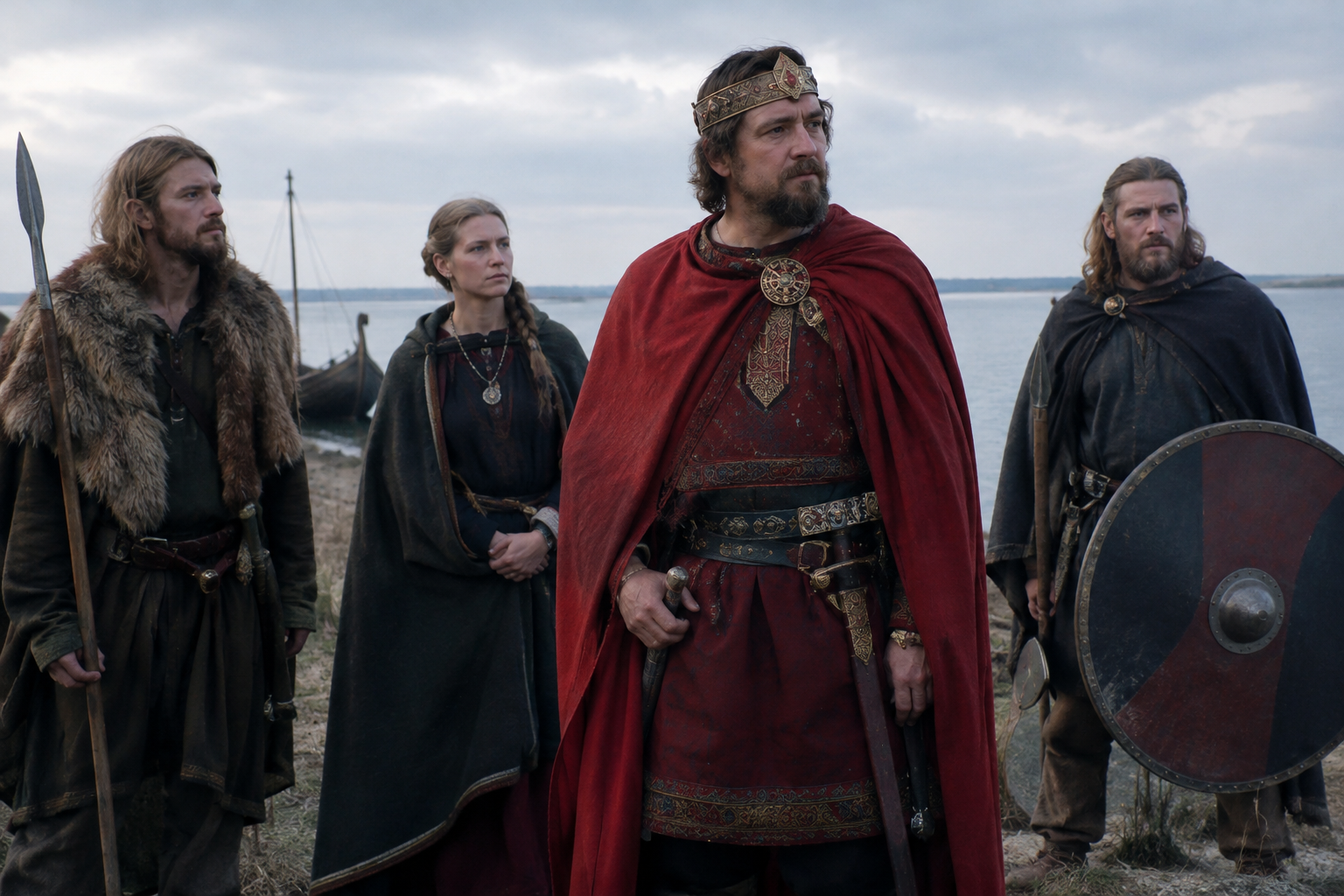
One of the clearest named figures linked with the Y-DNA haplogroup N1a1a1a1a1a1a7a3a is Duke Bela of Macsó, dated to around AD 1272 and identified as sample BPDOM01. Bela was a member of the Arpad royal kindred in medieval Hungary, and his remains matter for more than courtly curiosity. They help anchor this paternal line in a documented historical person from the high medieval Carpathian Basin, where dynastic politics, frontier warfare, and family identity were all intensely important.
That does not mean a Y-chromosome alone tells us everything about Bela, or about the dynasty around him. Y-DNA traces one direct paternal line out of many ancestral lines. But when the same broader paternal pattern appears both in an Arpad-associated medieval burial and in earlier northern European contexts, it gives us something much more interesting than a bare label: a glimpse of how a male line could move through very different worlds, from the Baltic in the Vendel Age to a royal environment in medieval Hungary.
Sample BPDOM01, identified here as Duke Bela of Macsó, belongs to the most historically visible end of this article's evidence. Bela was not an anonymous skeleton from a poorly dated grave but a person situated within the political landscape of 13th-century Hungary. His death in AD 1272 belongs to a violent and unstable period, when the kingdom was balancing internal aristocratic rivalries with wider pressures across Central and Southeastern Europe.
For a haplogroup article, that matters because it turns an abstract paternal branch into something historically legible. The Arpad dynasty is one of the best-known ruling houses of medieval Hungary, and genetic work on burials associated with that family has helped clarify the paternal continuity of at least some individuals connected with the dynasty. A MyTrueAncestry discussion of this wider context can be found here:
There is also a more specific article on the excavated and tested remains associated with the dynasty's burials:
What we should say carefully is this: the presence of N1a1a1a1a1a1a7a3a in a named medieval Hungarian nobleman places the branch in a dynastic setting, but it does not license sweeping claims that every member of the wider dynasty, still less every medieval Hungarian elite lineage, shared that exact terminal subclade. The value of Bela's sample is precision of context. We know roughly when he lived, where he belongs historically, and that this paternal line had reached the highest levels of medieval power.
The other striking evidence comes from much earlier burials on Saaremaa, the large Estonian island in the Baltic. Two samples listed here, VK489 and VK512, come from Salme II and are dated to about AD 725, in the Vendel Age. That alone makes them fascinating. We are not dealing with a royal court in Christian medieval Hungary, but with the seaborne martial world of the eastern Baltic and Scandinavia in the generation just before the Viking Age fully took shape.
Salme is archaeologically famous because the burials have been interpreted as a ship-burial context containing men associated with armed conflict and long-distance movement across the Baltic. In other words, this is a place where the archaeology already speaks of mobility, organized groups, and contact between regions. To find this haplogroup represented there in two separate individuals suggests that the paternal branch, or at least its immediate ancestral cluster, had a place in that northern maritime world.
An ancient DNA study examining the Salme material and related questions of Viking-Age-era mobility is available here: https://www.biorxiv.org/content/10.1101/703405v1.
We should be disciplined about what that means. Two men from one site do not prove a whole people carried the lineage, and they do not automatically show direct kinship between VK489 and VK512. But they do show that the haplogroup was present in a very particular historical setting: the eastern Baltic at a time when the sea connected warrior groups, traders, raiders, and local elites from Scandinavia to Finnic and Baltic shores.
Early Medieval Baltic Connections
Haplogroup N and its many sub-branches have a long and complicated history across northern Eurasia. But this article is about the much narrower lineage N1a1a1a1a1a1a7a3a, and narrow branches must be treated narrowly. The safest point is not to assign this exact subclade some grand route across the entire continent, but to notice the concrete distribution shown by these samples: one cluster in the Baltic Vendel Age and one historically documented individual in medieval Hungary.
That pattern is intriguing because both settings connect to societies shaped by mobility. The Salme burials belong to a world of sea travel and armed expeditions. The Arpad sphere belongs to a kingdom with remembered steppe origins, regional expansion, and elite lineages whose authority rested partly on descent. These are very different historical arenas, yet both preserve evidence for the same paternal branch or a reported association with it.
In public discussions of ancient DNA, there is often a temptation to turn such a pattern into a straight line: Baltic warriors become dynastic founders, or royal lineages become proof of some ancient ethnic essence. History is usually messier than that. What the evidence actually gives us is more modest and more valuable: a documented male line appearing in distinct northern and east-central European contexts across roughly five centuries.
The distance between Saaremaa and medieval Hungary is not just geographical. It is also cultural. Around AD 725, Salme sat within a northern zone of interaction where Scandinavians, island communities, and eastern Baltic peoples met through ships, trade, and violence. By AD 1272, Bela's world was one of castles, dynastic disputes, Latin Christianity, and written government.
That contrast is precisely what makes N1a1a1a1a1a1a7a3a worth noticing. The lineage is not pinned to one simple identity. It appears in the archaeological record among men from a Baltic martial burial setting, and then again in a named aristocratic figure from the Hungarian Middle Ages. A genetic study connected with the medieval Hungarian material can be found here: https://pubmed.ncbi.nlm.nih.gov/41197516/.
Readers interested in the broader Hungarian background may also want this related piece:
The historical lesson is not that these men belonged to one unbroken, fully reconstructable dynasty stretching from Saaremaa to the Arpad court. We cannot say that. The lesson is that one paternal branch could persist through changing languages, religions, and political systems. That is exactly the sort of continuity Y-DNA is good at detecting, even when everything else in the historical landscape has changed.
If your paternal line falls under N1a1a1a1a1a1a7a3a, the ancient evidence here points toward a lineage with documented visibility in the northern Baltic during the Vendel Age and in medieval Hungary through Duke Bela of Macsó. That is already a rich combination: seaborne Baltic archaeology on one side, dynastic Central European history on the other. It does not promise descent from a warrior band or a royal house, but it does place your direct male line within a real and varied historical record.
In that sense, this haplogroup is a good reminder that paternal ancestry can surface in unexpected places. A branch may pass through island burials, frontier kingdoms, and elite households without carrying a single fixed identity with it. What survives is the line itself, and ancient DNA lets us watch it appear, briefly but unmistakably, in the historical light.






Comments