Genomes of Medieval Hungary’s Elite Reveal Conquest-Period Roots and Lasting Steppe Ancestry
– 7 min read


The article takes readers beneath the floor of Hungary's most important medieval church – the Royal Basilica of Székesfehérvár – and shows that, long before it became the crowning place of kings, its ground was already a cemetery for the first conquering elites. Among them were people closely related to the founders of the Árpád dynasty.
The Church of the Virgin Mary at Székesfehérvár, founded by King Stephen I before 1031, became the kingdom's main royal basilica. It served as coronation church, royal pantheon, and a burial ground for the highest social strata. At least fifteen of the thirty-seven Hungarian monarchs who died before 1543 were buried there, together with queens, royal relatives, leading nobles, and powerful churchmen heading the chapter.
Archaeological work, starting with the sensational discovery of King Béla III and his first wife Anna of Antioch in 1848, brought to light the ruined basilica and more than 900 sets of human remains. Only a fraction can be tied to named historical figures, but they collectively represent the core of the kingdom's elite between the 11th and 16th centuries.
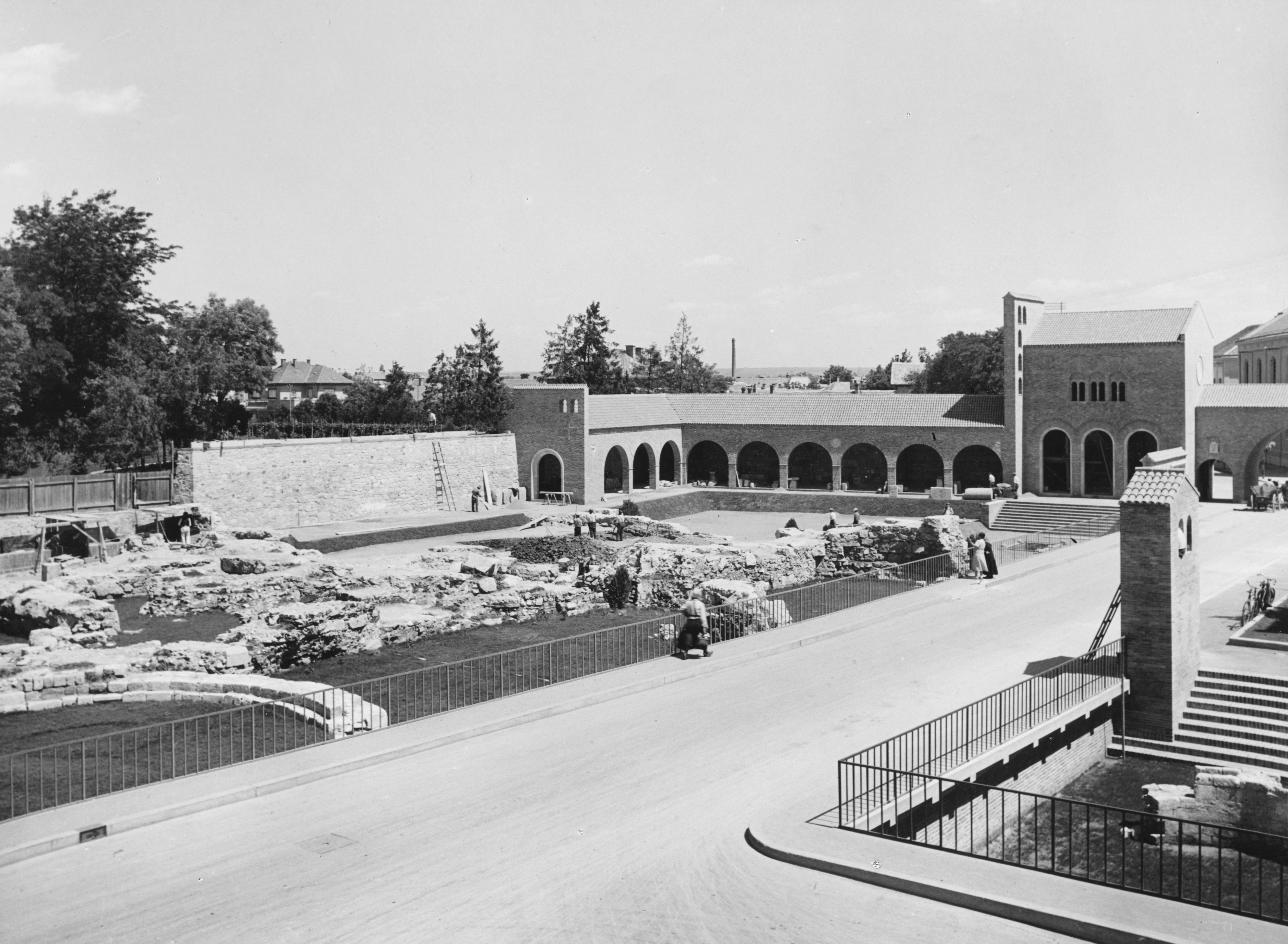
Excavations across more than a century revealed several building phases of the basilica, from an early 11th-century church to a late Gothic extension in the 15th century. The cemetery itself was heavily disturbed by later construction and repeated reburials. Many skeletons were found outside the church walls, some inside carefully built stone graves, others in simpler earth graves.
After the Ottoman conquest in 1543 the basilica fell into ruin; its stones were quarried, graves were broken, and remains became mixed. Today, most bones from the site lie in an ossuary within the Medieval Ruin Garden and in the Szent István Király Museum in Székesfehérvár. A handful of notable skeletons, including Béla III, Anna of Antioch and a few others, were moved to the Matthias Church in Budapest.
Because the layers were disturbed, grave goods and stratigraphy rarely provided clear dates. A few burials had been tentatively assigned to the late 10th century, but this was controversial and lacked independent confirmation. The article shows how ancient DNA and radiocarbon dating have finally clarified this early horizon.
By analysing the genomes of almost 400 individuals from the basilica cemetery, the study reveals a distinct Conquest-period stratum – burials dating to the time of the Hungarian Conquest in the late 9th and 10th centuries, predating the church itself.
Radiocarbon dates for six individuals place their deaths before the basilica's construction; these people were buried on the site when it was still an open cemetery, not yet a monumental church. Genetically, all six fall on the same characteristic gradient of ancestry as known 10th-century Conquest-era Hungarians. Two of them, labelled SZKB645 and SZKB687, sit squarely inside the genetic cluster of the core conquering group – the inner circle of the Conquest-period elite.
These early graves suggest that Székesfehérvár was already a power centre in the 10th century, a burial ground for leading warriors and their kin. The later basilica did not create the site's importance; it monumentalised a place that was already a resting place of the first conquering families.
The article shows that individuals like SZKB645 and SZKB687 carry almost no local European ancestry: genetically they are virtually indistinguishable from first-generation conquerors who rode into the Carpathian Basin from the east. Their genomes place them in the same group as the best-documented Conquest-period elites.
These eastern-leaning burials were not isolated. A larger set of individuals from the site show mixed ancestry: part conqueror-like, part local European. Their genetic profiles fit a simple picture: descendants of the conquering tribes, marrying into the established population of the Carpathian Basin, and then being buried around the basilica for centuries.
In several cases, the study can model an individual's ancestry as a direct mixture between this conqueror core and local groups, with no need to invoke other eastern migrants. Even into the 14th century, the article finds noblemen with a measurable share of this original conquering ancestry – a diluted echo of the first arrivals.
Among the most striking figures in the article is SZKB645. Radiocarbon dating places this person in the window 774–887 CE, a date range that stretches back before the traditional date of the Hungarian Conquest, usually around 895–900. Genetically, SZKB645 is indistinguishable from the core conquering group and, crucially, shows direct genetic links to the early Árpád dynasty.
Another early burial, SZKB647, a woman buried near SZKB645, carries a high proportion of the same conquering ancestry. Her genome also shows strong relatedness to early Árpád individuals. She appears in the study as a likely member of the same kin network: perhaps not a queen in the later sense, but clearly someone closely tied by blood to the rising princely house.
Genetic segments shared between SZKB645, SZKB647 and known Árpád-dynasty samples such as SZKB58, an early royal, and the individual labelled SZTL show that these were not just people of similar origin: they were relatives. This is the first time that a burial horizon beneath Székesfehérvár can be explicitly tied, by genetic evidence, to the founders of the Hungarian royal house.
The implication is bold: the future royal necropolis was already a family cemetery for Árpád-related elites in the Conquest period, well before stone walls rose above their graves.
The study ties together the earliest Conquest-period burials and the later medieval royals buried in the basilica. Béla III, for instance, whose richly furnished grave was found in the 19th century, fits into the same broad genetic pattern as other medieval nobles at the site. Members of the Árpád dynasty show a mixture of eastern steppe-derived ancestry from the conquering Hungarians and European ancestry – the same blended profile that characterises much of the basilica cemetery.
Genetic links do not stop at the kings. Several anonymous men in the cemetery share long stretches of DNA with known Árpád, Aba, and Báthory family members from other sites. The basilica was not simply a royal burial place; it was a nodal point in a wider web of intermarrying noble families, with roots stretching back to the conquerors on horseback.
Yet the article also makes clear that this elite was not a static clan. Close biological kinship within the cemetery is surprisingly rare. The royal necropolis appears less as a giant dynastic family graveyard and more as a revolving stage on which new families, tied by power and office rather than close blood, took their places across the centuries.
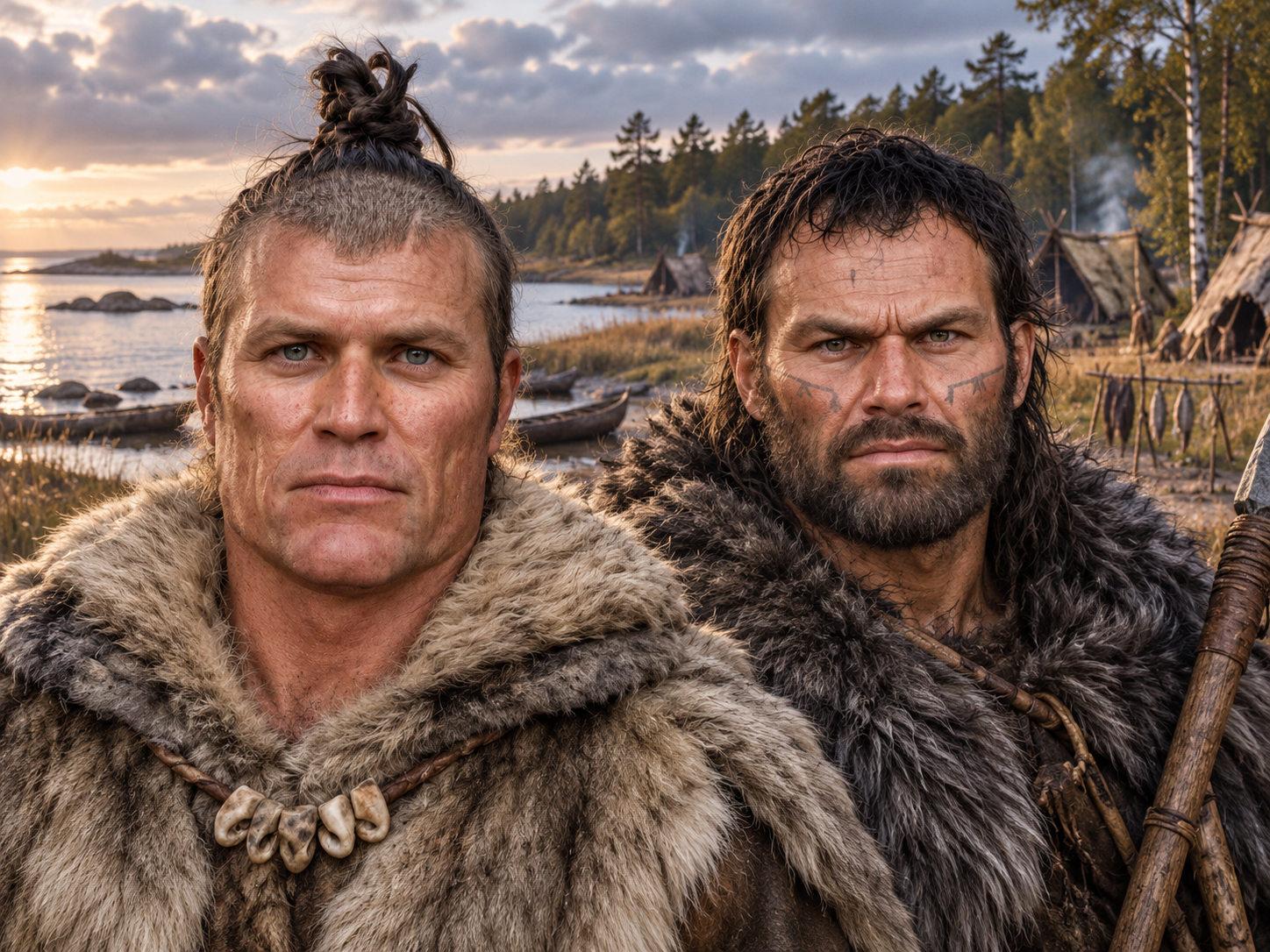
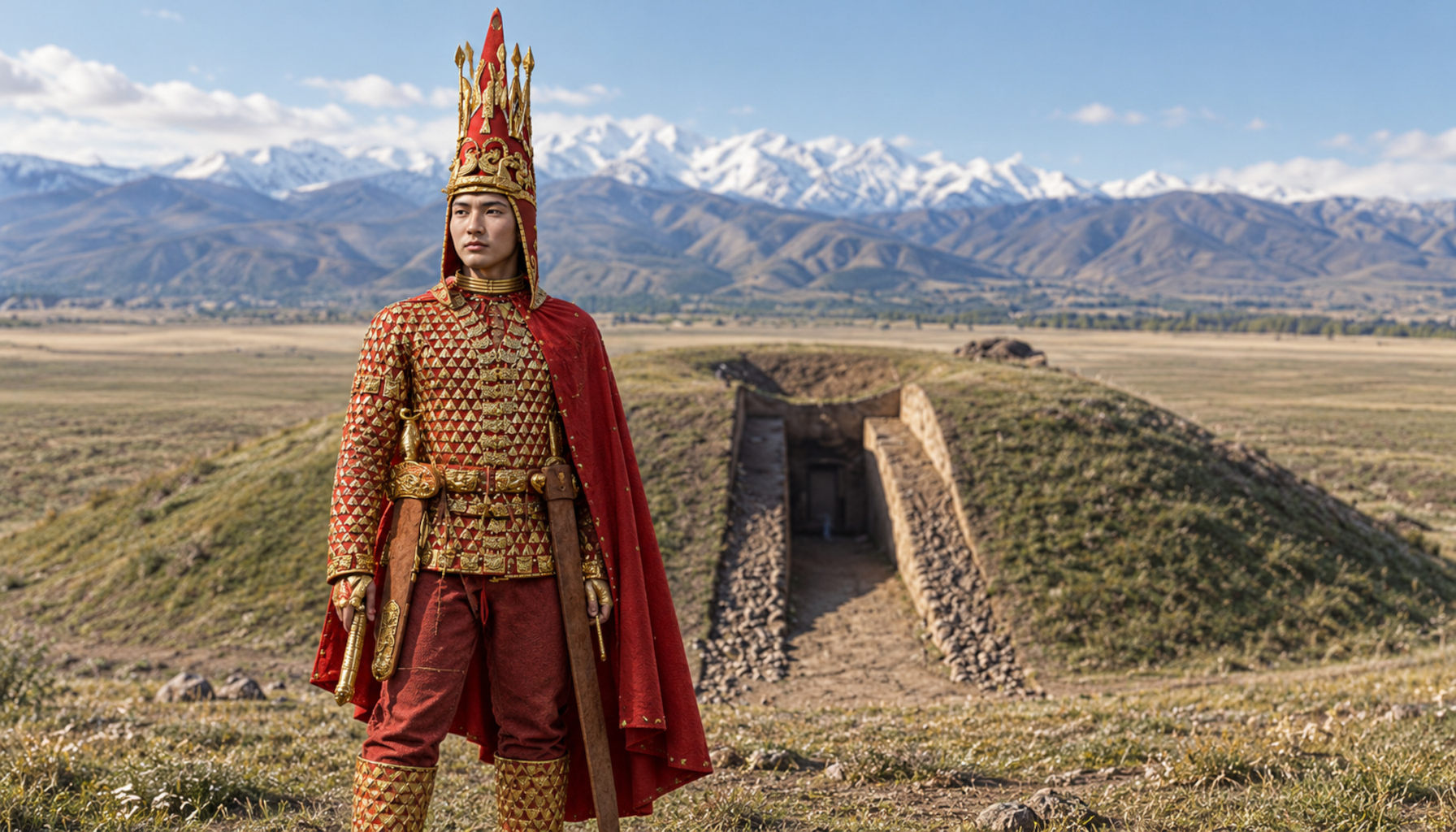
Because so many graves were disturbed, the article cannot always link specific grave goods to specific individuals. But it can place its genetic findings within what is known of Conquest-era and early royal burials in the region. Conquest-period elites are typically associated with rider gear, ornate belt fittings, and, in some places, horse burials – the classic material toolkit of steppe warlords.
By contrast, later medieval graves at the basilica would have featured rich textiles, jewellery, and sometimes inscribed stone tombs – the language of Western-style Christian nobility. The article shows that beneath these very different material worlds lies a genetic continuity: men who would have looked back, through many generations, to the original conquerors, and in some cases to the Árpáds themselves.
The study reveals a previously unrecognised stratum of graves that pre-date the construction of Stephen's church. These earlier burials are linked to the 10th-century conquering Hungarians, the steppe warriors who established control over the Carpathian Basin. Several individuals from this deep layer have what the study calls a Conquest-period genetic profile – a strong eastern steppe ancestry resembling that of people from the Ural region and Inner Asia.
When the team plotted the genomes of all the Székesfehérvár individuals against the genetic background of modern and medieval Europeans, a distinctive pattern emerged. Most of the basilica burials form a tight cluster that overlaps partly with present-day Central Europeans, including modern Hungarians, but is consistently shifted away from typical European variation.
Using models that estimate ancestry proportions, the article shows that more than a third of the individuals from the necropolis carry a detectable eastern component. In the overwhelming majority of cases, this eastern ancestry can be best explained as coming from the conquering Hungarians and their close kin, rather than from other steppe migrants.
The Hungarian kingdom remained plugged into the politics of the steppe for a long time, and later arrivals left their mark in a small number of burials. The article identifies about twenty individuals whose eastern ancestry cannot be cleanly traced to the original conquering Hungarians. Instead, their DNA fits better with later steppe groups such as Kipchaks and Cumans, or with Alans from the North Caucasus.
One particular skeleton, SZKB7276, stands out as a likely representative of the Jassic people. His genome is overwhelmingly similar to medieval Alans, and he lies on the genetic map in the direction of the Caucasus rather than toward Inner Asia. Radiocarbon dates place him in the 13th–14th centuries, precisely when Alan-descended groups are known to have settled in Hungary.
Over the course of the Middle Ages, the population of the Carpathian Basin became strikingly uniform in its genetic make-up – and, intriguingly, different from other Europeans of the same period and from modern Europeans today. The medieval gene pool of the Carpathian Basin became a well-stirred mixture: eastern steppe ancestry from the Conquest-era peoples blended with a European background that itself had changed, now showing closer ties to northern and western Europe.
The genetic shifts in this elite cemetery align closely with what medieval charters and chronicles tell us about Hungary's political alliances. After its foundation as a Christian kingdom, Hungary increasingly oriented itself towards the Holy Roman Empire and western Christendom, cementing ties through dynastic marriages, church foundations, and the settlement of foreign knights and colonists.
Instead of a few great houses dominating the burial ground for centuries, the genomic study shows a surprisingly thin web of family ties. The elite buried here were male-dominated, yes, but they were not one big family. They were a shifting collection of powerful men and their close kin, constantly refreshed and replaced.
Out of nearly 400 people from the royal necropolis, the researchers found only a small number of clear close relationships up to the third degree – the sort of ties one would expect within a single household or immediate dynasty. When all the individuals are linked together based on shared DNA segments, the result is not a dense mesh of kin but a very sparse network.
The article's findings transform the royal basilica of Székesfehérvár from a presumed monument to immovable bloodlines into something more dynamic: a burial ground that charts the constant renewal and reshaping of power in medieval Hungary, written not only in stone and parchment but in the DNA of the men and women who were laid to rest there.
Original source article: https://www.biorxiv.org/content/10.1101/2026.04.10.717699v1
Original source article: https://www.biorxiv.org/content/10.1101/2026.04.10.717699v1

Comments