Clan McNamara
– 1 min read


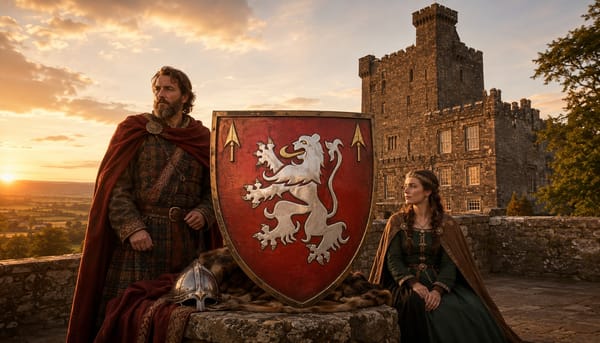
The McNamaras were one of the great Dal gCais clans of medieval County Clare, rising to prominence in western Ireland as lords, builders, and military powerbrokers. Their strongest Y-DNA link in the local lineage data is R1b1a1b1a1a2c1a4b2a1, tying the clan's story to a deeper Atlantic-Celtic paternal heritage that fits their Irish noble identity.
Their history is rooted in the baronies of Upper and Lower Bunratty and Clonderalaw, where the clan became known for shaping the political and architectural landscape of Clare. The motto Mac Conmara Fionn is commonly read as “son of the fair hound,” a phrase that carries the Gaelic sense of speed, strength, and aristocratic prestige. Figures linked to the clan story include Chieftain Cumara, the tower-house builder Sen Mac Conmara, and Donnchadh Mac Conmara, who remained important in the upheavals of seventeenth-century Ireland.
Knappogue Castle is one of the clearest surviving anchors for the McNamara story. Built in 1467 in County Clare and later expanded, it became a MacNamara seat and still stands today as a restored landmark that visitors can tour. That makes it more than a romantic ruin: it is a place where the clan's political reach and architectural legacy are still visible on the landscape.
The ancient DNA side is especially interesting because several Iron Age and later western European samples fall on close branches of the same broader R1b line, including finds from Broxmouth in East Lothian, Fairford in Gloucestershire, and West Lothian in Scotland. These individuals are not proven direct ancestors of Clan McNamara, but they help show the wider ancient population background connected to the same paternal story.
Upload your DNA to MyTrueAncestry to see whether your own results connect with Clan McNamara, its wider Irish noble world, or the deeper haplogroup trail behind it.
Comments