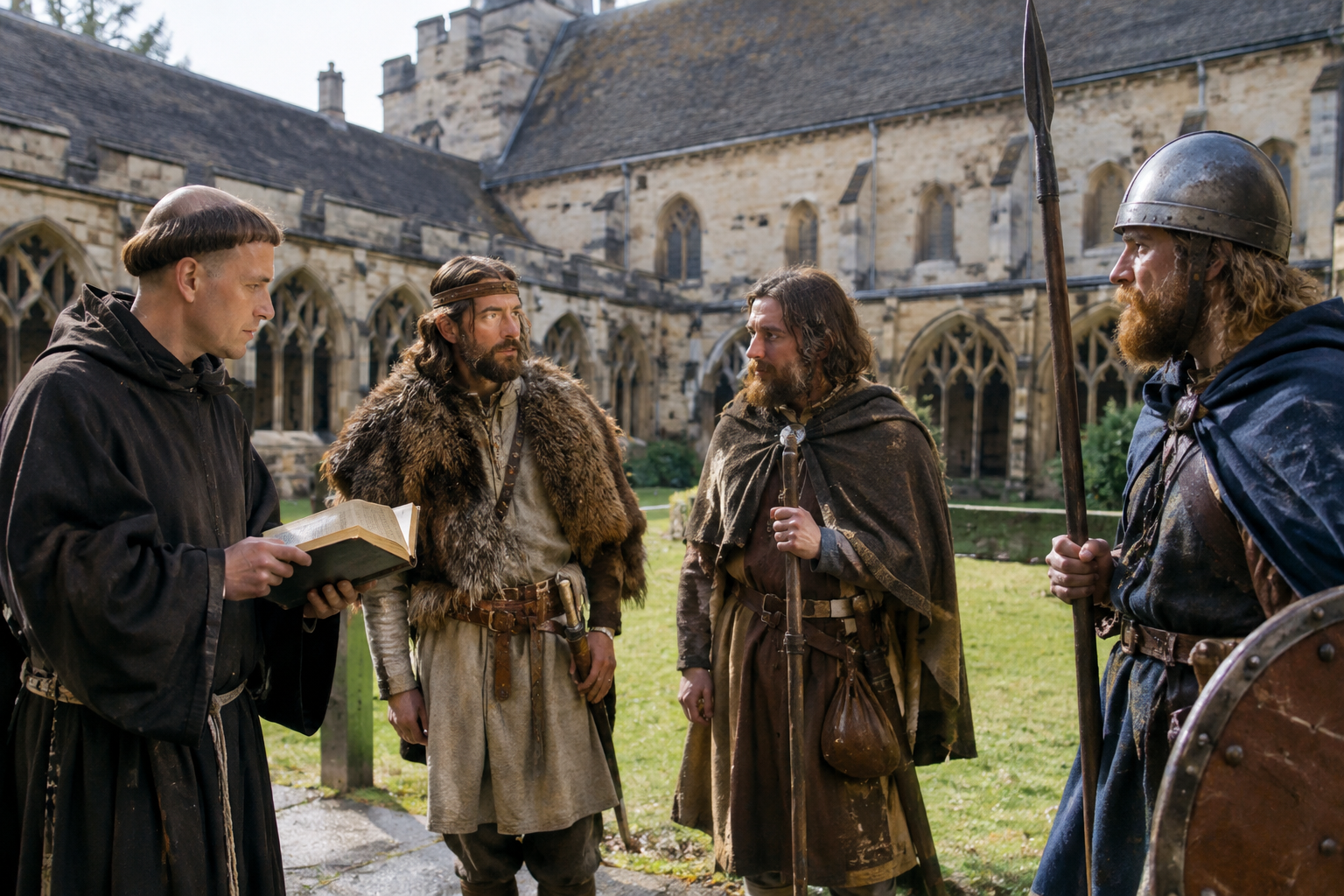
Haplogroups and Noble Lines Haplogroup I2a2a1 Some Y-DNA haplogroups announce themselves with imperial drama. Others are quieter, older, and in some ways more revealing. I2a2a1 belongs to that second category. It is a paternal lineage that helps us look past the noise of later kingdoms and surnames to something more deep-rooted: the long history of men By Sven • 6 min read
Haplogroups and Noble Lines Haplogroup R1a1a1a1d2b3 A paternal line with a wide historical footprint Some Y-DNA haplogroups turn up like a neat local family story. Others appear more like a set of scattered clues across a very large map. Haplogroup R1a1a1a1d2b3 belongs to the second category. It is a very specific paternal branch, tucked deep within By Sven • 6 min read
Haplogroups and Noble Lines Haplogroup E1b1b1b2a1a Some Y-chromosome lineages seem to sit still in the historical imagination. Others keep turning up in places that make us rethink the map. Haplogroup E1b1b1b2a1a belongs to the second category. It is a paternal line nested within the wider E1b1b family, a major branch of the Y-chromosome tree with deep By Sven • 6 min read
Haplogroups and Noble Lines Haplogroup O2a2b1a1a1c Some Y-chromosome lineages announce themselves in the grand capitals of history. Others first appear in places that are easier to miss on the map: a Bronze Age village in Qinghai, a burial from Han-era China, a grave on the Mongolian steppe. Haplogroup O2a2b1a1a1c belongs to that second category. It is By Sven • 6 min read
Haplogroups and Noble Lines Haplogroup E1b1a Some Y-chromosome haplogroups turn up in the historical record like the repeated appearance of a family name in a parish register: here, then there, and then unexpectedly somewhere far away. E1b1a is one of those lineages. It is especially important because, in broad terms, it is one of the major By Sven • 6 min read
Haplogroups and Noble Lines Haplogroup J2a1a1a2b2a2b3a Some Y-chromosome lineages announce themselves with a fanfare of kings and conquerors. Others are more interesting precisely because they do not. Haplogroup J2a1a1a2b2a2b3a belongs to one of those paternal stories that is best understood not as a badge of a single people, but as a clue to movement: men crossing By Sven • 5 min read
Haplogroups and Noble Lines Haplogroup G2a1 Some Y-chromosome lineages turn up in exactly the places one might expect. Others behave more like old archaeological gossip: appearing in an early farming settlement in Anatolia, reappearing in Neolithic central Europe, then turning up again in Roman, Lombard, Merovingian, and even early modern contexts far from any single obvious By Sven • 6 min read
Haplogroups and Noble Lines Haplogroup I2a1b1a2b1a2a1a1a1a1a2 Some Y-DNA haplogroups arrive in history with trumpets. Others appear more quietly, in a grave, a churchyard, a field under East Anglian skies. Haplogroup I2a1b1a2b1a2a1a1a1a1a2 belongs to that second category: a very specific paternal branch whose importance lies not in grand claims, but in what it lets us see about By Sven • 6 min read
Haplogroups and Noble Lines Haplogroup I2a1a2b Some Y-DNA haplogroups are famous because they turn up in royal tombs or in sweeping migration stories. Haplogroup I2a1a2b is interesting for a rather different reason. It appears, from the evidence supplied here, in places that force us to think less about a single dramatic march across Europe and more By Sven • 6 min read
Haplogroups and Noble Lines Haplogroup I2a2b Why I2a2b is such an intriguing paternal line Some Y-DNA haplogroups announce themselves with a neat historical label. Others refuse to behave so tidily. I2a2b belongs very much to the second category. It sits within haplogroup I, one of the old European paternal branches, and its story is interesting precisely By Sven • 6 min read
Haplogroups and Noble Lines Haplogroup E1b1b1a1b1a Some Y-DNA haplogroups behave rather like historical celebrities: they turn up in all the expected places, attached to famous peoples and familiar migration stories. E1b1b1a1b1a is more interesting than that. It appears in a scatter of ancient men from the north Pontic world, the Balkans, the Aegean, Roman frontier zones, By Sven • 6 min read
Haplogroups and Noble Lines Haplogroup J2a1a1b2a1a A paternal line that turns up in unexpected places Some Y-DNA haplogroups behave rather like those difficult historical characters who refuse to stay neatly in one chapter. J2a1a1b2a1a is one of them. It belongs to the wider Y-chromosome haplogroup J2, a branch long associated, in broad terms, with parts of By Sven • 6 min read
Haplogroups and Noble Lines Haplogroup R1b1a1b1a1a2b1 There is something wonderfully humbling about a Y-chromosome label like R1b1a1b1a1a2b1. It does not sound like poetry. It sounds like a filing system in a very overworked archive. Yet behind that string of letters and numbers lies a long paternal history spread across prehistoric Europe, Iron Age communities, Roman frontiers, By Sven • 9 min read
Haplogroups and Noble Lines Haplogroup I2a1b1a1a1b Some Y-chromosome lineages turn up once or twice in the ancient record and then vanish back into the archaeological mist. Haplogroup I2a1b1a1a1b is not like that. In the material supplied here, it appears again and again across Britain and Ireland in the Neolithic, turns up in Iron Age communities in By Sven • 8 min read
Haplogroups and Noble Lines Haplogroup R1a1a1b1a1a1c1 Some Y-chromosome lineages turn up in exactly the places where the written record begins to grow noisy: frontier zones, mixed populations, dynastic cemeteries, and ports where people arrived from somewhere else. Haplogroup R1a1a1b1a1a1c1 is interesting for precisely that reason. In the material supplied here, it appears not as the badge By Sven • 9 min read
Haplogroups and Noble Lines Haplogroup I1 Haplogroup I1 has one of those histories that makes ancient DNA so irresistible. It appears again and again in the archaeology of northern Europe, especially around Scandinavia and the wider North Sea world, and then turns up later in places shaped by Viking travel, medieval kingdoms, and early modern expansion By Sven • 9 min read
Haplogroups and Noble Lines Haplogroup R1b1a1b1a1a2b1c1b1 Some Y-DNA haplogroups announce themselves with royal fanfare. Others do something more interesting: they turn up quietly, in graves scattered across centuries and coastlines, and force us to think about how paternal lineages moved through the ordinary and extraordinary worlds of ancient Europe. Haplogroup R1b1a1b1a1a2b1c1b1 belongs to that second category. By Sven • 8 min read
Haplogroups and Noble Lines Haplogroup R1b1a1b1a1a2c1a4b Some Y-DNA haplogroups announce themselves with a flourish. Others make their case more quietly, by turning up again and again in graves spread across centuries, landscapes, and social worlds. Haplogroup R1b1a1b1a1a2c1a4b belongs to that second category. It sits deep within the wider R1b tree, one of the major paternal lineages By Sven • 8 min read
Haplogroups and Noble Lines Haplogroup I2a1b1a2b1a2a1a Some Y-chromosome lineages are easiest to understand when they turn up not in abstract trees of letters and numbers, but in real people dug from real ground. Haplogroup I2a1b1a2b1a2a1a belongs to one of those stories. It sits within the wider I haplogroup family, a deeply European branch of paternal ancestry, By Sven • 8 min read
Haplogroups and Noble Lines Haplogroup R1b1a1b1a1a2c1b1a Some Y-chromosome lineages are easy to place in the historical imagination. They turn up in one famous dynasty, one celebrated migration, one neat map. Haplogroup R1b1a1b1a1a2c1b1a is more interesting precisely because it resists that kind of tidy storytelling. It belongs within the wider R1b family, a major branch of western By Sven • 9 min read
Haplogroups and Noble Lines Haplogroup J2b2a1a1a1a1a1a1 Why this tiny branch matters Some Y-DNA haplogroups announce themselves with a broad, familiar historical footprint. J2b2a1a1a1a1a1a1 does something more intriguing. It appears in a scatter of ancient contexts across the Mediterranean, the Balkans, Central Europe, and even farther north, which makes it less the badge of a single people By Sven • 7 min read
Haplogroups and Noble Lines Haplogroup I1a3a1a1a3 Some Y-chromosome lineages are easy to place in the historical imagination. Others are more elusive, appearing not in a single royal tomb or famous battlefield, but scattered across the moving frontier of late antiquity and the early Middle Ages. Haplogroup I1a3a1a1a3 belongs to that second category. It is interesting precisely By Sven • 8 min read
Haplogroups and Noble Lines Haplogroup E1b1b1a1b1a6a1e Some Y-chromosome lineages are famous because they are broad and common. Others are interesting precisely because they are narrow, elusive, and only come into focus when archaeology and ancient DNA are read together. E1b1b1a1b1a6a1e belongs to that second category. It sits within the wider E1b1b family, a major paternal branch By Sven • 8 min read
Haplogroups and Noble Lines Haplogroup R1b1a1b1a1a1c2b2a1b1a4b2 Some Y-DNA haplogroups arrive with a fanfare: royal burials, famous surnames, a neat map and a tidy origin story. Haplogroup R1b1a1b1a1a1c2b2a1b1a4b2 does not quite behave like that. It is a very narrow paternal branch, far downstream within the much larger R1b tree, and that is exactly what makes it interesting. By Sven • 9 min read