Clan McMonagle

– 2 min read


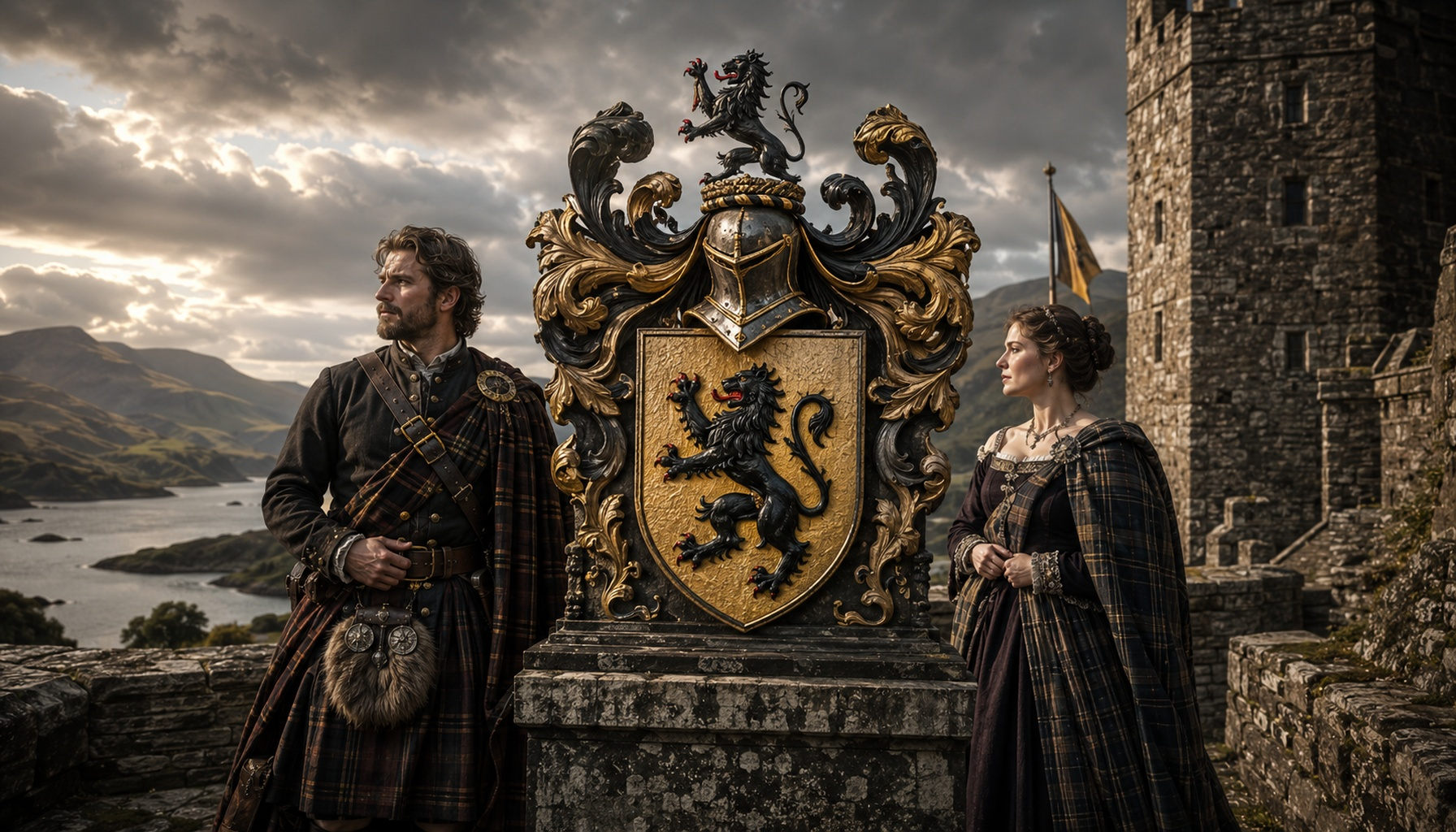
Clan McMonagle was a Gaelic Irish family of Ulster, rooted above all in the old cultural landscape of north-west Ireland, especially County Donegal and the wider Raphoe sphere. Their heritage belongs to that deeply local Irish world in which people were known not simply by a surname, but by kin, territory, memory, and the long echo of who belonged where. The surname sits within the Ulster Gaelic pattern of enduring family identity, and for those exploring paternal lines it is here tagged with the primary family haplogroup R1b1a1b1a1a2c1a1a1a1a1a1a1a1a2.
What makes McMonagle history interesting is not a neat, uninterrupted paper trail, because Irish history rarely offers that luxury. Instead, it is a story of continuity through disruption: Gaelic lordship, church influence, anglicization, political upheaval, migration, and the steady reshaping of identity without quite losing it. The name survived because families carried it, repeated it, adapted it, and remembered it. A named historical figure linked to this heritage is Bishop Patrick Mac Moengal, recorded in 1366, a reminder that the family name was already present in the medieval ecclesiastical and regional life of Ulster.
A strong location anchor for McMonagle heritage is St Eunan's Cathedral in Raphoe, County Donegal, a place that ties family memory to one of the old ecclesiastical centers of the region. The present Roman Catholic cathedral was built in the late 19th and early 20th centuries and is dedicated to St Eunan, or Adomnan, the important early medieval saint associated with Donegal. It stands in Raphoe, a settlement whose significance runs far deeper than the current building, because Raphoe itself was an ancient church site and long a center of religious authority in Donegal. In other words, even when the stone you see today is comparatively modern, the sacred and historical landscape beneath it is much older. That matters for a Gaelic family like the McMonagles, because identity in Ulster was so often attached to places where church, burial, lordship, and local remembrance overlapped. St Eunan's Cathedral can still be visited today, and for anyone tracing Donegal roots it offers one of those rare, satisfying moments where the map, the history, and the family story all meet in a real place.
From an ancient-DNA point of view, McMonagle heritage is best understood through related and linked regional signals rather than any claim of direct descent from specific excavated individuals. The primary family haplogroup tag here is R1b1a1b1a1a2c1a1a1a1a1a1a1a1a2, and notably there are many linked medieval Irish samples from Ballyhanna, County Donegal, including Sk197an, Sk197y, Sk197q, Sk197am, Sk197s, Sk197ab, Sk197u, Sk197t, Sk197r, Sk197ad, Sk197x, Sk197n, Sk197aa, Sk197z, Sk197ak, Sk197w, Sk197ai, Sk197m, Sk197ah, Sk197ag, Sk197v, Sk197ac, Sk197al, Sk197af, Sk197ae, Sk197o, Sk197aj, HAN197x, Sk197a, Sk197b, Sk197c, Sk197d, Sk197e, Sk197f, Sk197g, Sk197h, Sk197i, Sk197j, Sk197k, Sk197l, Sk197p, and HAN197. There are also related linked medieval Irish samples from Kilteasheen in Roscommon, including KIL041, KIL044, and KIL014. The point is not that these were McMonagles in any documentary sense, but that they reflect the genetic landscape of medieval Gaelic Ireland, especially in Donegal, close to the historical world in which the surname took shape and endured.
Read more about Clan Mac Suibhne
McMonagle heritage is a fine example of how an Irish surname can preserve a sense of belonging across centuries of change, even when the archives are patchy and the story must be rebuilt from fragments of place, kinship, history, and DNA. If you carry the McMonagle name, or have Donegal and Ulster roots in your family, you can upload your DNA to MyTrueAncestry and see whether you match the family group or any of the related ancient DNA samples from medieval Ireland.
Comments