Clan Mac Suibhne
– 3 min read


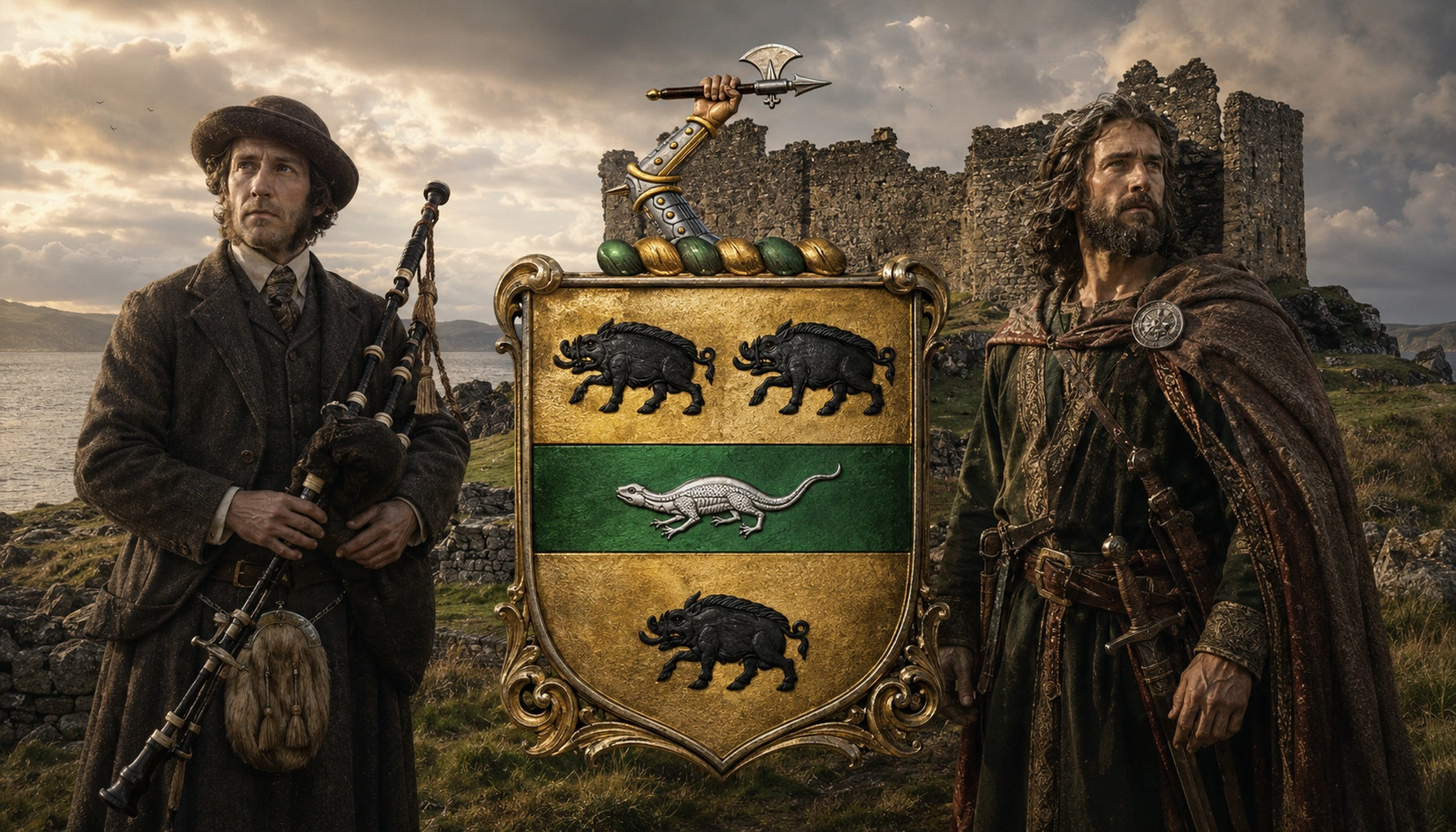
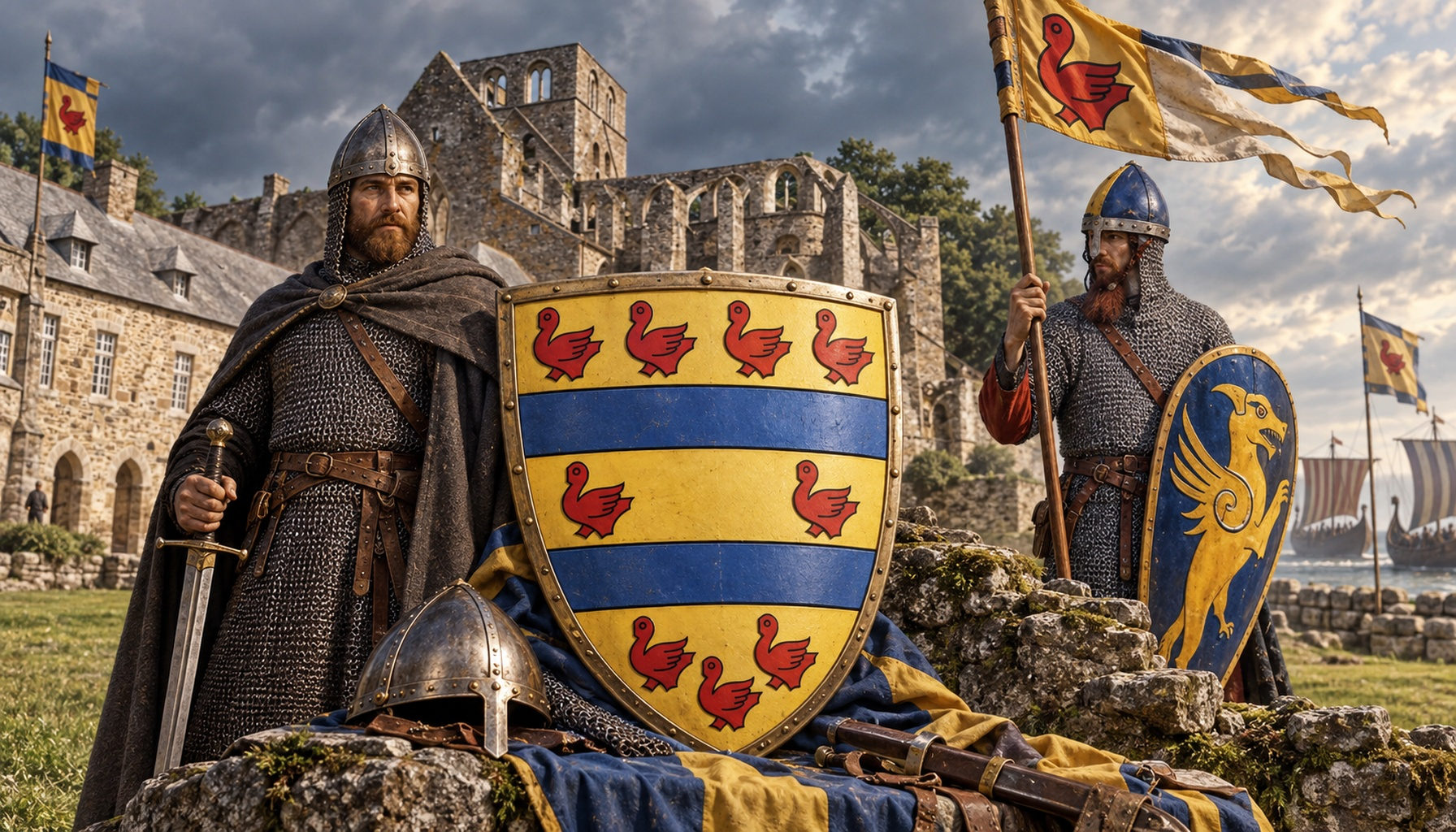
Clan Mac Suibhne was a Gaelic military kindred whose story belongs to both Scotland and Ireland: a family of captains, landholders, and regional lords who crossed from the western Scottish and Hebridean world into northwest Ireland and became deeply rooted in Donegal. In historical terms, they are a fine example of the gallowglass age, when heavily armed warrior families moved across the North Channel in service to Irish kings and chiefs, building power through fighting strength, marriage alliances, landholding, and loyalty networks. The primary haplogroup linked with this family is R1b1a1b1a1a2c1a1f1a1.
The name Mac Suibhne means "son of Suibhne", and the family is closely associated with the old Gaelic-Norse seaboard world of Argyll, Knapdale, and the Hebrides before their expansion into Ireland. This was not some neat one-way migration, but part of a lively medieval zone of movement in which ships, swords, fosterage, marriage, and politics tied western Scotland and Ulster together. In Ireland, the Mac Suibhnes became especially important in Donegal, where branches of the family entered the service of powerful Gaelic lords and developed into significant landed dynasties in their own right. One early named figure is Dubhghall Mac Suibhne, who died in 1262, a reminder that this was already a family of consequence in the 13th century, standing at the crossroads of lordship, war, and kinship.
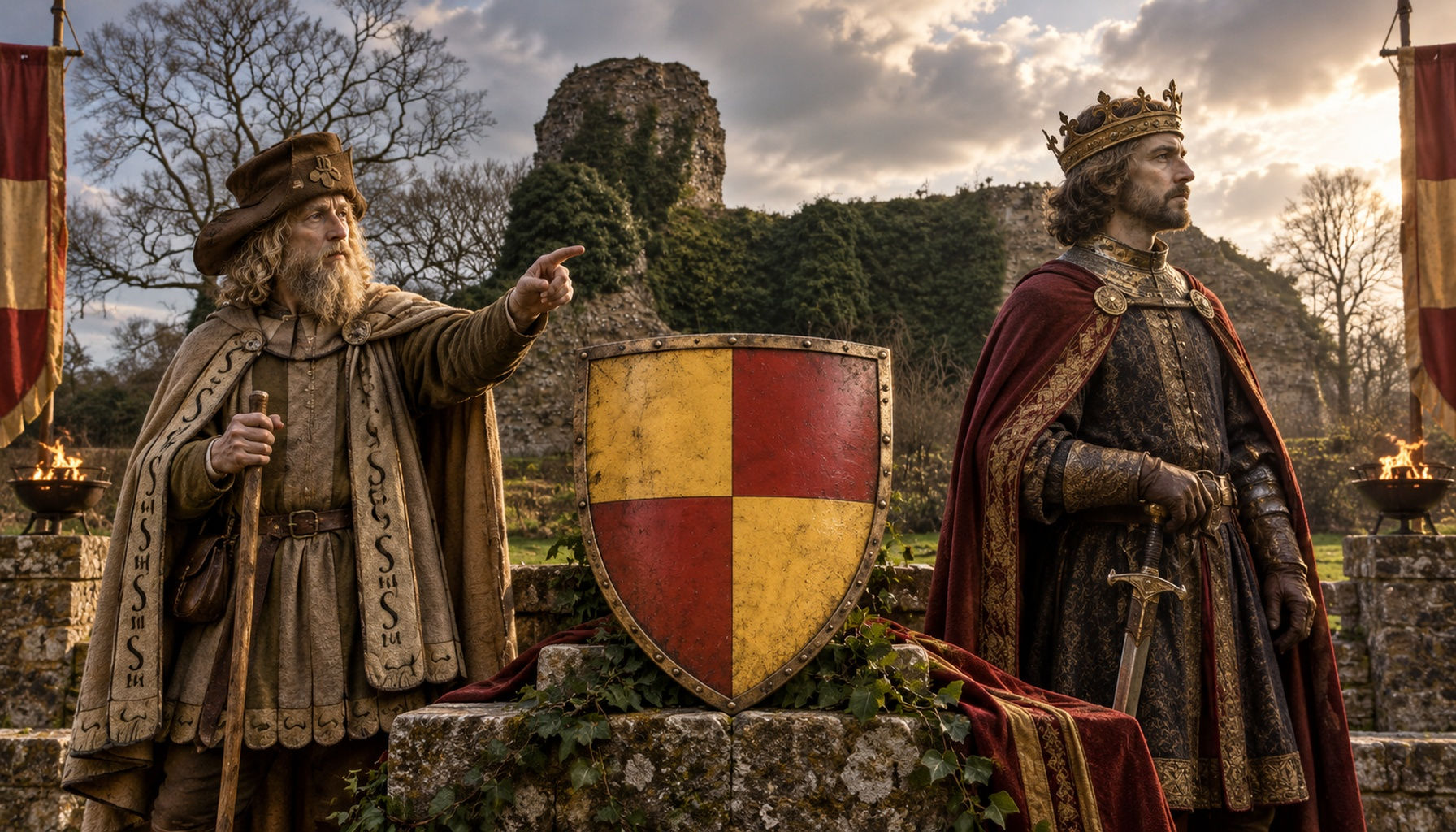
The great location anchor for the family is Castle Sween in Knapdale, Argyll, on the east shore of Loch Sween in western Scotland. It is often regarded as one of the oldest stone castles in Scotland, probably built in the late 12th century, and its very name preserves the memory of Suibhne, the ancestor from whom the clan took its identity. The castle occupies a striking coastal position, which tells you at once what sort of power this was: maritime, Gaelic, and outward-looking across sea lanes rather than shut up inland. Over time it passed through the hands of rival lords, including the MacDonalds and the Campbells, and it suffered damage in later conflicts, but the ruins still powerfully evoke the world from which the Mac Suibhnes emerged. Yes, it can still be visited today, and it remains one of the best places to imagine the clan's early setting in the broader Scottish-Gaelic sphere before its branches became so prominent in Donegal and the military society of northwest Ireland.
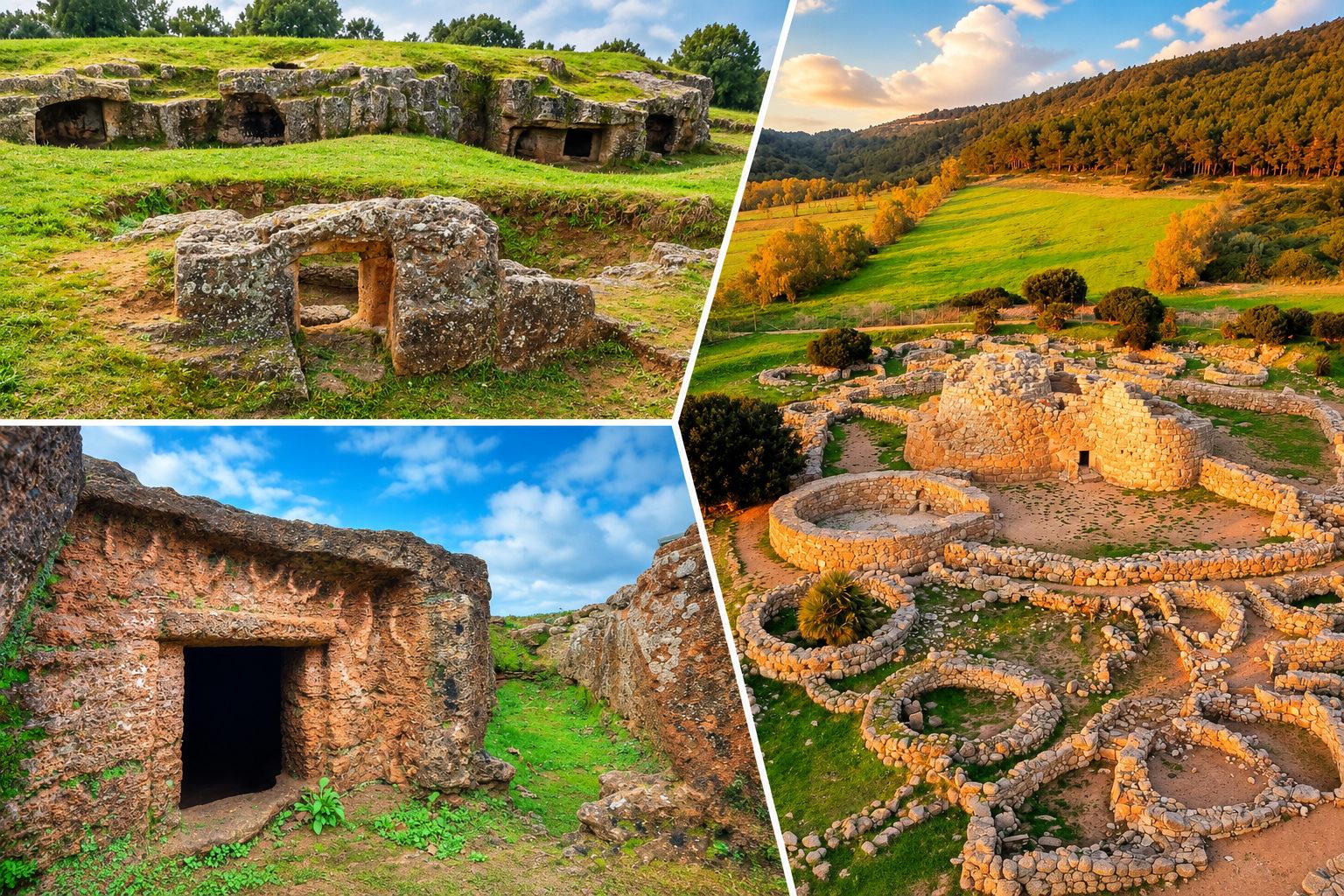
From a DNA perspective, the primary family haplogroup R1b1a1b1a1a2c1a1f1a1 sits within a wider Atlantic and Celtic-facing genetic landscape rather than proving direct descent from any one ancient individual. Related or linked ancient samples associated with this branch include Celtic Durotriges burials from Duropolis at Winterborne Kingston in England such as WBK12, WBK20, WBK29, WBK41, WBK05, WBK30, WBK43, WBK06, WBK08, WBK18, and WBK191; Imperial Roman Era Zadar in Croatia I26776; Bronze Age Orkney at Westray Links of Noltland KD061; Bronze Age Calabria GMO015; Early Medieval Belgium ST2025; Medieval Belgium outsider ST1308; Gallic France CGG023699; Post Roman Worth Matravers I11580; Merovingian Alt-Inden IND013; Late Roman Klosterneuburg R10656; Late Roman Conimbriga R10488; Celtic Briton Yarnton I21182; Iron Age Worlebury I11991; Iron Age Battlesbury Bowl I21309; Bronze Age Trumpington Meadows I3256; Bronze Age Amesbury Down I2417; Bell Beaker Upavon I4950; Bronze Age Bedfordshire I7576 and I7577; Bronze Age Boatbridge Quarry South Lanarkshire I5473; Celt Hinxton HI2; Early Bronze Age Thames I5377; and Ireland Copper Age Rathlin2B. These are best understood as showing the deep time spread of related paternal lines across Britain, Ireland, and parts of Europe, giving Mac Suibhne descendants a broader prehistoric backdrop to their much more specific medieval clan history.
If you carry Mac Suibhne heritage, or simply want to see how your DNA connects to the older Celtic, British, Irish, and medieval worlds around this clan story, you can upload your DNA to MyTrueAncestry and explore the ancient links for yourself.
Comments