Clan MacArthur
– 3 min read


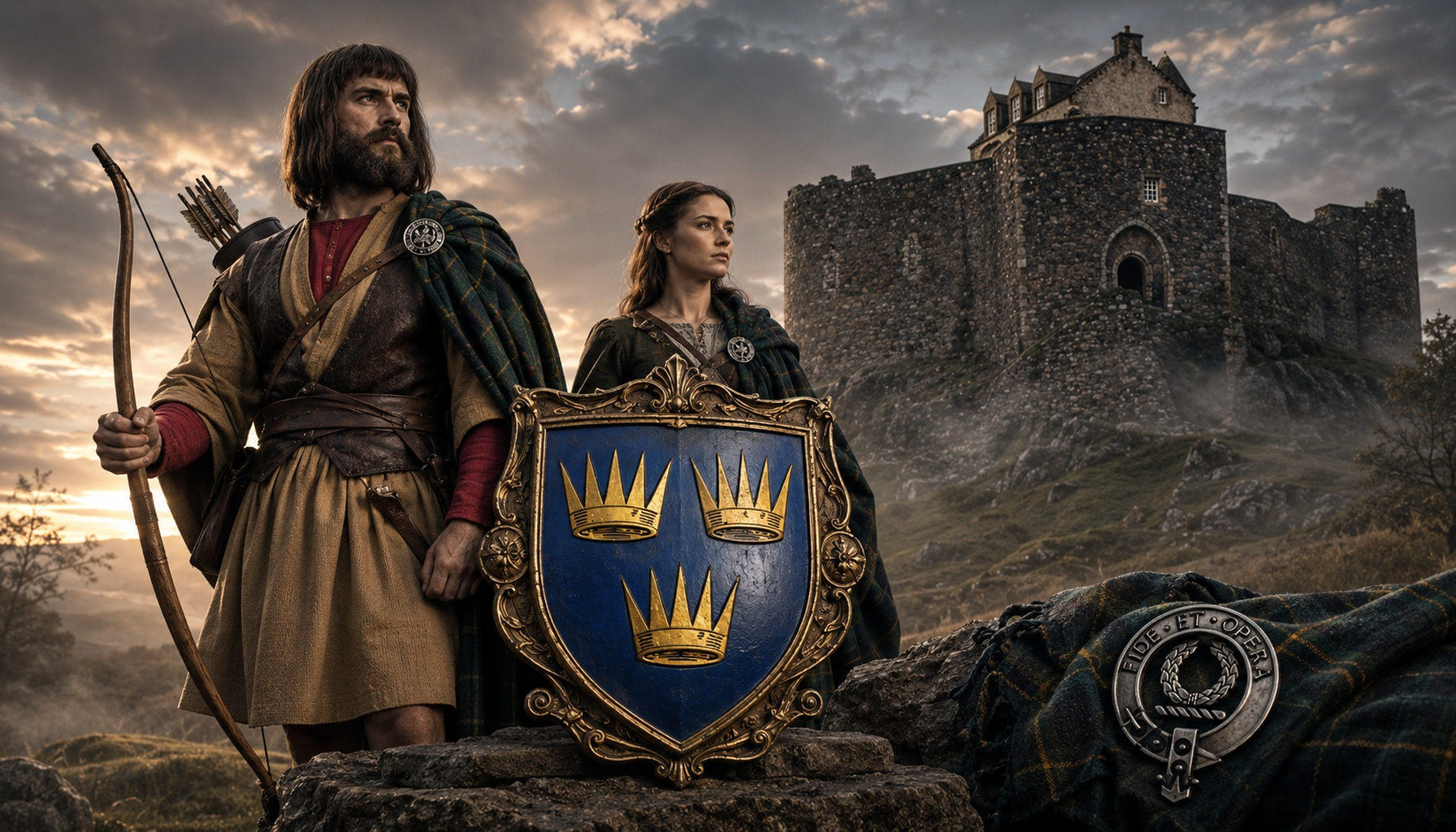
Clan MacArthur was one of the old Highland kindreds of western Scotland, rooted above all in Argyll and the country around Loch Awe, where Gaelic speech, kin loyalty, and hard local politics shaped everyday life. In that world, a clan was not simply a surname but a living network of cousins, followers, landholders, fighting men, and remembered ancestors. MacArthur tradition belongs squarely to that western Highland pattern: proud, martial, territorial, and stubbornly durable. For those exploring paternal-line DNA, the primary family haplogroup linked here is R1b1a1b1a1a1c1, a branch within the great Atlantic-facing R1b world so common across much of western Europe.
The name MacArthur itself carries an old heroic flavor, and the clan's story has long been tied to ideas of ancient descent and warrior standing. That does not mean a neat fairy-tale pedigree stretching unbroken into the mist, and Highland history rarely behaves so tidily. Rather, Clan MacArthur emerged through the very practical mechanics of medieval Scotland: landholding, service, alliances, rivalry, and memory. Even when larger powers dominated the political stage, smaller lineages like the MacArthurs preserved identity through oral tradition, heraldry, and the simple but powerful continuity of the name. One figure who appears in the record is Iain MacArthur in 1427, a reminder that by the later Middle Ages the family was already part of the documented landscape of Argyll.
A strong location anchor for the MacArthur story is Dunstaffnage Castle, near Oban in Argyll, one of the great stone fortresses of the western seaboard. Set dramatically on a rocky platform above the Firth of Lorn, it was built in the 13th century by the MacDougalls and later passed into Campbell hands after the Wars of Scottish Independence. That transfer alone tells you a good deal about Highland history: castles were not just residences but statements of control, sea power, and regional legitimacy. Dunstaffnage commanded coastal routes and watched a maritime world in which lordship moved as much by galley as by horse. For a clan such as the MacArthurs, whose identity was bound to Argyll and its Gaelic political culture, this is exactly the kind of place that helps make sense of their historical setting. It is not some vague backdrop of heather and romance, but a real stronghold in a contested landscape of rival kindreds, royal intervention, and shifting allegiance. The castle survives today under Historic Environment Scotland care and can still be visited, which makes it one of those rare places where the scenery, the masonry, and the history all still speak at once.
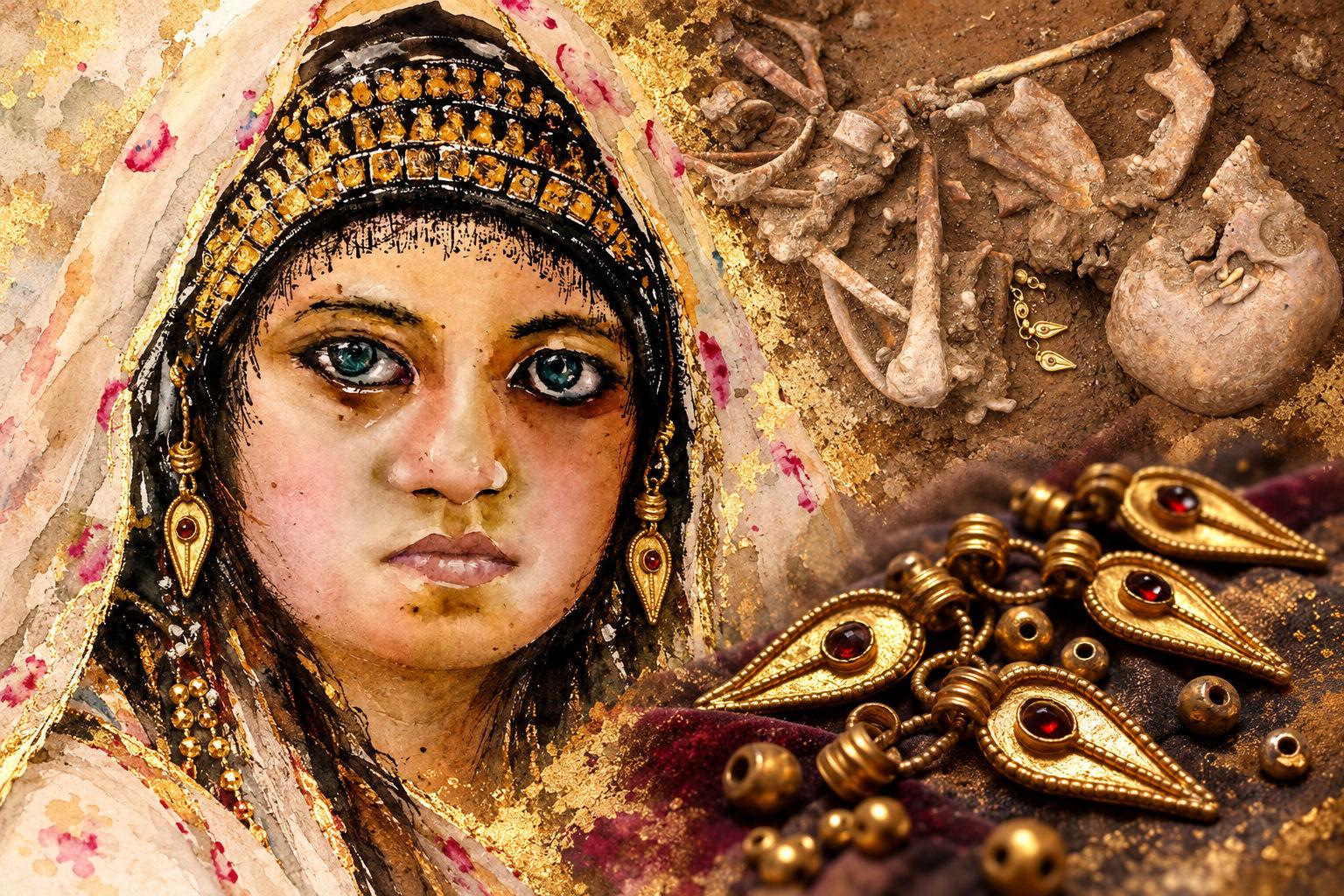
From a DNA point of view, the MacArthur-linked paternal haplogroup R1b1a1b1a1a1c1 belongs to a lineage with a very wide archaeological footprint across Europe. That does not prove direct descent from any named ancient individual, and it is important not to pretend otherwise. But it does place MacArthur heritage within a deep and rather fascinating genetic landscape. Related or linked samples under this branch include Celtic Durotriges England Duropolis Winterborne Kingston (WBK106), Gallo-Celtic Switzerland Pont de Cornaux-Les-Sauges (3430), Elite Celtic Burial Germany Ludwigsburg Roemerhuegel (LWB002_ss), Pict Era Scotland Black Isle Rosemarkie Cave samples such as KD001 and KD001_2, Bronze Age France Saint-Martin-la-Garenne (SMGB54), Bronze Age Unetice burials from Leubingen in Germany including LEU040 and LEU065, and later medieval and migration-era individuals from Northern Spain, England, Italy, Belgium, Denmark, and beyond. In other words, this is a lineage seen in Celtic, Bronze Age, medieval, and early historic contexts across a broad swathe of Europe. For a Highland clan of Gaelic western Scotland, that is not a contradiction at all, but a reminder that local identity can be intensely specific while deeper paternal ancestry reaches across centuries of movement, mixture, and survival.
Read more about Clan MacGregor
If you carry MacArthur ancestry, or simply suspect a connection to the wider Highland world of Argyll and Loch Awe, DNA can add another layer to the story. Upload your DNA to MyTrueAncestry to see whether you match Clan MacArthur, the primary haplogroup R1b1a1b1a1a1c1, or related ancient DNA samples from Celtic, Pictish, Bronze Age, and medieval contexts across Europe.
Comments