Clan Devlin
– 2 min read


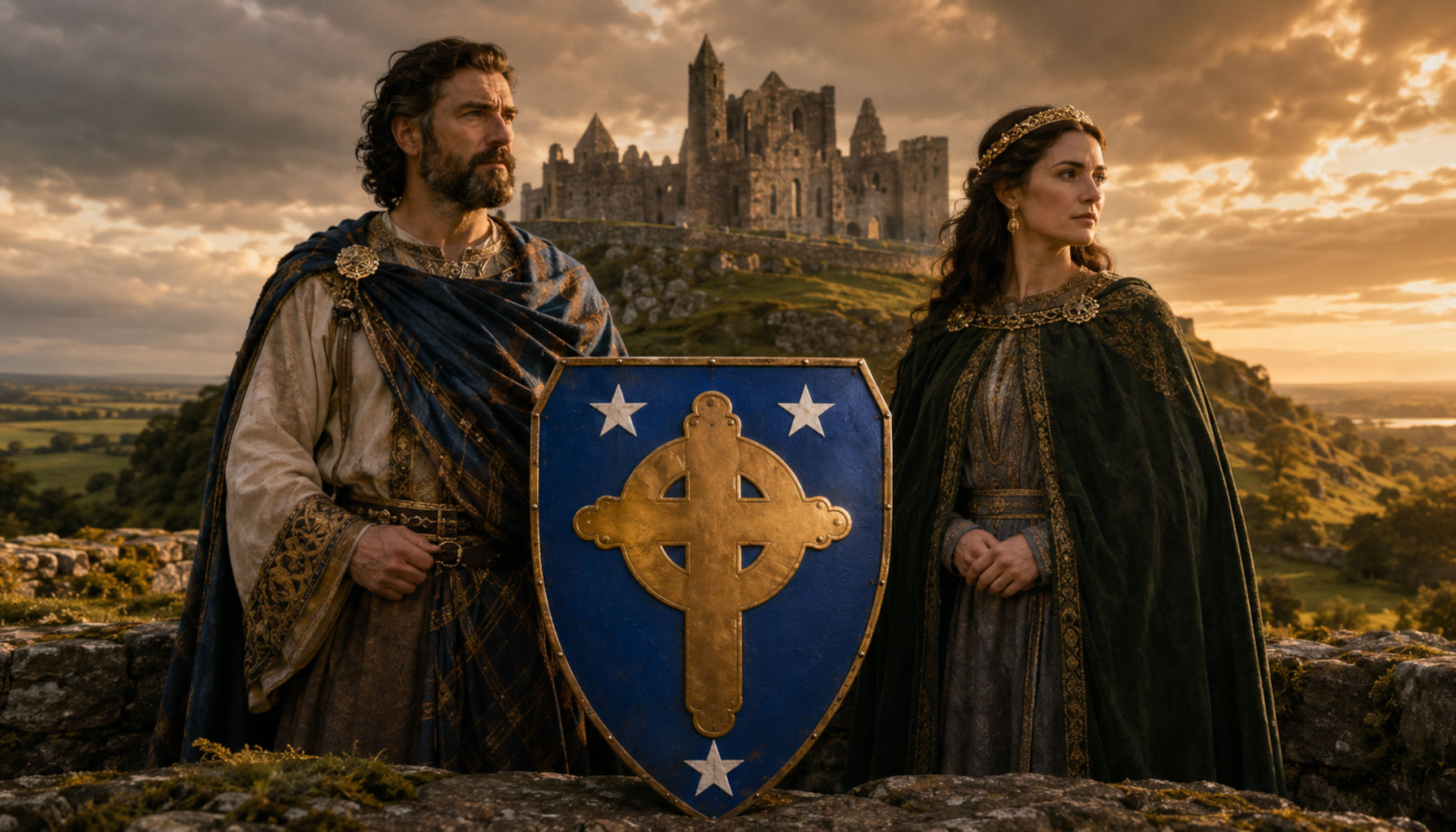
Clan Devlin was a Gaelic Irish family of Ulster, rooted above all in the historic world of Tyrone and northern Ireland, where kinship, territory, and memory mattered every bit as much as politics. The surname belongs to the old Irish naming tradition in which a family was not simply a label but a living network of descent, local loyalty, and inherited reputation. In genetic tagging terms, the primary family haplogroup linked here is R1b1a1b1a1a2c1a1a1a1a1a1a2c, a lineage found within the wider paternal landscape often associated with parts of Gaelic Ireland.
The Devlin story is, in many ways, the Ulster story in miniature. This was a family shaped by the stubborn continuity of Gaelic society, then tested by war, plantation, anglicization, and migration. Yet the name endured. Even when Devlin branches moved far from their original homeland, the surname kept carrying that deep sense of place back to Ulster. Among the historical figures remembered under the name is ODevlin, Bishop of Kells in 1211, a reminder that Gaelic families were present not only in lordship and local life, but also in the ecclesiastical world that stitched medieval Ireland together.
If you want a geographical anchor for Devlin heritage, Lough Neagh is a powerful one. This is the largest freshwater lake in the British Isles, lying at the heart of northern Ireland and touching several counties, including Tyrone, Antrim, Armagh, Down, Londonderry, and Derry's historic neighboring zones of influence. It covers a vast lowland basin and drains to the sea through the Lower Bann. In historical terms, that matters enormously: a lake like this was not a picturesque backdrop but a working center of movement, fishing, settlement, communication, and power. In the Gaelic age, the lands around Lough Neagh sat close to some of the most important political territories in Ulster, including those linked with the O'Neill sphere and the wider Tyrone world in which families like the Devlins belonged. It can still be visited today, and that continuity is part of its appeal: the same broad waters and shorelands that framed medieval and early modern lives remain part of the living landscape.
From an ancient DNA point of view, the Devlin haplogroup tag R1b1a1b1a1a2c1a1a1a1a1a1a2c connects interestingly with a cluster of related medieval Irish samples rather than proving any single direct line. These include numerous individuals from Ballyhanna, County Donegal, Ireland, such as Sk197an, Sk197y, Sk197q, Sk197am, Sk197s, Sk197ab, Sk197u, Sk197t, Sk197r, Sk197ad, Sk197x, Sk197n, Sk197aa, Sk197z, Sk197ak, Sk197w, Sk197ai, Sk197m, Sk197ah, Sk197ag, Sk197v, Sk197ac, Sk197al, Sk197af, Sk197ae, Sk197o, Sk197aj, HAN197x, Sk197a through Sk197p, and HAN197, alongside related medieval Irish examples from Kilteasheen in Roscommon such as KIL041, KIL044, KIL033, KIL037, KIL009, and KIL014. What these samples give us is not a neat pedigree chart, but something more historically useful: a glimpse of paternal lineages circulating in medieval Ireland within populations culturally close to the world from which Gaelic surnames like Devlin emerged.
Read more about Clan Gallagher
For anyone with the Devlin surname, or with roots in Ulster more broadly, this is where family history becomes properly exciting: not just names on paper, but landscape, migration, and the possibility of genetic links to the medieval Irish world. Upload your DNA to MyTrueAncestry and see whether you match the family story of Clan Devlin or any of the related ancient DNA samples connected with this wider Gaelic Irish heritage.
Comments