Clan MacGuire
– 3 min read


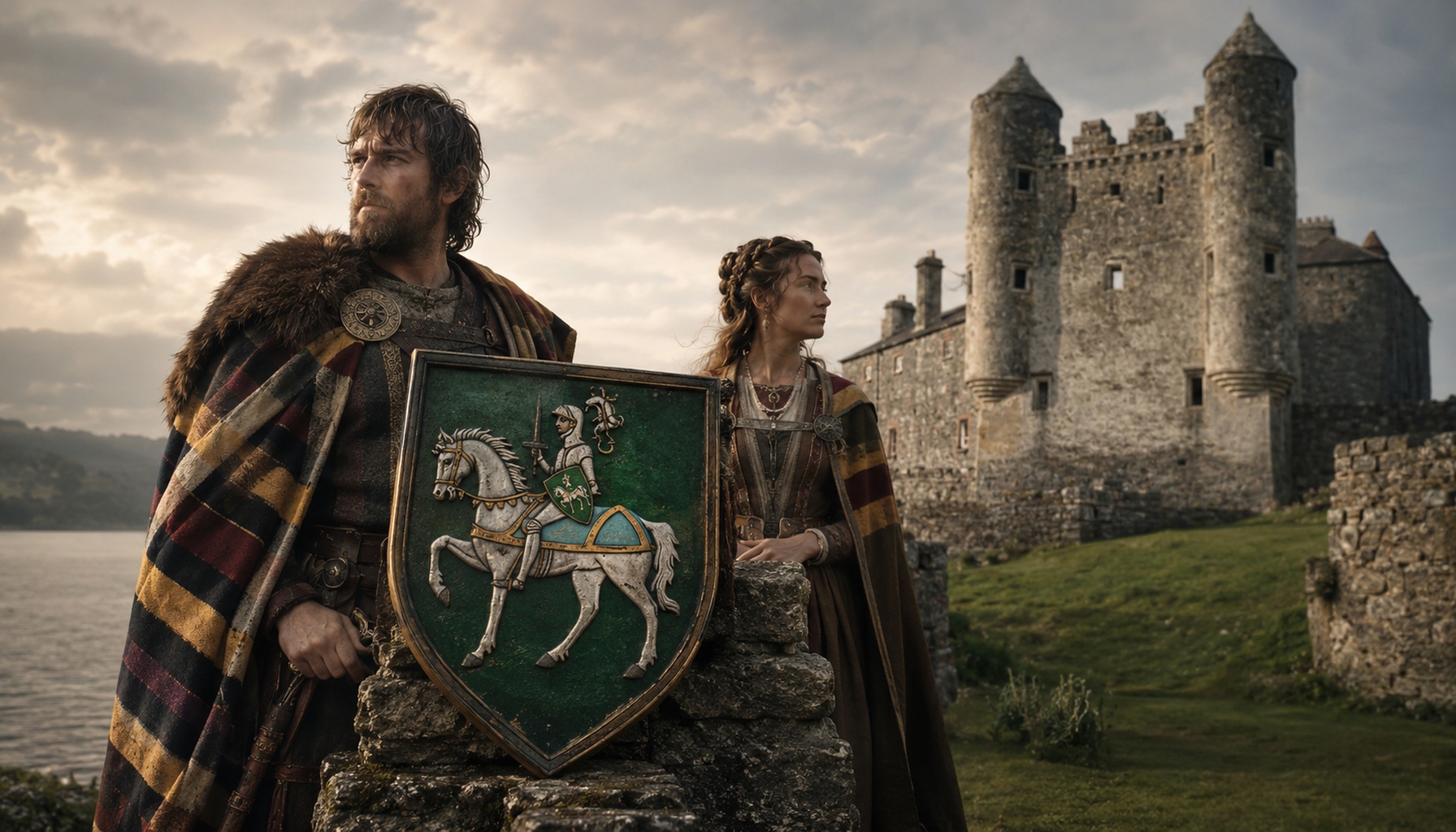
Clan MacGuire, or Mag Uidhir, was one of the great Gaelic Irish ruling families of Fermanagh in Ulster, rooted in the lake country and river routes of what became one of the most strategically important lordships in the north of Ireland. In historical terms, they fit the classic Gaelic Ulster pattern: a kin-based dynasty claiming ancestral descent, holding power through chieftainship, land, military strength, alliances, and command of territory. Their primary family haplogroup is linked here with R1b1a1b1a1a2c1a2a1a1a1b, a lineage tag that sits within a wider Atlantic and Insular European paternal story. Haplogroups: R1b1a1b1a1a2c1a2a1a1a1b.
The MacGuires were not simply a surname floating free in the records. They belonged to a very particular historical world: Gaelic lordship in Fermanagh, where authority was tied to ancestry, tribute, waterways, fortified places, and the loyalty of kindred. Through conquest, anglicization, upheaval, and migration, the family name endured because it was anchored in genealogy, place-memory, and cultural resilience. Older traditions also look back to deeper ancestral figures, and one early named figure sometimes brought into wider Gaelic genealogical memory is Cormac ua Cuinn (204-244), a reminder that medieval and early modern families often understood themselves through long chains of remembered descent as much as through land and politics in the present.
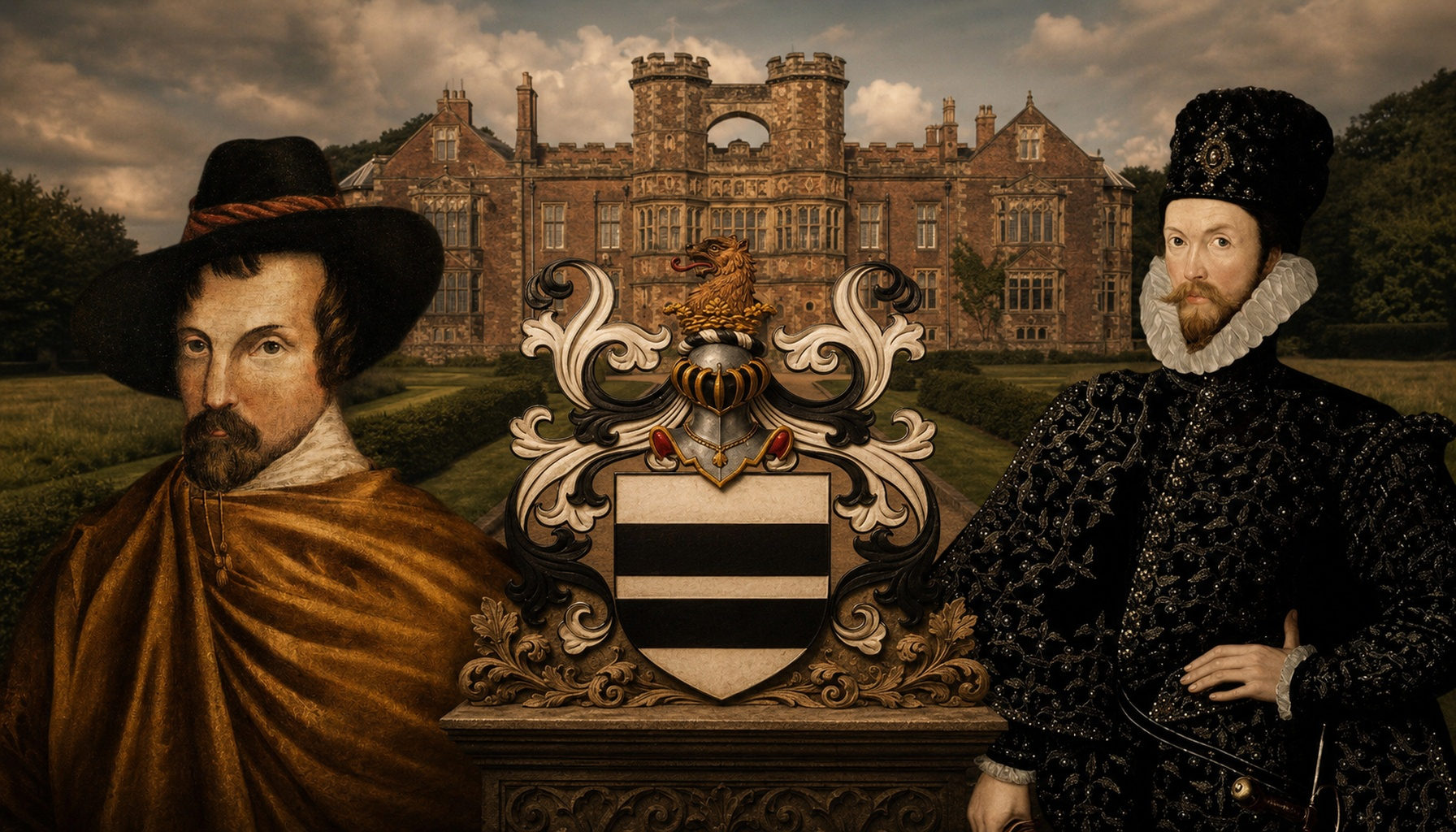
If you want one place that captures the MacGuire story in stone, it is Enniskillen Castle. Set in Enniskillen, County Fermanagh, the castle occupies an enormously important position beside the River Erne, controlling a key passage between Upper and Lower Lough Erne. That is exactly the sort of location a Gaelic ruling family needed: not just picturesque, but practical, political, and military. The castle was founded in the 15th century by the Maguires and stood at the center of their regional authority, watching over movement, trade, and conflict in a watery landscape where control of crossings mattered as much as control of fields. Later centuries brought siege, garrison life, and adaptation under changing regimes, so the site bears the marks not only of Gaelic lordship but of the Tudor and early modern struggle for Ulster. Today Enniskillen Castle still survives and can be visited, making it one of the best physical anchors for anyone trying to imagine the MacGuires not as a name on paper, but as a dynasty operating from a real stronghold in a real contested landscape.
From an ancient-DNA point of view, the MacGuire haplogroup tag R1b1a1b1a1a2c1a2a1a1a1b can be placed alongside a wide spread of related or linked samples across Britain, Ireland, and continental Europe. These are not proof of direct descent from the MacGuires themselves, and it is important not to pretend otherwise, but they do show the deep historical landscape in which such paternal lines moved and endured. Among the linked examples are Celtic Durotriges England Duropolis Winterborne Kingston samples WBK12, WBK20, WBK29, WBK41, WBK05, WBK30, WBK43, WBK06, WBK08, WBK18, and WBK191; Imperial Roman Era Zadar Croatia I26776; Bronze Age Orkney Westray Links of Noltland KD061; Bronze Age Calabria Cosenza Grotta della Monaca Sant Agata di Esaro GMO015; Early Medieval Belgium Sint-Truiden Groenmarkt ST2025; Medieval Belgium Outsider Sint-Truiden Onze-Lieve-Vrouwekerk ST1308; Gallic France Parancot CGG023699; Post Roman Era Worth Matravers Dorset England I11580; Merovingian Grave Alt-Inden IND013; Late Roman Era Klosterneuburg R10656; Late Roman Conimbriga Portugal R10488; Celtic Briton East Kent I13730; Iron Age Worlebury I11991; Iron Age Roundhouse Bu Orkney I2982; Iron Age Hillfort Battlesbury Bowl I21309; Bronze Age Trumpington Meadows I3256; Bronze Age Amesbury Down I2417; Bell Beaker Wiltshire Upavon I4950; Viking Age Kaargarden Grav VK287; Medieval Age Faroe Islands Sandoy Church VK27; Bronze Age Bedfordshire I7576 and I7577; Bronze Age Boatbridge Quarry South Lanarkshire I5473; Celt Hinxton Iron Age HI2; Early Bronze Age England Thames I5377; and Ireland Copper Age Rathlin2B. Taken together, they evoke a long and complicated genetic backdrop for Atlantic Europe, one in which lineages later associated with Gaelic families like the MacGuires were part of a much older story.
Explore Neolithic Irish kinship
If the MacGuire story speaks to your own family history, the next step is to test the paper trail against the deeper human one. Upload your DNA to MyTrueAncestry to see whether you match Clan MacGuire, their haplogroup context, or related ancient DNA samples from Ireland, Britain, and beyond.
Comments