The House of Barnard
– 3 min read



The House of Barnard was an English noble and landed house rooted in the old pattern of county society: land, service, marriage, reputation, and the careful handing on of name and estate from one generation to the next. In this report the family is linked with the primary haplogroup I1a10a, a paternal line with deep northern European associations. As ever with surname history, the point is not to claim a neat unbroken tale from prehistory to the present, but to place the Barnards in the long landscape of English family memory, where place-name, heraldry, and inherited standing mattered enormously.
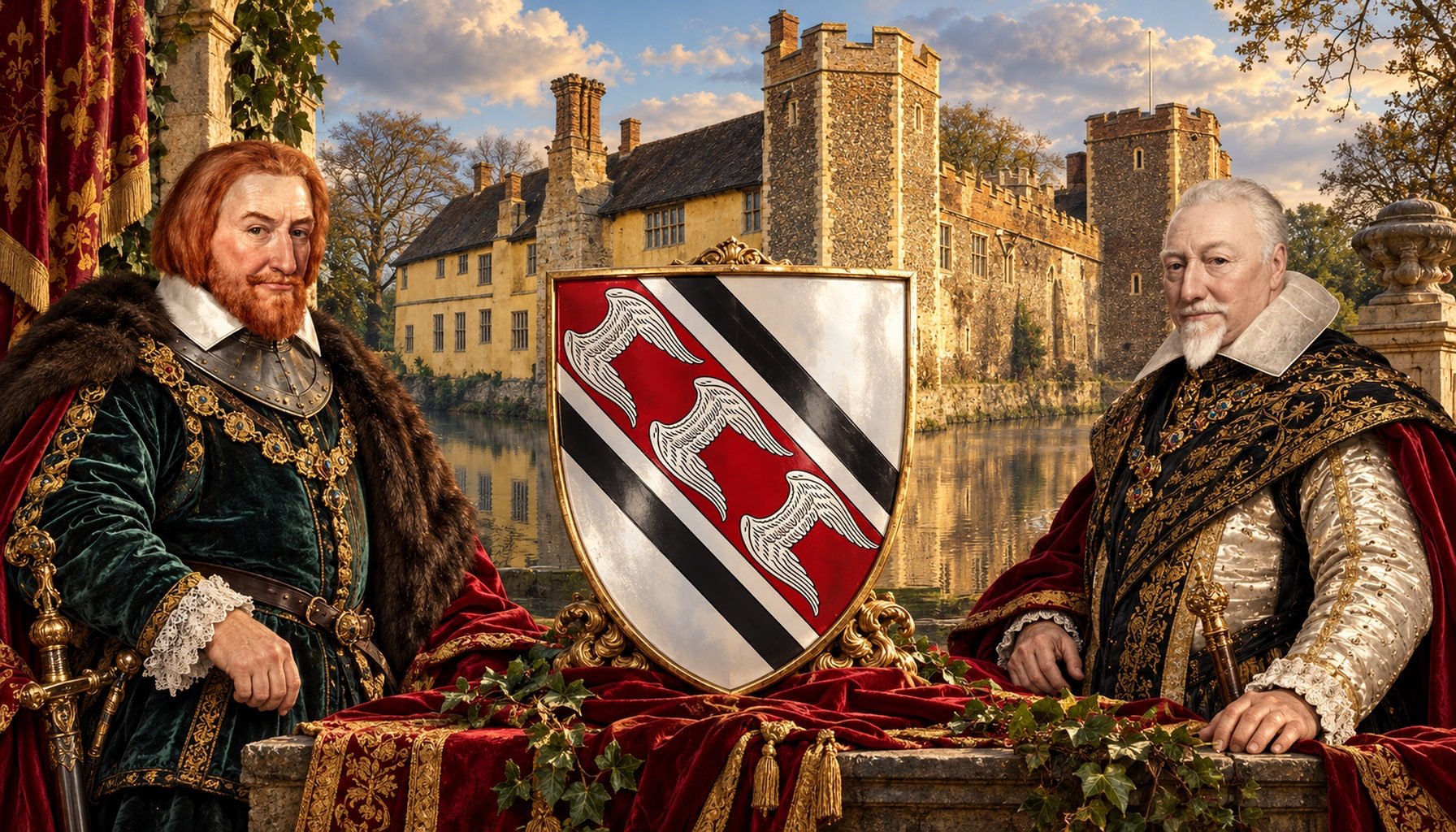
The surname is closely tied to place and to the historic north of England, with the family identity naturally anchored to Barnard Castle and the wider Durham and Tees valley world. This is a frontier country in the broad medieval sense: a region shaped by Norman lordship, church power, river routes, and the long political tension of northern England. Figures such as Sir Dorbard in 1172 and Sir Robert Baynard in 1331 help give that history human shape. They belong to the familiar story of landed families who rose and endured through feudal duty, local office, military obligation, and strategic alliances, becoming part of the durable social fabric of England's regional elite.
Read more about the House of Barnwell
Barnard Castle is the family's great location anchor, and it is no small thing that the place itself still speaks so loudly. The town stands in County Durham above the River Tees, and its castle was established in the Norman period, later becoming one of the chief strongholds of the Balliol lords. What survives today is an impressive ruin, dramatically set on high ground over the river, with later medieval additions layered onto its earlier fortress core. Historically it mattered because this was a commanding northern site, part military watchpoint, part lordly residence, part statement in stone that power here was territorial, visible, and meant to last. The town that grew around it became a market centre and local focus for the surrounding district. Yes, it can still be visited today, and that continued presence makes it exactly the sort of place where family history stops being abstract and becomes wonderfully physical: walls, slopes, river, skyline, and memory all in one.
Explore the Noble House of Percy
For the DNA side of the story, the Barnard line is tagged here with I1a10a, and there are a number of related or linked ancient samples carrying that broader paternal signature across time and region. These include Medieval England Cambridge St Johns Hospital (ATP_PSN_351), Nordic Bronze Age Denmark Sjaelland Magleo (NEO590), Thuringii Tribe Germany Obermoellern (OBM052), Early Medieval Croatia Velim-Velistak (VEM059), Thuringii Tribe Germany Deersheim Saxony-Anhalt (DRH024), Danii Tribe Denmark Sjaelland Kalundborg Simonsborg (CGG106718), Early Nordic Bronze Age Denmark Lolland Uglemose (CGG106712), Nordic Tribe Sjaelland Denmark Bredebjerggord 8 (CGG106822), Iron Age Denmark Jutland Hestehavens mose (CGG106524), Iron Age Denmark Asnos (CGG107392), Viking Age Trelleborg Kingdom of Denmark (CGG106823), Viking Age Denmark Bogovej (CGG106776), Pre-Vendel Sweden Oland Stoerlinge (CGG024145), Viking Age Sigtuna Sweden (urm035), Pre-Vendel Age Oland Sandby Borg Sweden (snb013), Stora Kronan Shipwreck Battle of Oland Sweden (kro008), Gothic Kecskemet-Mindszenti Transtisza Hungary (A181017), Dark Ages Baiuvarii Tribe Bavaria (AED249), Viking Age Hessum Funen Denmark (VK316), Danish Viking Clan St. Brice Massacre Oxford (VK144), Viking Age Bogovej Langeland Denmark (VK367), Viking Age Staraya Ladoga (VK409), and Ollsjo Battleaxe Sweden (oll009). These are best understood as related reference points rather than proof of direct descent: they show the broad historical world in which an I1a10a paternal signature appears, stretching from Bronze Age Scandinavia to early medieval England and the wider North Sea and continental Germanic sphere.
Explore Anglo-Saxon migration DNA
The House of Barnard is a fine example of how English family heritage works: a surname bound to place, a landscape marked by estate identity, and a reputation built through public service over generations. If you have Barnard lines in your family, or simply want to see whether your DNA connects with this house or with the related I1a10a ancient samples, you can upload your DNA to MyTrueAncestry and explore the deeper story behind your ancestry.


Comments