The House of Anker

– 2 min read


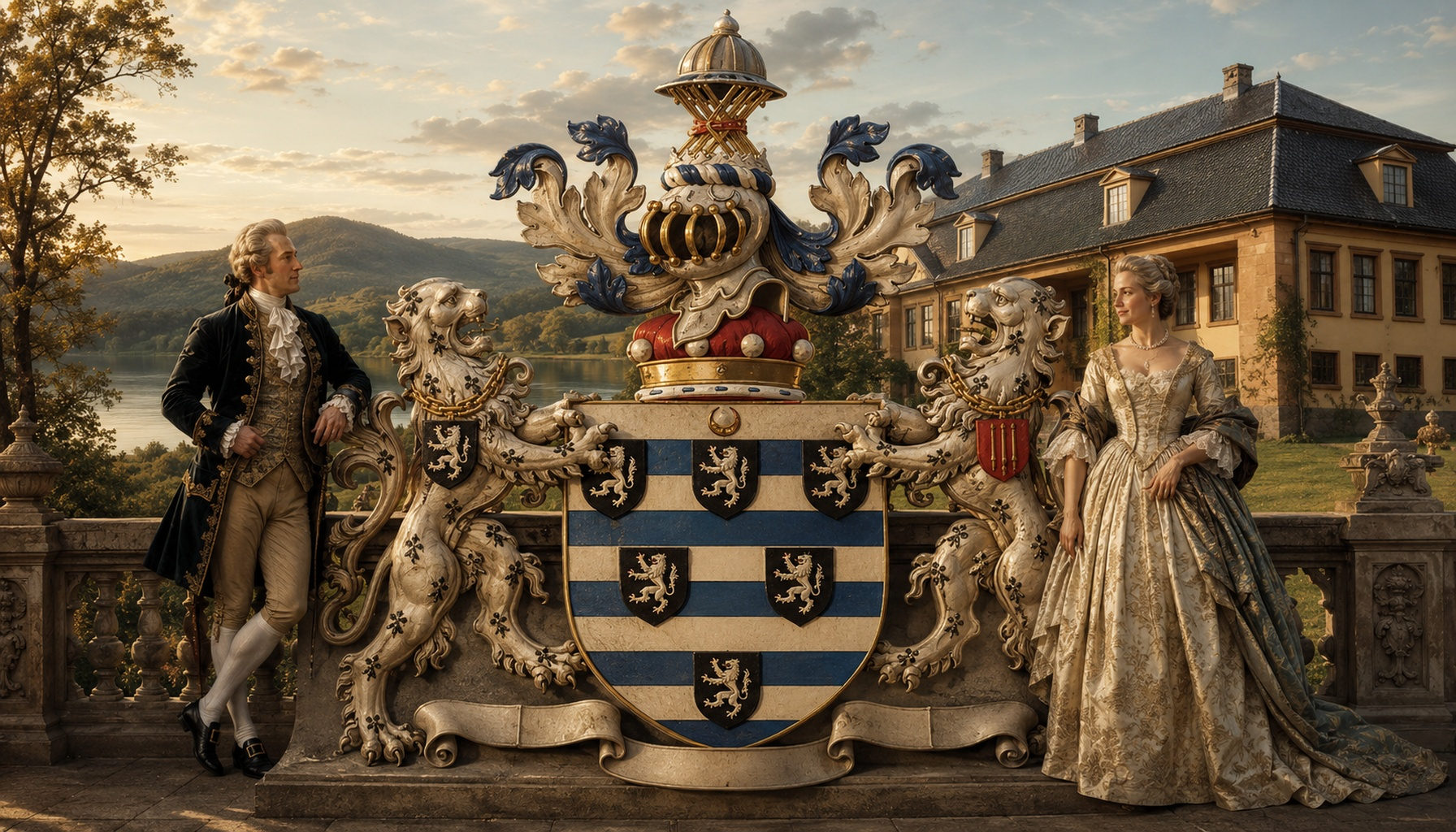
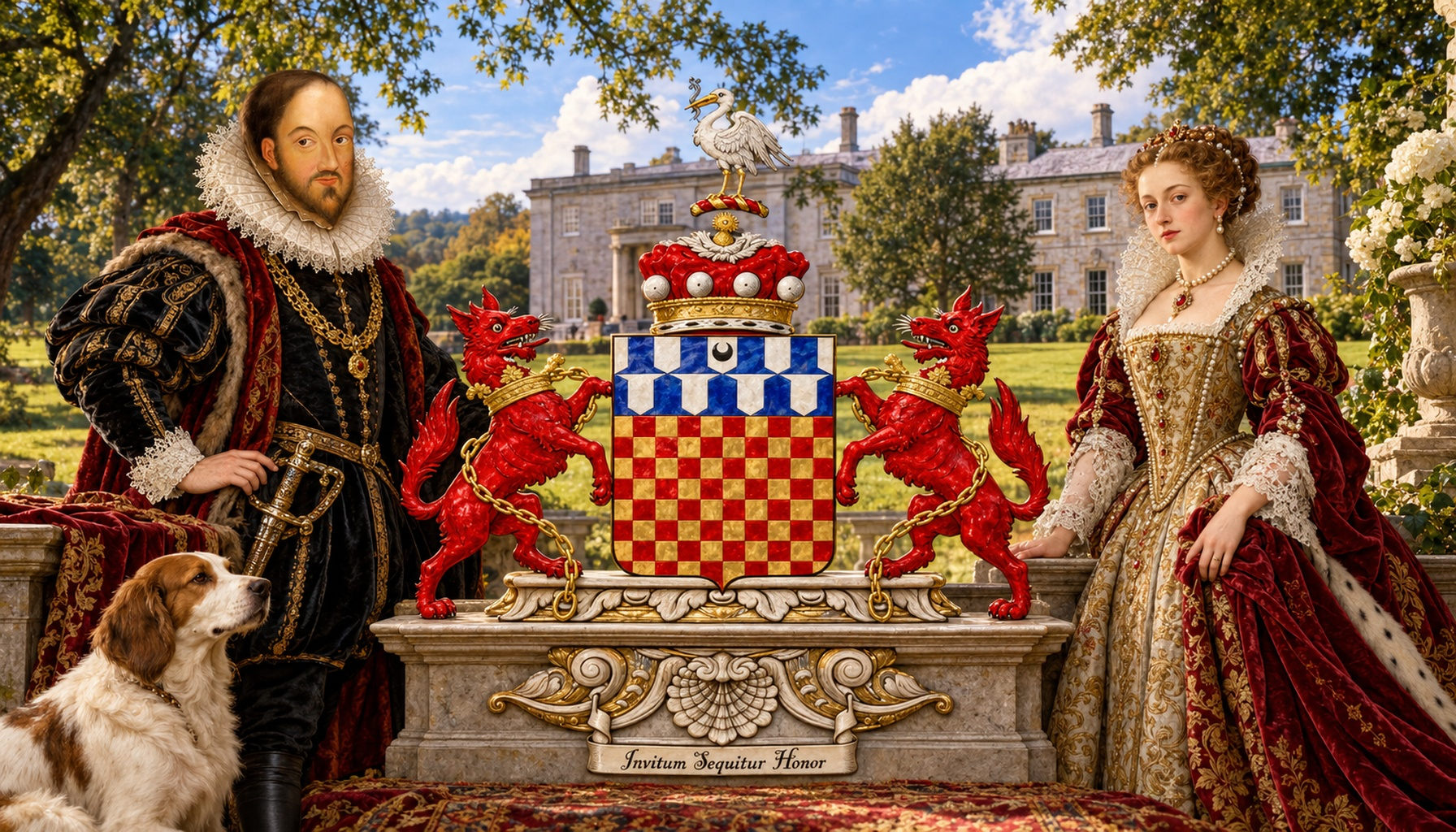
The House of Anker was a Scandinavian noble family house closely associated with Denmark and Norway, rooted in that busy northern world of harbors, customs houses, counting rooms, estates, and royal service. Their primary linked haplogroup is I1a2b3a2a2, a branch that sits comfortably in a wider Scandinavian and North Sea story. In historical terms, the Ankers were not simply grand names on paper. They belonged to that practical northern elite who rose through trade, shipping, administration, landholding, and public duty, building status not only from birth but from usefulness, wealth, and continuity.
The family emerged from a Danish and Norwegian setting shaped by the long union of the two kingdoms, where ambitious merchant and official families could move between Copenhagen and Norwegian commercial life with remarkable ease. The earlier form Ancher appears in the record, with figures such as Erich Olufsen Ancher (1644-1699), who belongs to the formative generations of the house, and later Christian Ancher, born in 1745, who stands within the family's mature period of influence. What makes House Anker interesting is that it represents a distinctly Scandinavian family-house pattern: regional roots, maritime horizons, estate identity, civic participation, and the careful preservation of lineage memory across generations.
Read more about the Galtung Family
A key location anchor for the family is Palaet in Copenhagen, known in Danish as Palaeet, a fine eighteenth-century mansion in the Frederiksstaden district. Built in the 1750s for the wealthy merchant and royal official Hans Henrik de Hvistendahl, it later became strongly associated with the Anker circle through elite social and political life in the Danish-Norwegian capital. This is exactly the kind of building that helps make sense of families like the Ankers: not a lonely castle on a crag, but an urban palace tied to government, commerce, diplomacy, and cultivated society. In later years the building also gained royal associations, which only underlines the social world in which houses like Anker operated. Better still, it still stands in central Copenhagen and can be visited from the outside as part of the historic cityscape, making it a very tangible stop for anyone tracing Scandinavian noble and mercantile heritage.
Explore the Royal House of Bernadotte
From a DNA perspective, the Anker family's primary linked haplogroup, I1a2b3a2a2, belongs to a broader northern European paternal landscape that appears in a range of ancient contexts rather than in one single neat line. Related or linked samples include GOX287 from the Gallic Triboci area at Goxwiller in the Grand Est region of France; I20638 from post-Roman North Yorkshire in the Vale of Pickering; CGG106702 from Neolithic Karlstrup in Denmark; CGG107534 associated with the Danii tribe in Denmark at Egedal Mose; I20639, I20646, I20661, and I20656 from the Early Anglo-Saxon cemetery at West Heslerton in Yorkshire; and I20637 from post-Roman Worth Matravers in Dorset. These do not prove direct descent from or to the Anker family, and we should be careful about that. What they do show is that the haplogroup linked to House Anker belongs to a deep and mobile story stretching across Scandinavia, the North Sea zone, and adjacent parts of western Europe over many centuries.
If the House of Anker speaks to your own family story, upload your DNA to MyTrueAncestry and see whether you match the family or related ancient DNA samples linked to haplogroup I1a2b3a2a2. It is a wonderful way to place your ancestry in the larger human story of Scandinavian ports, estates, migrations, and memory.
Comments