The Galtung Family
– 2 min read


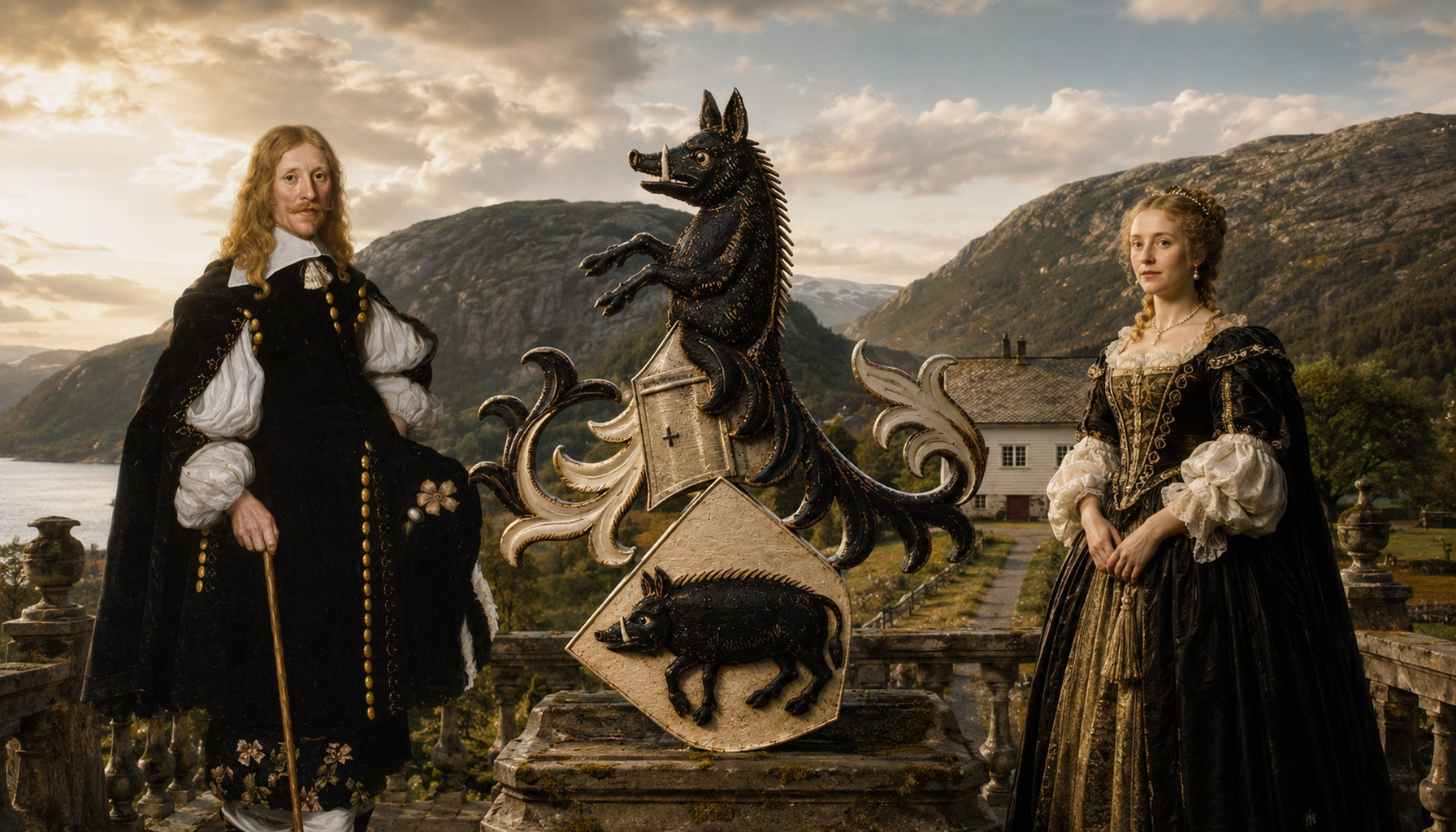
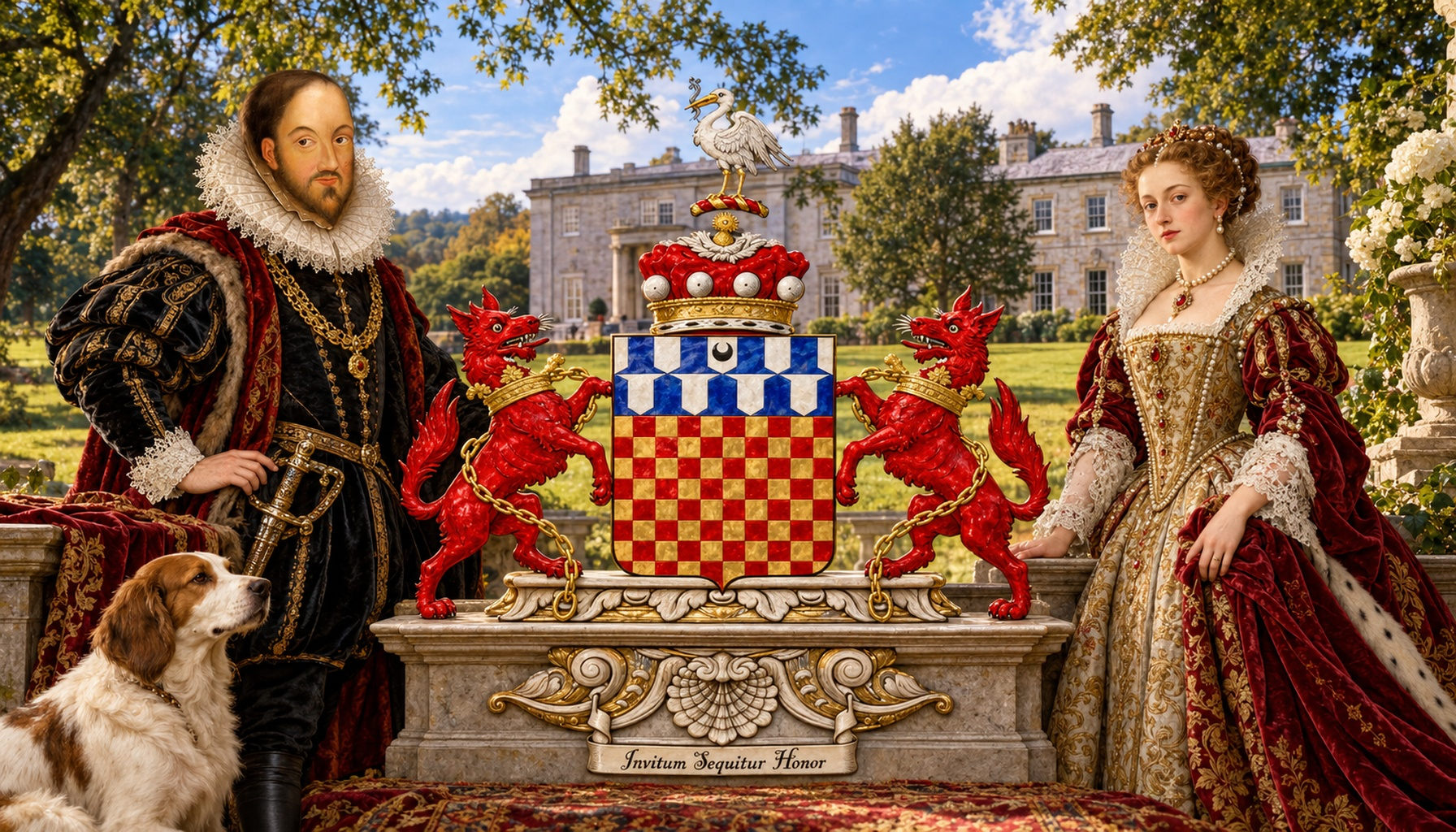
The Galtung family, or Adelslekta Galtung, was one of Norway's old noble lineages, rooted in the western fjord country and remembered not as a royal house but as a family of land, office, heraldry, and long local standing. Their primary linked haplogroup is R1b1a1b1a1a2b1c2b1a2, a paternal lineage with a deep European history. In historical terms, the Galtungs belong to that very Scandinavian pattern where power often sat not only in crowns and capitals, but in estates, marriage networks, district influence, and the stubborn preservation of family identity across centuries.
The family emerged from the noble landscape of medieval and early modern Norway, especially in western Norway, where control of land and recognized lineage could matter as much as courtly glamour. This was a world of fjords, regional law, church patronage, and service to crown and realm, where a family name could become a durable political tool. Figures such as Laurits Johanneson (1519-?) and Lauritz Galtung (1615-1661) help anchor the lineage in the written record, showing the family's continuity through generations that navigated property, office, and noble memory in a changing Norwegian state.
A key location anchor for the family's story is Baronie Rosendal in Kvinnherad, in Vestland, magnificently placed between fjord, mountain, orchard, and manor landscape. Rosendal is famous as the only barony in Norway, established in 1678 when the estate was elevated to baronial rank for the family circle connected through marriage and inheritance around Ludvig Rosenkrantz and Karen Mowat. The estate grew into far more than a residence: it became a social and political symbol of noble life in Norway, with its manor house, formal gardens, surrounding lands, and an aristocratic culture that was both local and unmistakably European. In other words, Rosendal is exactly the kind of place that helps us understand families like the Galtungs: not floating abstractions called nobility, but people tied to land, buildings, papers, coats of arms, tenants, kinship, and memory. Happily, it can still be visited today, and that makes it one of those rare sites where the texture of Norway's noble past is still physically present rather than merely archived.
Read more about the Aminoff Family
From a DNA perspective, the Galtung family's primary linked haplogroup, R1b1a1b1a1a2b1c2b1a2, belongs to a wider web of ancient paternal lineages found across Europe and European-descended communities. Related or linked ancient samples include Historic St. Mary City Chapel Field Cemetery, Maryland (I15299), Gallic France Sequani Tribe Parancot (CGG023702), Early Iron Slovenia Dolge Njive Hill Fort (I5685 and I5687), Pre Illyrian Bronze Age Croatia Bezdanjaca Cave (I18072), Iron Age Hillfort Croatia Kriz Brdovecki Sava Valley (I5725), and Heneti Italic Tribe Grottuna dei Covoloni del Broion, Italy (BRC003). These do not prove direct descent from any one ancient individual to the Galtung line. What they do show is that this paternal branch sits inside a very old European story stretching from Bronze Age and Iron Age communities to later historic populations, a reminder that even a distinctly Norwegian noble family was part of much deeper continental human movements.
If you have Galtung ancestry, Norwegian roots, or simply a taste for the way family history and deep ancestry intertwine, this is exactly the kind of lineage worth exploring. Upload your DNA to MyTrueAncestry to see whether you match the Galtung family story or any related ancient DNA samples linked to haplogroup R1b1a1b1a1a2b1c2b1a2.
Comments