Clan Vans

– 3 min read


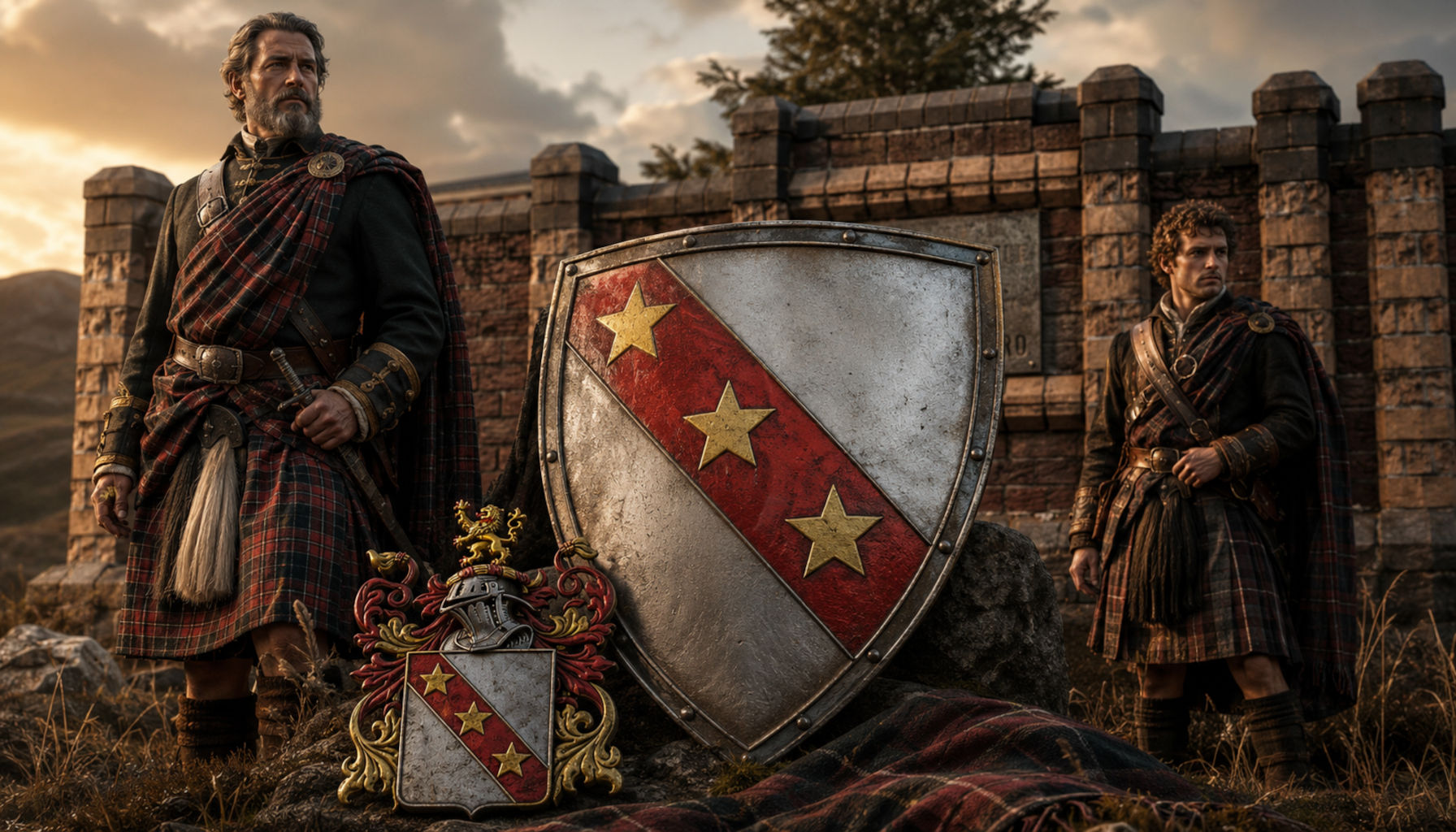
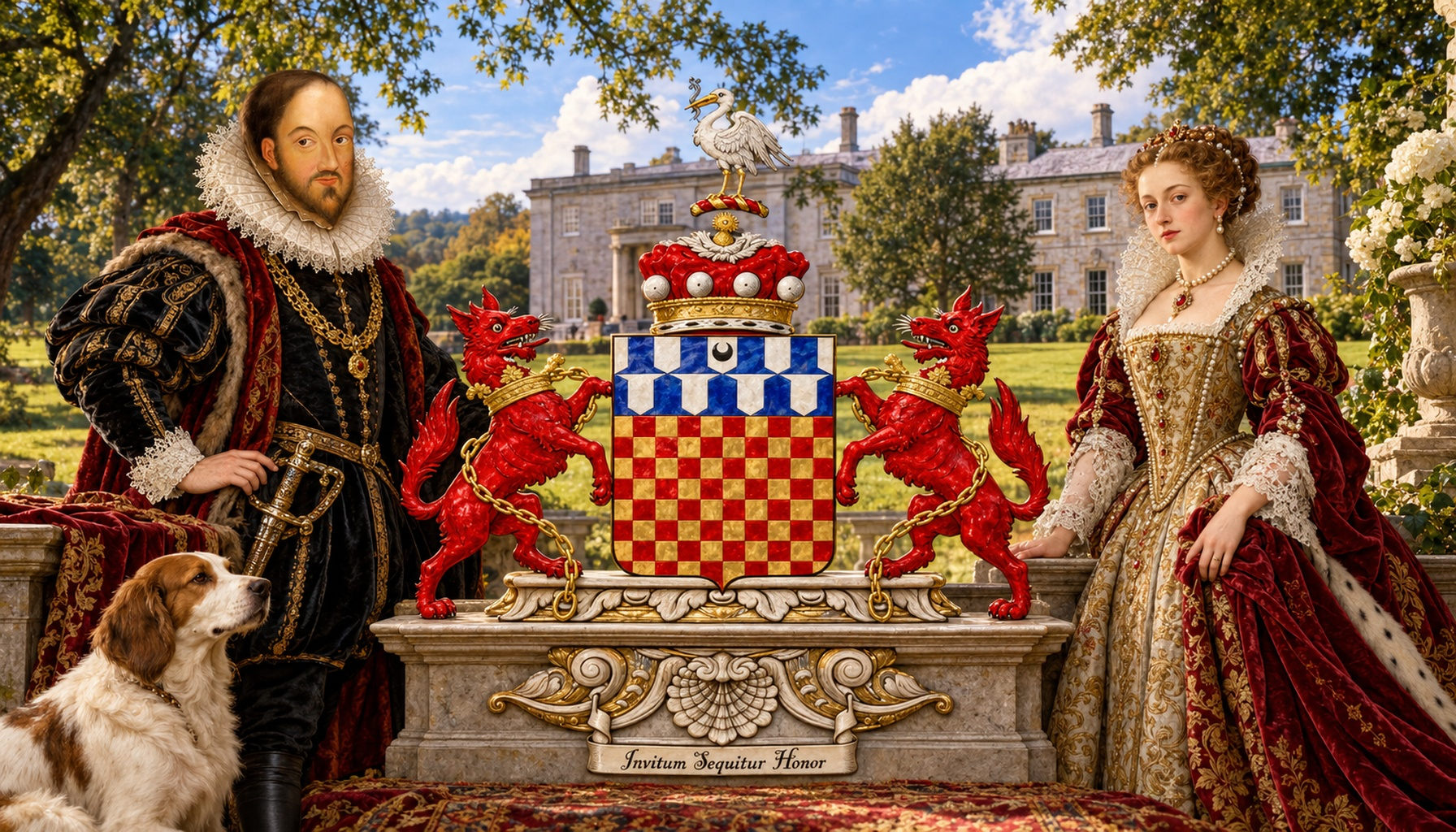
Clan Vans, often linked with the later Vance spelling, was a Scottish Lowland armorial family whose identity grew out of place, service, and continuity rather than grand royal myth. Their story belongs to that very Scottish pattern in which a surname was not simply a label but a marker of local standing, remembered duty, landholding, and inherited reputation. In this case the family is especially associated with East Lothian and with the old territorial world around Dirleton, where name and place were closely tied together. The primary haplogroup linked with this family tradition is R1b1a1b1a1a2c1a2a2a1a, a lineage with deep roots across Britain and western Europe.
The Vans name appears in medieval records in forms such as Vaus or de Vaus, reflecting the wonderfully untidy spelling habits of the age. One named figure is William de Vaus of Direlton in 1384, a reminder that this was a family established enough to be recorded in connection with land and locality. What matters historically is not the fantasy of princely status, but the durable reality of a Lowland family maintaining itself across generations through regional service, heraldry, and social presence. Clan Vans is, in that sense, a fine example of how Scottish family history was built: not only by battles and titles, but by continuity.
Read more about the Vaux family
The great location anchor for the Vans story is Dirleton Castle in East Lothian, one of those places where Scottish history seems to sit in layers before your eyes. The site began as a Norman-style stronghold in the 13th century, later expanding into a formidable medieval fortress with a massive gatehouse, curtain walls, towers, and later domestic ranges that show how a castle could shift from war machine to noble residence. Dirleton was fought over during the Wars of Independence, besieged more than once, and rebuilt and adapted across centuries, so its stones carry the marks of both violence and long habitation. Set not far from the coast and within reach of Edinburgh, it stood in a region that mattered strategically as well as locally. For a family associated with Direlton or Dirleton, this was not just scenery; it was the social and political landscape in which reputation was made. The castle survives today as an impressive ruin under care and can still be visited, which gives modern descendants and the simply curious a rare chance to stand in the very environment that shaped the name.
The haplogroup R1b1a1b1a1a2c1a2a2a1a linked with Clan Vans belongs to a wider ancient paternal landscape seen in Britain and beyond, and that is where the DNA side becomes properly interesting. Related or linked ancient samples include several Celtic Durotriges individuals from Duropolis at Winterborne Kingston in England, such as WBK12, WBK20, WBK29, WBK41, WBK05, WBK30, WBK43, WBK06, WBK08, WBK18, and WBK191, alongside finds from Celtic Briton East Kent, Iron Age Somerset, Iron Age Orkney, Bronze Age Orkney, Bronze Age Wiltshire, Bronze Age Bedfordshire, South Lanarkshire, Rathlin in Copper Age Ireland, and later Roman, post-Roman, and medieval contexts stretching from Dorset and the Faroes to Belgium, Germany, Austria, Portugal, Croatia, France, and beyond. None of this proves direct descent from any named ancient individual, and it would be quite wrong to pretend otherwise. But it does place the Vans-associated lineage inside a broad and very old genetic story connected to the populations of Iron Age and later Britain, with echoes across the Atlantic façade and parts of continental Europe.
Explore Roman and early medieval Britain DNA
If you carry the Vans or Vance name, or suspect Lowland Scottish roots, this is exactly the kind of heritage that becomes richer when history and DNA are read together. Uploading your DNA can help you see whether you match Clan Vans, the haplogroup R1b1a1b1a1a2c1a2a2a1a, or related ancient samples from Britain and the wider European past, turning an old surname into a deeper historical journey.
Comments