The Vaux Family

– 3 min read


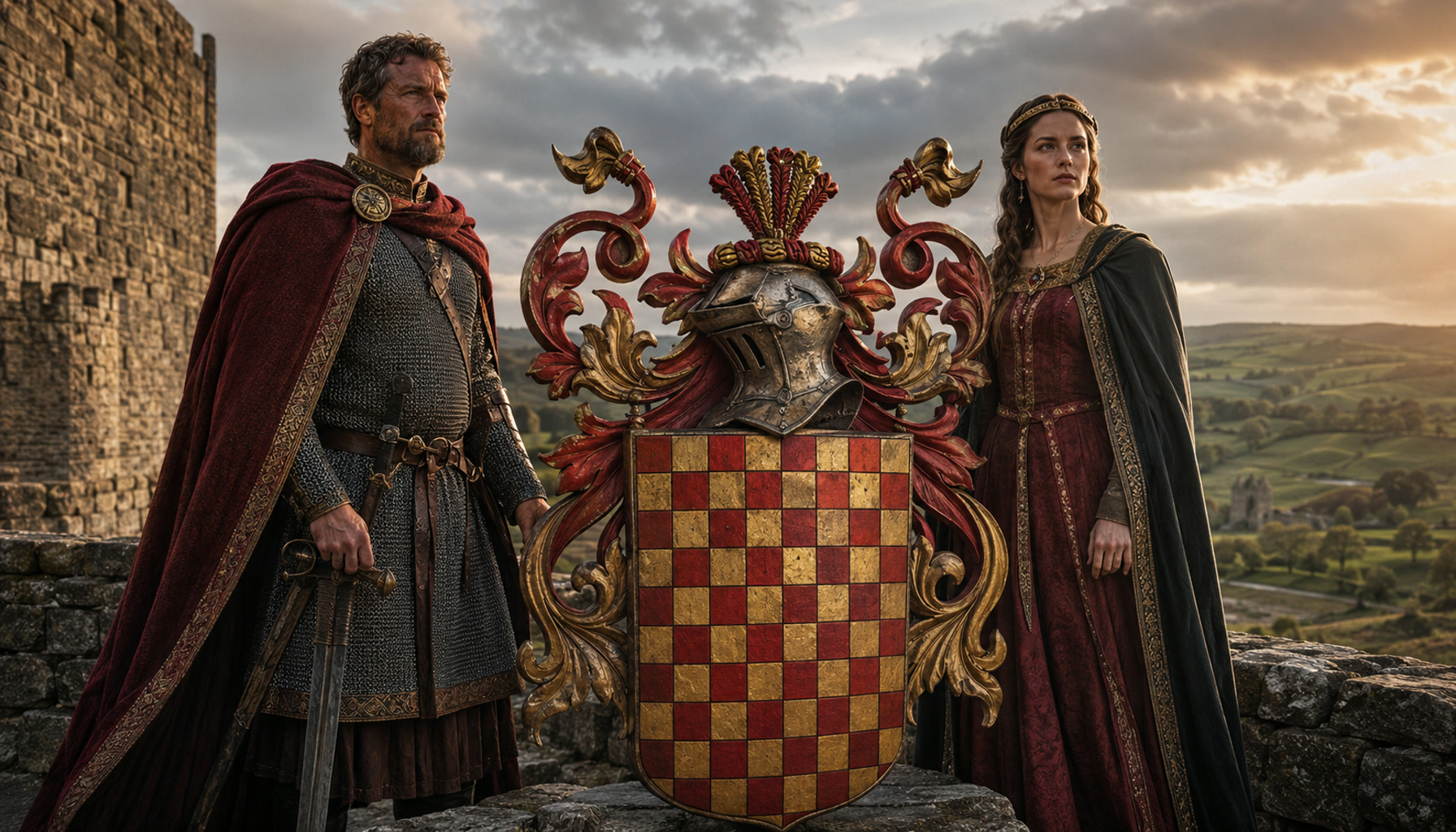
What makes the Vaux story interesting is not just that they were noble, but how recognisably Norman their rise was. This was a family pattern built on service first and identity second. A knight acquires land, a family holds a manor, a marriage brings influence, a son gains office, a grandson acquires a title, and before long what began as martial utility looks like ancient aristocracy. The Vaux family became associated with baronial standing, castle tenure, ecclesiastical patronage, heraldry, and the practical business of ruling people through land. Among the better known later figures are Sir William Vaux of Harrowden, recorded in 1471, Nicholas Vaux, 1st Baron Vaux of Harrowden, who lived from 1460 to 1523 and rose under the early Tudors, and Thomas Vaux, 2nd Baron Vaux of Harrowden, 1509 to 1556, remembered not just as a peer but also as a poet. Their careers remind us that noble families did not stand still: they moved from the battlefield and feudal levy into court, parliament, religion, letters, and the elaborate theatre of Tudor power.
Explore The House of de Warenne
The Vaux family is especially anchored at Great Harrowden in Northamptonshire, where Harrowden Hall became the great visible statement of their landed identity. The present hall, known as Great Harrowden Hall, is largely an Elizabethan and later house, long associated with the Vaux of Harrowden and built on the footprint of earlier manorial power. It stands in a village setting that still carries the feel of an old estate centre, with church, hall, and settlement closely tied together in the traditional way. This matters because noble history is never just a list of names. It is topography, stone, patronage, and display. Harrowden Hall was the kind of place from which authority was seen, exercised, and remembered. The hall is a Grade I listed building and remains one of the most important historic houses in the area. As a historic exterior and heritage site within Great Harrowden, it can still be seen and visited at least from the surrounding village context, though access to the house itself may be limited because it is not a standard full-time public museum in the way a major state property is.
Read more about The House of Neville
For those interested in the deeper paternal background linked with the Vaux family haplogroup I2a1b1a2b1a2a3b1a1, there are a number of related ancient DNA samples that help sketch the broader prehistoric and early medieval landscape in which such lineages circulated. These include Medieval Belgium Sint-Truiden Onze-Lieve-Vrouwekerk ST0552, Danii tribe Denmark Sjaelland Koge CGG107415, Jute Early Roman Era Denmark Jutland Bog War Alken Enge CGG019202, Iron Age Denmark Eastern Sjaelland Varpelev CGG107412, Early Anglo-Saxon Buckland Dover England BUK037, Merovingian grave Alt-Inden in North Rhine-Westphalia IND006, Anglo-Saxon Sedgeford in Norfolk SED017, and Gothic Kecskemet-Mindszenti in Transtisza Hungary A181019. To be clear, these are not being presented as direct ancestors of the Vaux family. Rather, they are related or linked carriers within the broader haplogroup story, showing how this paternal branch appears across Iron Age, Migration Age, Anglo-Saxon, Jutish, Merovingian, and medieval European settings. In other words, the DNA trail does not give us a neat little arrow pointing to one knight in Normandy. What it gives us is something more historically honest: a web of related male-line presence across the North Sea world and continental Europe from which later medieval noble lineages emerged.
Explore medieval Sint-Truiden DNA
If you are researching the Vaux family, or simply wondering whether your own paternal or autosomal ancestry touches the same Norman, Anglo-Norman, or older northern European genetic landscape, this is exactly the sort of history DNA can help illuminate. Upload your DNA to MyTrueAncestry and see whether you match the Vaux family profile or any of the related ancient DNA samples linked to haplogroup I2a1b1a2b1a2a3b1a1.
Comments