Clan Dunbar
– 3 min read


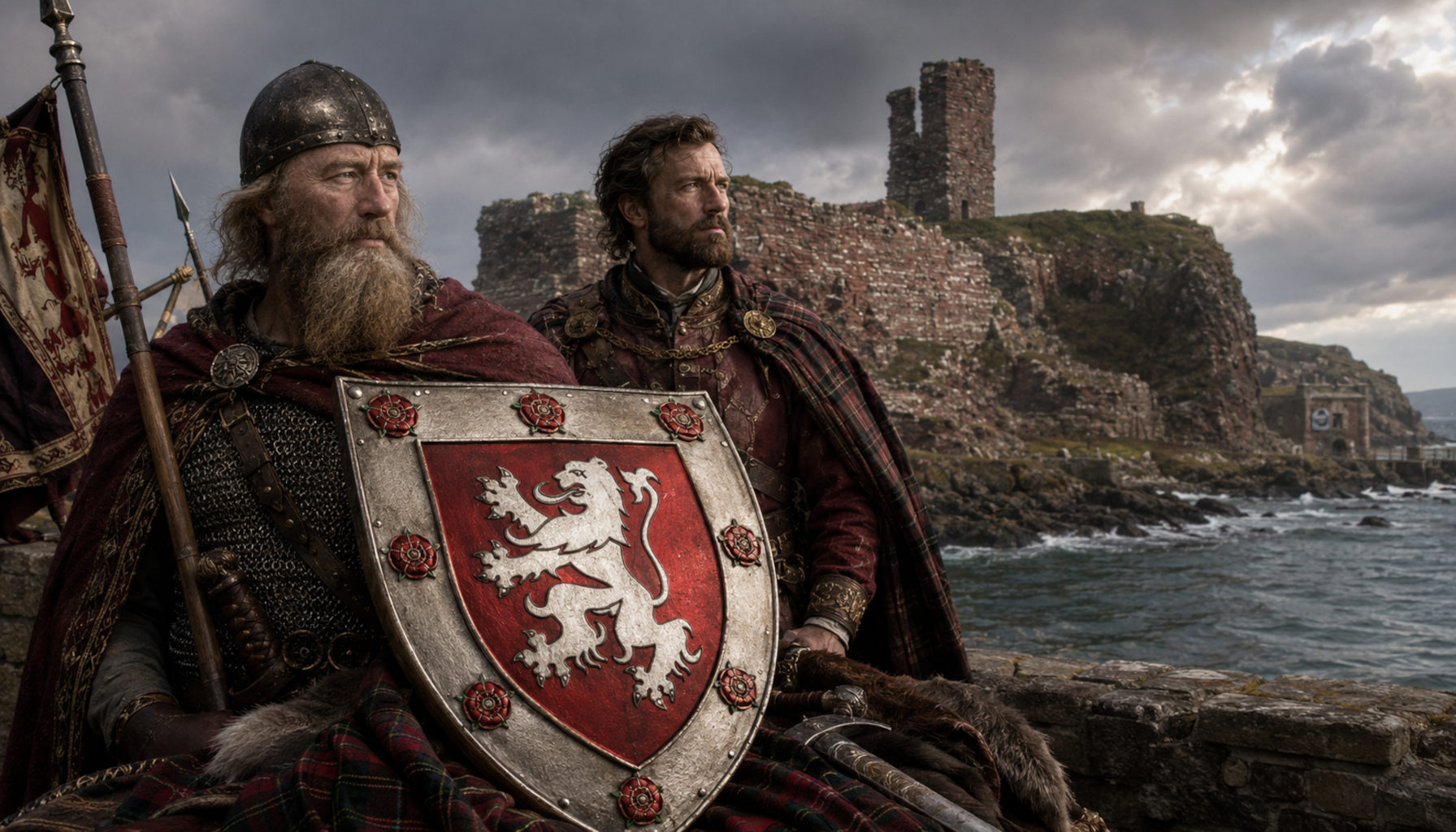
Clan Dunbar was one of the great noble families of southern Scotland, rooted above all in Lothian and the eastern Borders, and remembered for earldom rank, royal connection, military service, and long political importance. In family DNA tagging, the primary haplogroup associated here is R1b1a1b1a1a1b1a1a, a branch within the broad western European R1b world. Historically, the Dunbars belong to that very Scottish pattern in which land, title, marriage, castle power, and crown service all worked together to build a house that could endure for centuries.
The surname itself comes from Dunbar in East Lothian, and that matters, because this was not a family floating abstractly in heraldic space. It was anchored to a place on the coast, at a frontier of sea power, noble ambition, and royal politics. The early line is often linked to Gospatric, Earl of Northumbria, active in the late 11th century and associated with the year 1073 in Scottish history. From that turbulent post-Conquest world, where northern England and southern Scotland were bound up in exile, warfare, and shifting allegiance, the Dunbars emerged as a family of real territorial consequence. Over time they became associated with the Earls of Dunbar and March, standing close enough to kings to matter, and independent enough to be dangerous when politics turned sour.
Dunbar Castle was the great stone anchor of the family story, dramatically placed on a rocky outcrop at Dunbar on the North Sea coast. Its position made it formidable: part fortress, part symbol, part statement that this family intended to be seen. The site had very old importance, and the medieval castle became one of the strongest fortifications in Scotland, repeatedly caught up in sieges, wars, and the hard business of border politics. It was associated not only with the Dunbars but with the wider struggles of Scottish kingship, Anglo-Scottish conflict, and later national upheaval. Though much of the castle is now ruinous, the remains and the site at Dunbar are still known and can be visited from the surrounding area, with the surviving fragments and coastal setting still giving a strong sense of why this place mattered so much. Even in ruin, it has that peculiarly British habit of looking both battered and impossibly self-confident.
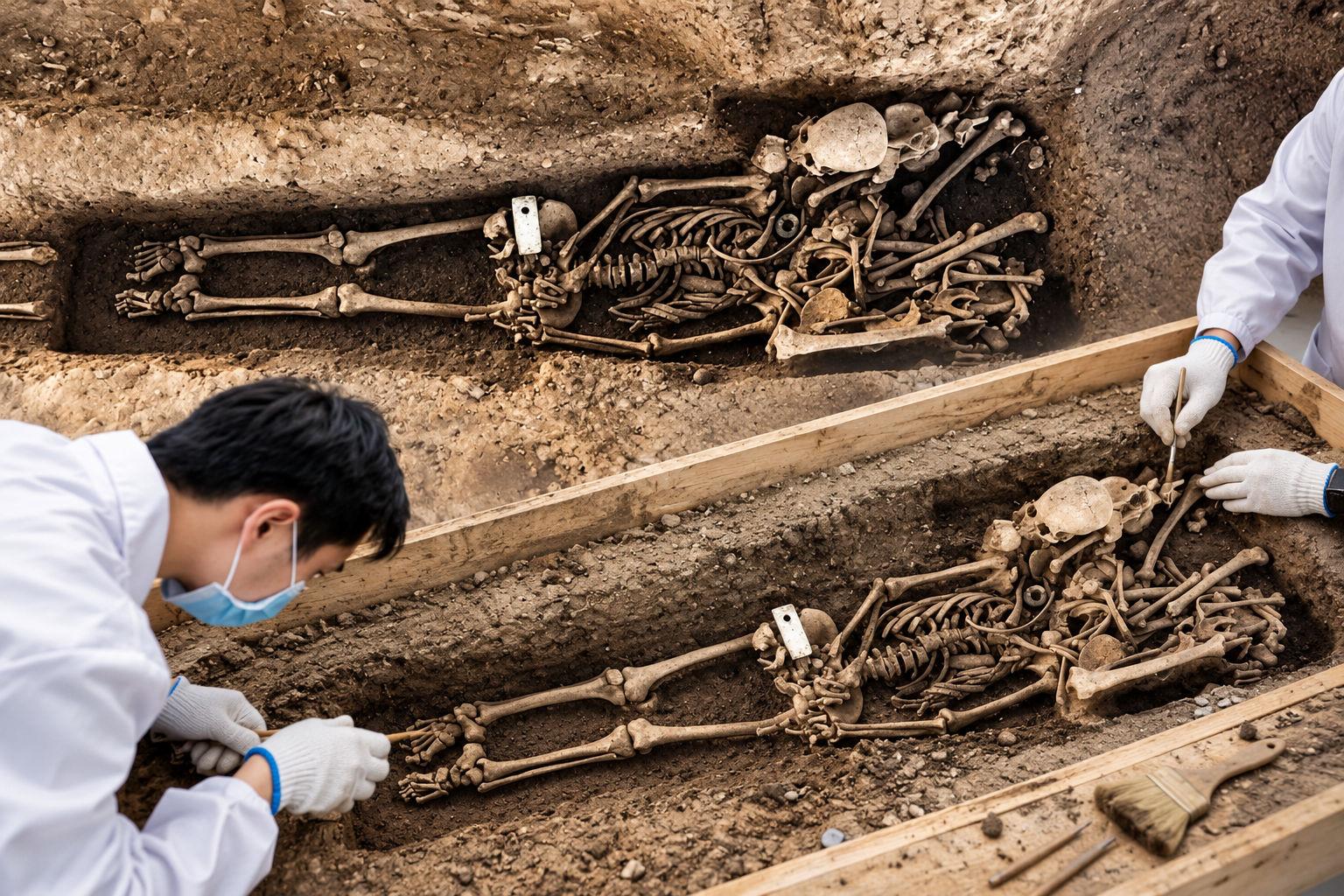
On the DNA side, the Dunbar haplogroup tag here is R1b1a1b1a1a1b1a1a, and while that does not prove direct descent from any excavated individual, it does place the family within a wider web of related ancient male lines found across northern and western Europe. Linked samples include Merovingian Period Frankish Moemlingen, Germany, sample Mln27; Medieval Vasterhus, Sweden, mbv200; Viking Age Sweden, Uppsala Gammelbyn Brstil, gam872; several Iron Age and Danii-linked Danish samples from Sjaelland including CGG107411, CGG107419, CGG107489, CGG107495, CGG106728, CGG019442, CGG019091, and CGG107387; Pre-Viking western and northern Norway samples CGG107007 and CGG107015; Scania, Sweden, CGG105928; the Stora Kronan shipwreck sample kro001; Early Anglo-Saxon Cambridgeshire sample HAD006; Viking Age Orkney VK204; Iron Age warrior VK418 from Norway; Balladoole on the Isle of Man VK170; Ridgeway Hill Viking invaders VK259 and VK449; and a Viking Gaelic boat burial in Iceland, VDP-A7. Taken together, these linked finds evoke the larger world from which a family like Dunbar emerged: North Sea movement, Anglo-Scottish frontier politics, Scandinavian contacts, and the long blending of elite and regional lineages that shaped medieval Britain.
Explore the Noble House of Percy
If you have Dunbar roots, or simply suspect your family story runs back into the old noble landscape of southern Scotland, uploading your DNA can be a fascinating next step. MyTrueAncestry lets you compare your results with historic families and with ancient DNA samples linked to haplogroups like R1b1a1b1a1a1b1a1a, so you can see whether you match the wider genetic world connected with Clan Dunbar and its North Sea past.
Comments