Clan Urquhart
– 2 min read


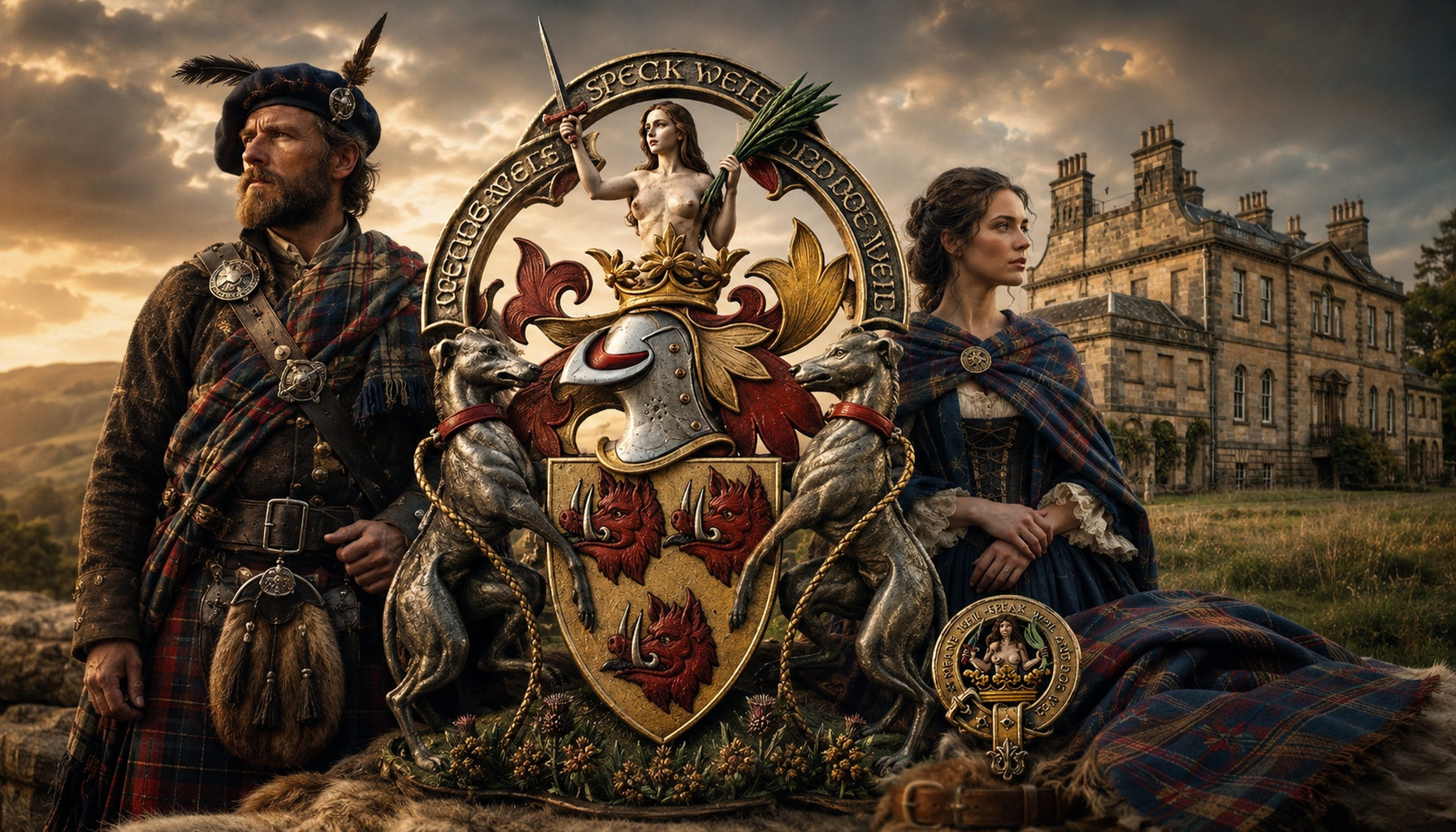
Clan Urquhart was a northern Highland family of deep territorial memory, rooted above all in Cromarty and the wider north of Scotland, with long associations that also reach toward Loch Ness and the old Highland pattern of land, kin, and local authority. Their primary linked haplogroup here is I1a1b1a1e2c4a, a paternal line found today in family DNA projects and set within a much broader northern European story. Historically, the Urquharts grew not simply as a surname but as a landed kindred: a clan whose standing rested on chiefship, public service, heraldry, and a stubborn attachment to ancestral ground.
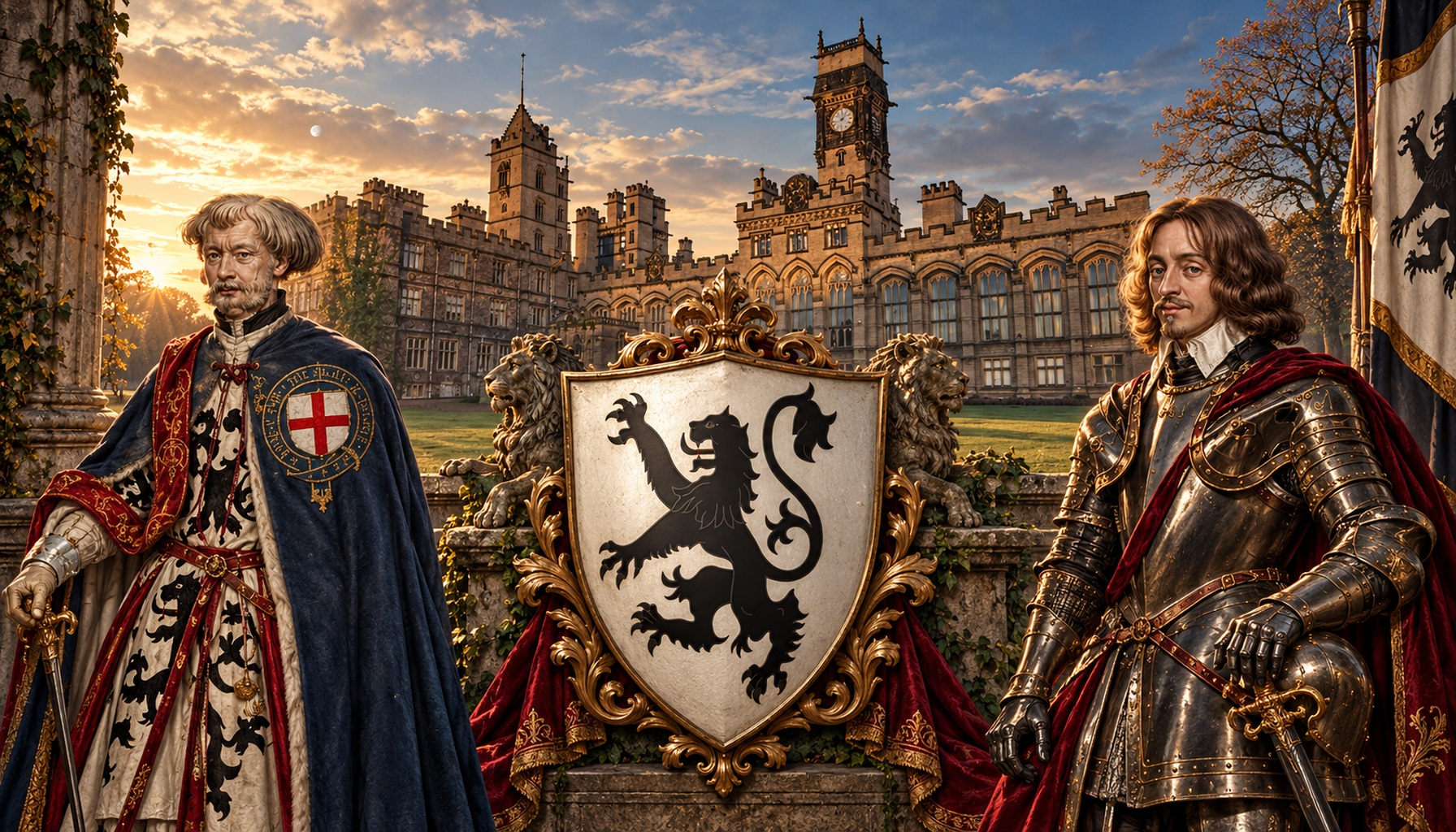
The name appears in medieval record as a territorial surname, and that is important in Scotland. It tells us that this was a family shaped by place as much as pedigree. In the Highlands, identity was rarely abstract. It was tied to who held what, who answered to whom, and which castle, parish, or district carried the family memory. Clan Urquhart fits that pattern beautifully. Figures such as William de Urquhart, High Sheriff of Cromarty, active between 1325 and 1395, show the family already embedded in royal administration as well as regional power. In other words, these were not merely people living in the north; they were part of how the north was governed and remembered.
Read more about Clan Mackenzie
One especially evocative anchor for Urquhart heritage is Castlecraig, near Nigg in Easter Ross, on the Black Isle side of the Moray Firth world that shaped so much of the clan's history. Castlecraig is a ruined tower house, generally dated to the 15th century, standing in a striking coastal position and long associated with the Urquharts of Cromarty. It is the sort of place that explains Highland family history better than a page of pedigree ever could: defensive, local, visible, and tied to the management of land and sea approaches alike. Its ruinous state today is part of its force. You can still read in the stone the older language of status, insecurity, and continuity. As a historic ruin it can still be visited from the outside, and for anyone interested in Clan Urquhart it offers a very direct meeting with the family landscape rather than just the family legend.
The haplogroup I1a1b1a1e2c4a linked with Clan Urquhart belongs to a wider northern European paternal network, and ancient DNA gives that network real time depth. Related or linked samples include Iron Age Pommerania Gdansk Wielbark PCA0480, Viking Age Sweden Uppsala Enbacken enb200, Early Viking Age Hundstrup Sealand Denmark VK296, Vendel Age Saaremaa Salme II-J VK549, Vendel Age Saaremaa Salme II XXVIII VK511, and Late Medieval Cancelleria Basilica R1286. These individuals should not be presented as direct ancestors of the clan without specific proof, but they do show the broader genetic world in which this lineage moved: from Iron Age Baltic settings to Scandinavian and Viking Age contexts, and on into the medieval period. That is precisely what makes archaeogenetics so compelling. It does not hand us a neat clan tree for the first millennium. It lets us glimpse the older human background from which later families such as the Urquharts emerged.
If you carry the Urquhart name, have roots in Cromarty, Loch Ness, or the northern Highlands, or simply want to know whether your DNA connects with this family story or with related ancient I1a1b1a1e2c4a samples, you can explore it directly. Upload your DNA to MyTrueAncestry and see whether your results align with Clan Urquhart or with the wider ancient populations linked to its paternal heritage.
Comments