Clan Sempill
– 3 min read


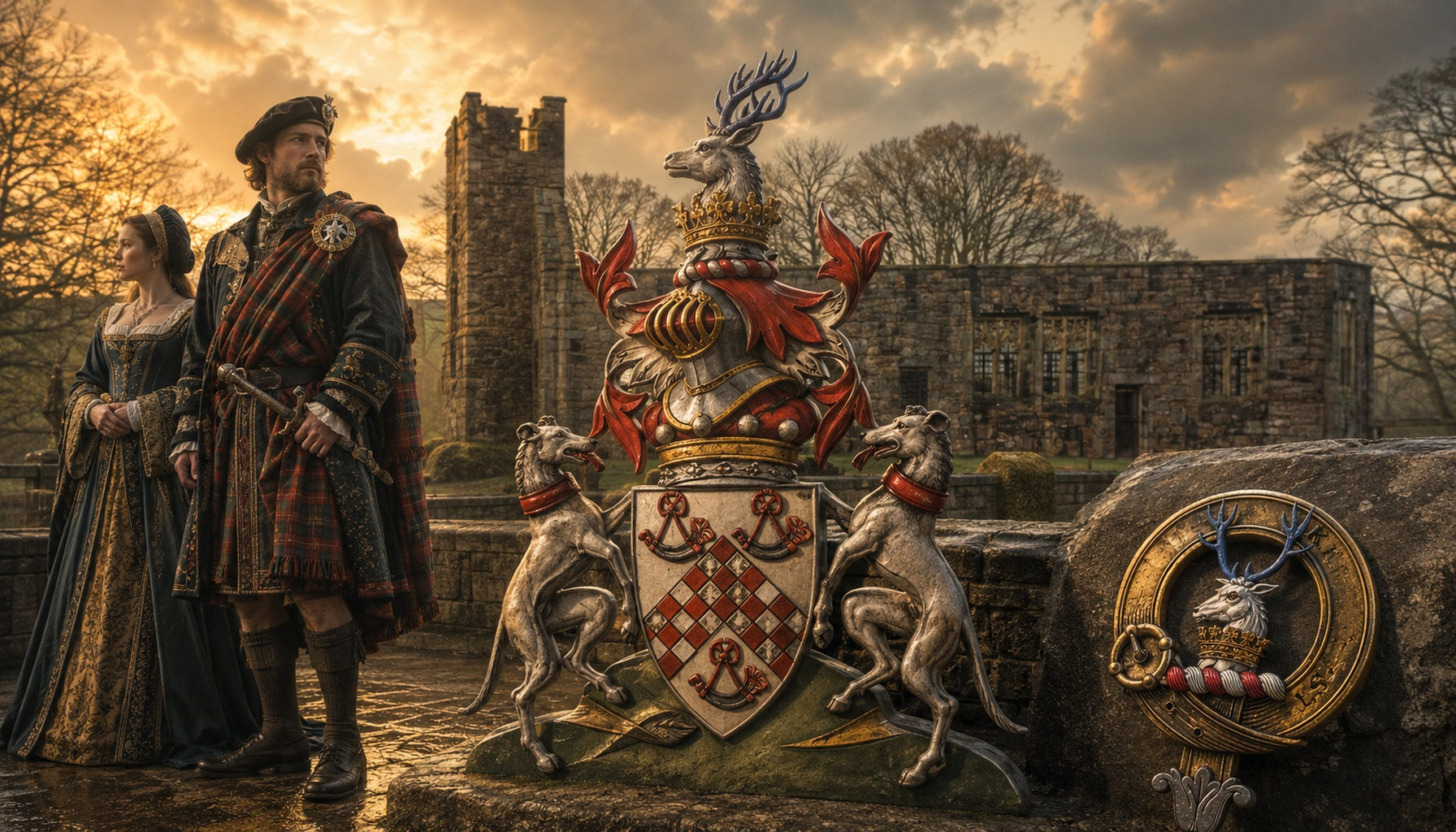
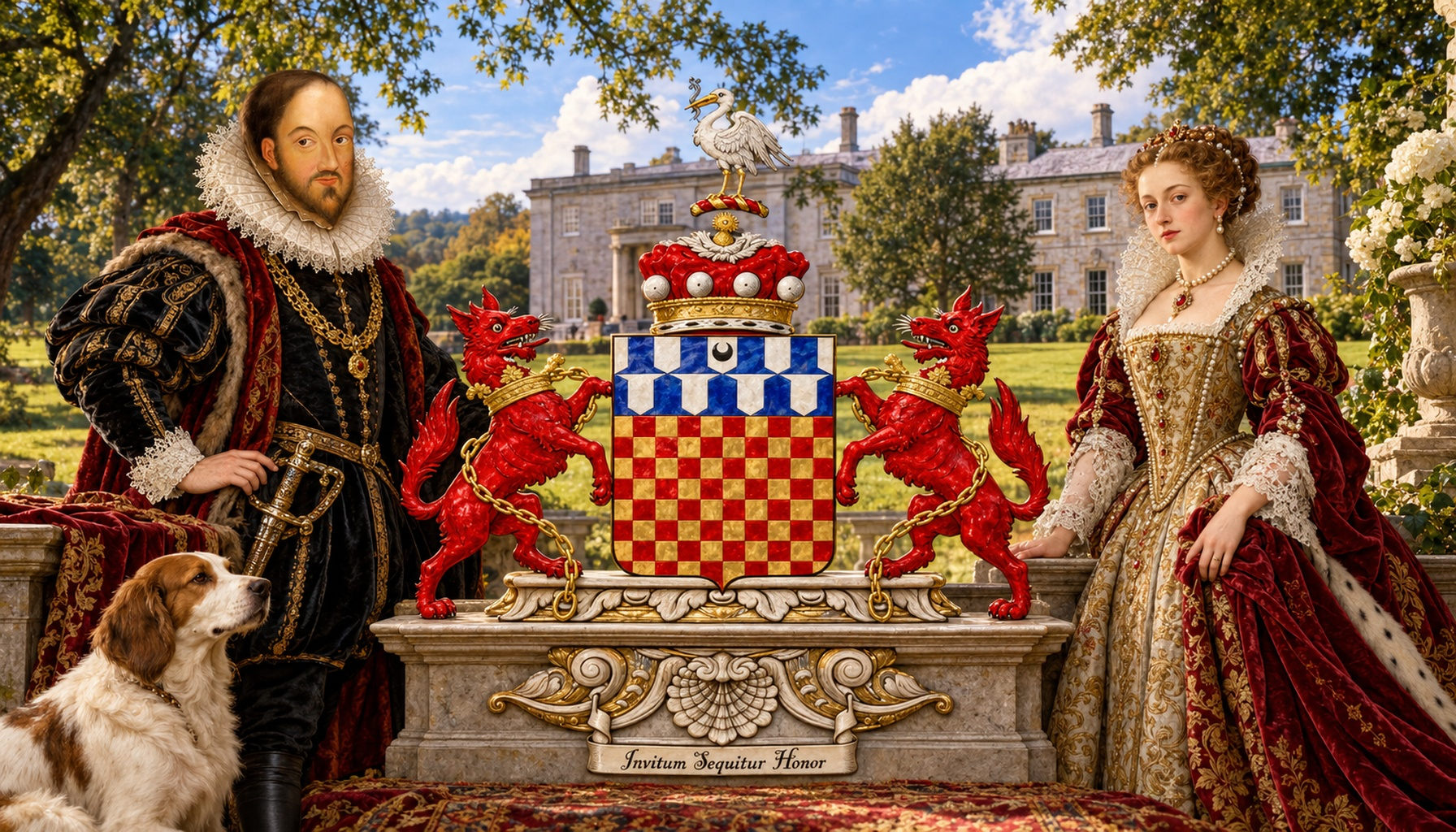
Clan Sempill was one of the old noble families of Lowland Scotland, rooted above all in Renfrewshire and remembered through titles, estates, heraldry, and long public service. In historical terms, the Sempills fit a very Scottish pattern: a landed house that grew through royal favour, marriage alliances, local authority, and national duty, while steadily building the prestige that came with aristocratic continuity. The primary haplogroup linked here is R1a1a1b1a3a1b3c1b1, a paternal line tag that places the family story into a wider genetic map alongside its documentary and heraldic past.
The name appears early in the record, with Robert de Sempill noted in 1246, which tells us something important at once: this was a family already operating in the world of charters, landed obligation, and feudal identity. Their emergence belongs to the medieval Scotland of crown service and territorial consolidation, when noble families were not simply picturesque surnames but working political units. The Sempills advanced by holding land, serving the crown, taking part in public life, and maintaining the sort of memory that aristocratic families prized deeply: who married whom, who held what, who bore which arms, and who stood where in the kingdom's hierarchy.
A useful location anchor for Sempill heritage is Craigievar Castle in Aberdeenshire, one of the most striking castles in Scotland and a perfect reminder that noble identity was always tied to place as much as pedigree. Craigievar is famous for its pink-harled exterior, its tall and fairy-tale silhouette, and its remarkably well-preserved early modern character. Built in the 17th century and rising in a cluster of turrets, corbelled projections, and steep roofs, it embodies the fortified comfort of a Scottish lairdly residence: defensive enough to declare status in unsettled times, but elegant enough to broadcast cultivated taste and social ambition. Inside, the castle has long been known for historic interiors, portraits, plasterwork, and the accumulated atmosphere of elite domestic life. It is not the original cradle of the medieval Sempills of Renfrewshire, but as a heritage touchstone it captures beautifully the world of estate culture, lineage display, and aristocratic memory in which families like the Sempills moved. Craigievar Castle has been managed as a heritage property and can still be visited, which makes it a very tangible doorway into the broader story of Scottish noble life.
From a DNA perspective, the haplogroup tag R1a1a1b1a3a1b3c1b1 links the Sempill story to a broader set of ancient and historic male-line samples across northern Europe and the North Atlantic world. These include related or linked individuals such as Historic St. Mary City Chapel Field Cemetery, Maryland, sample I15285; Germanic Tribe Denmark Sjaelland Lillevasby, CGG107454; Viking Age Halogaland Holm, CGG107030; Pre-Viking Western Norway Skongeneshelleren, CGG107009; Anglo-Saxon Sedgeford in Norfolk, SED006; Early Medieval Polhill, Kent, POH006; Viking St. Brice Massacre Oxford, VK172; Iron Age Telemark Norway, VK390; and Iron Age Islandbridge Dublin, VK546. None of this proves direct descent from any one of those men, and it should not be used that way. What it does show is that the same deeper paternal branch turns up in settings connected with Germanic, Scandinavian, Anglo-Saxon, Insular, and colonial-era populations, offering a vivid reminder that a Scottish noble family sits inside a much older web of migrations, settlements, and kin-lines that archaeology and ancient DNA are only now beginning to illuminate properly.
Explore Ancient DNA in Post-Roman Britain
If you carry Sempill ancestry, or simply suspect a link to Scotland's Lowland noble world, uploading your DNA can add an entirely new dimension to the paper trail. MyTrueAncestry lets you see whether you match Clan Sempill connections or any of the related ancient DNA samples linked to haplogroup R1a1a1b1a3a1b3c1b1, placing family tradition beside archaeology and genetics in one much bigger story.
Comments