Clan MacCarthy

– 3 min read


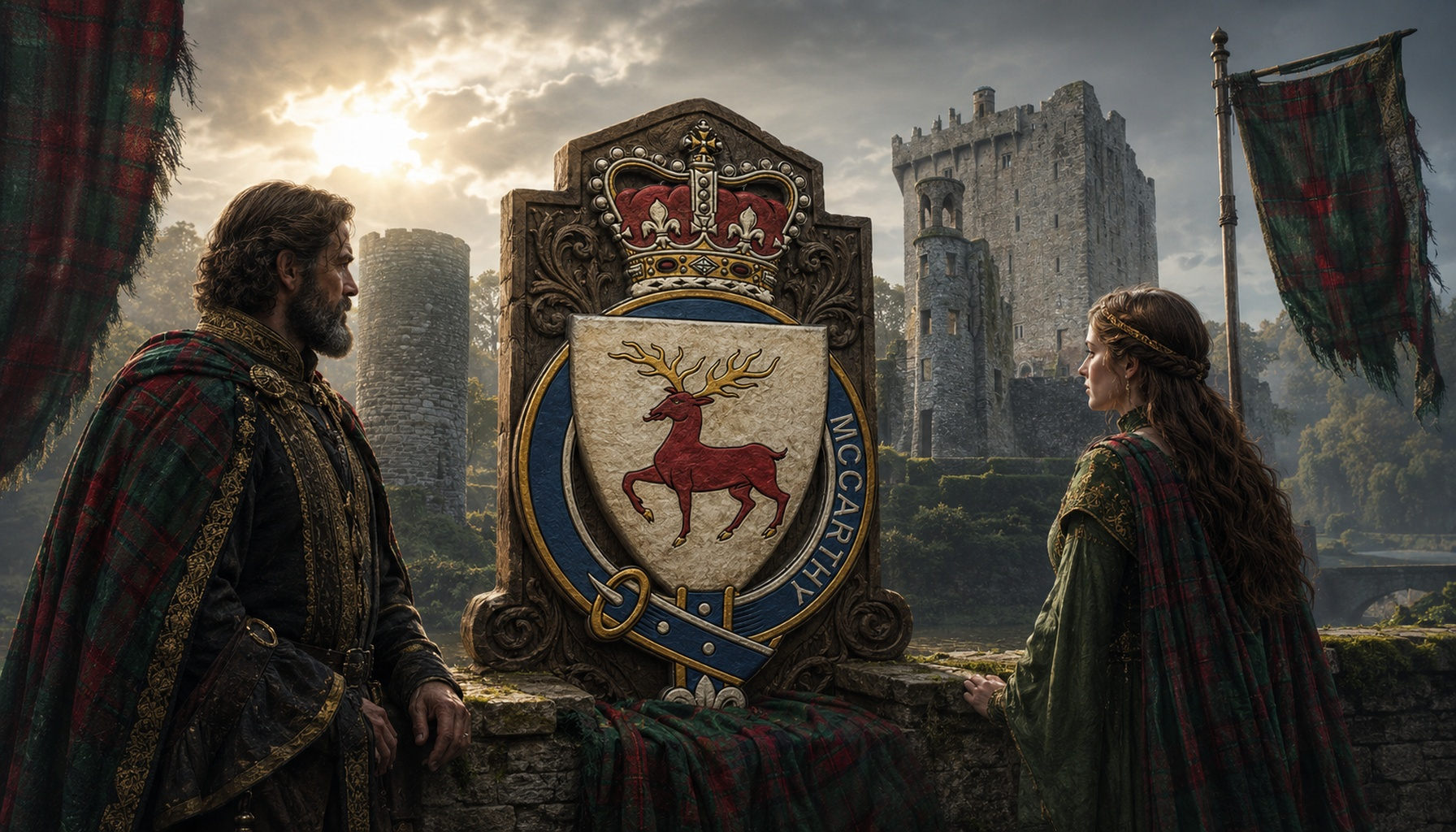
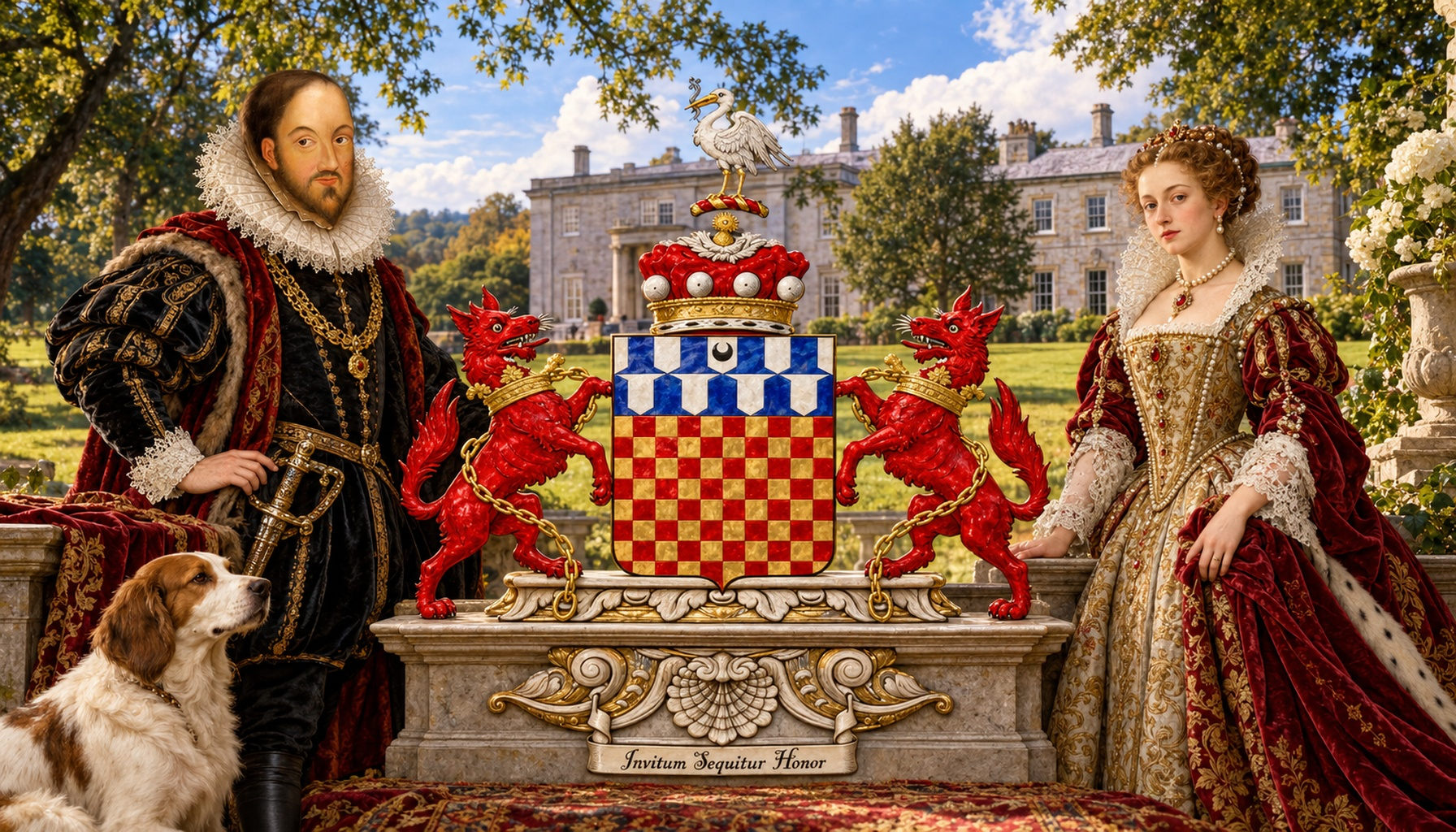
Clan MacCarthy was one of the great Gaelic Irish dynasties of Munster in the south of Ireland, a family whose story is tied to kingship, land, warfare, poetry, and memory. Their name comes from Carthach, and the wider dynasty emerged from the old royal world of Desmond and the Eoganacht tradition, rooted above all in Cork and Kerry. In genetic tagging terms, the primary family haplogroup linked here is R1b1a1b1a1a2c1a5a1a, a branch within the broader R1b line so often associated with Atlantic western Europe and especially with long-settled paternal lineages in Ireland.
The MacCarthys belong to that recognisably Gaelic pattern of rule that feels both local and grand at once: chieftains and kings who governed through kinship, clientship, tribute, marriage alliances, military followings, and an intense attachment to place. This was not simply a surname floating in the abstract. It was a political world with strongholds, dependent families, learned poets, and carefully preserved genealogies. Figures such as Muireadhach Mac Carthaigh, who died in 1092, stand near the early historical formation of the line, while later branches such as the MacCarthy Mor, MacCarthy Reagh, and MacCarthy of Muskerry carried the family name deep into the medieval and early modern history of southern Ireland. Even when outside powers pressed in, the MacCarthy identity endured through ancestry, oral tradition, and the stubborn prestige of ancestral territory.
Read more about Clan OSullivan
No place captures the MacCarthy story more vividly than Blarney Castle in County Cork. The present castle, the famous tower house visited by travelers from all over the world, was built in the 15th century by Cormac Laidir MacCarthy, lord of Muskerry. It stands on an older strategic site, which had earlier fortifications before the surviving stone stronghold rose above the landscape. Architecturally it is a classic late medieval Irish tower house, with thick walls, defensive features, chambers stacked upward, and that remarkable mix of domestic lordship and military practicality so typical of Gaelic and Anglo-Irish power centers alike. Of course, Blarney is most famous for the Blarney Stone, set high in the battlements and long linked with the gift of eloquence, but behind the legend is something more historically important: this was a MacCarthy seat, a declaration in stone that the family belonged among the ruling powers of Munster. And yes, it can still be visited today, which means this is not merely a page from the annals but a real place where the MacCarthy past still rises out of the Cork countryside.
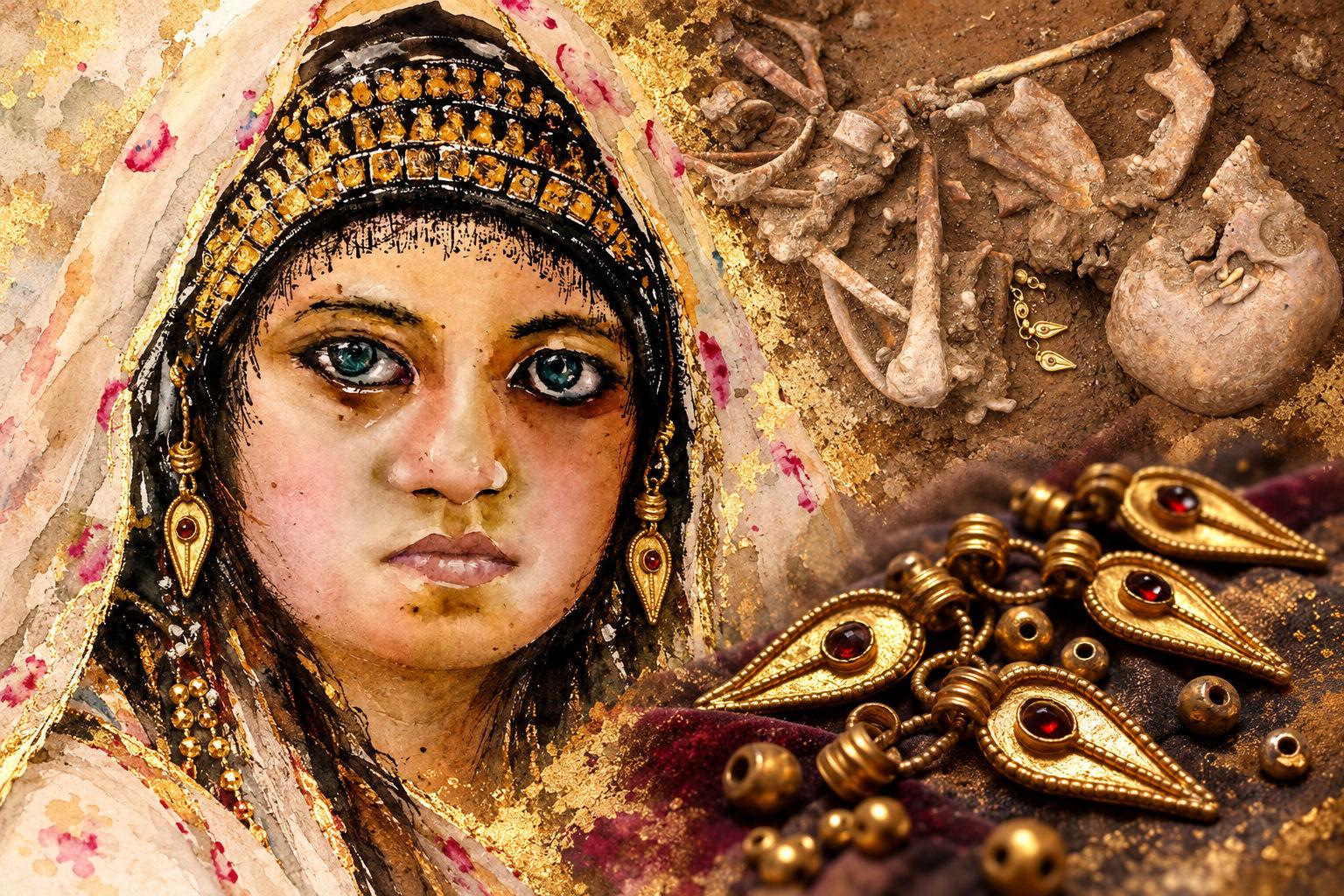
For those interested in deeper paternal history, the haplogroup tag R1b1a1b1a1a2c1a5a1a connects the MacCarthy story to a wider Atlantic and Insular world rather than to any single proven individual ancestor. Related or linked ancient samples include Early Anglo Saxon Cemetery West Heslerton Yorkshire sample I11586, Celtic Briton Carsington Pasture Cave Derbyshire sample I12775, Celtic Briton Lechlade-on-Thames Gloucestershire sample I12783, Celtic Briton Bradley Fen Cambridgeshire sample I11156, Iron Age Gloucestershire Greystones Farm sample I12785, and the well-known Ireland Copper Age sample Rathlin1B. These do not prove direct descent from Clan MacCarthy, and they should not be read that way. What they do offer is a broader archaeological frame for the kinds of paternal lineages that moved through Britain and Ireland across the Copper Age, Iron Age, and early medieval centuries, before later dynasties like the MacCarthys appear in the written record.
Read more about Clan MacCarthy
If you carry MacCarthy heritage, or simply suspect connections to the old Gaelic families of Munster, DNA can add a fascinating extra layer to the story. Upload your DNA to MyTrueAncestry and see whether you match Clan MacCarthy, related Irish lineages, or ancient DNA samples linked to the same wider haplogroup background.
Comments