Ancient DNA Unveils Eastern Roots of Uralic Languages, Bridging Siberia and Europe

– 4 min read


Ancient DNA Unlocks the Origins of Uralic Languages
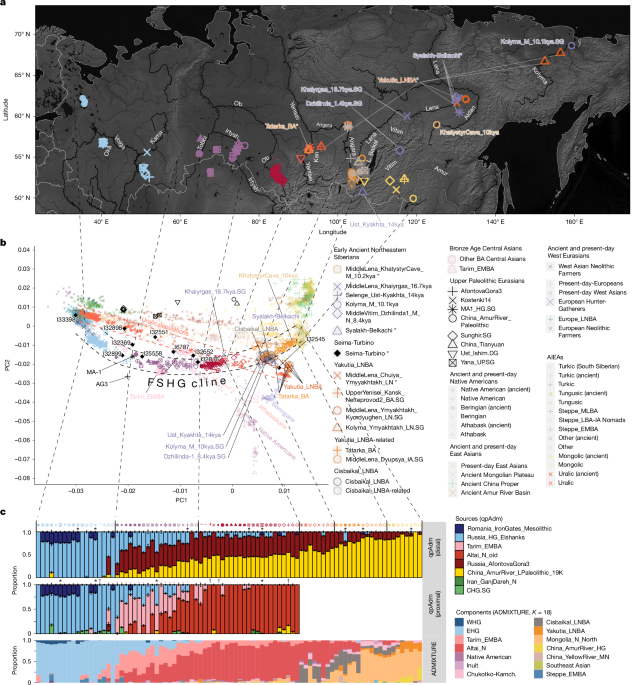
In an extraordinary new study, researchers have illuminated the enigmatic origins of the Uralic language family—spoken today by communities in Hungary, Finland, and Estonia. The research, led by scholars including ancient DNA expert David Reich, analyzed genetic data from 180 newly sequenced ancient individuals from Siberia alongside more than a thousand previously published genomes spanning 11,000 years.
The findings, published in Nature, suggest that around 4,500 years ago the forebears of today’s Uralic speakers lived in the taiga forests of northeastern Siberia, in a region corresponding to present-day Yakutia. This homeland lies closer to Alaska and Japan than to modern-day Finland, yet its genetic legacy still survives among Uralic-speaking populations today. Co-leading authors Alexander Mee-Woong Kim and Tian Chen Zeng place this ancient homeland at the center of a long-running debate between eastern Siberian and Ural-adjacent origins.
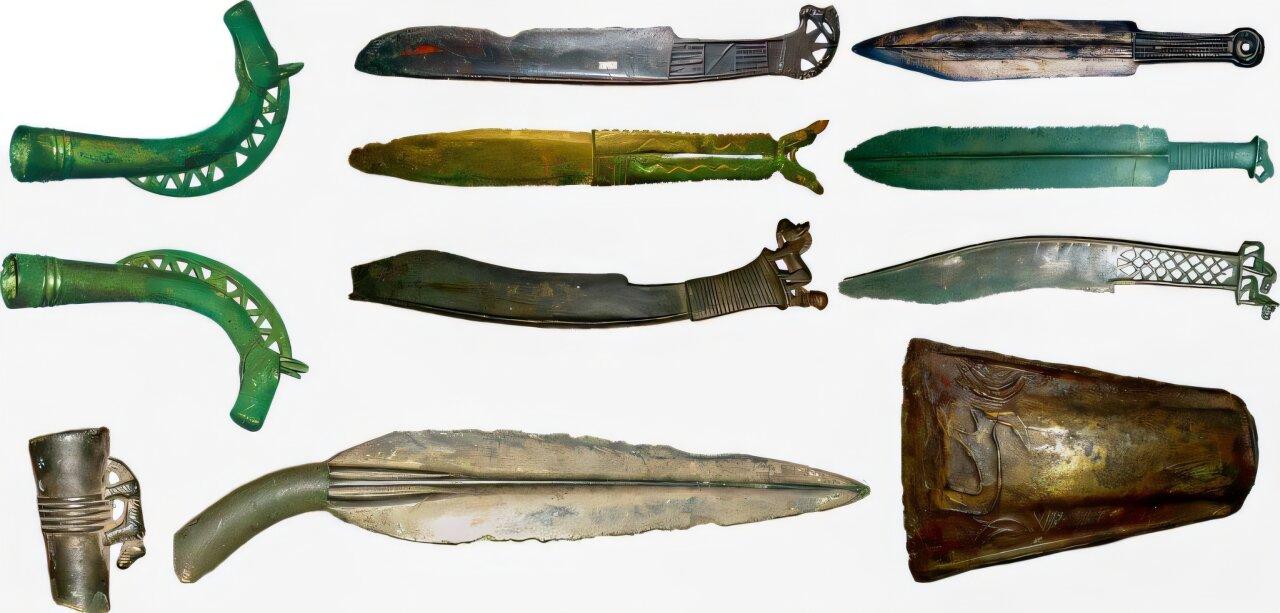
A key element linked to the spread of Uralic languages is the Seima-Turbino phenomenon, a striking example of technological innovation and cultural exchange. Around 4,000 years ago, advanced bronze-casting methods spread rapidly across northern Eurasia, reshaping trade and social structures. This expansion coincided with a period of significant climatic change that may have favored the movement of Uralic-speaking groups across the boreal forest zone.
Archaeologists have uncovered numerous sites containing Seima-Turbino artifacts, including sophisticated bronze weapons and ornaments. These finds are more than impressive objects: they offer a glimpse into the social complexity of the period. The study found that ancient burial sites with rich Seima-Turbino assemblages also showed strong evidence of Yakutia-related ancestry, reinforcing the link between this technological horizon and populations connected to northeastern Siberia.
Read more about ancient DNA and archaeogenetics
The genetic analysis reveals a complex mixture of ancestries among the communities involved, including Yakutia-related ancestry as well as contributions from Iranic and Baltic European hunter-gatherer-related gene pools. The results point to a substantial genetic signal originating in Yakutia and spreading westward across the continent, reaching as far as Hungary and also contributing to the ancestry of the indigenous Sámi of northern Scandinavia. This movement broadly parallels the spread of cultural and linguistic connections across northern Eurasia.
Over time, Yakutia-related ancestry became less visible in some Uralic-speaking groups. It is now greatly reduced among Hungarians, while Finns and Estonians retain a smaller but still detectable connection. By contrast, the Nganasan of northern Russia preserve ancestry that is much more closely tied to this northeastern Siberian source. The study also shows that individuals with different ancestry profiles could be buried at the same Seima-Turbino-associated sites, suggesting interaction, mobility, and shared participation in technological networks rather than a single homogeneous population.
Explore medieval Finland through archaeogenetics
Another important thread in this story involves the Yeniseian language family, whose roots the study traces back more than 5,400 years to the Lake Baikal region of southern Siberia. Although Yeniseian languages survive today only in very limited form, their former range may still be preserved in place names across areas now dominated by Turkic and Mongolic languages—rather as older linguistic layers survive in river names elsewhere in the world.
Archaeological work around Lake Baikal has added depth to this picture, while the study also raises the possibility of a link between Yeniseian speakers and the Indigenous Na-Dene languages of North America. The genetic evidence offers tentative support for this idea, though appropriately without settling the linguistic question outright.
Bronze production depended on access to raw materials such as copper and tin, encouraging the development of long-distance trade routes and new social ties across northern Eurasia. This was not simply a technological shift; it helped drive broader cultural change. Despite their limited demographic scale, the populations tied to these networks appear to have helped spread language and cultural influence across immense distances, from the forests of Scandinavia to the steppes of Central Asia.
The genetic and linguistic evidence points to dynamic systems of mobility and exchange rather than the expansion of a single people or a single archaeological culture. No one culture can neatly claim the spread of Uralic languages. Instead, the picture is of genetically diverse communities participating in wide-ranging networks that carried technologies, ideas, and languages across Eurasia.
In that sense, this study offers a reminder of how small populations can have outsized historical impact. By combining ancient DNA with archaeology and linguistics, it brings into clearer focus peoples long obscured by time and distance. From Seima-Turbino burials to enduring linguistic legacies, the research shows how communities from the Siberian taiga contributed to reshaping the cultural map of Eurasia.
See more on Finland’s population change and Baltic connections
 Tian Chen Zeng
Curious whether your own DNA shows connections to ancient northern Eurasian populations, Uralic-speaking groups, or related archaeological samples? Upload your DNA to MyTrueAncestry and explore where you fit into the deeper human story.







Comments