Tracing the spread of Germanic languages using ancient genomics

– 5 min read


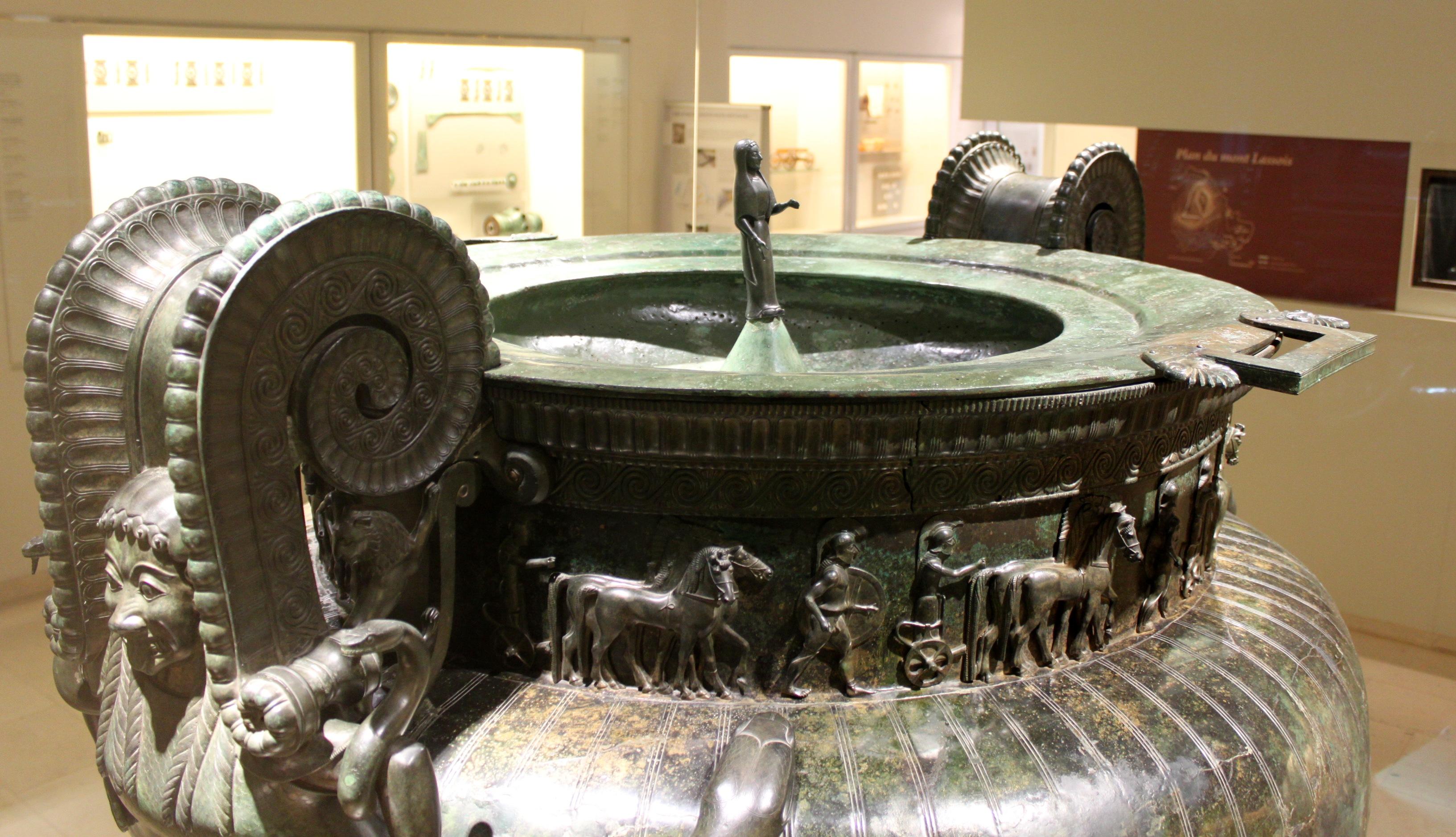
The story begins not with kings, but with bones on trays and teeth in labelled tubes. Across northern and western Europe, the search for the origins of Germanic speech drew strength from graves, bogs, barrows, and battle deposits — an immense gathering of human lives from Denmark, Norway, Sweden, the Netherlands, Britain, and beyond.
The most haunting finds came from wetlands. Danish bogs preserved skulls, partial skeletons, and whole bodies. At Hundstrup Mose, adults, children, and newborns were placed in the bog at different moments in time. At Alken Enge in Jutland, remains of at least eighty-two people — mostly men showing signs of trauma — appear to be a defeated army ritually deposited after battle.
Formal cemeteries offer equal drama. Slusegård on Bornholm, with around 1,400 graves, contained cremations, inhumations, Roman imports, weapons, and one skull still bearing an embedded iron point. At Hoby on Lolland, one man was buried with extraordinary Roman luxury goods, marking him as a figure of exceptional status.
Teeth, skulls, cairns, and grave fields are not merely data sources. They are the stages on which ordinary and extraordinary people lived, moved, fought, and died across the centuries before and during the spread of Germanic speech.
Learn more about ancient DNA and archaeogenetics
Long before Viking ships or written runes, Scandinavia was being remade by major movements of people. Around 2850 BC, the Single Grave Culture transformed Jutland, while the Battle Axe world took root differently in Sweden. Denmark and Sweden did not simply become the same place at once.
By roughly 4,000 years ago, three distinct Bronze Age ancestries had emerged: eastern, southern, and western Scandinavian — real human populations moving through real landscapes. Eastern Scandinavians carried a distinctive share of hunter-gatherer ancestry linked to the Baltic zone. Southern and western Scandinavians had different balances. One shared Bronze Age culture did not erase local populations.
From around 1500 BC, a more unified Nordic Bronze Age culture took shape, marked by great mounds, long-distance metal flows, rock art, and maritime expansion. Copper travelled from Wales, the Alps, and Austria. Yet beneath this cultural unity, regional ancestry differences persisted.
These Bronze Age foundations mattered. When Iron Age shifts came and Germanic speech communities emerged, they did so among populations already structured by centuries of movement and mixture.
The central finding is that the later Iron Age saw renewed population movement — especially from southern Scandinavia and northern Germany — both back into Scandinavia and outward into places such as England. Historical linguists had long suspected southern Scandinavia and adjacent northern Germany as the cradle of Proto-Germanic. The genomic results give that idea new life.
Iron Age people from Jutland, the Danish islands, Sweden, and Norway could be modelled as combinations of Bronze Age regional ancestries. Swedish Iron Age groups carried predominantly eastern Scandinavian ancestry. Denmark combined eastern and southern elements. Norway shows older western Scandinavian ancestry increasingly overlaid by eastern influence. In plain terms: Sweden was not Denmark, Denmark was not Norway, yet all three shared a deep family resemblance — exactly the social geography in which related languages diverge and spread.
Britain offers the clearest external signal. From around 1,600 years ago, ancestry associated with southern Scandinavia and northern Germany appears clearly, matching migrations of Saxons, Angles, and Jutes, and distinct from later Viking-Age Scandinavian influence. The older Anglo-Saxon migration genuinely shows up in the bones.
The seas did not divide these people; they connected them. Some Norwegian individuals before the Viking Age already carried ancestry from the Celtic-speaking British Isles, showing early cross-North Sea traffic.
Explore DNA shifts in Roman and early medieval Britain
Genetic evidence now allows some famous historical names to be tested against graves and genomes. Langobard burials in Hungary and Italy show many individuals with ancestry linked to Scandinavian Iron Age sources alongside locals and absorbed outsiders — exactly what one expects from a migrating confederation. Gothic-associated individuals in Poland fit eastern Scandinavian Bronze Age-related ancestry, making a Scandinavian origin much harder to dismiss.
Britain and Ireland show multiple distinct northern migrations: an earlier Anglo-Saxon wave from southern Scandinavia and northern Germany, then later Viking-Age movement from Sweden and Norway. Not all Scandinavian-looking ancestry in Britain is Viking.
Specific graves sharpen history into biography. At Salme in Estonia, famous Viking burials cluster genetically with Iron Age central Sweden, supporting a Mälaren Valley origin. At Kalmergården, two beheaded individuals were not locals: one had strong Norwegian Iron Age ancestry, another strong Baltic Bronze Age ancestry — real dead men who sound almost like saga characters.
A "Goth" or "Langobard" was never simply a DNA type. These were social identities built through migration, alliance, kinship, and memory. Their graves still contain the traces: swords, brooches, imported vessels, and now genomes.
The most moving evidence is often the smallest: siblings buried apart, parents and children linked across cemeteries, communities shaken by climate and violence. Kinship analysis revealed dozens of close relationships among the sampled dead. In France, two pairs of siblings and a parent-child pair were buried across two sites just 2.4 kilometres apart — communities using multiple places within one social territory.
Around AD 536–540, major volcanic events darkened skies and collapsed temperatures across the northern hemisphere. In Denmark, oak tree rings show severe growth failure. In southern Sweden, pollen records track falling agriculture and woodland recovery. Some places were abandoned; others reorganised. This shock overlaps closely with the social and genetic changes visible in southern Scandinavia — when landscapes empty, opportunities open for new leaders, new alliances, and incoming groups.
Bodies themselves carry drama. Some individuals show healed injuries, speaking of survival. Others bear signs of developmental stress, disease, or hard physical wear. These are reminders that population history is made by vulnerable, physical human beings.
The spread of Germanic languages is therefore not merely a story of one ancestry replacing another. It is a story of families, burial grounds, stress, adaptation, and memory — fields abandoned and reclaimed, elites rising, warriors moving by sea, and old monuments reused by new generations. The true subject is the making of historical worlds through the lives of real people.
Read more about ancient DNA in post-Roman Britain
 Hugh McColl
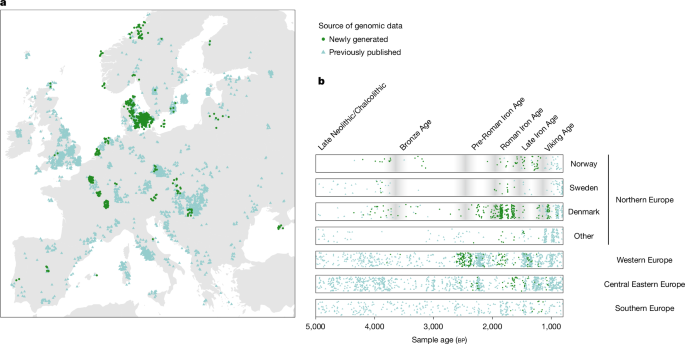
If this world of graves, migrations, and ancient kinship speaks to your own family curiosity, you can take the next step with MyTrueAncestry. Upload your DNA and see whether you match this family of ancient populations or related archaeological samples from the Germanic world and beyond.
Comments