Haplogroup R1a1a1b1a3b

– 4 min read


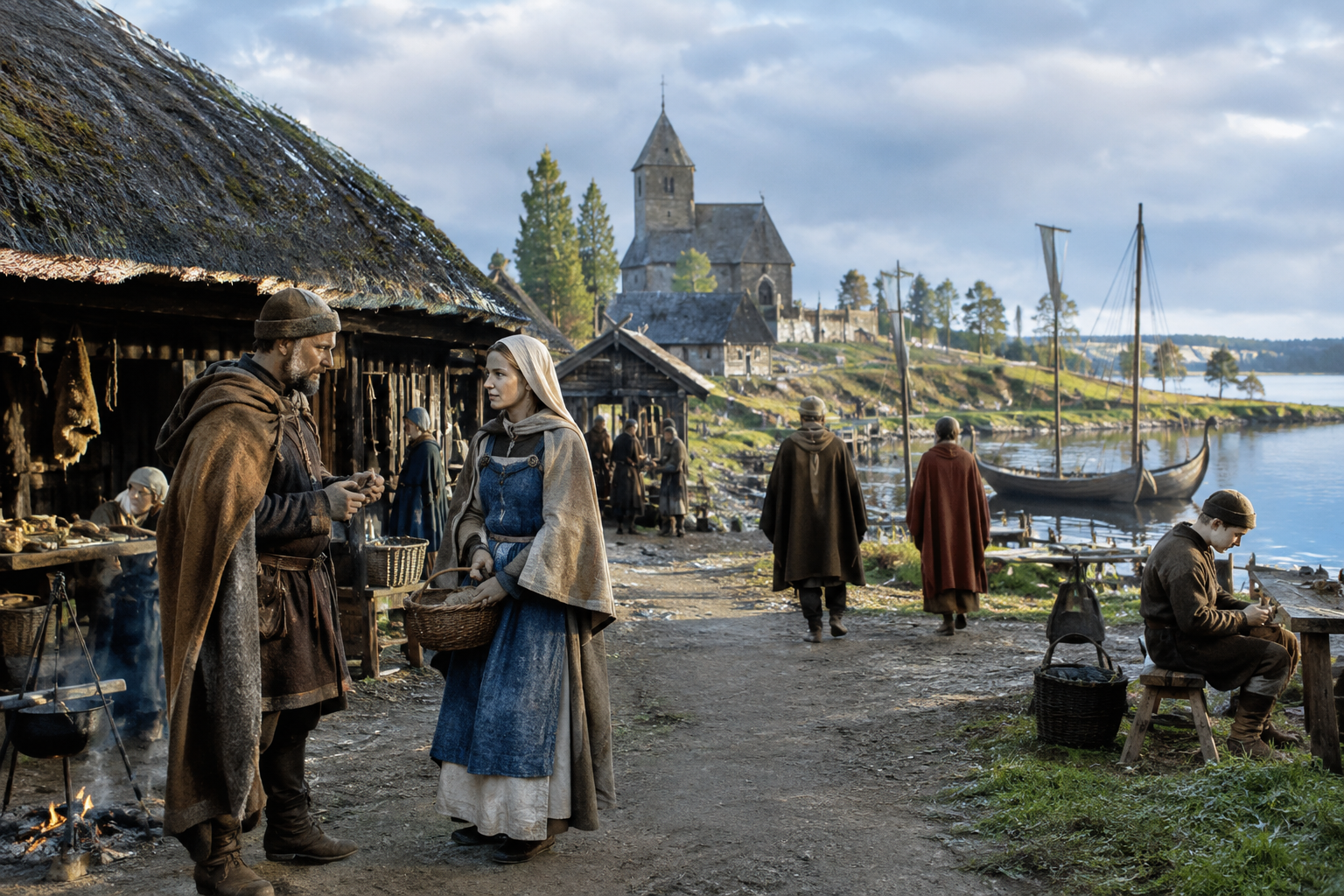
At Sigtuna in medieval Sweden, one ancient individual offers a neat reminder that haplogroups become most interesting when they are tied to real places rather than grand abstractions. The sample mbs081, dated to around AD 1100, comes from a town that was one of the earliest and most important urban centers in the Swedish kingdom. In MyTrueAncestry's classification, this individual is associated with the Y-DNA haplogroup R1a1a1b1a3b.
That matters because Sigtuna was not some remote village at the edge of events. It was a political, commercial, and ecclesiastical hub in a period when Scandinavia was being reshaped by Christianity, kingship, trade, and new patterns of settlement. A paternal lineage found there is therefore not just a technical label on a chromosome. It is a small, direct male-line trace inside one of the key landscapes of early medieval northern Europe.
Sigtuna, on the shores of Lake Malaren, belonged to a world that had already moved beyond the classic Viking Age, though many of its connections were inherited from it. By about AD 1100, the town had churches, minted coins in earlier phases, and stood within networks linking Sweden to the Baltic, the North Sea, and the wider Christian world. Its cemeteries are valuable precisely because they capture ordinary and not-so-ordinary lives during this transition.
Sample mbs081 belongs to that urban and early Christian setting. The evidence provided here does not justify inventing grave goods, social rank, or family ties for him, and it is better not to embroider. What we can say is that a man carrying a paternal line classified here as R1a1a1b1a3b was living, dying, and being buried in one of medieval Sweden's formative towns.
An ancient DNA project on medieval Swedish burials has examined biological and social kinship in this setting, and the research framework can be seen here: https://www.rj.se/en/grants/2016/biological-and-social-kinship-reflected-in-genomes-from-medieval-swedish-multiple-burials/. Even without turning one sample into an entire population, that kind of work helps place paternal lineages in the lived archaeology of medieval communities.
Medieval Swedish graves and kinship
The exact string R1a1a1b1a3b is a very narrow paternal designation within the much larger R1a family. That distinction is important. The broader R1a umbrella has a long and complicated history across Eurasia, but that does not mean every fine-scale sub-branch shares the same historical path, date, or regional story.
Y-DNA follows one direct paternal line only: father to son, and so on back through time. It can therefore illuminate one strand of ancestry with striking precision, while saying nothing by itself about a person's full family tree, language, culture, or identity. A medieval Swede with this lineage was still, in every meaningful historical sense, shaped by the local society of Sigtuna: its religion, politics, diet, neighborhood ties, and the habits of a growing town.
That is one of the virtues of ancient DNA when handled carefully. It gives us a line of descent without reducing a person to that line.
There is a temptation in Y-DNA storytelling to look only for dramatic migration episodes: warriors, founders, dynasties, and sweeping invasions. But urban cemeteries often tell a subtler and in some ways more useful story. They show which paternal lines were present in functioning communities, in places where people traded, married, worshipped, and raised children.
By AD 1100, Sigtuna stood in a Scandinavia that had experienced centuries of mobility around the Baltic. Men carrying branches of R1a were certainly no strangers to northern and eastern Europe in the long run, but the significance of mbs081 is not that he proves some simple migration slogan. It is that this branch was part of the human mix inside a documented medieval town at a moment when Sweden was consolidating as a Christian kingdom.
That makes the sample especially useful for anyone whose paternal ancestry points toward the Baltic or Scandinavian world. It anchors the lineage in an actual burial landscape rather than in a map full of colored arrows.
Early Christian DNA in Scandinavia
Medieval Swedish sites have become increasingly important because they sit at the intersection of several historical processes at once. There is the aftermath of Viking Age travel; there is the spread of Christianity and churchyard burial; there is state formation; and there is the rise of towns whose inhabitants were often more mixed than older nationalist histories liked to imagine.
So a sample like mbs081 is best read against that background. He does not stand for all Swedish men of the period, nor can one burial define the history of a subclade. But he does show that the paternal branch labeled here as R1a1a1b1a3b had reached, or remained within, a medieval Scandinavian urban population by about AD 1100.
This also fits a broader pattern seen across ancient genomics: language, culture, and paternal descent do not line up tidily. Germanic-speaking regions, Slavic-speaking regions, Baltic contact zones, and Scandinavian trading worlds all reveal more biological variety than old textbook caricatures suggested.
Germanic languages and ancient genomics
Sigtuna's importance also lies in geography. It belonged to a Baltic-facing world. Ships, merchants, clerics, craftspeople, and families moved around this sea constantly, and those movements left marks in both archaeology and genetics. A paternal lineage in medieval Sweden may reflect deep local continuity, earlier regional movement, or the accumulated effects of centuries of contact across northern Europe.
That is why caution matters more than drama. It would be easy, but wrong, to pin mbs081 to a single named people or one heroic migration. The evidence offered here supports a firmer and more interesting conclusion: this lineage was present in a town where Scandinavian, Baltic, and Christian medieval histories met in everyday life.
For comparison, other work on northern populations has shown how fluid the medieval and post-medieval Baltic world could be, with Finland and neighboring regions participating in overlapping networks rather than sealed ethnic blocks.
Early medieval Baltic connections
If your paternal line falls under R1a1a1b1a3b, the medieval Sigtuna sample mbs081 gives you something solid and human-scaled: a documented male line in Sweden around AD 1100, in a town central to the making of medieval Scandinavia. That does not make every modern carrier Swedish, nor does it create a shortcut to a named dynasty. But it does place this lineage in a real archaeological setting shaped by urban life, Christian burial, and Baltic exchange.
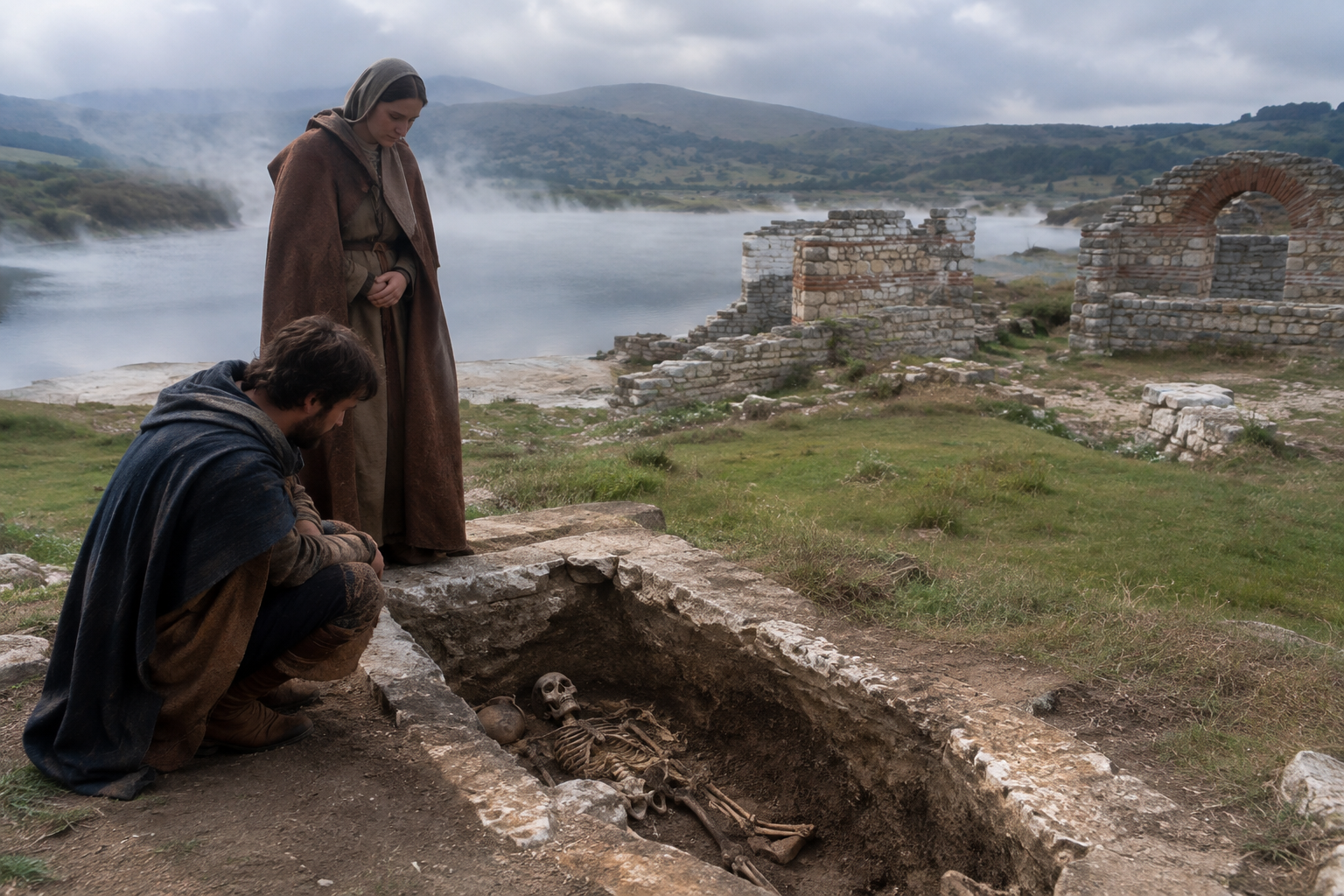
In other words, this is not just a branch on a phylogenetic tree. It is a branch that turns up in the cemetery soil of Sigtuna, among the people who lived through one of northern Europe's great historical transitions.
Comments