Haplogroup R2a2a1a

– 5 min read



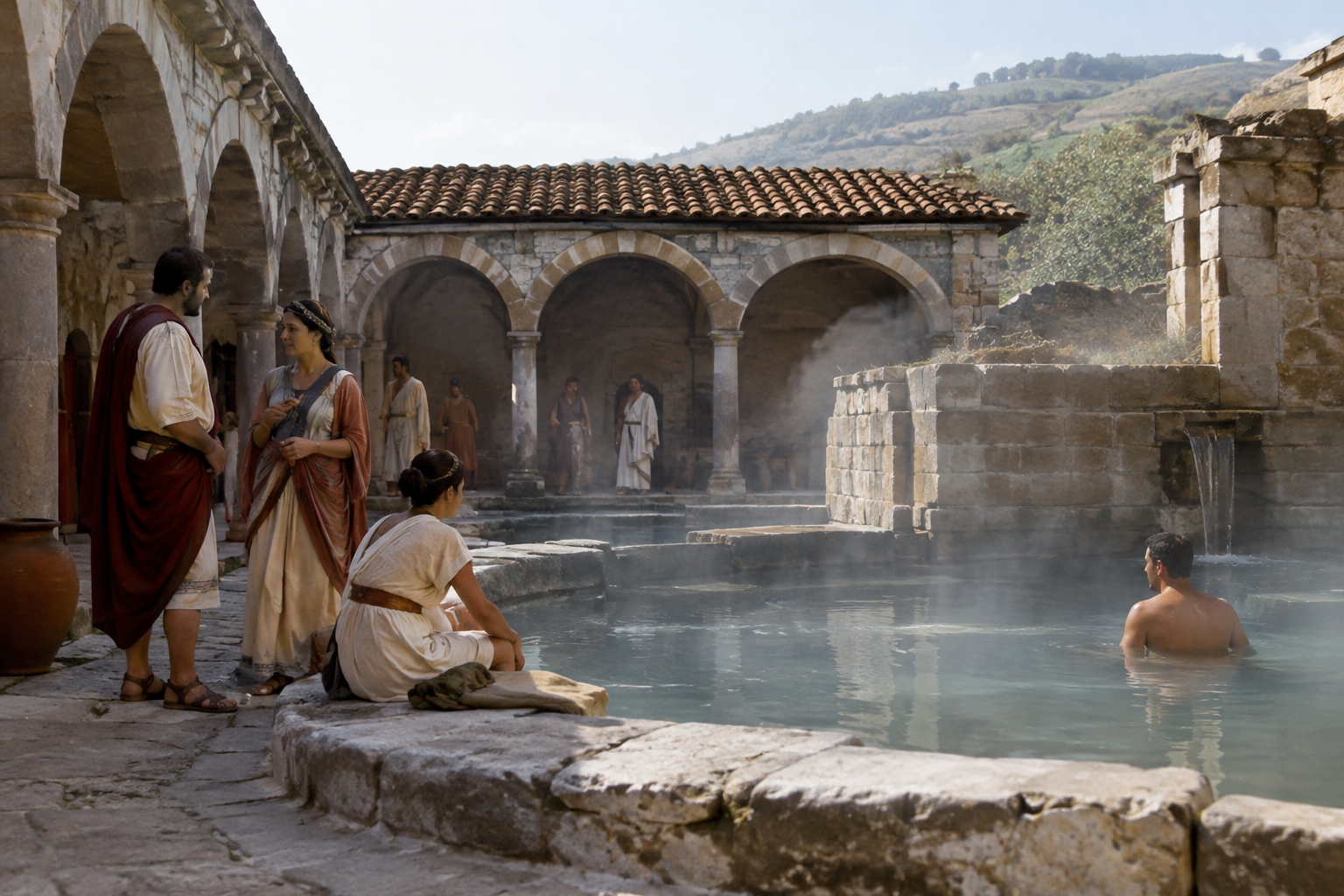
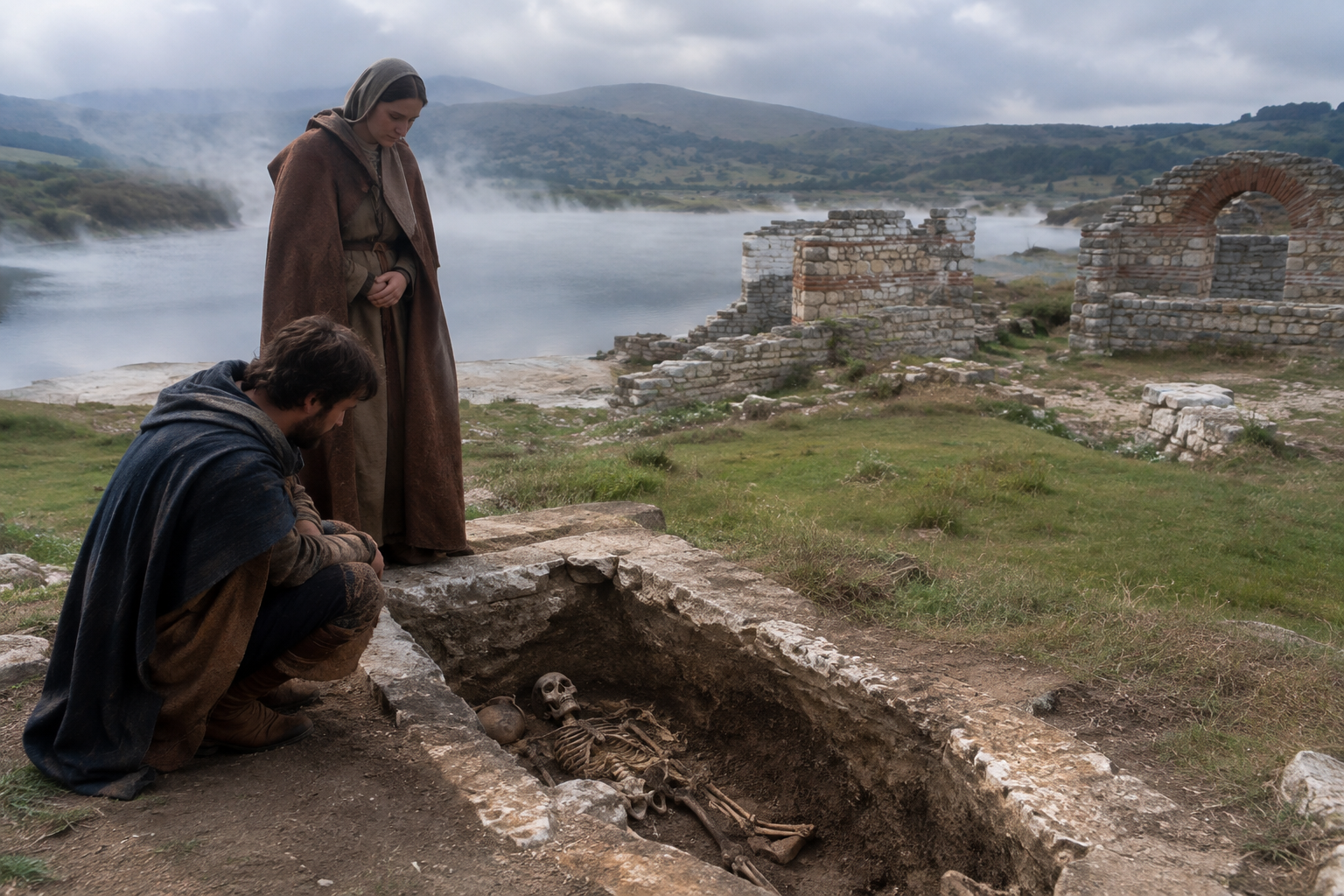
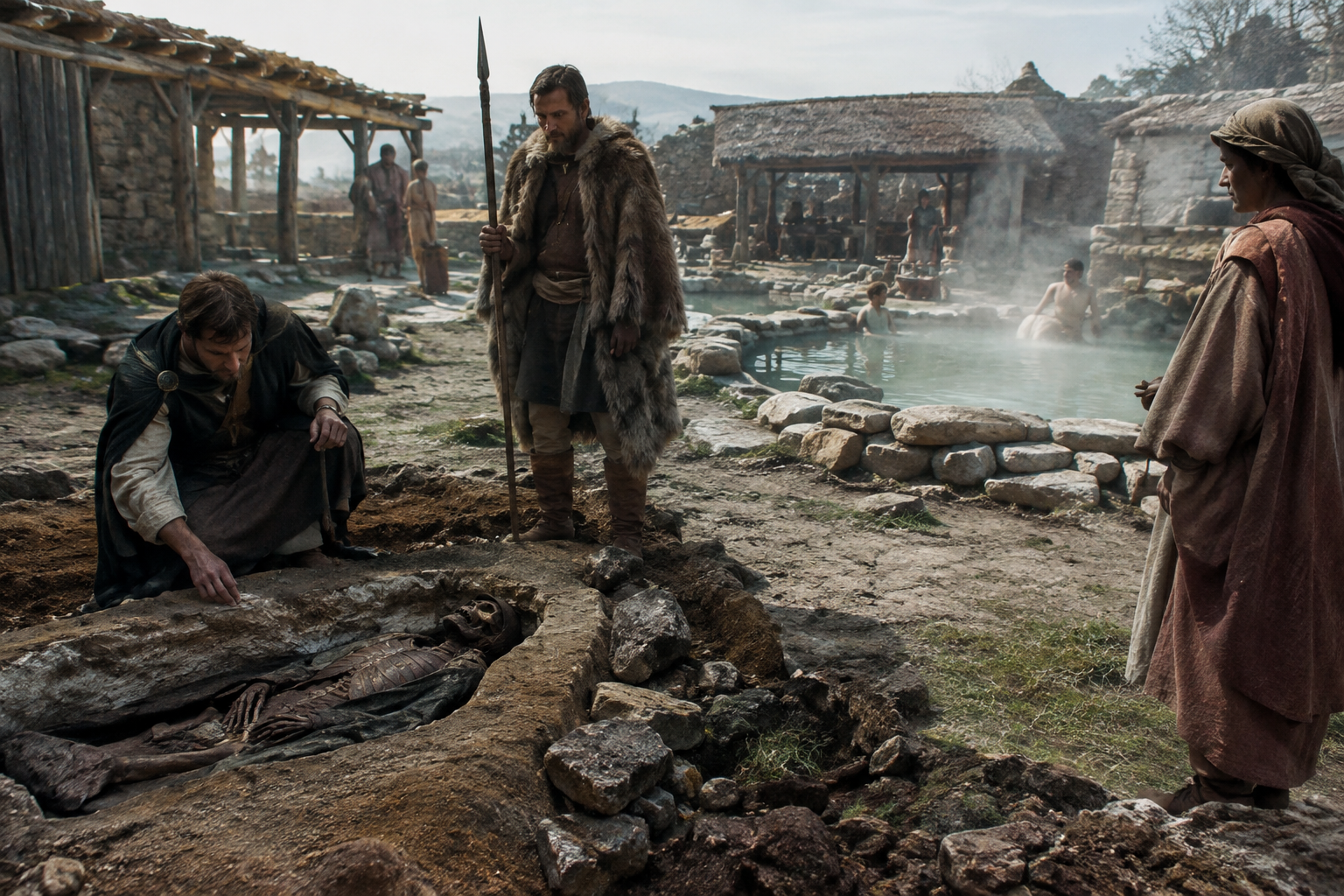
The clearest ancient signpost here is a single man from Aquae Calidae, the hot-spring town on the Black Sea route in what is now Bulgaria. Dated to around AD 350 and identified as I41150, he belongs to the Late Roman world, a period when this region stood at a busy imperial crossroads between the Balkans, the Black Sea, and the wider eastern Mediterranean. That makes his reported Y-DNA assignment to R2a2a1a especially intriguing, because it is not the sort of lineage most readers would expect to meet first in a Roman-era Balkan setting.
This is exactly the sort of find that ancient DNA handles well. Y-DNA traces one direct paternal line only, not a person's whole ancestry, language, or identity. But even one paternal line, if securely placed in time and place, can show how thoroughly connected the Late Roman world really was.
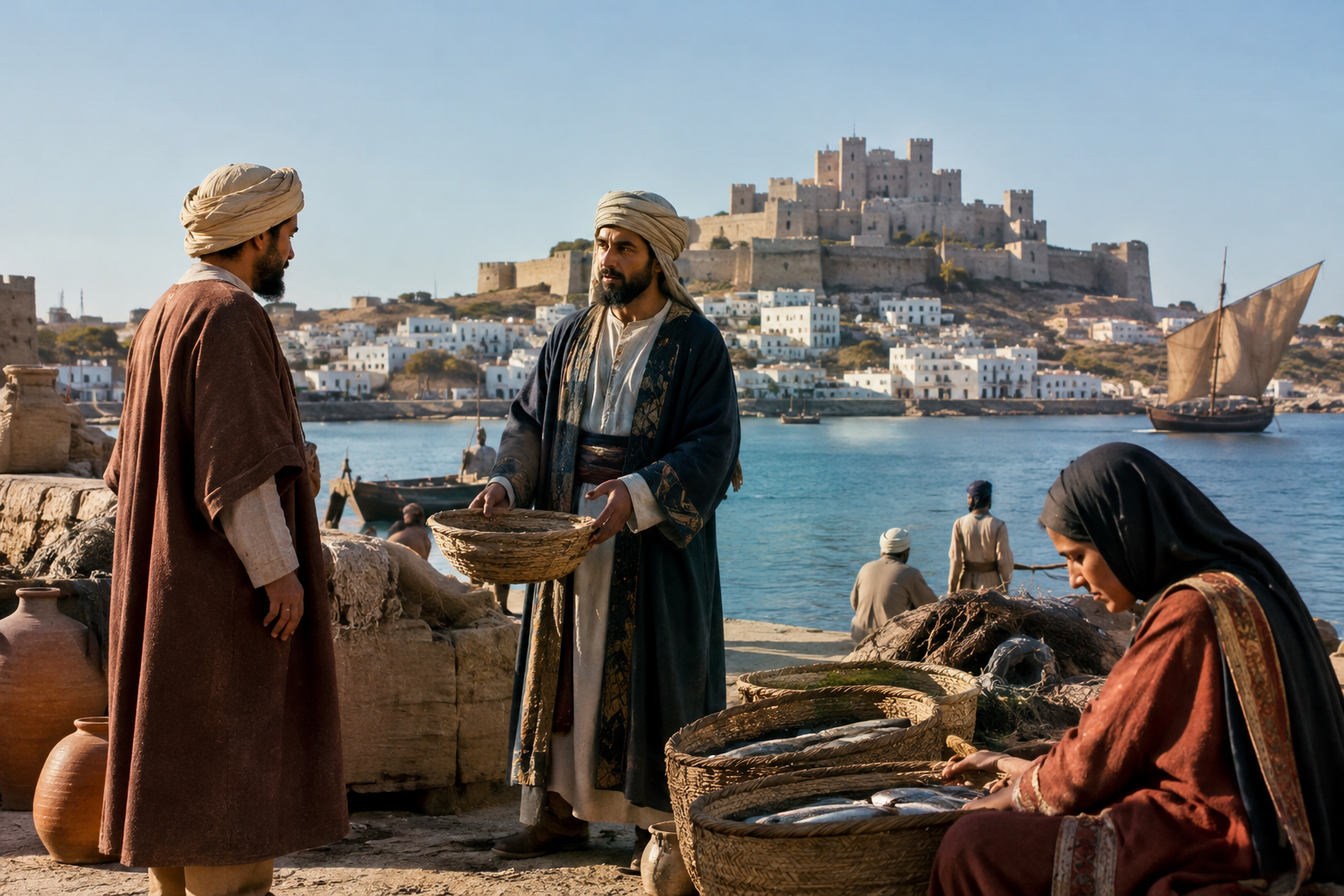
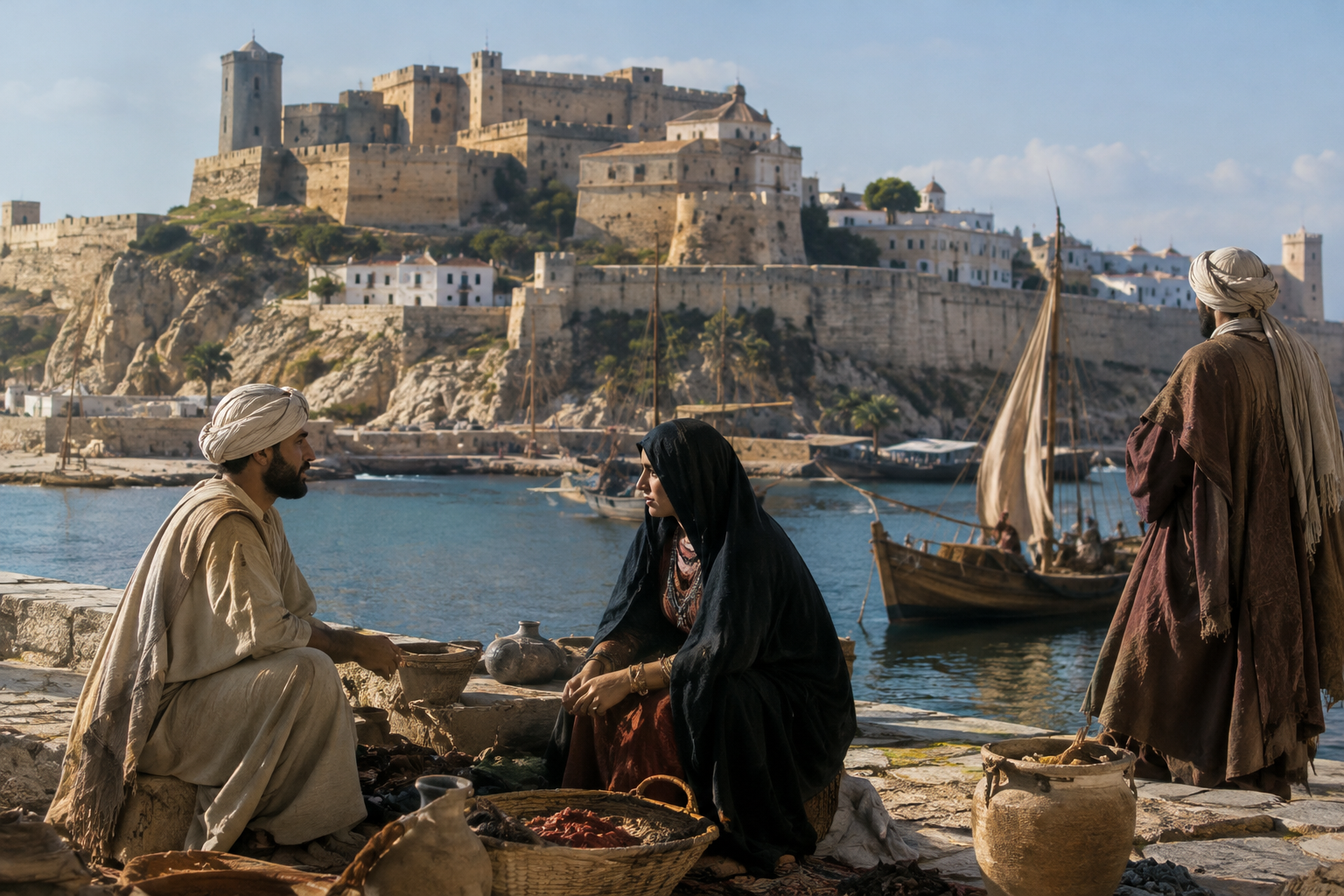
Aquae Calidae was not an obscure village at the edge of nowhere. Known for its thermal springs since antiquity, it sat in a strategic corridor near the western Black Sea, in a zone shaped by Thracian, Greek, Roman, and later Byzantine interests. By the fourth century AD, when I41150 lived, this was a landscape of roads, military movement, trade, official travel, and local continuity all at once.
So the interest of I41150 is not simply that he lived in Bulgaria. It is that he lived in a place where people could arrive from many directions and still become part of a recognizably local Roman provincial society. A man associated with R2a2a1a in this setting hints at the movement of paternal lines across imperial space, whether through migration, soldiering, commerce, family formation, or longer-standing eastern connections already folded into Balkan life.
A recent ancient DNA study on Late Antique Bulgaria has helped sharpen this wider picture of mixed origins and mobility in the region, even if one should be careful not to over-interpret any single lineage or sample: https://www.biorxiv.org/content/10.64898/2026.03.03.709317v1.
The key point with R2a2a1a is precision. This is a narrow subclade within the broader R2 family, and narrower branches do not automatically carry the full history of their parent lineage in any simple way. It would be rash to take a general map of R2 distribution and paste it directly onto this specific Roman-era individual.
Still, at a broad level, R2 has long been more strongly associated with parts of South and Central Asia, Iran, and neighboring regions than with most of Europe. That is why its appearance in a Late Roman burial from Aquae Calidae matters. It does not prove that I41150 was a recent immigrant from any one place, but it does fit a world in which the Balkans could absorb people and paternal lines from surprisingly wide horizons.
That wider eastern dimension should not surprise us too much. The Roman Empire was full of such unexpected presences. Men moved with armies, caravans, merchant networks, administrative appointments, religious communities, and households. Once in a provincial town, their descendants could become locally rooted very quickly, while one Y-chromosome line quietly preserved a more distant paternal story.
One of the most useful lessons from recent archaeogenetics is that Late Antique communities in southeastern Europe were often more varied than older nationalist or ethnic models allowed. Labels such as Roman, Thracian, Goth, or local provincial describe political, cultural, or historical contexts; they do not map neatly onto a single genetic profile. Aquae Calidae belongs firmly in that complicated world.
For that reason, I41150 is most interesting not as an isolated curiosity but as evidence of the Balkans as a contact zone. In the fourth century AD, this region lay under pressures and opportunities created by imperial reorganization, frontier politics, Christianization, military recruitment, and commerce around the Black Sea. A paternal lineage like R2a2a1a appearing there is a reminder that the Roman Balkans were connected eastward as well as westward.
There is also a useful historical caution here. A single Y-line cannot tell us whether this man thought of himself as Roman, local, foreign-born, bilingual, Christian, pagan, civilian, or military. Archaeology and history must do that work in combination with genetics. But the paternal evidence can show that a community included lineages not usually visible in inscriptions or later chronicles.
It is easy to think that one ancient sample is too little to say anything worthwhile. Sometimes that is true. But sometimes a single well-placed individual forces us to ask better questions. Why is an R2a2a1a paternal line present at Aquae Calidae around AD 350? Is this the trace of recent mobility, or the residue of older eastern-linked populations already established in the Balkans? Was the line rare locally, or do we simply lack enough tested burials to see its real frequency?
These are good archaeological questions because they do not demand more certainty than the evidence can bear. They place the sample where it belongs: inside a living Roman provincial landscape, rather than in a tidy migration diagram. The hot-spring town of Aquae Calidae was exactly the sort of place where imperial infrastructures and local histories met, and where an unexpected paternal lineage might turn up without fanfare.
This is also why comparisons with other Roman-era studies are useful. Work on provincial populations elsewhere in the empire has repeatedly shown mobility, mixture, and the survival of diverse family lines over generations. Readers who want a broader Roman comparison may find a useful parallel in the MyTrueAncestry discussion of Roman Hispania's Lasting Genetic Legacy, where imperial rule also left a complex biological footprint rather than a single uniform one.
If you carry R2a2a1a today, the most responsible historical takeaway is not that you descend from one Roman from Bulgaria, nor that you belong to a single ancient people. It is that your paternal line belongs to a branch with a distribution that often points researchers toward eastern and trans-regional connections, and that one documented ancient appearance of this branch sits in a Late Roman Balkan town with every reason to be cosmopolitan.
That matters because the Roman Empire was not merely an Italian or western European story. Its eastern provinces, Black Sea routes, and Balkan corridors were essential to how people, goods, beliefs, and families moved. In that sense, I41150 from Aquae Calidae is a fine little corrective to simple maps of the past. He stands in a Roman town, in a Balkan landscape, carrying a paternal line that prompts us to think across larger geographies.
The distinctive point about R2a2a1a in the ancient record offered here is not quantity but setting. Sample I41150 shows this paternal branch in Late Roman Aquae Calidae, around AD 350, in a region where empire, mobility, and local life overlapped constantly. For anyone researching this haplogroup, that is a valuable clue: your direct paternal line can appear in places that only make sense once we remember how connected the ancient world really was.
Comments