Haplogroup E1b1b1b1a1f2b

– 4 min read


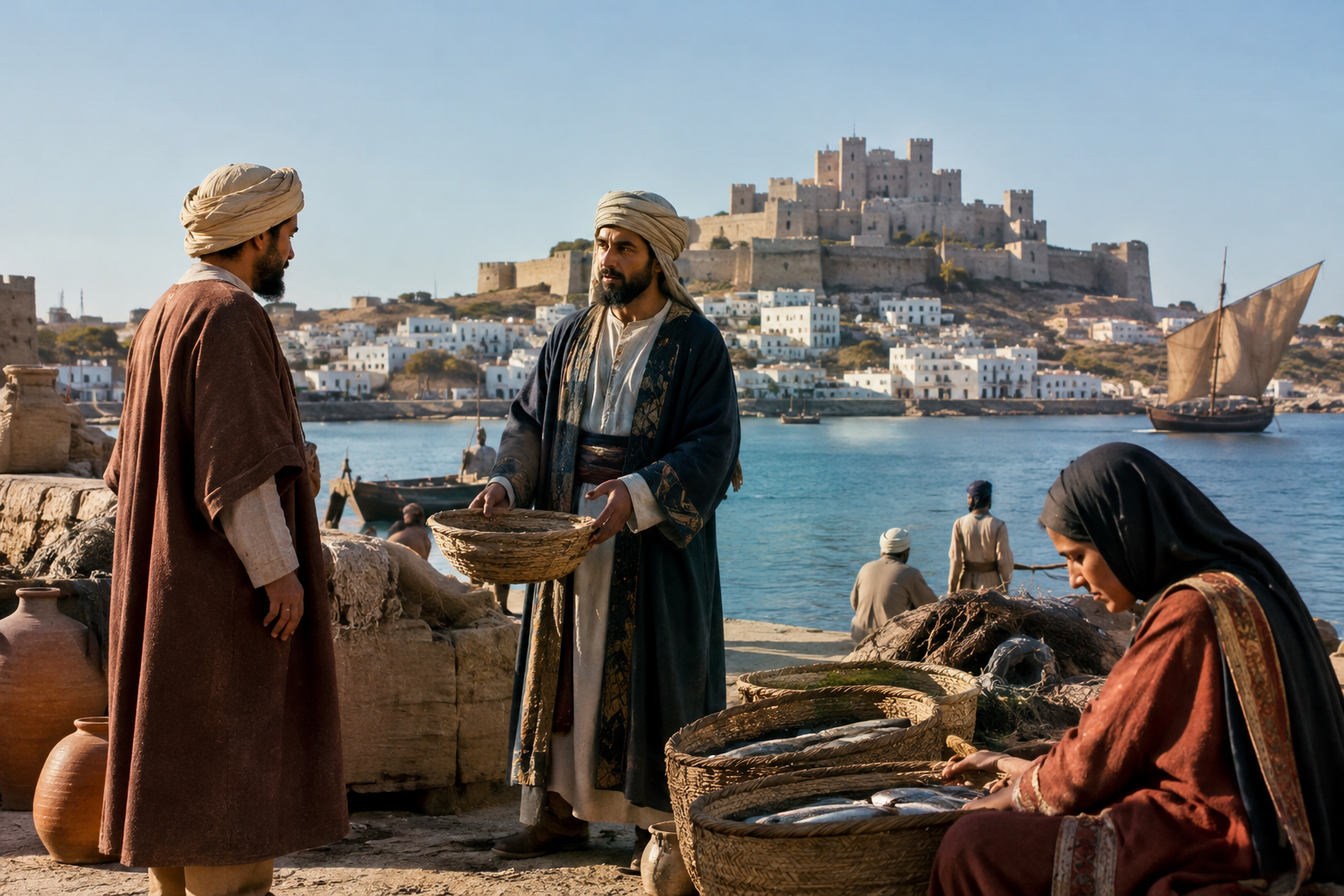
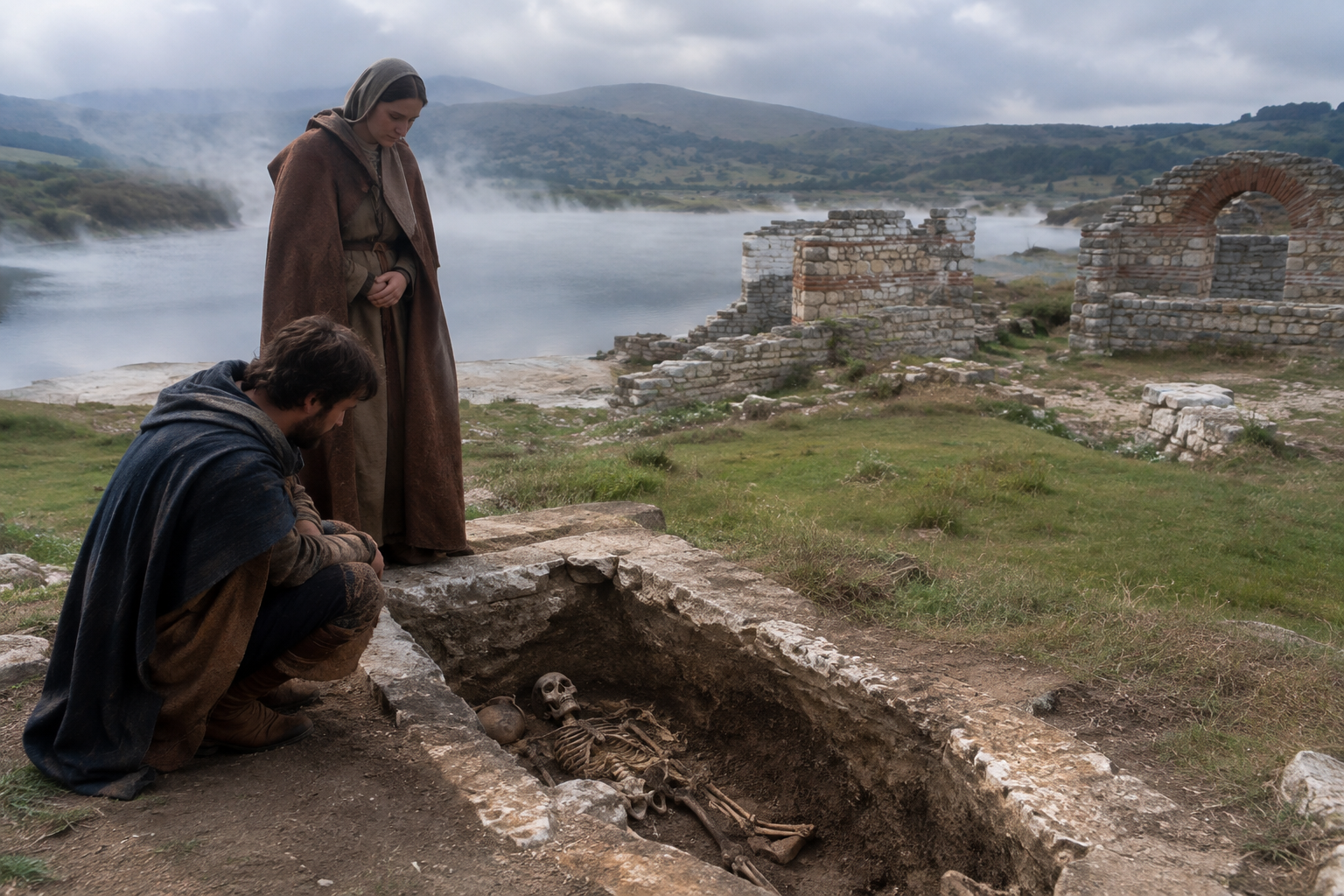
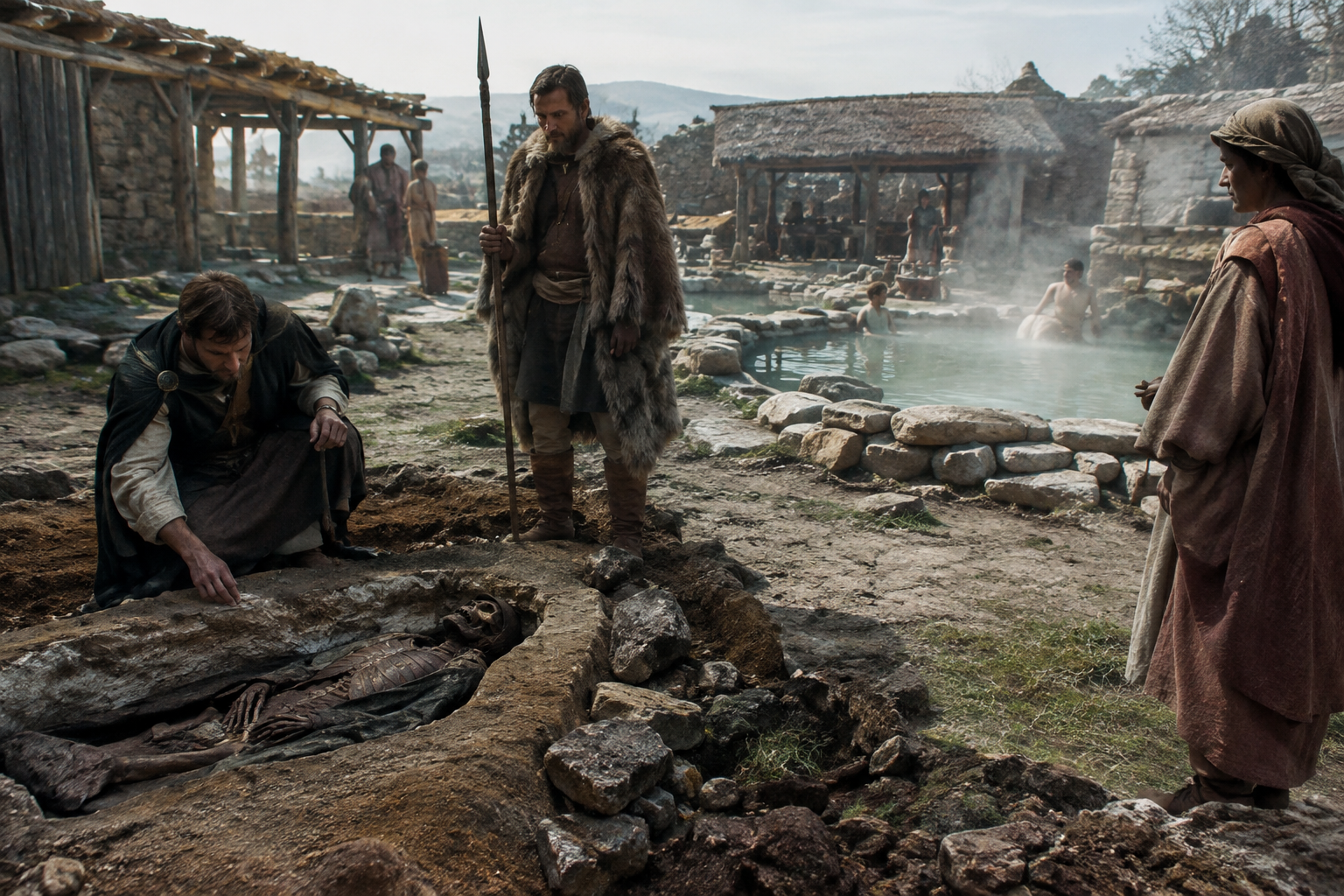
One of the clearest ancient signposts for the Y-DNA haplogroup E1b1b1b1a1f2b comes from medieval Ibiza: sample ldo116, dated to about 950 AD and associated with Al-Andalus. That is already a striking setting. Ibiza is often imagined through its later Mediterranean fame, but in the 10th century it belonged to an Islamic world tied to Iberia, North Africa, and the wider sea-lanes of the western Mediterranean.
That makes this lineage interesting in a very specific way. Rather than appearing in a remote prehistory disconnected from written history, E1b1b1b1a1f2b here turns up in a place where archaeology, political history, and mobility across the sea all meet. As always with Y-DNA, we are looking only at one direct paternal line, not the whole ancestry or identity of the person. But even that single line can be revealing when it appears in such a connected medieval island community.
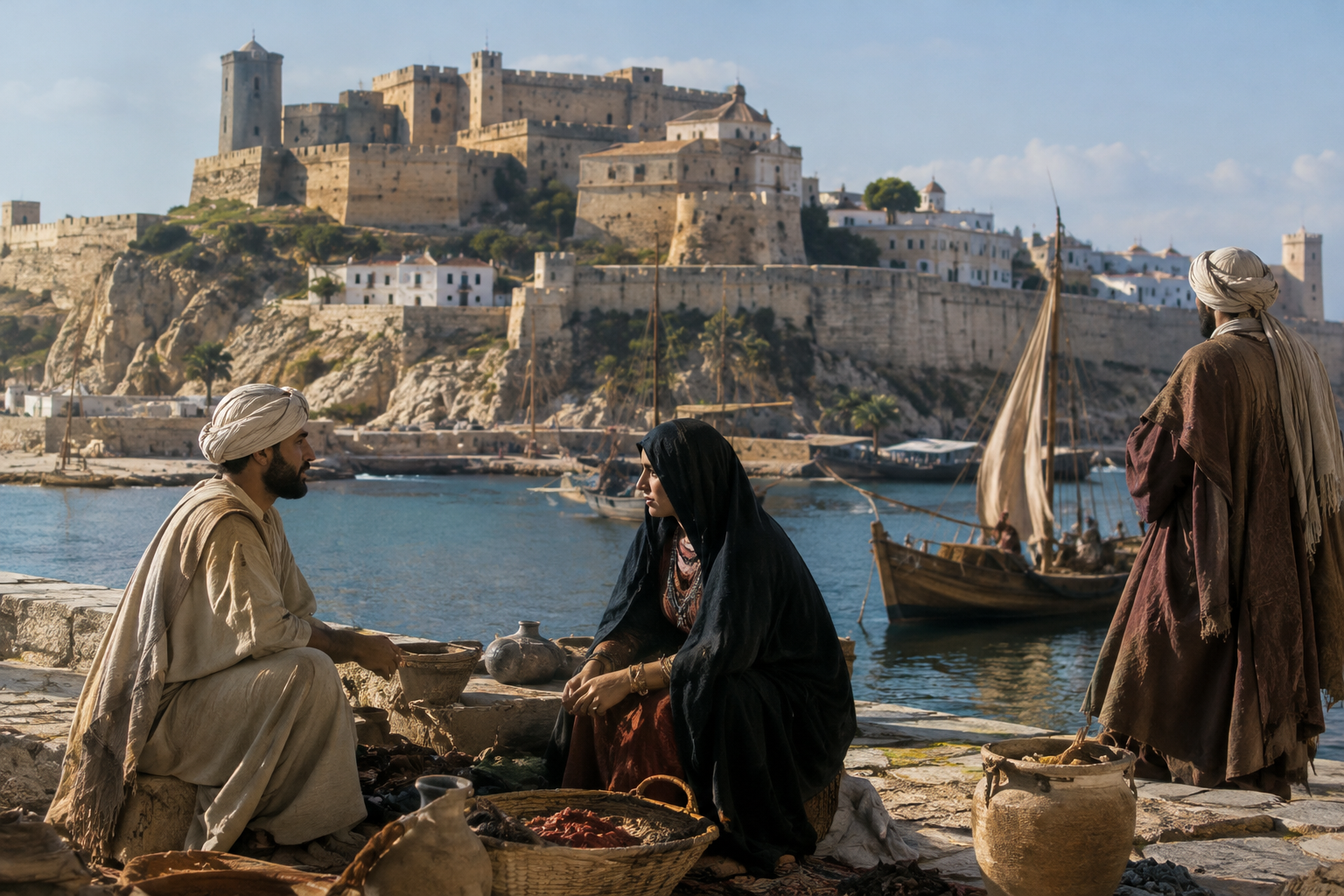
By around 950 AD, Ibiza was part of the Islamic cultural sphere of the Balearics, linked administratively and economically to Al-Andalus and, across the water, to North Africa. Islands can look isolated on a map; in practice they are often crossroads. Ships, merchants, soldiers, religious scholars, enslaved people, and farming communities all helped shape the human landscape of the medieval western Mediterranean.
Sample ldo116 belongs to that world. The importance of the find is not that one man can stand for all Ibiza, still less for all of Islamic Iberia. It is that his paternal line fits the broader picture emerging from archaeogenetics: medieval island populations were often more mixed, mobile, and historically entangled than older nationalist stories once allowed.
A recent MyTrueAncestry article on this same burial landscape explores that wider context in more detail:
The haplogroup name is a mouthful, but the key point is simple. E1b1b1b1a1f2b is a very narrow branch inside the much larger E1b1b paternal family. That broader family has a long and complicated history across parts of Africa, the Mediterranean, and southwest Eurasia. It would be careless to dump all of that deep history onto this one fine-grained branch, because narrower lineages can have their own later expansions and local stories.
So what can be said responsibly here? First, the appearance of E1b1b1b1a1f2b in medieval Ibiza is entirely plausible in a western Mediterranean context shaped by contact between Iberia and North Africa. Second, the sample shows that paternal lines now discussed in modern DNA projects were present in historically documented Islamic-period communities in the Balearics. Third, this is a reminder that paternal ancestry in Iberia was never sealed off within neat modern borders.
The Balearic Islands preserve exactly the kind of setting that makes ancient DNA so valuable. Written sources tell us that Muslim rule transformed parts of island life, including settlement, trade, agriculture, and political integration with Al-Andalus. Genetics adds something different: it lets us see that these changes were not only institutional or cultural, but also human, embodied in real people buried in island cemeteries.
For a broader view of how the islands changed over time before and after the medieval period, this related piece is especially useful:
That longer island history matters because medieval Ibiza did not begin from scratch in 950 AD. The Balearics had already seen prehistoric settlement, Punic and Roman influence, and late antique change. By the time of Al-Andalus, the population background was already layered. A paternal lineage like E1b1b1b1a1f2b entering, surviving, or circulating in this environment belongs to a history of repeated contact rather than a single simple migration event.
It is tempting to read any medieval Iberian lineage through later Christian-Muslim binaries, but the archaeology of Al-Andalus is usually less tidy than that. Islamic Iberia was not genetically uniform, nor was it populated by one incoming group replacing everyone else. Instead, it included local Iberian converts, people with North African ancestry, descendants of earlier Roman and post-Roman populations, and newcomers drawn into urban and rural networks over generations.
That is why ldo116 is so useful. He anchors E1b1b1b1a1f2b in a real medieval community shaped by those processes. The value of the sample lies less in claiming a single point of origin than in showing the branch within the lived demographic complexity of Al-Andalus in the Balearics.
Another MyTrueAncestry post, focused on Iberia under Rome and after it, helps show the deeper background against which these medieval changes unfolded:
That Roman and post-Roman background matters because medieval populations did not arrive on an empty stage. In Iberia, every later community inherited an already mixed population history. A medieval Y-line in Ibiza therefore belongs to several overlapping histories at once: local island continuity, Islamic-period connectivity, and the older Mediterranean habit of moving people, goods, and genes across the sea.
If there is one historical frame that best suits E1b1b1b1a1f2b in this case, it is the western Mediterranean rather than any single kingdom or ethnic label. The medieval sea joined together southern Iberia, the Balearics, coastal North Africa, and beyond. The same routes that moved ceramics, crops, and ideas also moved paternal lines.
This is where archaeogenetics is at its best: not when it pretends to identify a man as the embodiment of a people, but when it helps recover the scale of contact. Ibiza in the 10th century was part of a maritime world. A Y-line found there may reflect family roots in Iberia, North Africa, or an already blended population formed through earlier generations of movement. Without overclaiming, that is the historically sensible reading.
Research on the medieval Ibiza burials has helped bring that picture into focus, including work accessible through a study of the Islamic-period Ibiza material. Even without forcing every detail beyond the evidence, the larger point is clear enough: this was a biologically and historically diverse population.
For someone who carries E1b1b1b1a1f2b today, the medieval Ibiza sample does not prove descent from one island community, nor does it confer a ready-made ethnic label. What it does offer is something better grounded: a documented glimpse of this paternal branch in the 10th-century western Mediterranean, in an Al-Andalus setting where Iberian and North African histories were tightly interwoven.
That is the distinctive lesson of ldo116. This haplogroup belongs, at least in one ancient case, to the human reality of medieval Mediterranean mobility. Not a legend, not a dynasty, but a real person from Islamic Ibiza whose paternal line now helps map the deeper history of connection across sea and shore.
For a nearby comparative story from mainland Iberia, this related article is well worth exploring:

Comments