Haplogroup C2a1a1b1a2a

– 5 min read


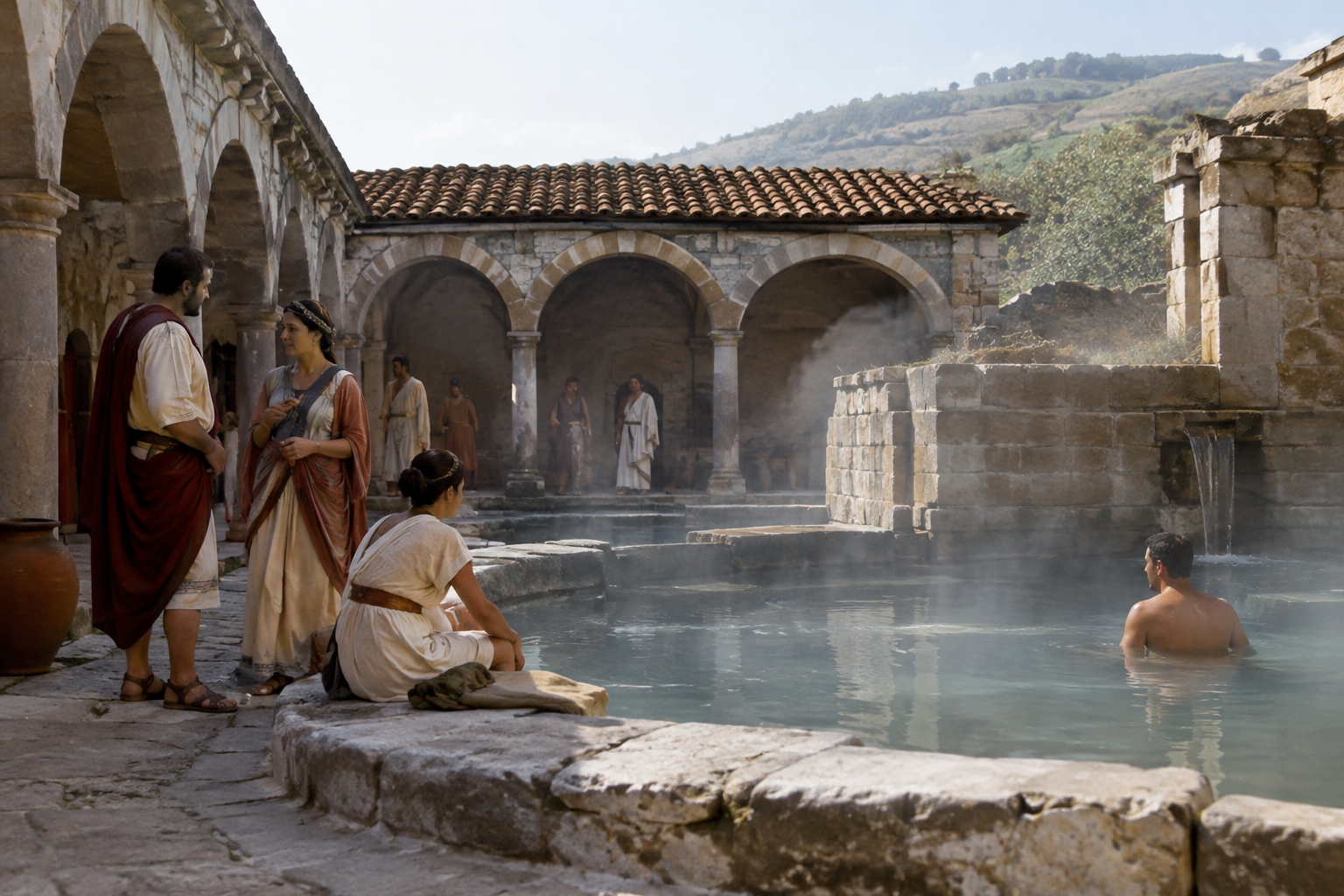
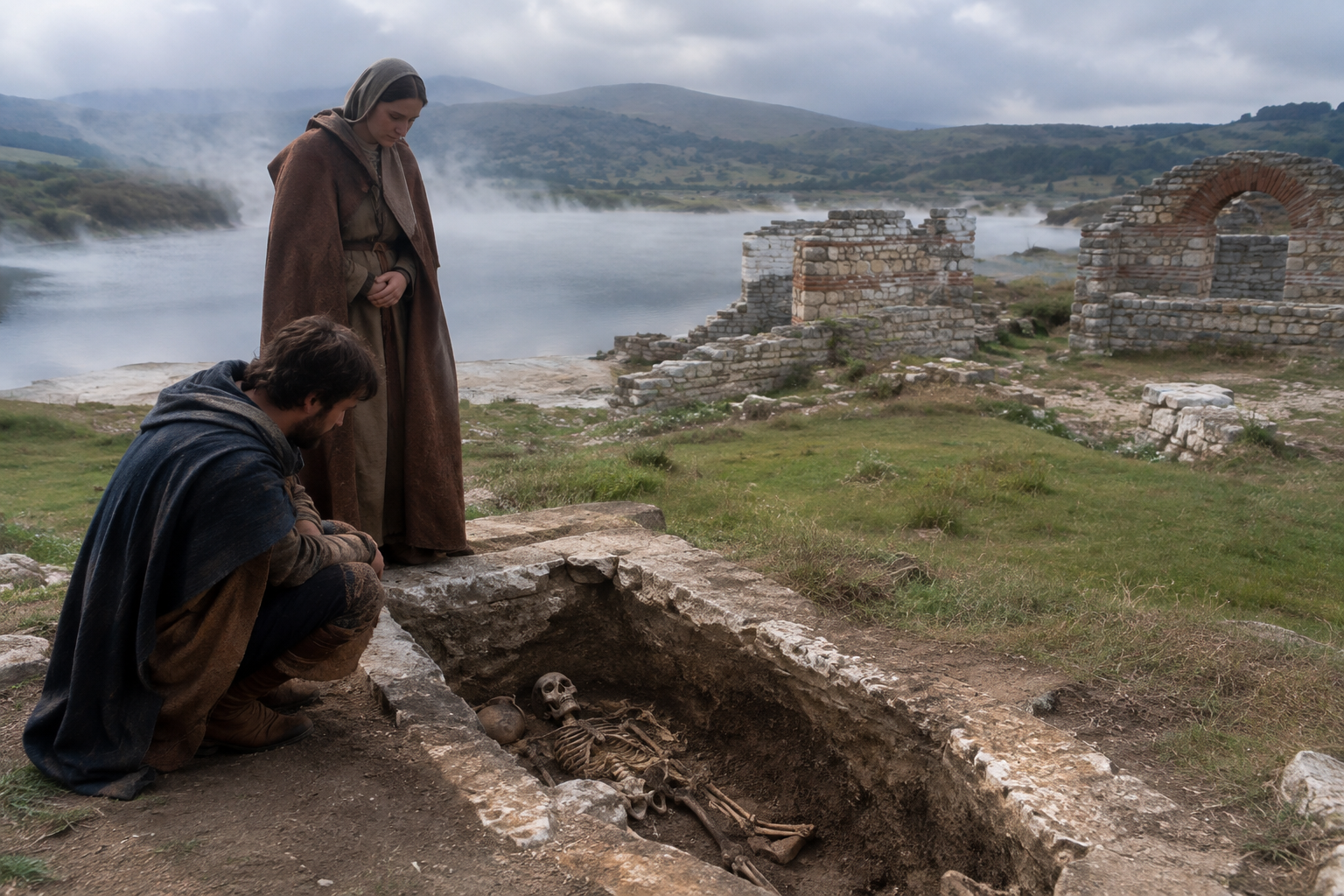
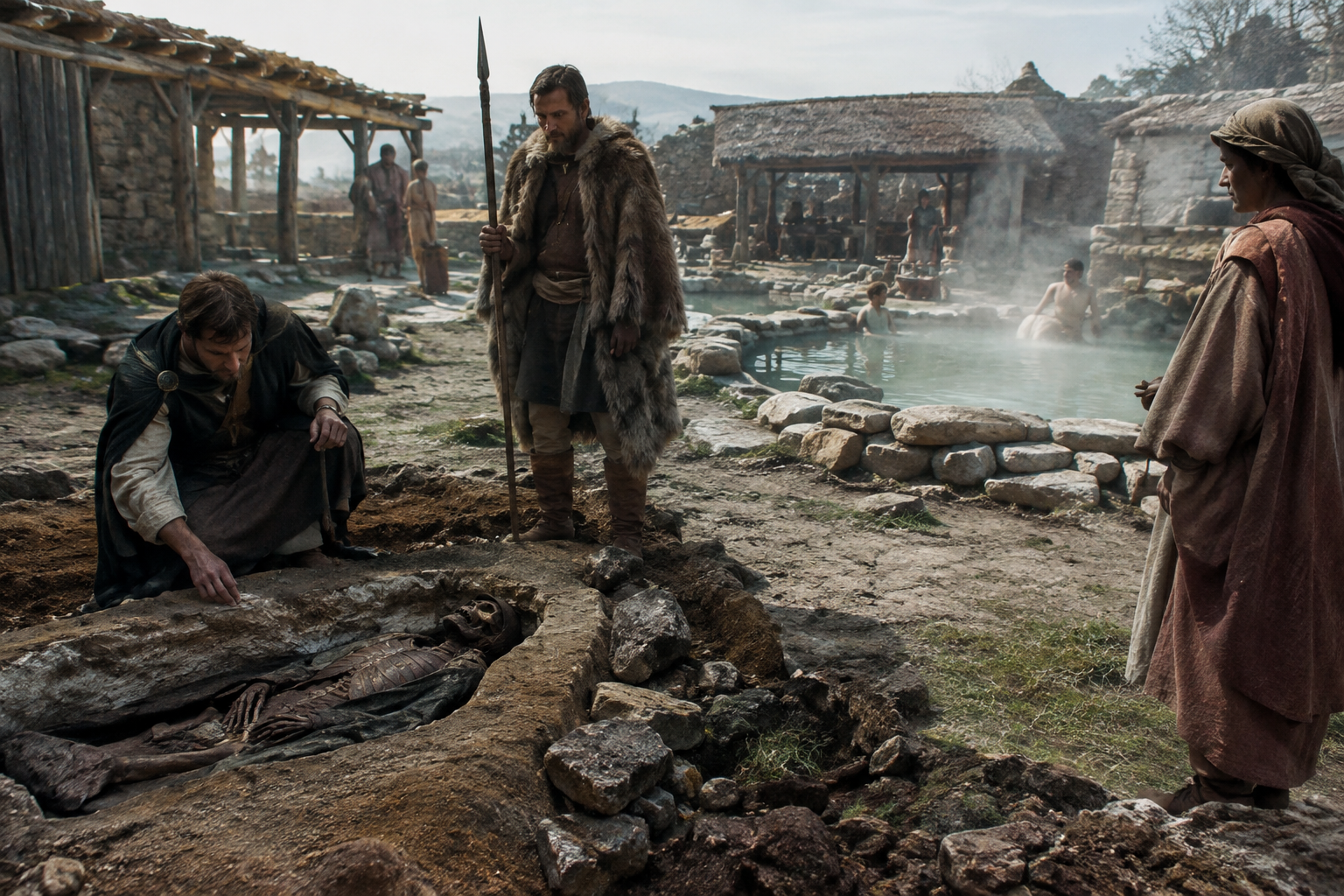
At Aquae Calidae, near modern Burgas on Bulgaria's Black Sea coast, one late Roman man has become unexpectedly important for the history of a very specific paternal line. The individual identified as I41149, dated to about AD 350, is reported in association with the Y-DNA haplogroup C2a1a1b1a2a. That is striking not because one burial can explain a whole lineage, but because this branch is far more often discussed in the wider story of Inner and northern Eurasia than in the Roman Balkans.
So the fascination here lies in the setting. Aquae Calidae was not a remote frontier camp in the desert of the imagination; it was a real thermal-water site in the late Roman world, plugged into roads, trade, military movement, and the social churn of the Balkans. A paternal lineage is only one thread in a person's ancestry, but when a branch like C2a1a1b1a2a appears in this context, it opens a crisp historical question: who was moving through the late Roman Black Sea zone, and how varied were the male lines within it?
Aquae Calidae had a long life as a place of baths, movement, and settlement. By the fourth century AD, this part of southeastern Bulgaria belonged to a Roman world that was politically stressed but still deeply connected. Armies were recruited and redeployed, merchants crossed regions, and communities in the Balkans were repeatedly reshaped by newcomers, veterans, captives, local families, and people whose roots lay well beyond the empire's administrative borders.
That is the proper frame for I41149. The sample gives us a person from a defined place and approximate date, not a ready-made ethnic label. A Y-chromosome assignment can trace one direct paternal line only; it does not tell us that this man was "from" one single people in any simplistic sense. But it does show that late Roman Bulgaria could include paternal lines far outside the branches many readers might expect from a conventional schoolbook picture of Roman provincial society.
An ancient DNA study investigating late antique Bulgaria and its neighboring regions is the right kind of backdrop for such a find, because the main lesson from this period is mixture rather than purity. The relevant research context is consistent with a Balkans shaped by mobility, contact, and layered ancestry rather than neatly bounded populations.
C2 is a large and historically important Y-DNA clade with deep roots in Asia, especially in northern and eastern parts of the continent and across steppe-connected populations. The branch in this article, C2a1a1b1a2a, is much narrower. That distinction matters. It would be careless to take the broad distribution of haplogroup C2 and pretend that every one of its sub-branches shared the same route into Europe, the same historical carriers, or the same period of expansion.
What the Aquae Calidae sample offers is not a grand origin myth, but a secure point on the map: by late Roman times, a paternal line assigned to C2a1a1b1a2a was present on the western shore of the Black Sea. That alone is historically interesting, because the Black Sea and Balkan worlds were classic contact zones, where imperial systems met mobile groups from the steppe and where ancestry could accumulate in layers over generations.
Readers who follow ancient Y-chromosome work in Asia will know that branches of C2 often appear in discussions of steppe and East Asian-linked male lineages. That broader background makes I41149 notable, but it does not license a fantasy biography. He need not have been a first-generation arrival from far away. His paternal line may have reached the region earlier, through military service, migration, alliance networks, or family histories now invisible to us.
If there is one place where an apparently unexpected lineage should not surprise us too much, it is the Black Sea zone. Roman administrators, soldiers, merchants, migrants, and neighboring non-Roman groups all used this region as a corridor. The empire's northern and northeastern horizons were never sealed. They were busy, negotiated, and often violent frontiers, but frontiers full of people.
That matters for interpreting C2a1a1b1a2a in Bulgaria. A lineage like this could have entered the Balkans through several historically plausible channels: steppe-linked movements into the Pontic zone, incorporation of outsiders into Roman military structures, or gradual transmission through families already established in Black Sea communities. The honest answer is that the present evidence does not isolate one route. The important point is that the archaeological and historical setting makes such diversity entirely credible.
The late Roman centuries were also the age in which older labels like "Roman" and "barbarian" become maddeningly blunt. People moved between those categories in service, law, and daily life. Genetics has been especially useful here because it strips away the illusion that frontier societies were biologically tidy. A burial ground can look archaeologically coherent while its inhabitants carry varied ancestries and paternal lines.
That wider pattern has been emerging across other Roman and post-Roman frontier studies as well. The Roman world did not simply project people outward from Italy; it absorbed them from many directions too.
There is a temptation with rare or eye-catching haplogroups to make them do too much historical work. One man at Aquae Calidae does not prove a mass migration, a ruling clan, or a named tribe. Nor should we assume that the finest possible terminal placement is equally secure in every reporting context. With a sample like I41149, the responsible approach is to keep the interpretation tied to what is actually documented: late Roman Aquae Calidae, around AD 350, with a Y-DNA assignment associated with C2a1a1b1a2a.
But that caution should not drain the interest from the finding. Quite the opposite. The real insight is that late antique southeastern Europe could preserve paternal signatures that connect the Balkans to much larger Eurasian stories. Ancient DNA keeps forcing historians to take mobility seriously, not just as a dramatic episode of invasions and empires, but as the ordinary condition of many connected regions.
A current research lead associated with this sample can be found in this ancient DNA study. Even without overstating any single conclusion, the broader value of such work is clear: it lets archaeology test how cosmopolitan these late Roman populations really were, individual by individual.
If your own Y-DNA falls under C2a1a1b1a2a, Aquae Calidae offers a small but vivid historical anchor. It shows that this paternal branch, or a lineage reported at that resolution, had reached the late Roman Balkans by the fourth century AD. Not as a legend, not as a dynastic boast, but as a real ancient person buried in a real place at a historical crossroads.
That is the distinctive lesson of this haplogroup here: a paternal line often associated with much broader Asian and steppe histories also appears within the social world of late Roman Bulgaria. For family historians, that does not provide a neat single origin story. It provides something better: evidence that your direct male line belongs to the long, untidy, fascinating history of Eurasian movement.



Comments