Haplogroup R1a1a1b2a2a2a

– 5 min read


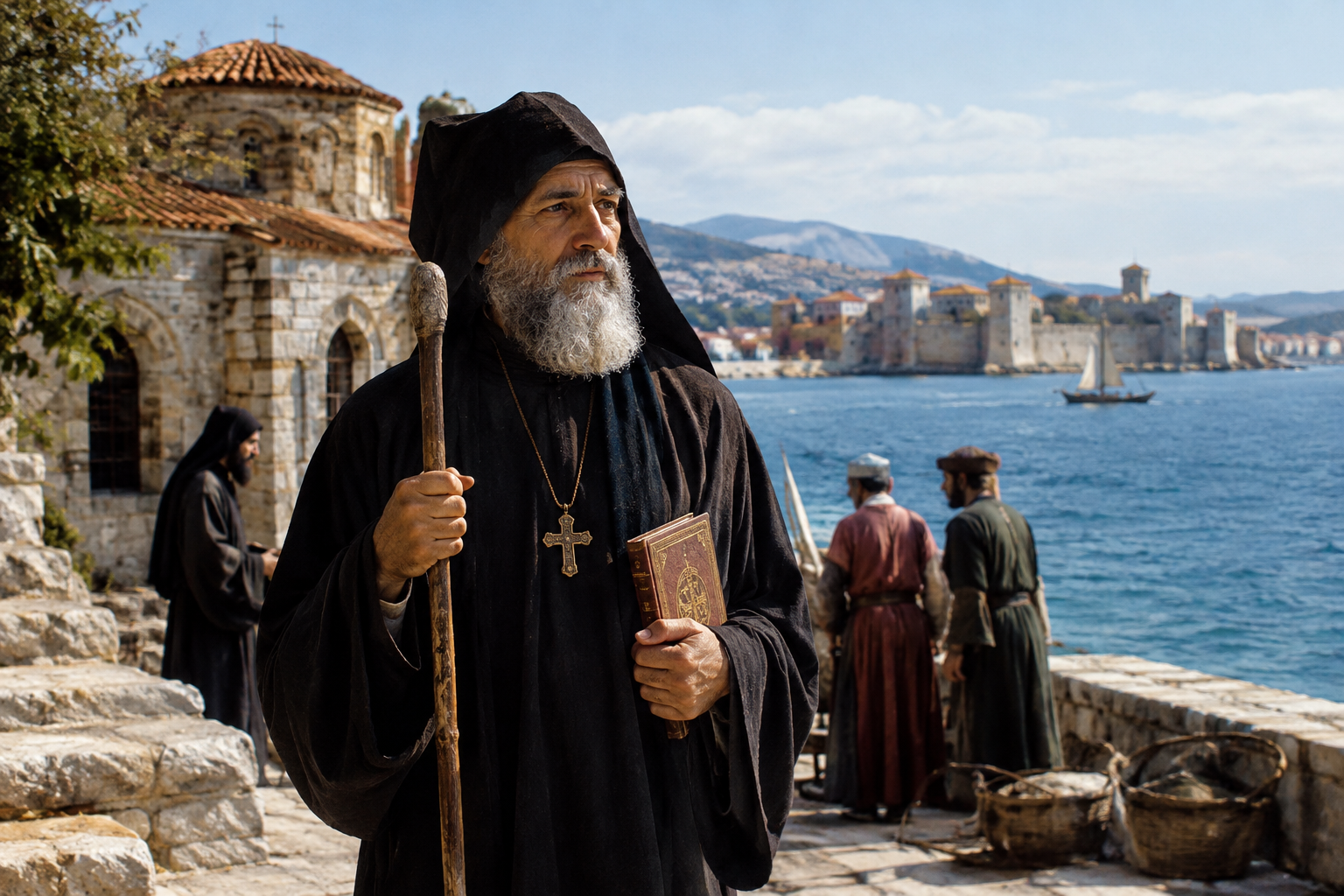
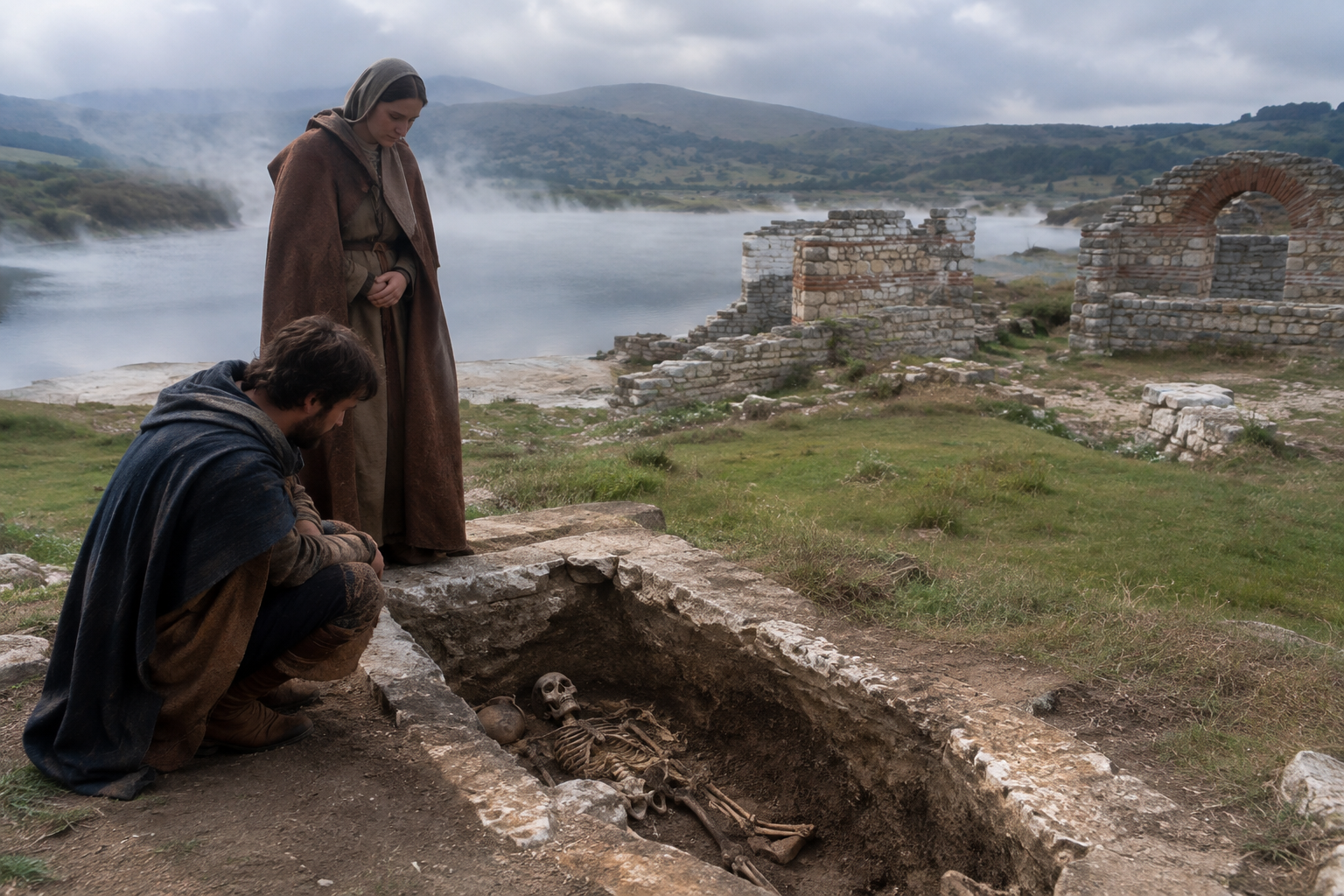
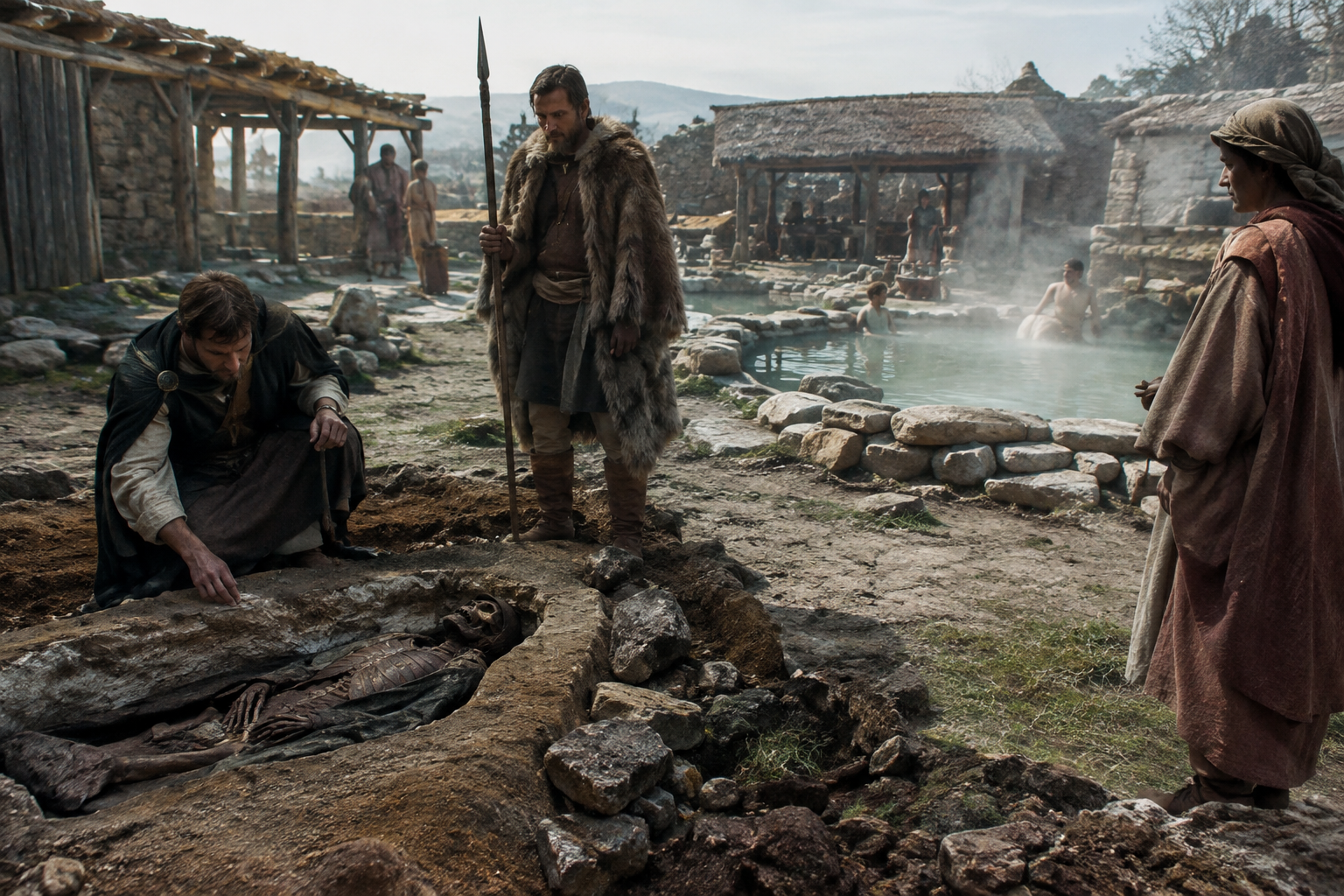
In the late Byzantine period, someone was buried at St Isidore on Chios, the Aegean island better known to many historians for trade, monasteries, and its position between the Greek world and Anatolia. That individual, sample I37184, dated to around 1257 AD, is the clearest ancient anchor here for the Y-DNA branch R1a1a1b2a2a2a. It is a small piece of evidence, but a vivid one: a paternal line often discussed in broad Eurasian terms turns up in a very particular Christian burial landscape of the medieval eastern Mediterranean.
That matters because haplogroups are often flattened into crude stories about peoples and migrations. In reality, a Y-chromosome lineage follows only one direct paternal line, while any one person's ancestry was already a complicated mixture of family histories, languages, and loyalties. On Chios in the 13th century, that complexity was not an abstract theory. It was everyday life.
The site itself gives the sample its real interest. St Isidore on Chios was not just any burial ground, but part of a sacred setting with a long religious memory. A study connected with the site, published on the archaeology, historiography, and archaeogenetics of St Isidore, makes clear why such burials are valuable: they let us look at identity not as a slogan but as something lived locally, in church spaces, cemeteries, and communities.
Sample I37184 belongs to that world. The date places him in a century of upheaval for the Byzantine sphere. After the Fourth Crusade in 1204, power around the Aegean became fractured and competitive. Chios sat amid shifting pressures from Byzantine successor states, Latin interests, maritime commerce, and the growing power of Anatolian polities. A man carrying the paternal lineage R1a1a1b2a2a2a in this setting is not evidence of one simple migration tale; he is evidence that such lineages had become part of the ordinary human fabric of the medieval Aegean.
The wider haplogroup R1a has a long and important history across parts of Europe and Eurasia, and it appears in many discussions of Bronze Age and later population movements. But the branch in this article is not the whole of R1a. It is the much narrower subclade R1a1a1b2a2a2a, and that distinction is essential.
A narrow subclade tells us about one twig on a very large paternal tree. It does not, by itself, identify a language, an ethnicity, or a political allegiance. When we find this lineage in a Byzantine-era burial on Chios, the safest historical reading is not that the man can be neatly labelled as "coming from" some distant region, but that paternal lines ultimately linked to wider Eurasian histories were by then present within the Greek-speaking and Orthodox Christian worlds of the eastern Mediterranean.
That is, in a way, more interesting than a simpler story would be. Medieval islands were not sealed boxes. They were crossroads, and not in the romantic travel-brochure sense. They were places where merchants, soldiers, clerics, migrants, and local families met over generations, producing communities that were culturally legible to themselves but genetically varied in ways we are only now beginning to detect.
Chios has often appeared in history as a node: an island in shipping lanes, in ecclesiastical networks, and in the political tug-of-war between larger powers. That makes it exactly the sort of place where a lineage like R1a1a1b2a2a2a might appear without fanfare. No trumpet need sound. No invading host need be imagined. Medieval populations often absorbed older movements so thoroughly that only genetics reveals how mixed the paternal record had become.
This is one reason ancient DNA from the Aegean and nearby Greek worlds matters so much. It helps correct the old habit of treating historical populations as if they were pure and static. The archaeology of burials, churches, and settlements shows continuity of place and practice; the genetics often shows that continuity was carried by people whose family backgrounds were more diverse than any tidy textbook category suggests.
That does not make Chios unusual in a sensational sense. Quite the opposite. It makes Chios historically normal for the medieval Mediterranean. Ports and islands gathered people. Empires taxed them, recruited them, married them, converted them, buried them, and remembered them. A paternal lineage could arrive centuries earlier than the burial we happen to sample, and by the time it appears in a church cemetery it may already be entirely local in language and social belonging.
For readers familiar with the broad reputation of R1a as more common farther north or east, a Chios burial may seem surprising at first glance. But Byzantine history gives plenty of room for such lineages to circulate. The empire and its neighboring regions were connected to the Balkans, the Black Sea, Anatolia, the Caucasus, and the steppe-facing frontier through trade, war, settlement, and military service.
The medieval eastern Mediterranean was full of men whose paternal lines might once have passed through very different landscapes. By the 13th century, those older movements had long since been folded into new identities: Byzantine, local, urban, rural, islander, Christian. The Y chromosome preserves one thread, but the burial context tells us where that thread had come to rest.
That broader pattern is worth setting beside other studies of movement and mixture in connected regions. Work on the Black Sea and neighboring zones repeatedly shows that populations around Byzantium were shaped by contact and mobility rather than neat boundaries.
There is only one ancient sample listed here, and that should discipline the story. We are not looking at a dynasty, a cemetery-wide paternal pattern, or a map of all medieval Chios. We are looking at one documented male line, I37184, in one late Byzantine sacred setting. That is enough to be useful, but not enough to support sweeping claims.
Still, single samples can be illuminating when their context is strong. Here the context is strong because St Isidore is historically specific: a named site, on a known island, in a known period of Byzantine and post-1204 instability. The value of I37184 lies not in grandiose certainty but in the way it places a narrow paternal branch within a recognizably medieval Greek world.
For family historians, this is often the most honest kind of excitement ancient DNA can offer. Not the fantasy of discovering that one lineage "explains" a whole identity, but the sharper, more human realization that paternal ancestry could pass through sacred Greek landscapes, imperial borderlands, and island communities whose histories were layered rather than pure.
The most distinctive thing about R1a1a1b2a2a2a in this case is not that it points to one dramatic migration, but that it appears in a late Byzantine burial on Chios, a place where religion, politics, and mobility met. That makes this haplogroup branch a reminder that paternal lines associated with broad Eurasian histories were also fully at home in medieval Aegean society. If this is your branch, the ancient evidence responsibly suggests a paternal past that may have passed through zones of contact and integration rather than standing apart from them.

Comments