Haplogroup J2a1a1b2a1c2

– 5 min read


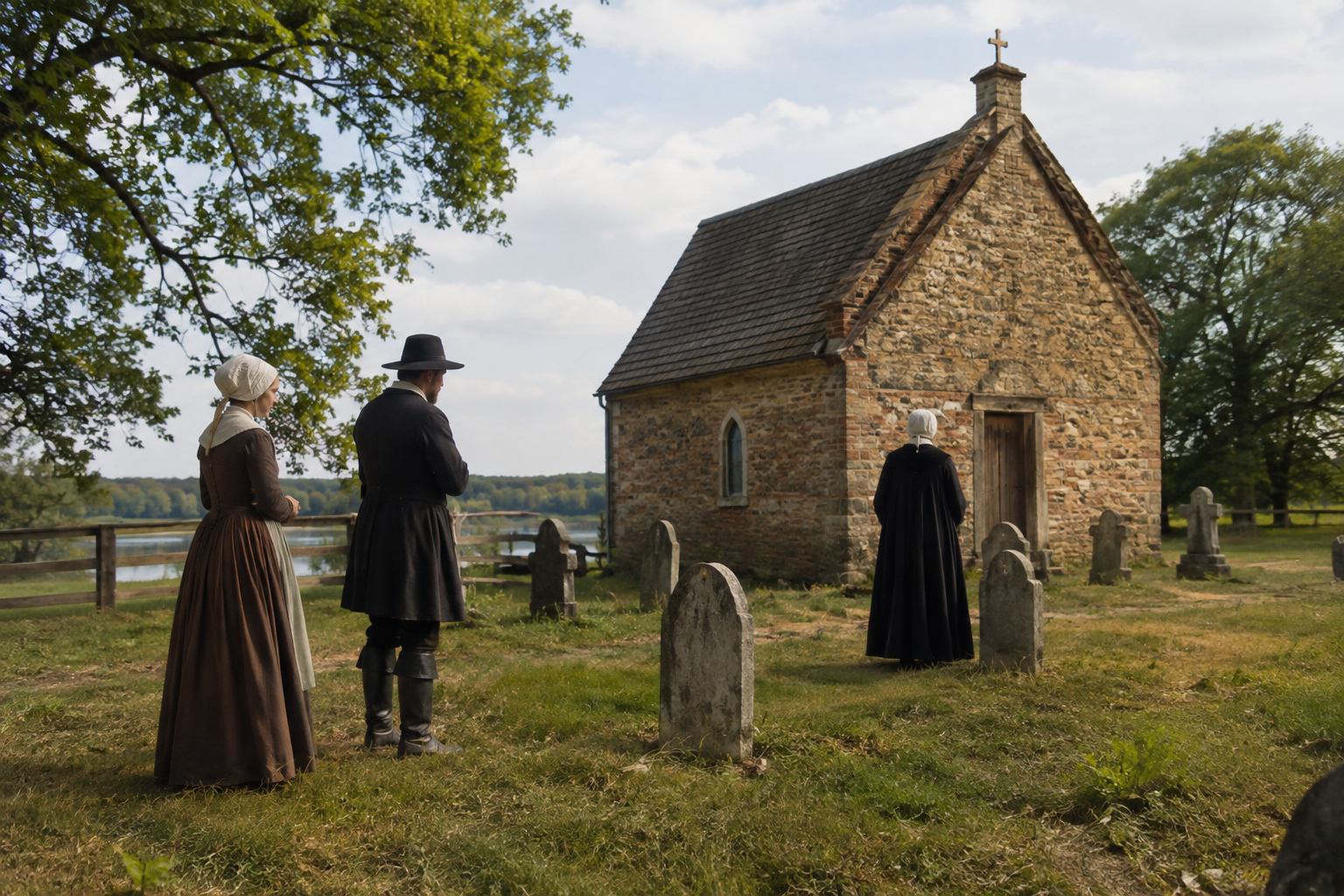
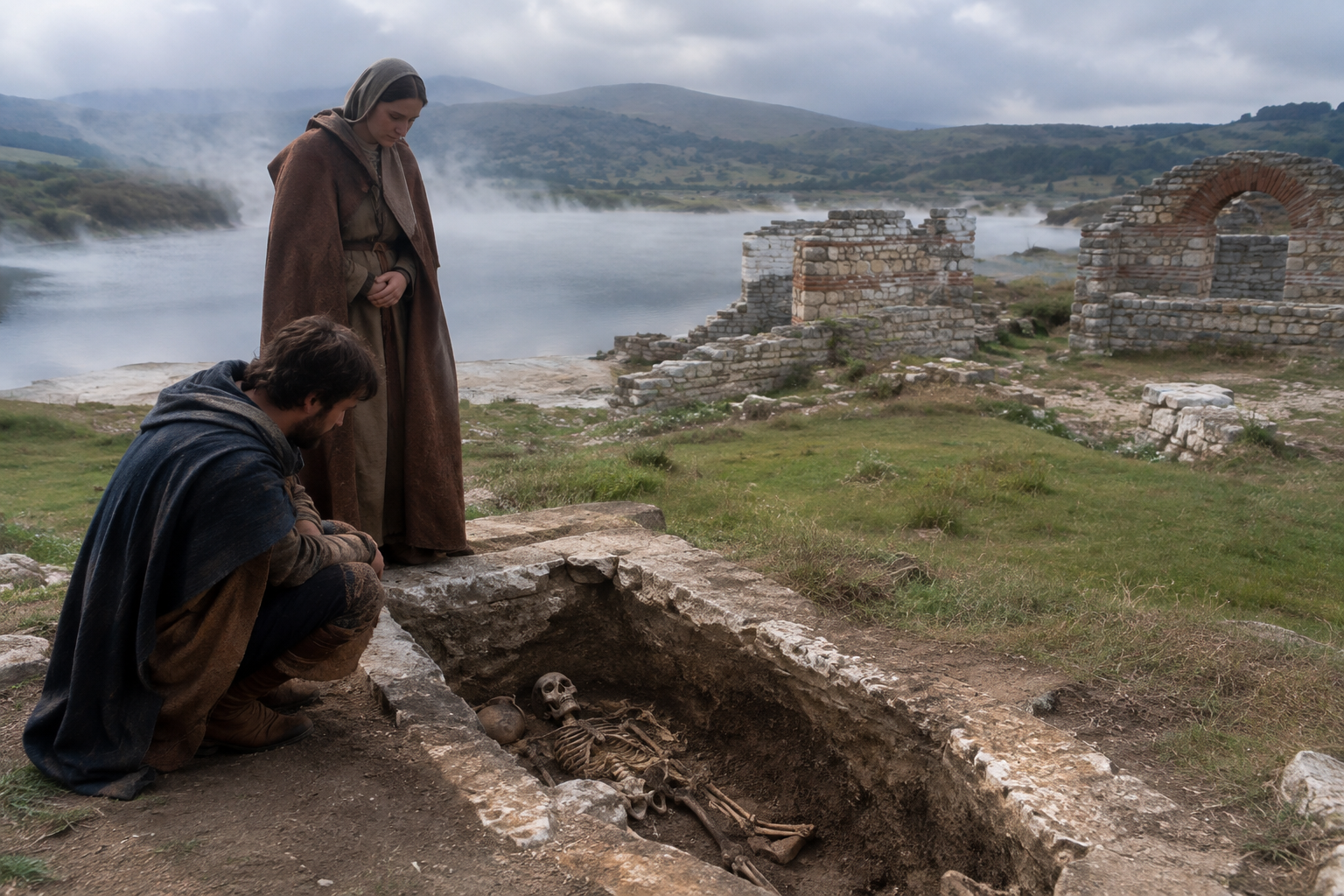
In the early colonial cemetery at Historic St. Mary's City in Maryland, one excavated individual has given this very specific Y-chromosome branch a concrete historical foothold: sample I15303, dated to around 1634 AD from the Chapel Field cemetery. That is immediately interesting because haplogroup J2a1a1b2a1c2 is not the sort of lineage most readers expect to meet first in seventeenth-century English America. Yet there it is, attached not to a legend or a family tradition, but to a real burial from one of the earliest colonial settlements in what became Maryland.
The point is not that one man can stand for a whole colony. He cannot. But a direct paternal lineage like J2a1a1b2a1c2 can sometimes illuminate the quieter side of history: not empires in the abstract, but the movement of particular male lines through ports, parishes, and frontier settlements. In this case, the story begins not in the Bronze Age or in some misty origin tale, but in a chapel cemetery on the western shore of the Chesapeake.
Historic St. Mary's City was the first capital of colonial Maryland, founded in the 1630s. Its Chapel Field cemetery belongs to that tense and formative world of migration, religious experiment, tobacco wealth, disease, and early Atlantic mobility. Sample I15303 comes from that setting: a Christian burial ground in an English colonial town, not a battlefield grave or an aristocratic mausoleum.
That context matters. A Y-DNA result from such a cemetery reminds us that colonial populations were already more varied in origin than later myths sometimes suggest. A man buried in a seventeenth-century Maryland chapel could belong to a paternal line with much older roots outside northwestern Europe, while still being fully part of that colonial community in language, law, religion, or social life.
A recent ancient-DNA study on St. Mary's City has helped clarify the biological diversity of the settlement and its surrounding population history; this is the key research context for I15303's appearance in the record, and it is discussed in research on the genetic legacy of seventeenth-century colonial St. Mary's City.
J2a1a1b2a1c2 is a very narrow branch within the much wider Y-DNA haplogroup J2. That wider parent lineage has a long and well-known history in parts of the eastern Mediterranean, Anatolia, the Caucasus, the Near East, and later in many parts of southern and southeastern Europe. But one must be careful here: the broad story of J2 is not automatically the story of this exact terminal branch.
What we can say responsibly is more modest, and more useful. If you belong to J2a1a1b2a1c2, your direct paternal line sits within a lineage family that has often turned up in populations linked to Mediterranean and Near Eastern historical movements. What the Maryland burial shows is that by the early modern Atlantic world, at least one bearer of this branch had become part of an English colonial setting in North America.
Y-DNA traces only one line of descent, father to son to son. It does not define a person's whole ancestry, social identity, or culture. But it can preserve a remarkably durable thread through otherwise mixed and complicated family histories.
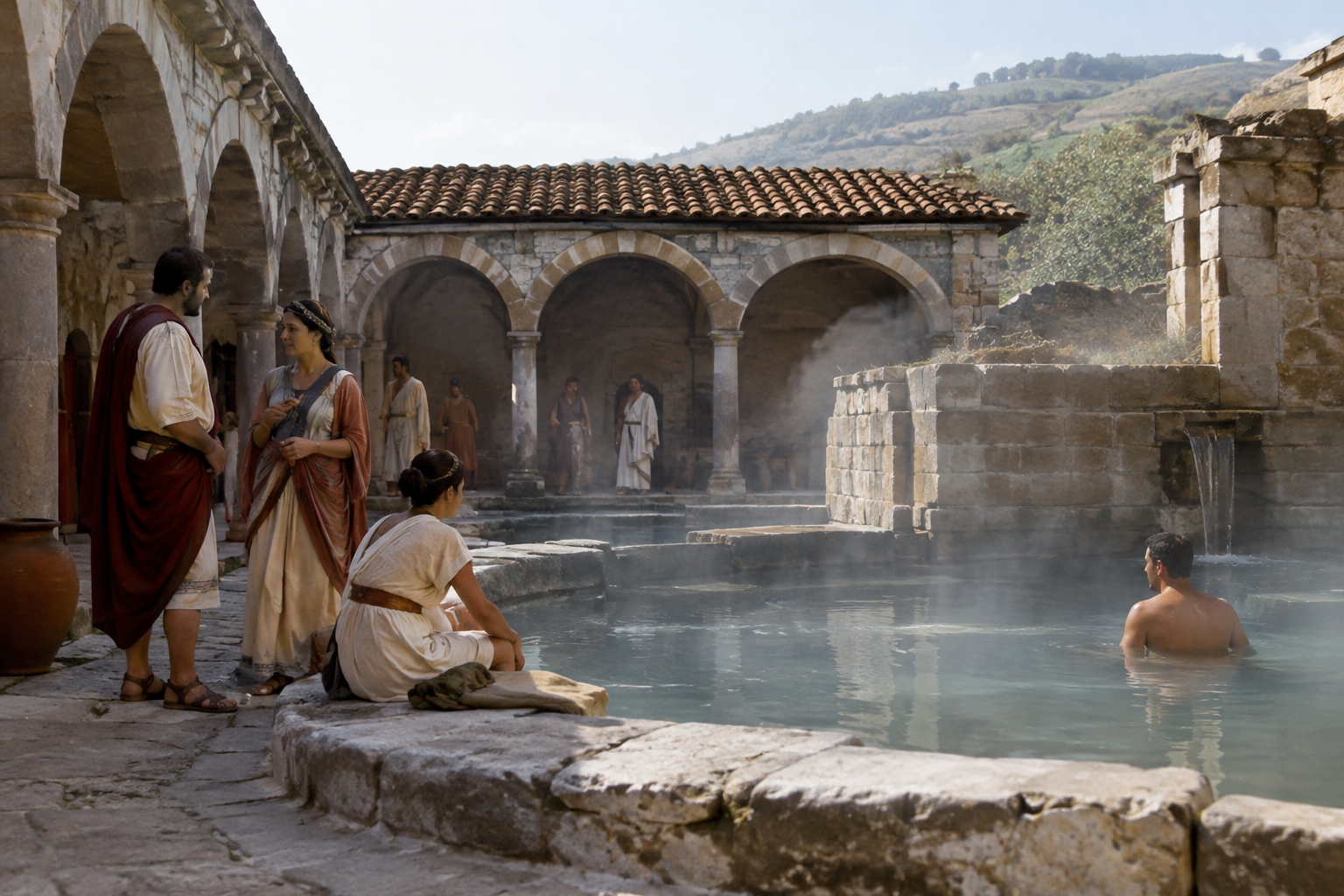
At first glance, a J2-derived lineage in an early English colonial cemetery may look surprising. On second glance, it looks rather less so. Seventeenth-century England and its colonies were tied into a world of Mediterranean commerce, older Roman-era population mixtures, migration through port towns, and the long demographic afterlife of medieval and early modern mobility.
By the time settlers crossed the Atlantic, paternal lines had already been circulating around Europe for millennia. Some came through ancient Mediterranean expansions, some through Roman imperial movement, some through medieval trade and resettlement, and some through more local family histories we can no longer reconstruct in detail. The burial of I15303 does not let us choose between those routes, but it does place this paternal branch in a real colonial community at a very early date.
That broader possibility has become increasingly visible in ancient DNA work from Europe, especially in studies showing that communities often contained more ancestry variation than older national or ethnic stories allowed. For the Iberian example, where Roman and later population shifts left lasting marks, see the MyTrueAncestry discussion of Roman Hispania's Lasting Genetic Legacy.
Although this article is anchored in one colonial-era sample, the bigger historical significance of J2-related branches lies in their repeated appearance across the Mediterranean world and adjacent parts of Europe. Archaeogenetics has made that picture clearer over the last decade. The old habit of imagining neatly separated peoples has given way to something far more historical: mobility, intermarriage, military service, trade, and local continuity all at once.
For haplogroups under J2, that mixed landscape is especially important. These lineages are often discussed alongside the spread of farming, urban life, exchange networks, and later classical and post-classical connections. But one should not compress all that into a single migration tale. Different J2 branches may have taken different routes at different times, and the narrow branch J2a1a1b2a1c2 needs its own evidence wherever possible.
That is why I15303 matters. Even a lone well-dated sample can act as an anchor point. It shows that this branch was present in the early Chesapeake world, and it invites comparison with the sorts of mixed historical populations seen elsewhere in Mediterranean-influenced contexts, whether in Roman Italy, Iberia, or colonial zones shaped by long-distance movement.
There is another reason this Maryland sample deserves attention. Colonial cemeteries are often read through documents first and bones second. Ancient DNA changes that balance. It can reveal that apparently ordinary churchyard burials belonged to people whose family histories were far less locally bounded than the surviving paperwork might suggest.
St. Mary's City, after all, was not simply an "English" outpost in any pure biological sense. It was part of a dense Atlantic system that connected the British Isles to continental Europe, Africa, the Caribbean, and the wider Mediterranean. A paternal lineage like J2a1a1b2a1c2 fits well within that entangled historical reality, even if the exact biography of I15303 remains unknown.
The best reading of this evidence is not to force an exotic origin story onto one burial. It is to notice that colonial societies were peopled by individuals carrying lineages whose deeper roots often lay in much older Eurasian histories. Ancient DNA gives us a way to see those hidden continuities without pretending to know more than the burial itself can tell us.
For someone researching haplogroup J2a1a1b2a1c2 today, the clearest lesson is that this is a paternal line with a documented presence in the early modern Atlantic world, not only in the older Mediterranean sphere with which the parent haplogroup J2 is more commonly associated. Sample I15303 from Historic St. Mary's City offers a small but solid historical marker: by around 1634 AD, this branch had already entered the human landscape of colonial Maryland.
That does not tell every bearer of the lineage where his family came from. But it does suggest a paternal history capable of crossing regions, languages, and political worlds long before modern records begin. Sometimes that is the real value of ancient DNA: not a grand claim of identity, but one firmly dated glimpse of your direct male line standing in a chapel cemetery at the edge of a new colony.

Comments