Haplogroup E1b1b1a1a1c1b1a1a

– 4 min read


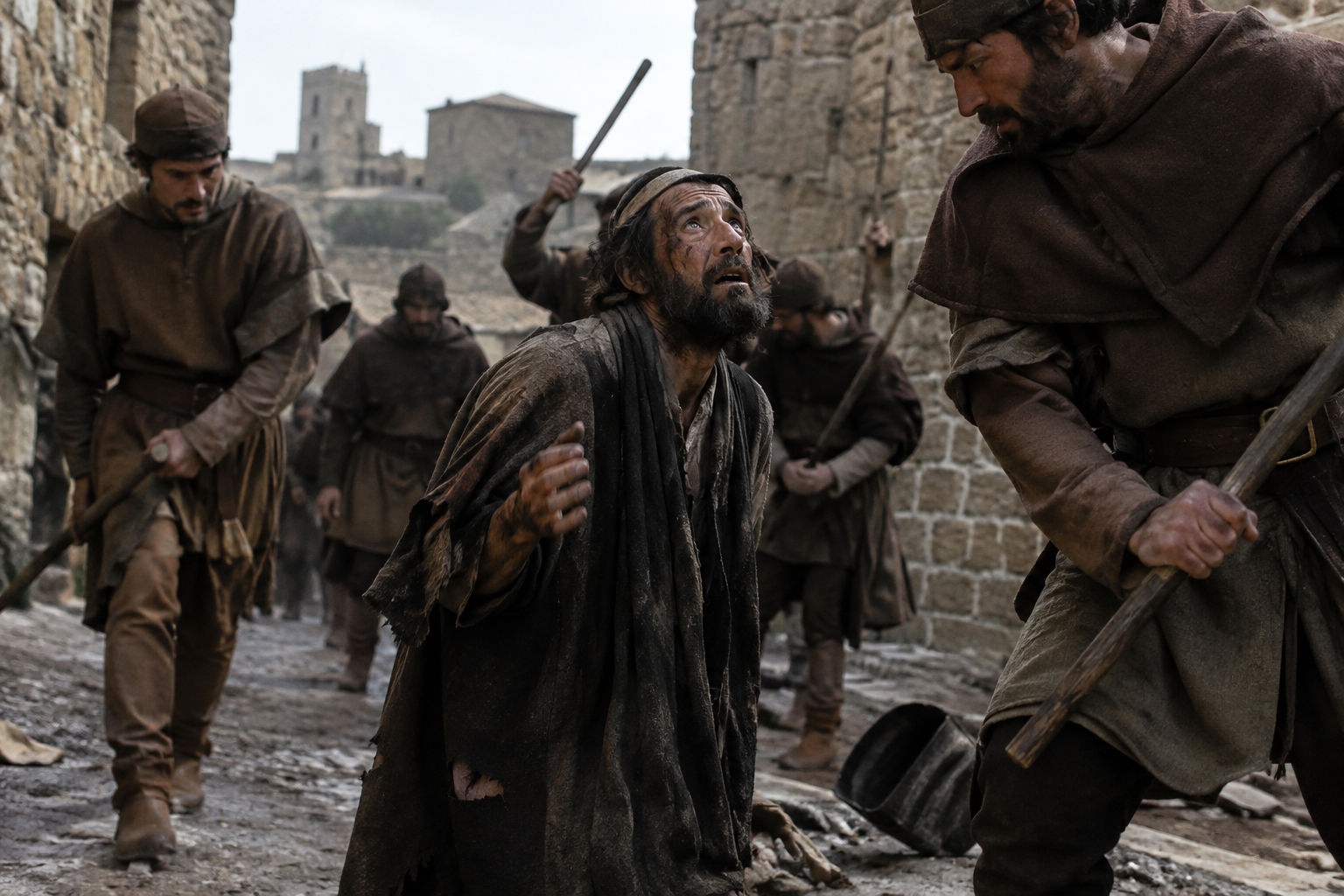
In 1348, in the Catalan town of Tàrrega, violence struck the local Jewish community with terrible force. One of the individuals recovered from the burial ground at Les Roquetes, identified as ROQ2, belongs on MyTrueAncestry under the Y-DNA haplogroup E1b1b1a1a1c1b1a1a. That makes this lineage visible not in an abstract migration map, but in a brutally specific historical moment: medieval Iberia at the time of plague, persecution, and sudden communal rupture.
The importance of that is easy to miss if one stares only at the letters and numbers. Y-DNA tracks a direct paternal line, not a person's whole ancestry, religion, or identity. But when a paternal branch turns up in a documented medieval Jewish burial context in Catalonia, it gives us one sharply focused point from which to think about how lineages associated today with the wider E1b1b family were present in the western Mediterranean, woven into urban life, and caught up in one of the darkest episodes of fourteenth-century Iberian history.
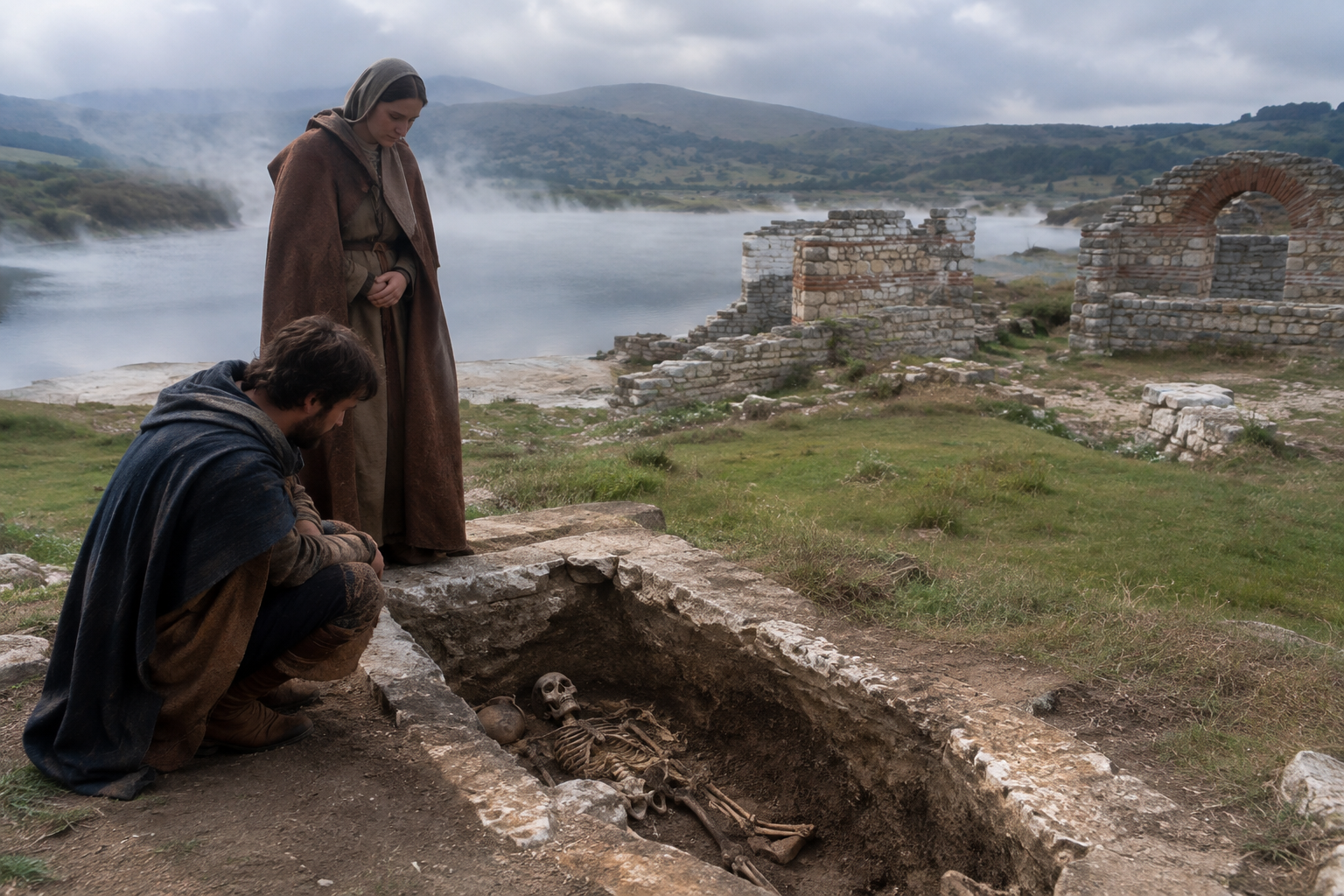
The sample ROQ2 comes from the cemetery associated with the Jewish community of Tàrrega, in present-day Catalonia. The date, 1348 AD, is not just any medieval timestamp. It places this man in the year of the Black Death and in the same atmosphere of fear, accusation, and anti-Jewish violence that scarred communities across Europe. At Tàrrega, archaeology and historical study meet in unusually direct fashion: the burials preserve evidence of a community struck down during a known outbreak of persecution.
A university report on the site describes how ancient DNA helped illuminate the Jewish community buried there, connecting biological evidence with a historically documented pogrom in Catalonia. That research context matters for ROQ2 because it anchors the genetic finding in a real cemetery, a real town, and a real episode of collective violence rather than floating it free as just another database label. See the research context here: https://www.uab.cat/sites/ContentServer/newsroom/news-detail/-1345830290613.html?detid=1345983739719.
E1b1b1a1a1c1b1a1a is a very fine-grained subclade inside the much broader E1b1b family. The wider E1b1b umbrella has a long and complicated history around the Mediterranean, North Africa, the Near East, and parts of Europe. But one must be careful here: that broad geographic story cannot simply be copied and pasted onto this exact terminal branch without direct evidence.
For ROQ2, the safest historical statement is a modest one. This paternal line was present in a medieval Jewish individual from Catalonia, in a town deeply tied to the commercial and cultural worlds of the Crown of Aragon. That tells us something real about the diversity of paternal ancestry within Iberian Jewish communities, but it does not by itself identify where this man's paternal ancestors first entered Iberia, how long they had lived there, or whether the lineage arrived in Roman, late antique, Islamic, or later medieval times.
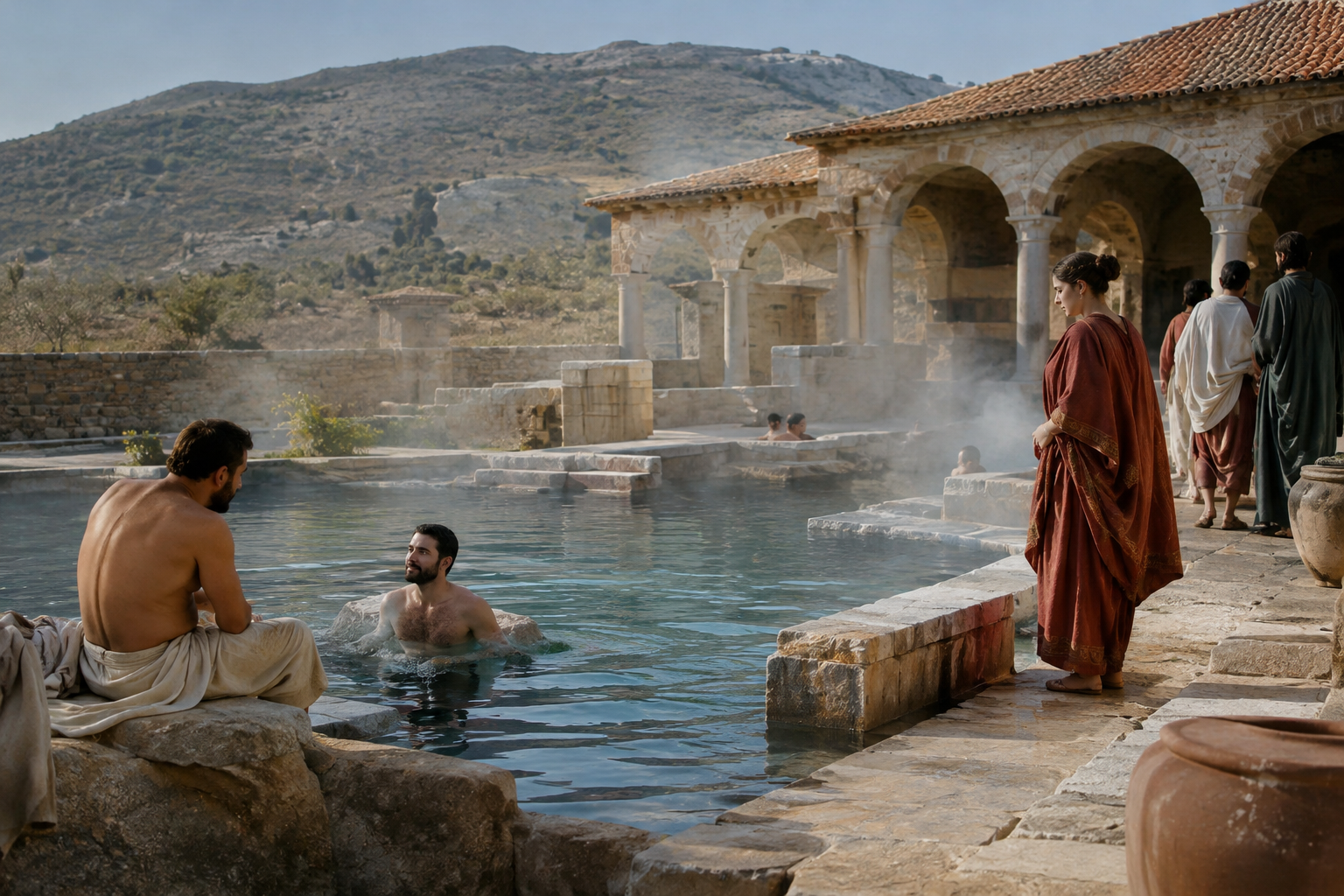
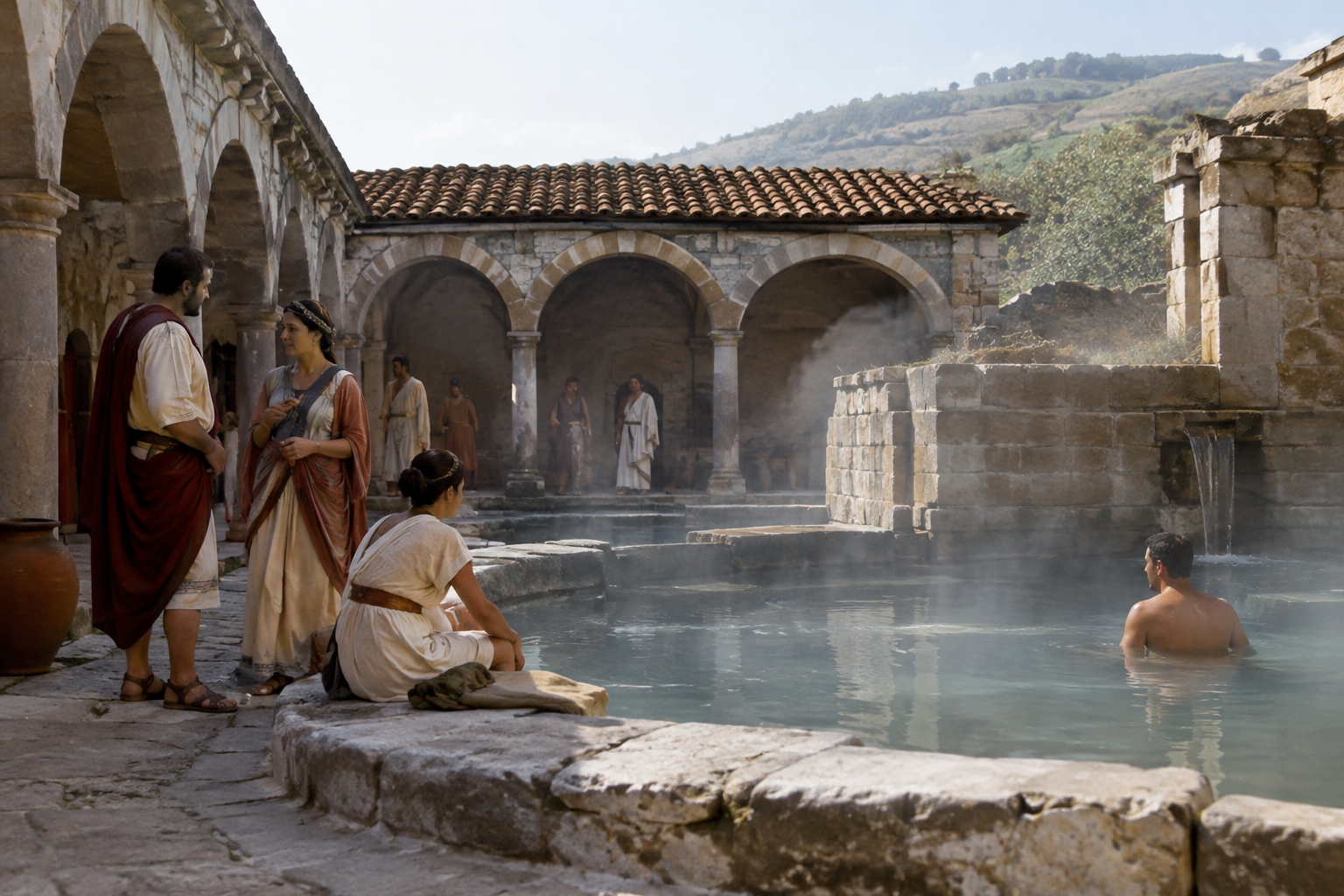
Catalonia in the Middle Ages was not an isolated corner of Europe. It was part of a lively Mediterranean world connected by trade, migration, scholarship, and political expansion. Jewish communities in places like Tàrrega lived within that urban web, participating in local society while also maintaining ties that could stretch across Iberia and beyond. A paternal lineage such as E1b1b1a1a1c1b1a1a sits quite naturally in such a setting: not as an exotic intrusion, but as one thread in a population shaped by centuries of movement around the sea.
This is one reason Iberia repeatedly turns up as such an interesting laboratory for ancient DNA. Roman rule, late antique mobility, the Islamic period, and medieval Christian kingdoms all left demographic traces, sometimes reinforcing older patterns and sometimes introducing new ones. The result is not a neat ethnic mosaic but a thoroughly historical one, in which religion, language, law, and ancestry overlap only imperfectly.
There is a temptation, whenever a Y-haplogroup associated somewhere in the Mediterranean or Near East appears in a medieval Jewish context, to tell a grand tale of unbroken descent from antiquity. Sometimes that may prove broadly true at the level of deep population history. But archaeology is usually less tidy, and more interesting, than that.
The men buried in Jewish cemeteries did not all have to share one paternal background, one place of origin, or one migration date. Medieval Jewish communities, like other communities, could include lineages with different earlier histories. Some paternal lines may reflect older Levantine or eastern Mediterranean connections; others may have been absorbed through conversion, marriage patterns, or long residence in Iberian settings. The significance of ROQ2 is precisely that he reminds us of this diversity.
That point fits well with recent work on medieval Iberian populations more generally, where ancient DNA has been showing a less homogeneous and more locally textured past than older stereotypes allowed. Tàrrega is valuable not because it solves every question, but because it places one identifiable paternal branch inside a specific community at a specific time of crisis.
Diverse Origins in Medieval Spain
What, then, should a reader actually take from this sample? First, that E1b1b1a1a1c1b1a1a was present in medieval northeastern Iberia, specifically in a Jewish individual buried after the 1348 violence at Tàrrega. Second, that the line belongs to a setting where written history and archaeology can be brought together unusually well. And third, that this is a reminder of how paternal ancestry survives through men whose lives were shaped not only by migration in the distant past but by very immediate medieval events: disease, accusation, segregation, and massacre.
There is also something rather moving about the scale of the evidence. We are not dealing here with kings, dynasties, or legend-haunted founders. We are dealing with a named archaeological individual, ROQ2, from a cemetery whose significance comes from the vulnerability of the community it served. The Y-chromosome in this case is not a banner of prestige. It is a fragment of human continuity recovered from an act of destruction.
For someone researching the haplogroup E1b1b1a1a1c1b1a1a, the most responsible lesson from the evidence is not a grand claim of ethnicity or a single-point origin. It is that this paternal line appears in a documented medieval Jewish context in Catalonia, within the complicated human history of the western Mediterranean. That makes it a lineage worth reading through the history of cities, minorities, and movement across Iberia and its neighboring worlds, rather than through simplistic labels alone.
Comments