Haplogroup R1b1a1a2a1a1c2b2a1b1a

– 5 min read


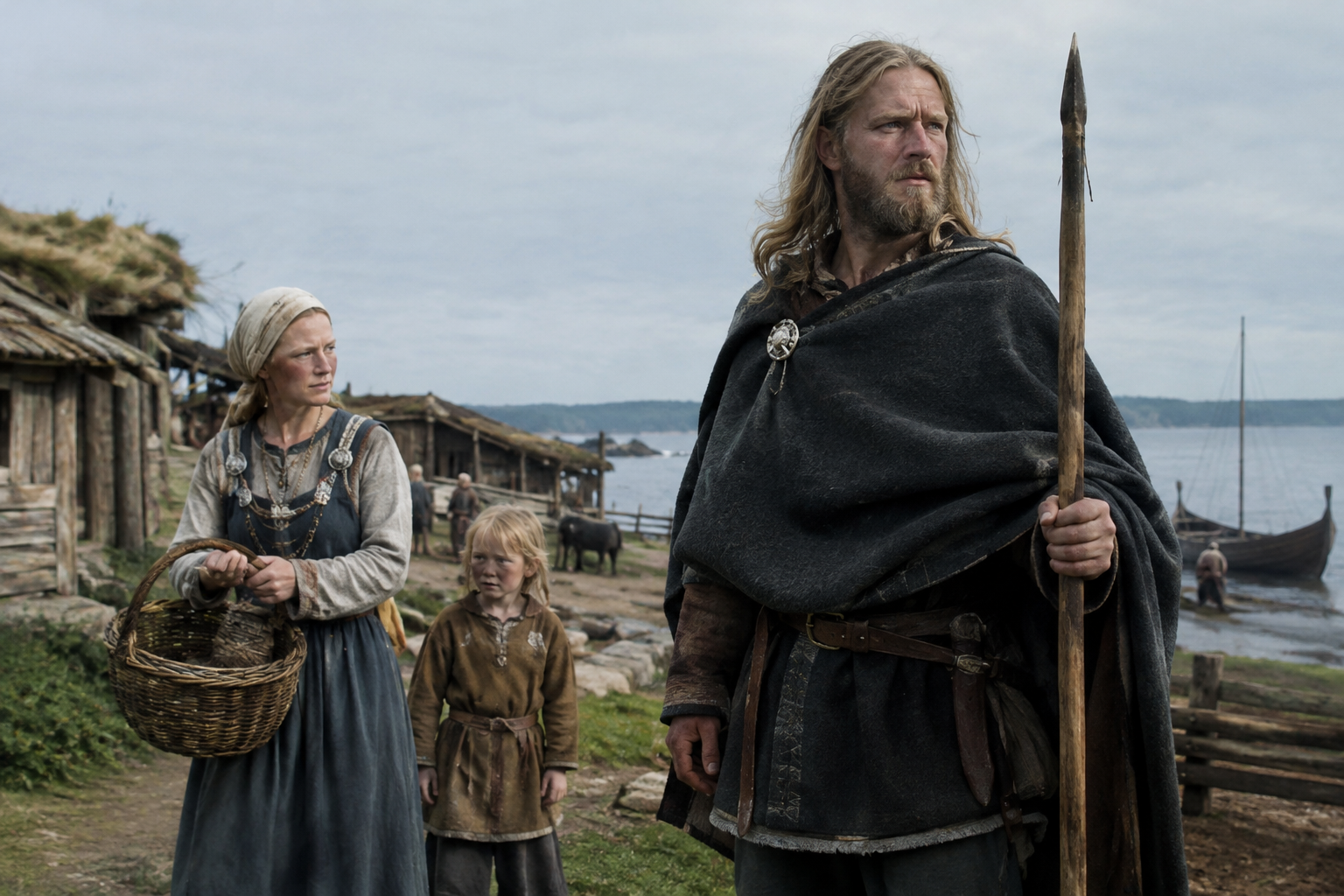
At Fjalkinge in eastern Sweden, one Viking Age man dated to about AD 975 appears in the record simply as sample fjk533. That may sound bare and technical, but it is exactly the sort of find that matters in ancient DNA: one identified individual, from one real place, anchored to one recognisable historical moment. In this case, the Y-DNA lineage associated with him is the very specific branch R1b1a1a2a1a1c2b2a1b1a.
The fascination here lies in the contrast between scale and precision. R1b is a vast paternal haplogroup spread across much of Europe, but this article's branch is a very narrow twig on that larger tree. A Viking Age Swedish sample linked to so fine-grained a lineage does not tell us everything about Scandinavia, and it certainly does not define a whole people. What it does offer is a direct paternal line caught in the archaeological record of late 10th-century Scandinavia, at the point when older regional traditions and a more connected North Sea world were meeting each other in life, burial, trade, and belief.
Fjalkinge lies in what is now Skane, a region that in the Viking Age belonged to the Danish sphere rather than the later Swedish kingdom. That matters historically. Late 10th-century eastern Denmark was not a fringe but a busy zone of contact, facing the Baltic, tied into Scania, Zealand, and wider routes across the North Sea.
So when fjk533 is placed around AD 975, he belongs to a world of growing political consolidation, expanding Christian influence, and steady movement of people and goods. The Y-chromosome result traces only his direct paternal line, but even that single thread is useful. It shows that this precise branch of R1b1a1a2a1a1c2b2a1b1a had reached, or was already established in, Viking Age southern Scandinavia.
Research connected with medieval Swedish burials has explored how biological kinship and social practice can intersect in burial grounds, even when graves do not speak in neat genealogical sentences. A project page tied to that work can be found here: https://www.rj.se/en/grants/2016/biological-and-social-kinship-reflected-in-genomes-from-medieval-swedish-multiple-burials/. For a sample like fjk533, that broader context is important: ancient DNA becomes most meaningful when archaeology keeps us grounded in actual communities rather than fantasy pedigrees.
There is always a temptation, when faced with a long haplogroup label, to flatten it into a grand migration story. Better not to. The wider R1b family has deep and complicated prehistoric roots in Europe, with many branches moving, expanding, and diversifying over thousands of years. But the branch R1b1a1a2a1a1c2b2a1b1a is much more specific, and a single Viking Age identification in Sweden does not, by itself, map its full origin or route.
What can safely be said is that this lineage sits within a paternal family tree that became highly visible in many parts of later prehistoric and historic Europe. By the Viking Age, Scandinavia was not genetically sealed off. Ancient DNA has repeatedly shown that Norse-age societies were regionally varied and often connected to wider European networks. A late Viking Age man in Fjalkinge carrying a branch of R1b fits that larger picture of contact and mixture rather well, without needing any melodrama attached to it.
That is also a useful reminder for family historians. A Y-DNA haplogroup traces one father-to-father line only. It can link a modern tester to an ancient paternal thread, but it does not sum up all of that person's ancestry, language, or identity.
Some readers understandably want dozens of matching ancient graves before they feel confident that a lineage has historical weight. But archaeology often advances through exactly the opposite process: a single securely dated individual establishes presence, and only later do wider patterns become visible. fjk533 matters because he fixes this paternal line to a real human being in a real Scandinavian setting at the end of the Viking Age.
That is especially useful in southern Scandinavia, where the late 10th century was a period of transition rather than stasis. The region was tied to emerging kingship, maritime exchange, and changing burial customs. Even when we know little more than the site, the date, and the lineage, the placement is historically rich. It means this branch was part of the male population moving through that world, not merely something inferred from much later surnames or modern distributions.
Germanic languages and genomics
It is worth pausing over what "Viking Age Sweden" can misleadingly suggest. Fjalkinge was part of a border-crossing world in which modern national labels are a little too tidy. Skane sat close to Denmark, close to Baltic traffic, and not far in cultural terms from the maritime zones that linked traders, raiders, settlers, craftspeople, and clergy.
Ancient DNA studies from Scandinavia increasingly underline this complexity. They show continuity in some places, movement in others, and local communities that cannot be reduced to a single biological type. That broader pattern helps make sense of a lineage like R1b1a1a2a1a1c2b2a1b1a appearing in a Viking Age context. It need not point to a dramatic one-off migration. It may simply reflect the long entanglement of southern Scandinavia with continental and North Sea populations.
That is where archaeology is particularly good at cooling down romantic myths. The Viking world was dynamic, but not because every burial marks a heroic voyager from saga. Often the real story is more interesting: ordinary communities in connected landscapes, carrying lineages whose histories are older and more tangled than any single identity label.
Baltic connections in the early Middle Ages
If your own Y-DNA falls on or near R1b1a1a2a1a1c2b2a1b1a, the Fjalkinge sample offers something modest but solid: this paternal line was present in southern Scandinavia in the late Viking Age. That does not prove that every modern carrier descends from a Scandinavian ancestor of that period, nor does it turn the lineage into an ethnic badge. But it does place the branch within a historically vivid setting where Danish and Swedish spheres overlapped and where the Viking Age was nearing its transformation into the medieval North.
For MyTrueAncestry members, that is the real value of an ancient match like fjk533. It narrows an abstract haplogroup into a human timescape: a man in Fjalkinge, around AD 975, part of the living population of late Viking Age Scandinavia, carrying one specific paternal line forward through history.
The most distinctive thing about R1b1a1a2a1a1c2b2a1b1a here is not a sweeping empire or a famous dynasty, but a firm archaeological foothold. Through fjk533 at Fjalkinge, this narrow paternal branch is tied to late 10th-century southern Scandinavia, a region alive with political change and maritime connection. For anyone tracing this line today, that is a careful but meaningful clue: one paternal ancestor line was already present in the Viking world's southern Scandinavian heartland as the first millennium drew to a close.
Comments