Haplogroup T1a1a1b2a

– 5 min read



Haplogroup T1a1a1b2a is one of those paternal lines that immediately forces a historian to slow down. Not because it turns up everywhere, but because it does not. In the surviving ancient-DNA record, branches of haplogroup T are uncommon enough that each appearance matters, especially when it shows up in places shaped by long-distance movement, trade, empire, or religious change.
That rarity is the real story here. Y-DNA follows one direct paternal line only, so it does not describe a person's whole ancestry or identity. But when a lineage such as T1a1a1b2a, or a closely related upstream T branch, appears in ancient remains, it can illuminate how surprisingly connected old worlds often were: the Mediterranean, the Near East, Iran, and later medieval Europe were not sealed boxes. They were busy, entangled human landscapes.
T1a1a1b2a sits within haplogroup T, a wider paternal lineage with deep roots in western and southern Asia and a later presence around the Mediterranean, northeast Africa, and parts of Europe. That broad background matters, but it must be handled carefully. The history of the parent haplogroup T is not automatically the history of every one of its narrow downstream branches, and the exact subclade T1a1a1b2a cannot simply be projected backward wherever T has been found.
Still, the broader pattern is historically suggestive. Haplogroup T often turns up not as the dominant local paternal line, but as a minority thread in populations shaped by movement across coasts, caravan routes, imperial frontiers, and urban centres. In other words, it belongs very naturally in the archaeological worlds where strangers became neighbours and where ancestry could travel farther than language, dress, or political loyalty.
In this case, there are no specific ancient sample IDs attached to the article input. That means the honest way to write about T1a1a1b2a is not to pretend that a neatly documented Bronze Age warrior, Roman merchant, or medieval noble has already been pinned to this exact subclade. He has not been supplied here, and inventing one would be bad archaeology dressed up as storytelling.
But absence of a named sample is not absence of history. It tells us something important about the present state of research. Very fine-grained Y-DNA branches often outrun the published ancient record. Modern testers may sit on quite specific terminal clades while ancient studies still report only broader upstream labels, especially when coverage is low or the research question was focused on population structure rather than deep Y-chromosome resolution.
Ancient DNA and Archaeogenetics
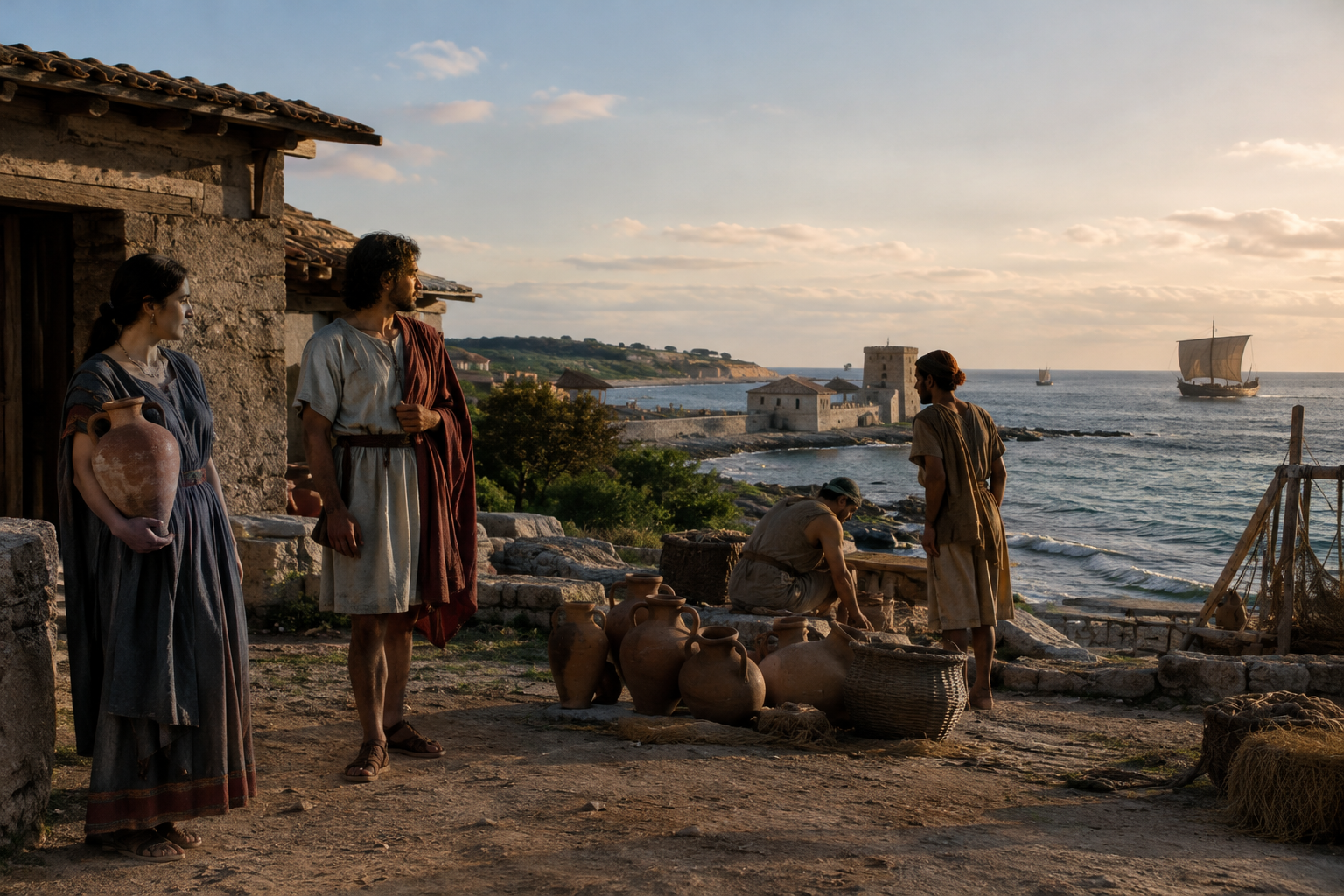
If we ask where a lineage like T1a1a1b2a is most likely to become archaeologically visible, the answer is not in a fantasy map of heroic tribal migrations. It is in zones of contact. The eastern Mediterranean is one obvious setting: a world of ports, soldiers, pilgrims, tax collectors, farmers, slaves, and traders, all moving under successive empires. Southern Italy, the Aegean, the Levant, and coastal North Africa were repeatedly tied together by shipping lanes and political systems that moved men as well as goods.
Iran and the lands east of Mesopotamia form another plausible context for the deeper history of related T branches. That is not because every man carrying T1a1a1b2a must descend from a single dramatic migration out of one kingdom or another, but because the archaeological and genetic record of those regions consistently shows long-term continuity mixed with repeated episodes of connection across western and central Asia. For readers interested in how Iranian-region DNA studies complicate any simple story of origins, MyTrueAncestry has also explored ancient Iranian mtDNA and skeletal identification, a useful reminder that lineages have to be read against local archaeological context rather than as ethnic labels.
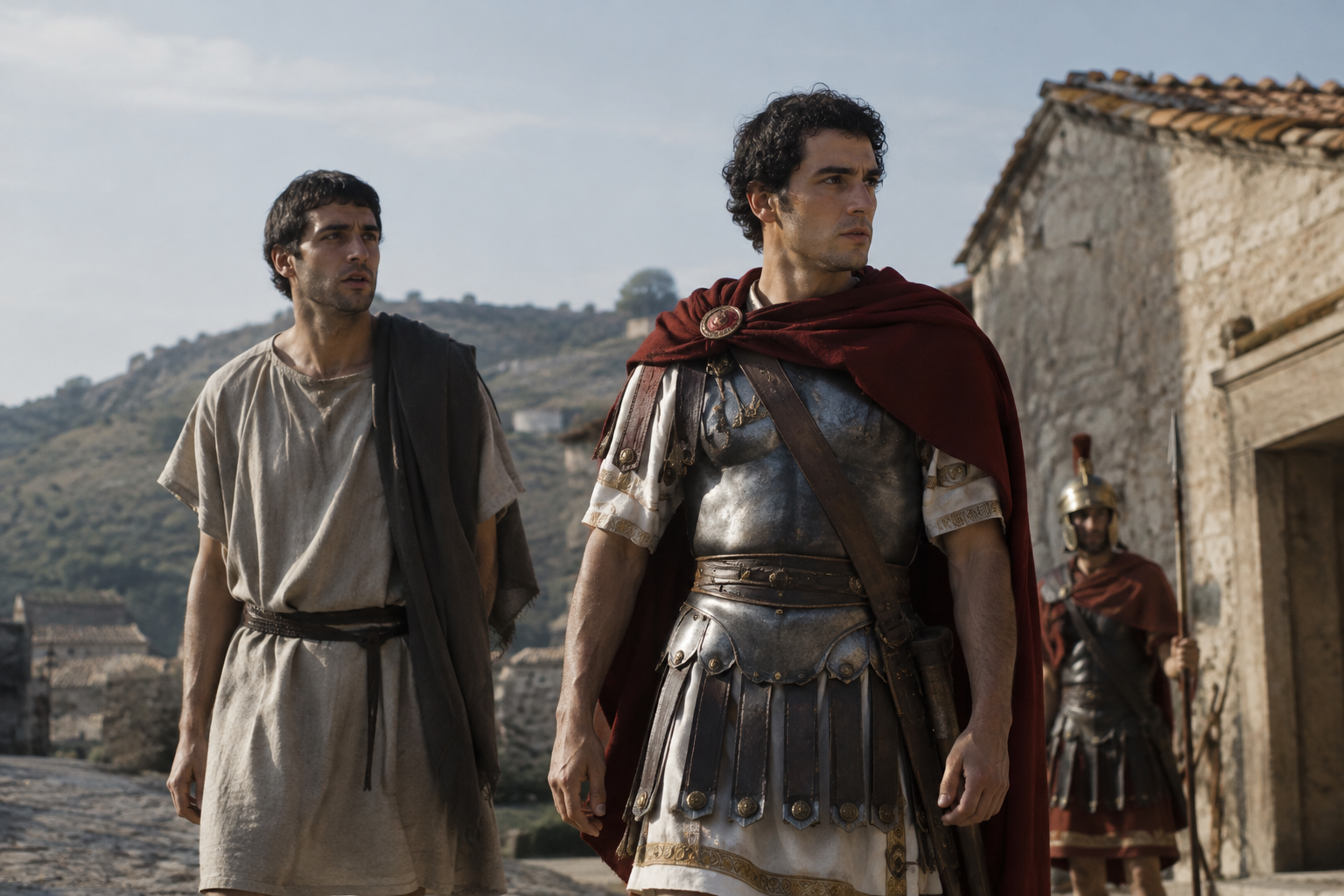
One of the best historical frameworks for understanding rare paternal lineages is empire. Roman rule, for example, did not simply spread one people into many provinces. It created military corridors, market towns, colonies, estates, religious communities, and port cities in which ancestry could become strikingly mixed. A man with a Near Eastern or eastern Mediterranean paternal line might leave descendants far away from any supposed place of origin, not because of one grand migration, but because of service, settlement, marriage, enslavement, commerce, or conversion.
That matters for T1a1a1b2a. Even if this exact branch has not yet been securely identified in the published ancient sample set provided here, the historical environments in which related T lineages are most intelligible are precisely these mixed zones. Roman and post-Roman Europe, especially in the Mediterranean west, often preserved traces of people whose paternal ancestry reached into older networks linking Iberia, Italy, the Balkans, North Africa, and the Near East.
The same point applies in the early medieval world. We are sometimes tempted to imagine that after Rome came tidy successor peoples: Goths here, Franks there, local provincials over there. Ancient DNA keeps wrecking that simplicity. Burial communities in places like the Rhineland, Iberia, and Italy often show more mixture than older textbook narratives allowed. A rarer Y-chromosome branch can survive in exactly such circumstances, passed quietly from father to son while languages, rulers, and local identities changed around it.
That broader picture sits well beside MyTrueAncestry's discussions of the early medieval population history of the Rhineland and of diverse origins at a 7th-century Madrid burial site. Those studies do not prove T1a1a1b2a specifically, but they do show the kind of mixed historical settings in which a minority paternal lineage can persist.
For someone who carries T1a1a1b2a today, the temptation is obvious: to ask whether this is a Jewish line, a Phoenician line, a Roman line, an Arab line, a Persian line, or a Mediterranean merchant line. The slightly irritating but necessary answer is that a Y-DNA branch is not a ready-made historical costume. The same paternal lineage can pass through many communities over two thousand years.
And yet that does not make the result meaningless. Quite the reverse. T1a1a1b2a is interesting precisely because it often points away from simple local isolation and toward a paternal history shaped by older webs of contact. In some family histories that may connect to the eastern Mediterranean; in others to the Balkans, southern Italy, Iberia, the Levant, Arabia, Iran, or Jewish and Islamic diasporas. The branch alone cannot decide among those possibilities, but it does place your direct paternal line in a part of human history where movement mattered.
This is also a good example of how fast archaeogenetics moves. A lineage that looks elusive today may become much clearer once a cemetery, port town, monastery, desert burial ground, or frontier settlement is sampled at higher resolution. One well-published ancient male from a securely dated context can transform the discussion, especially for a narrow branch like T1a1a1b2a.
So the present article is not a closing argument; it is a careful staging post. The evidence currently supports a sensible historical picture: T1a1a1b2a belongs to a wider paternal family with strong associations across western Asia and the Mediterranean world, and its rarity in many datasets makes each appearance potentially informative. What it most responsibly suggests is not a single named people, but a direct male line shaped by the same long-distance connections that made ancient and medieval history far more cosmopolitan than older myths allowed.
For family historians, that is already a substantial clue. T1a1a1b2a is a lineage to investigate through regional matches, downstream SNP testing, and comparison with new ancient discoveries as they appear. Its strength is not in easy legends, but in the stubborn historical fact that people, even in the distant past, moved farther and mixed more often than neat national stories would like to admit.
Comments