Haplogroup J2a1a1a2b2a1b1b

– 5 min read


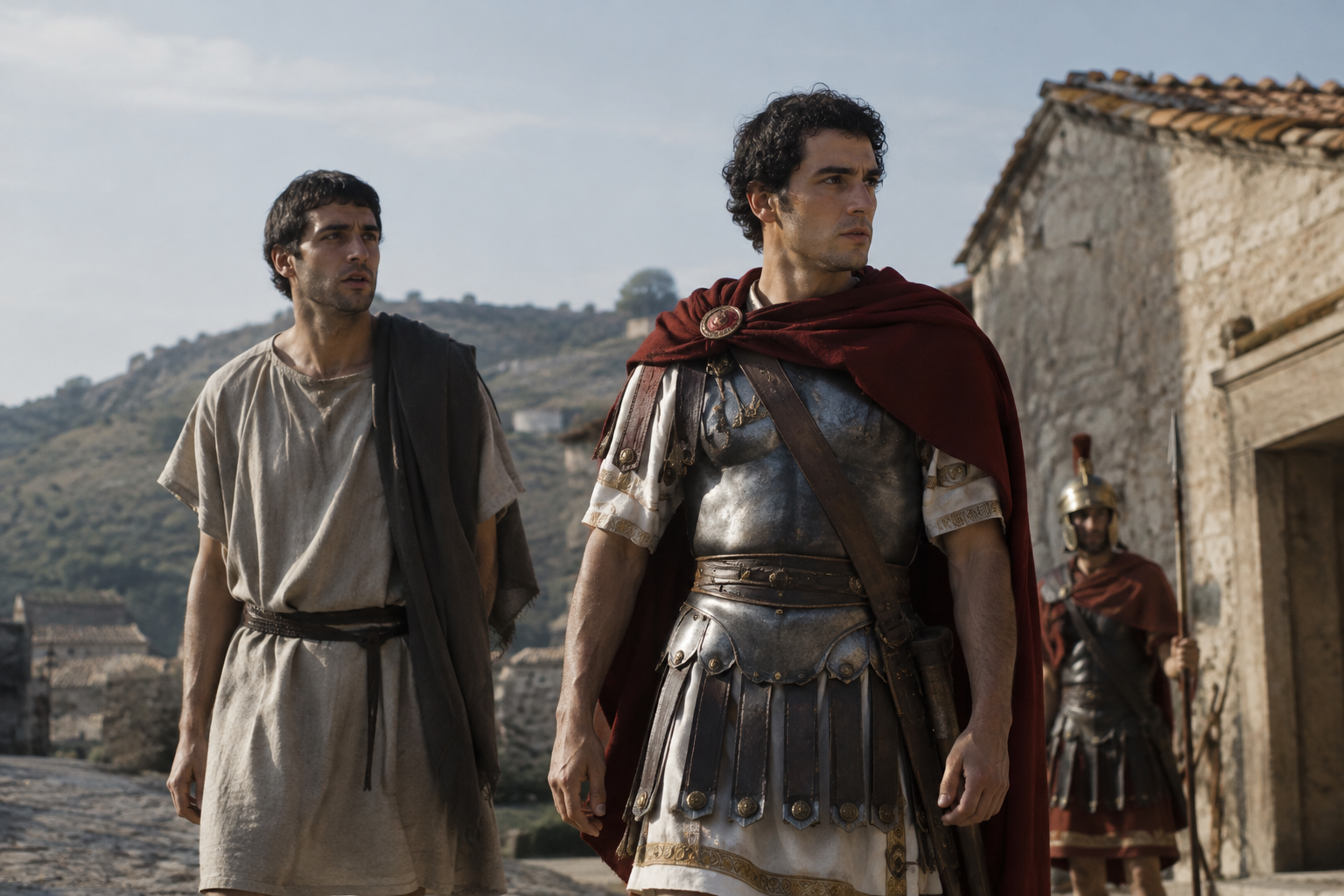
At Monterotondo, just outside Rome, one ancient man has become unexpectedly important for the history of paternal ancestry. The individual labeled R1550, dated to around AD 165 and described as a Roman Outlier Monterotondo, carries the Y-DNA haplogroup J2a1a1a2b2a1b1b. That is a very specific paternal branch, and its appearance in the Roman world is a reminder that imperial Italy was not genetically simple, local, or closed.
The fascination here lies in the word outlier. In ancient DNA studies, that usually signals a person who does not sit neatly inside the main genetic cluster of the cemetery or region being studied. In other words, R1550 matters not because one skeleton can stand for all Romans, but because he offers a glimpse of movement, mixture, and the human scale of empire.
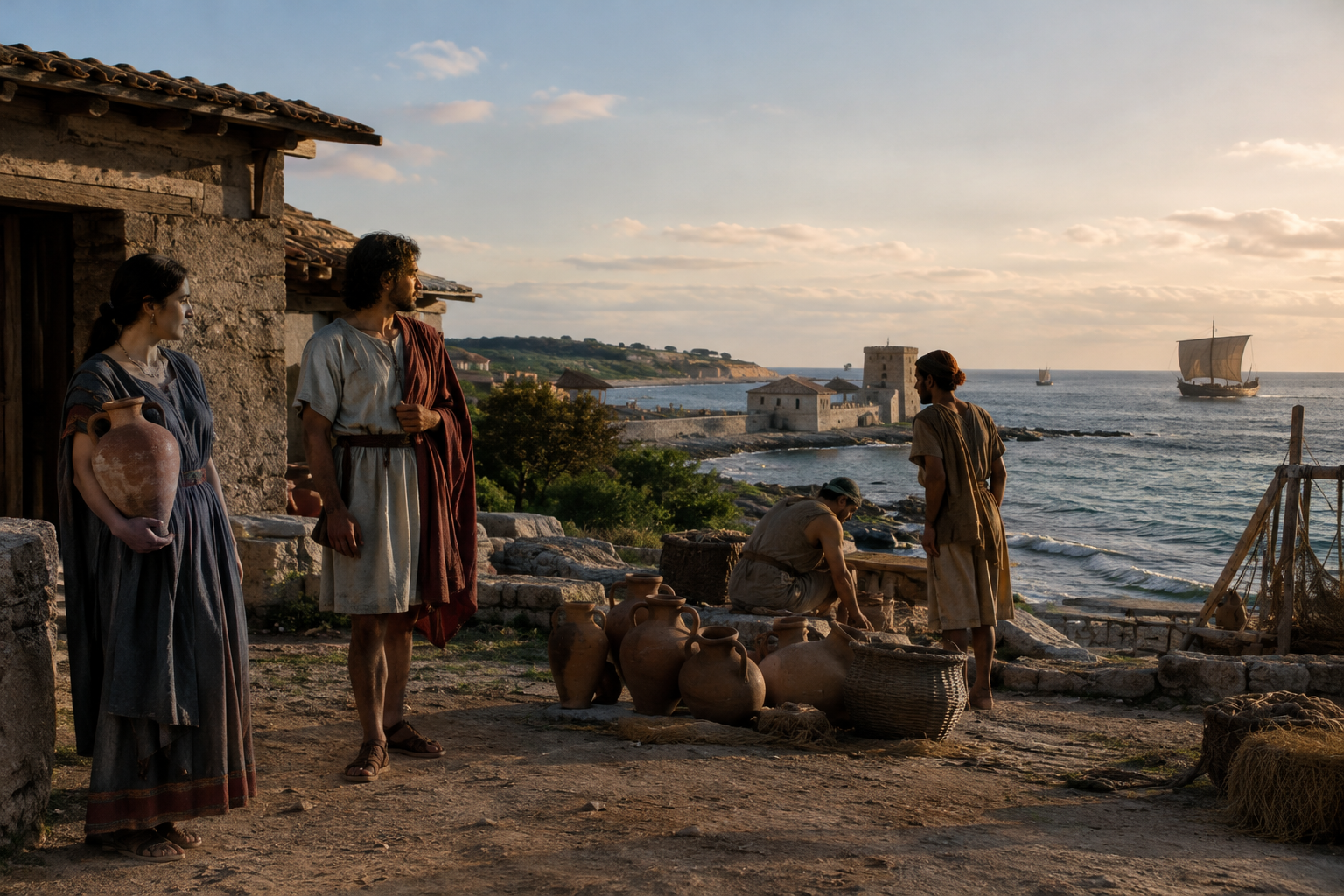
Monterotondo sits in Latium, in the orbit of the imperial capital but not swallowed by it. By the second century AD, this was a world linked by roads, army service, trade, slavery, marriage, and migration. A burial from this setting carrying J2a1a1a2b2a1b1b fits a broader picture in which central Italy had already become a meeting ground for lineages with different deeper histories.
That does not mean we can write a miniature biography for R1550. We do not know his profession, language, social status, or whether his father and grandfather had lived in Italy or arrived from elsewhere. But the combination of date, location, and classification as a Roman outlier strongly suggests that his paternal line belongs to the kind of mobility that made the Roman Empire so historically distinctive.
A landmark ancient DNA study of Rome and central Italy helped establish this wider context by showing just how much the ancestry of people in and around Rome changed over time, especially during the imperial period. The great value of a sample such as R1550 is that it gives that big demographic story a direct male line.
Y-DNA follows one line only: father to son to son across generations. So J2a1a1a2b2a1b1b is not the whole ancestry of R1550, still less the whole ancestry of anyone alive today who matches or approaches this branch. It is one thread, but an unusually informative one, because paternal lines can sometimes reveal patterns of male mobility that are blurred in the rest of the genome.
The wider haplogroup J2 is often associated, in very broad terms, with populations of the eastern Mediterranean, Anatolia, the Caucasus, and parts of the Near East, and it appears in many later settings around the Mediterranean world. But that broader history should not be lazily projected onto the narrow terminal branch J2a1a1a2b2a1b1b. The evidence here is more modest and more interesting: by the mid-second century AD, this specific paternal line is documented in a man from the Roman world near Rome.
That is already enough to say something useful. If your paternal ancestry falls on this branch, the ancient evidence currently points not to a closed local story, but to one shaped by the same large systems that moved people around the Mediterranean under Roman rule.
Archaeologists and geneticists are often most excited by patterns, but history is full of people who sit at the edges of patterns. R1550 is valuable precisely because he seems to represent one of those cases. He is not simply another datapoint in a uniform local population. He hints at a family line that arrived, persisted, or mixed in a way that stood out to genomic analysis.
That should sound familiar to anyone who studies Rome seriously. The empire was full of such lives: soldiers posted far from home, merchants with long commercial routes, enslaved people and their descendants, freed families, pilgrims, officials, and migrants born into a world where movement was ordinary even if it was not equally voluntary. Ancient DNA cannot sort all those possibilities by itself, but it can show that a cemetery near Rome contained people whose backgrounds were not all the same.
This is one reason Roman Italy keeps producing such striking genetic results. A single cemetery can contain local continuity, recent arrivals, and families whose roots stretch across several provinces. One Y-chromosome lineage, recovered from one burial, becomes a small but sharp piece of that larger mosaic.
There is a temptation, when a J2 branch turns up in Roman Italy, to leap straight to familiar historical labels: Greek, Syrian, Anatolian, Phoenician, Jewish, Levantine, or something equally neat. Resist that temptation. The Mediterranean had already been connected for millennia before R1550 was buried, and lineages like those within J2 could travel through many different historical settings long before the Roman Empire ever existed.
That longer background is important because Rome inherited an old world rather than inventing a new one from scratch. Bronze Age exchange, Greek colonization, Phoenician networks, Hellenistic kingdoms, and Roman imperial administration all layered movement upon movement. By the second century AD, a paternal line with eastern Mediterranean depth might have reached Latium through any number of routes, some recent and some ancient.
What R1550 gives us, then, is not a tidy ethnic label but a firm archaeological placement. Here is a man in Roman central Italy, around AD 165, whose paternal line belongs to J2a1a1a2b2a1b1b and whose genome evidently marked him out from the main local cluster. That is a historically rich fact even before we try to romanticize it.
The most striking thing about imperial Rome is not merely that people came from many places, but that this diversity reached beyond the capital itself. Towns and rural sites in its orbit were part of the same circulatory system. Monterotondo was close enough to Rome to feel those currents very strongly, and R1550 looks like the kind of individual who makes that visible.
Ancient DNA studies of Roman and post-Roman Italy increasingly show that central Italy cannot be understood as a sealed ancestral box. Instead, it was shaped by continuity and immigration at the same time. Some lineages stayed rooted locally across long periods; others arrived and were absorbed; still others remained distinctive enough to stand out in genetic analyses. R1550 belongs to that last, especially revealing category.
For someone researching the haplogroup J2a1a1a2b2a1b1b today, the clearest ancient clue is not a royal pedigree or a mythical founder. It is a documented man from the Roman world near Rome, sample R1550, whose paternal line places this branch inside the human traffic of the empire. That suggests a lineage with a history shaped by Mediterranean mobility, and perhaps by the eastern connections that so often surface in Roman-period Italy, though the exact route remains open.
In other words, this haplogroup is historically interesting not because it can be made grander than the evidence allows, but because it belongs to the real, untidy world of Roman movement and mixture. One man at Monterotondo is enough to show that this paternal branch had entered that world by the mid-second century AD.
Comments