Haplogroup G2a2a1a2a1b1

– 4 min read


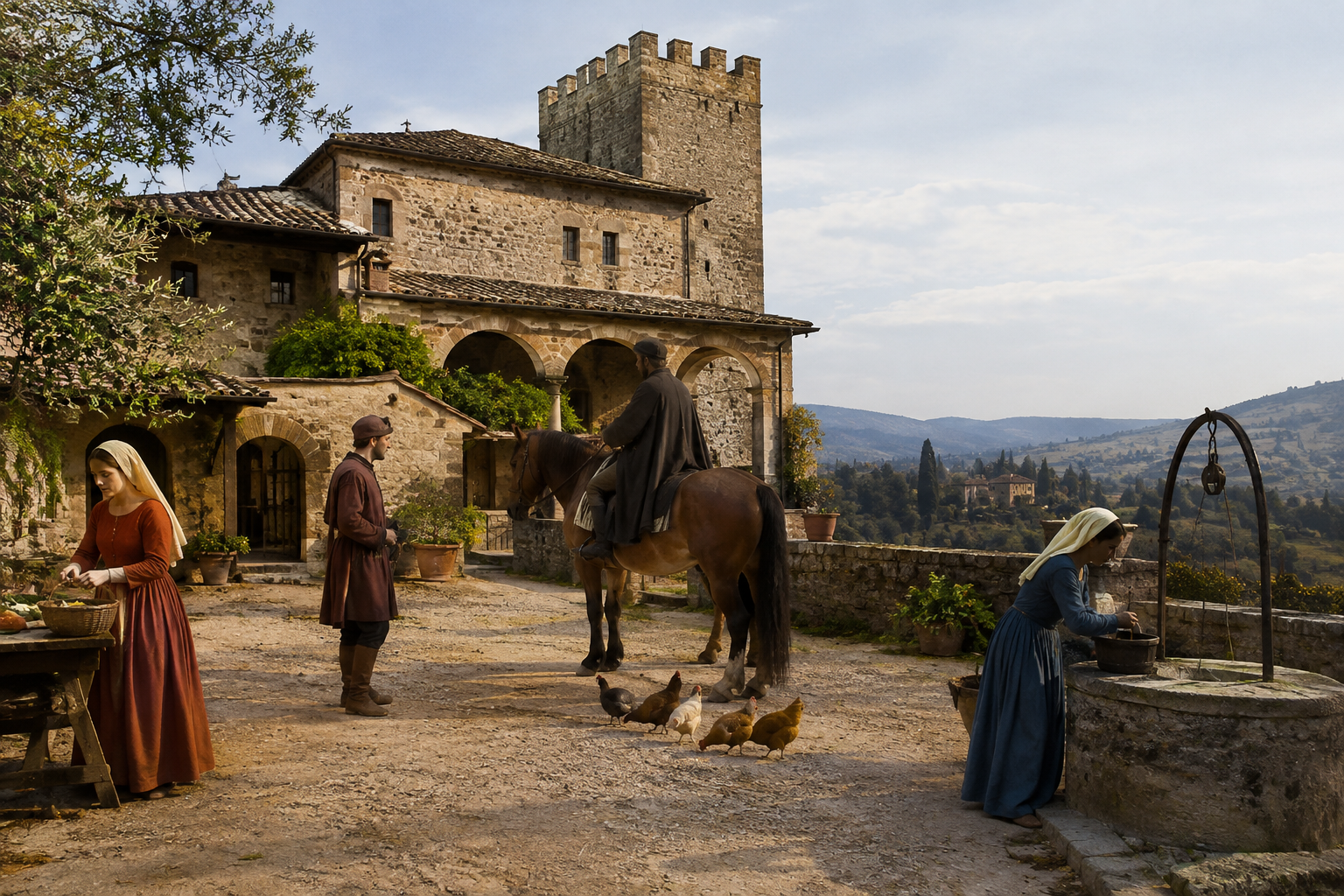
At Villa Magna in Tuscany, one medieval man offers a very precise glimpse into a much larger human story. The individual labeled R64, dated to around AD 1110, carried the Y-DNA haplogroup G2a2a1a2a1b1. That may sound forbiddingly technical, but the setting is wonderfully concrete: central Italy in the High Middle Ages, a landscape of villages, estates, churches, and fields shaped by centuries of Roman, post-Roman, and medieval life.
What makes R64 interesting is not that he can be turned into a grand historical stereotype, but that he cannot. A single paternal lineage found in medieval Tuscany does not tell us everything about his ancestry, language, or identity. What it does do is anchor this branch of the Y chromosome in a real person at a real place, and invite a broader question: how did a lineage best known in deep European prehistory continue to surface in later Italian populations?
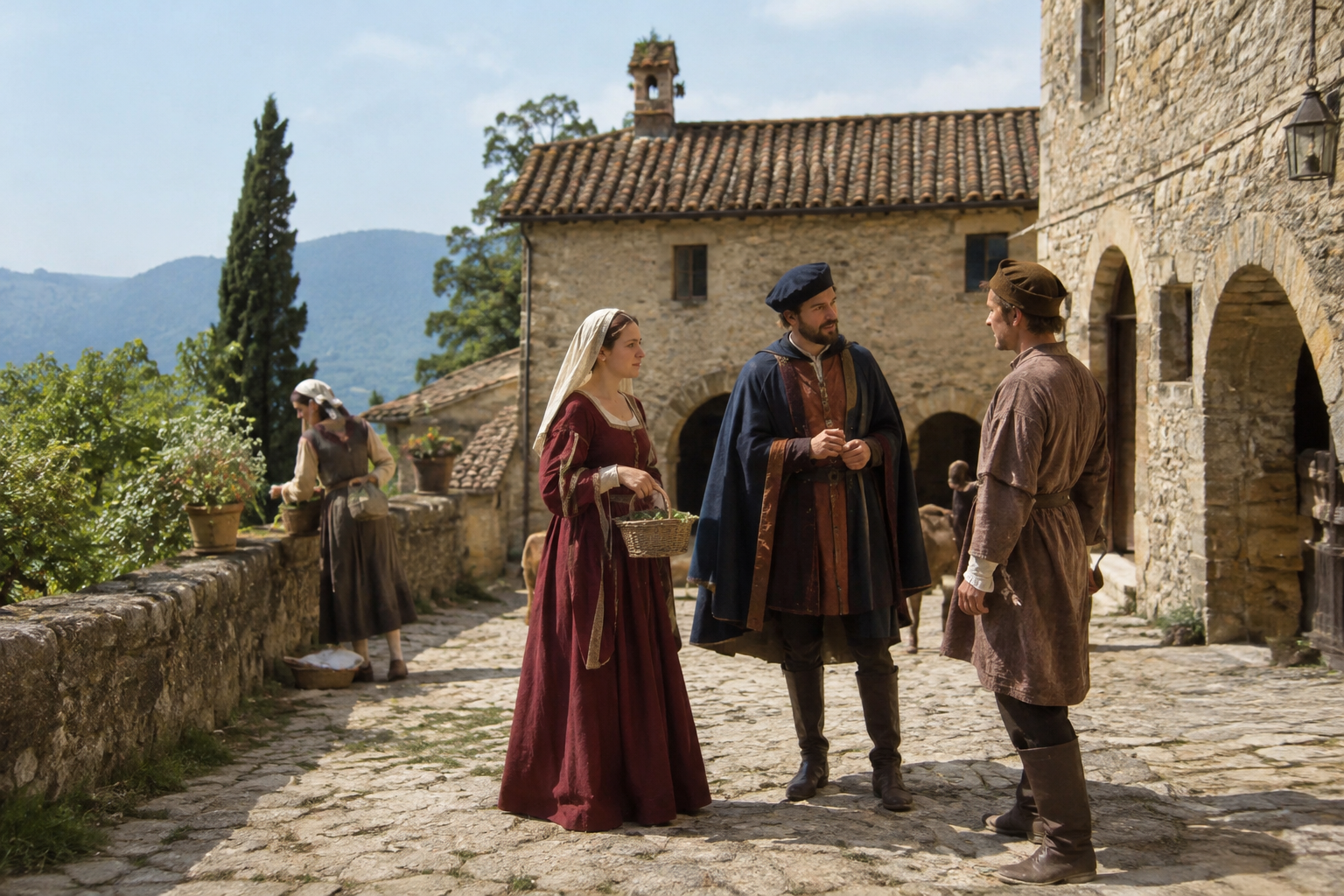
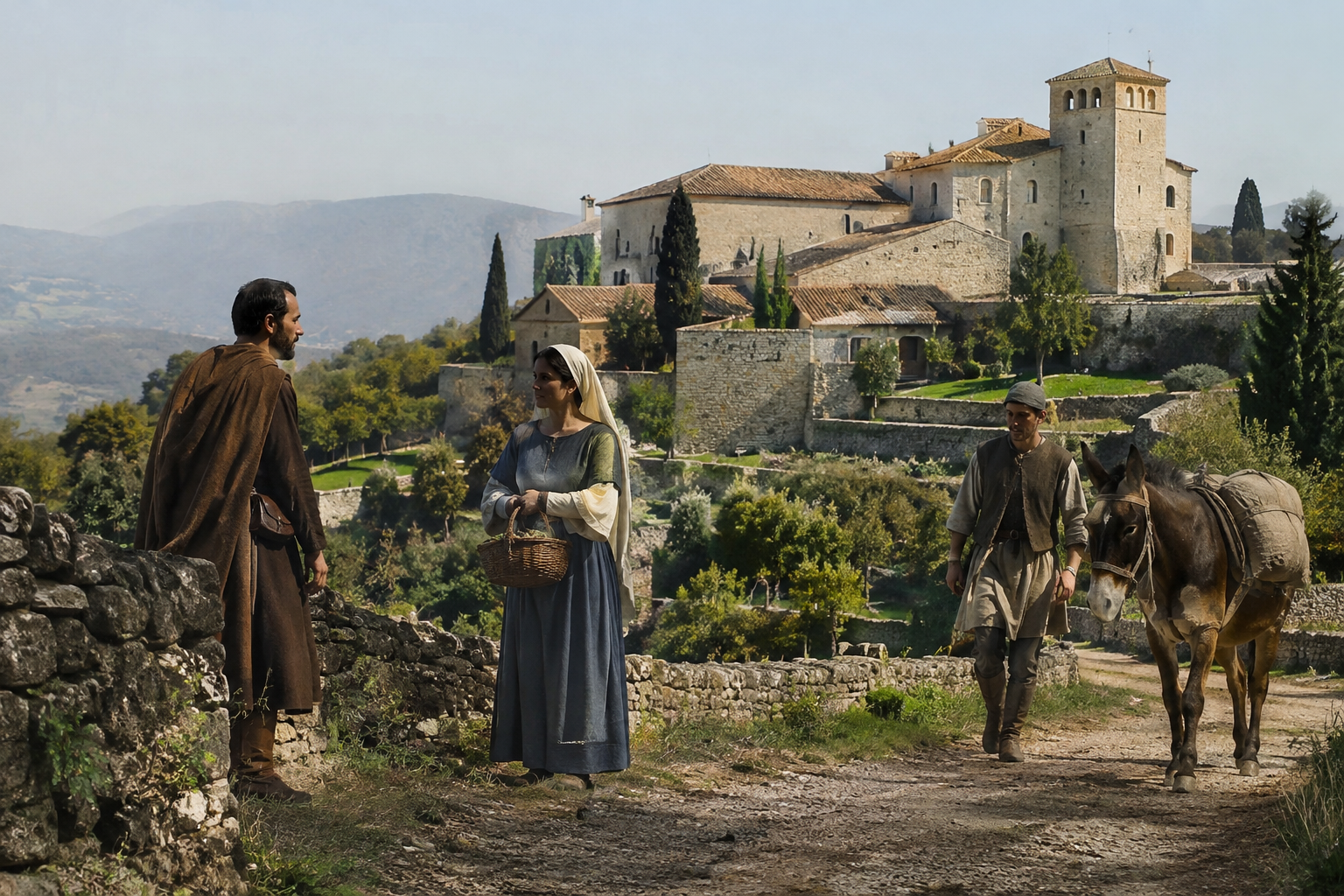
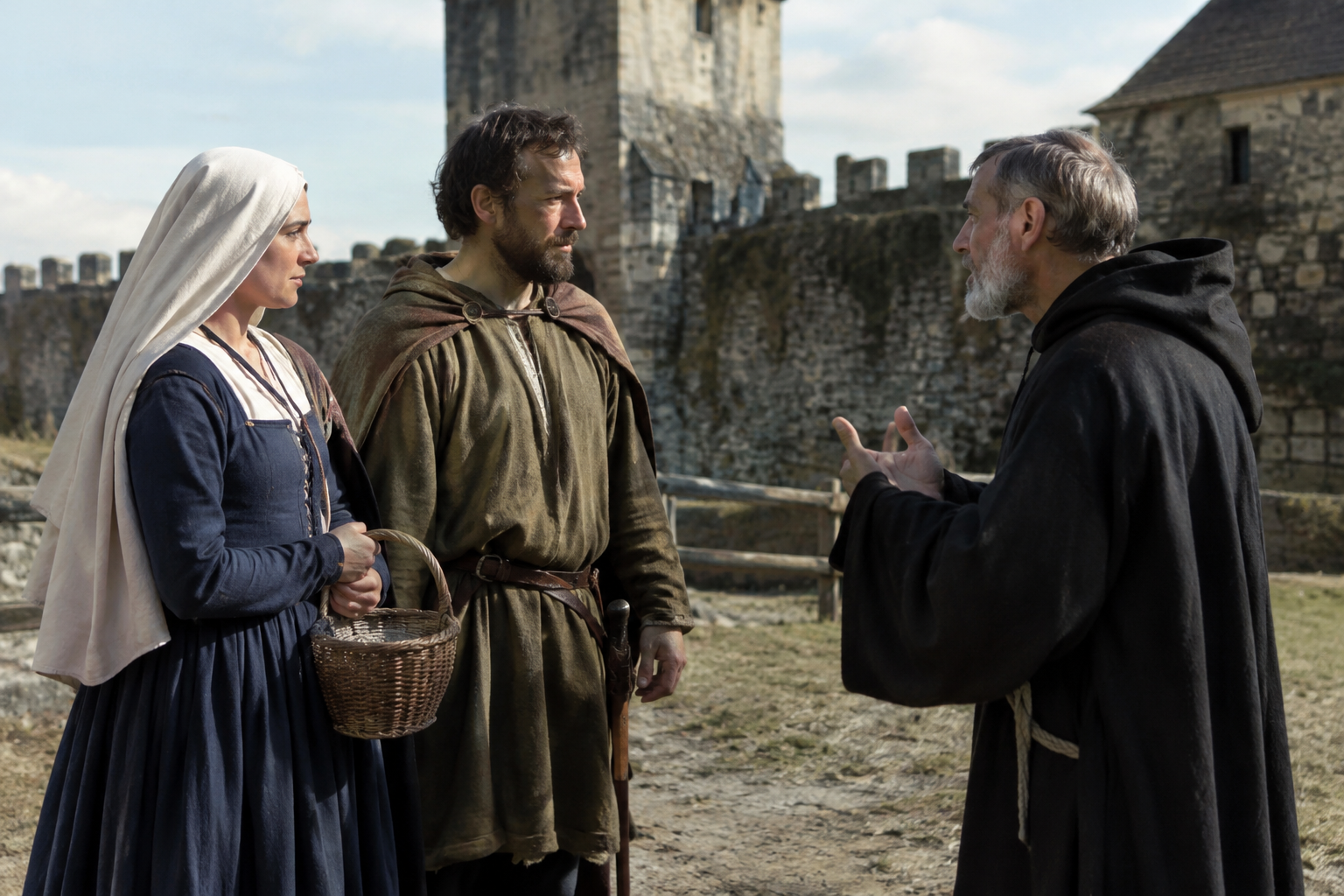
Villa Magna is one of those sites that reminds us how misleading the word "villa" can be. In the Roman world it could mean an elite estate, but such places often had very long afterlives, reused and reworked across late antiquity and the Middle Ages. By the time of R64, Tuscany was not a fossilized Roman landscape. It was a region of changing lordship, farming communities, ecclesiastical power, and local continuity mixed with mobility.
Within that setting, the reported presence of G2a2a1a2a1b1 in R64 matters because it places this paternal branch inside a medieval population that was already the product of many earlier layers. Italy had seen Bronze Age transformations, Roman-era movement, and early medieval demographic change. Yet lineages do not neatly replace one another. Some persist quietly, surviving political collapse, linguistic change, and new ruling powers.
A wider ancient DNA study of Europe and the Mediterranean, published in Science, helped frame just how dynamic these long-term population histories could be. For Italy especially, ancient genomes have shown that continuity and change sat side by side, often within the same regions.
The broader parent haplogroup G, and especially branches of G2a, is famous in archaeogenetics for its strong association with many of Europe's early farming populations. Again, one must be careful here: that does not mean every later man with a G2-derived lineage was simply a direct emblem of "the first farmers". But it does mean that R64's branch belongs to a paternal family tree with unusually deep roots in the agricultural spread that reshaped Europe after the Neolithic transition.
In plain terms, Y-DNA traces one direct paternal line only: father to father to father. It is therefore a very narrow window onto the past. Yet because so many early European farmers carried G2-related lineages, later finds of G-derived branches in places like Italy are historically suggestive. They hint that some paternal lines tied to that early agricultural world endured through millennia of later admixture and social change.
That is particularly plausible in Italy, where Neolithic and later Mediterranean populations left complicated but durable genetic legacies. The peninsula was never genetically static, but neither was it wiped clean and repopulated in every era. The survival of a lineage like G2a2a1a2a1b1 into medieval Tuscany fits that broader picture of layered continuity.
There is a temptation to imagine medieval rural Italy as a world of purely local descent, with families rooted in one place for countless generations. Archaeology and genetics both advise more caution. Medieval communities could be quite local in some respects, but they also lived in regions connected by trade, church networks, seasonal labor, warfare, and migration.
So R64 should not be turned into a mascot either for complete continuity or for dramatic foreign arrival. The more interesting point is that a lineage with deep prehistoric resonance appears in a medieval individual from Tuscany, where continuity and movement were both part of ordinary history. A man bearing G2a2a1a2a1b1 in about AD 1110 may have had paternal ancestors long rooted in Italy, or from elsewhere within the wider Mediterranean-European world where related branches circulated. With present evidence, the medieval context is secure; the exact path into that village landscape is not.
That balance between local persistence and wider mobility has become clearer across many early and high medieval studies. Even where cemeteries or settlements look regionally typical, the people buried there could reflect more varied family histories than the old textbook labels suggested.
To understand why R64 is worth lingering over, it helps to remember how often Italy changed hands without becoming biologically unrecognizable. The late Roman and early medieval centuries brought political fragmentation, new military elites, and fresh population inputs. Lombards, Goths, Byzantines, Franks, and many others passed through Italian history. But ancient DNA has steadily shown that the results were regional and uneven, not a simple tale of total replacement.
That makes a haplogroup like G2a2a1a2a1b1 especially revealing. It does not point to one famous invader or one named kingdom. Instead it hints at the longer endurance of male lines that may have been present in parts of southern and central Europe since very early farming expansions. By the medieval period, such a lineage would have been fully woven into the social fabric of Christian, Latin-speaking Tuscany, regardless of its far older prehistoric ancestry.
This is one reason archaeogenetics can be so useful when handled carefully. Grand political history tends to follow rulers, wars, and documents. Y-DNA sometimes catches a different scale of history: the survival of family lines beneath those dramatic events.
If your own paternal line falls under G2a2a1a2a1b1, R64 is not your proof of descent from one medieval Tuscan man. Ancient DNA does not work like that. What he does offer is something subtler and, in its way, more exciting: evidence that this branch was present in medieval central Italy, in a society built on the long accumulation of prehistoric, Roman, and medieval ancestry.
For members of the MyTrueAncestry community, that is the real value of this kind of match. It places a technical haplogroup inside human history. In the case of G2a2a1a2a1b1, the signal is of a paternal line whose deeper background likely reaches into Europe's old farming world, yet which remained alive and entirely at home in medieval Tuscany more than a thousand years after Rome's imperial height.
Comments