Haplogroup G2a2b2a1a1b1a1a2a1b1b1

– 5 min read


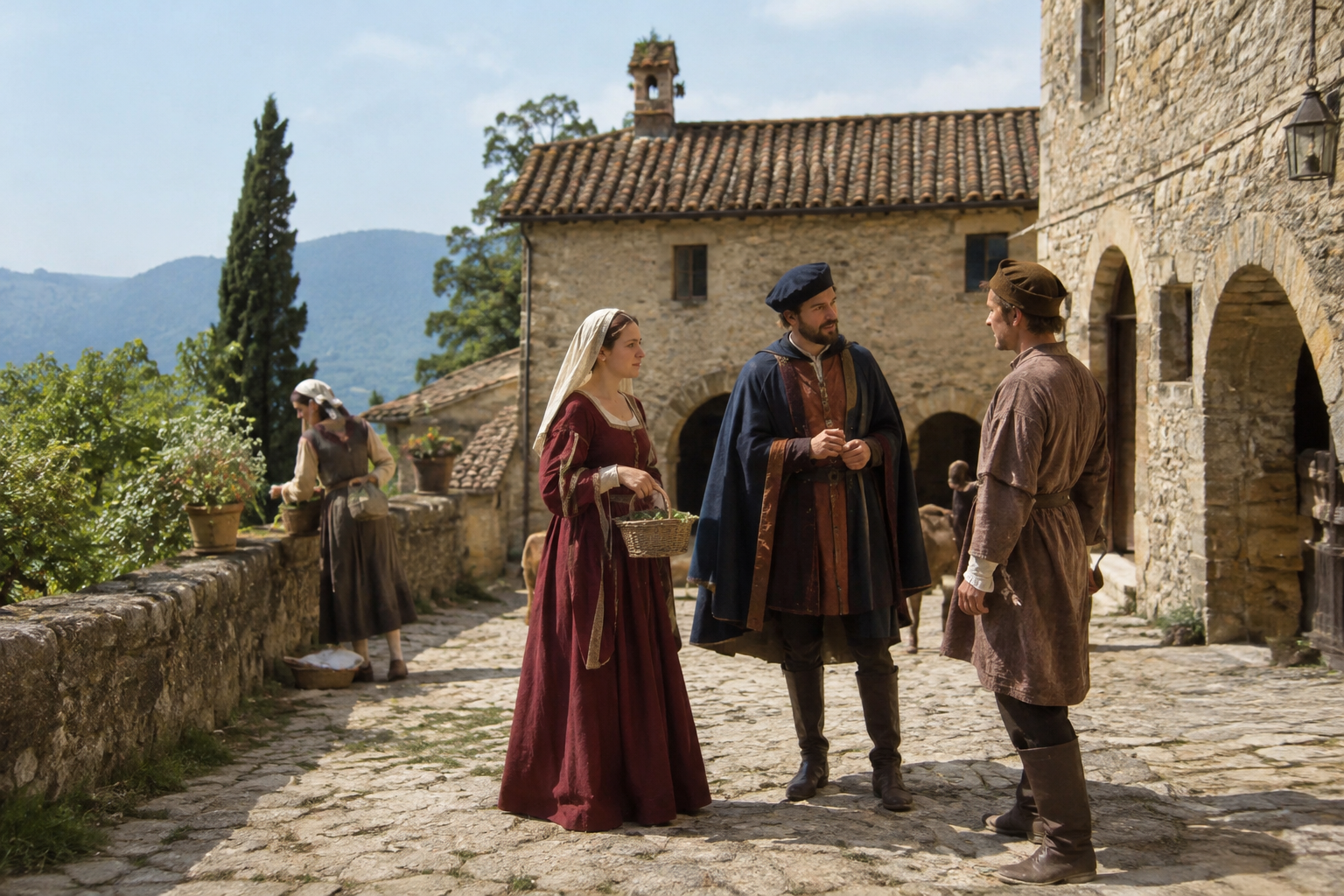
In 1355 AD, at Villa Magna in Italy, one man labeled R55 carried a very specific paternal line: G2a2b2a1a1b1a1a2a1b1b1. That looks forbiddingly technical, but the historical point is rather simple. A late medieval burial from central Italy preserves a Y-chromosome lineage whose deeper roots belong to one of Europe's oldest farming-associated paternal families, yet whose documented appearance here belongs not to the Neolithic, but to a fully historical world of churches, estates, villages, disease, mobility, and local continuity.
That is what makes R55 interesting. He was not a legendary founder or a princely skeleton in a gilded tomb. He was a real person from a named place, living in fourteenth-century Italy, and his Y-DNA lets us glimpse one narrow paternal thread inside a much larger medieval population. Y-DNA traces one direct male line only, not a person's whole ancestry, but that single line can still be historically revealing when it turns up in a secure archaeological context.
Villa Magna is one of those sites that reminds us how misleading the word "villa" can be. In the Italian archaeological record, such places often have very long lives, changing function over centuries as Roman estates, ecclesiastical centers, agricultural communities, or burial grounds. By the time of sample R55, we are in the late medieval period, not the imperial Roman one. The importance of the find lies precisely in that later setting: this haplogroup was present in a lived medieval landscape rather than only in much earlier prehistoric burials.
With the evidence at hand, it is safest to say that R55 represents a late medieval Italian carrier reported under the article's branch, G2a2b2a1a1b1a1a2a1b1b1. That is a highly refined subclade within haplogroup G, but we should be careful not to load every broad claim about haplogroup G onto this exact twig of the tree. The parent lineage has a long and complicated history across western Eurasia; the medieval man from Villa Magna shows only that one descendant branch was present in Italy around the mid-fourteenth century.
That date matters. Fourteenth-century Italy was dense with movement: clergy, tenants, artisans, merchants, soldiers, pilgrims, and the ordinary circulation of marriage and labor. A paternal line found in such a context may reflect local continuity, earlier migrations folded into the medieval population, or both.
If this lineage sounds familiar to ancient-DNA readers, that is because broader branches of haplogroup G are famous in European prehistory. They appear repeatedly among early farmers who spread agriculture into Europe from Anatolia and the Balkans. In other words, the grand historical background to R55's paternal line is not the world of steppe chiefs or late-arriving conquerors, but the much older story of farming populations who transformed the continent.
That said, one must not collapse thousands of years into a slogan. The fact that early European farmers often carried branches of G does not mean that every later bearer of a narrow medieval subclade can be read straightforwardly as an untouched Neolithic survivor. Populations mixed, expanded, shrank, and reorganized many times between the Neolithic and 1355 AD. What the Villa Magna sample offers is not a frozen relic of first farmers, but evidence that one paternal descendant line of that wider family still persisted in medieval Italy.
That persistence is historically plausible. Italy is full of regions where deep genetic layers remained in place even as Romans, Goths, Lombards, Byzantines, Franks, and many others passed through or ruled overhead. Ancient DNA has repeatedly shown that political change and paternal continuity are not the same thing.
That is the larger frame in which R55 belongs. Across Italy, ancient-DNA research has made one point again and again: continuity exists, but so does mixture, and the balance varies by place and period. Central Italy in particular was never an isolated pocket. Roman-era mobility brought in people from across the Mediterranean; the post-Roman centuries layered on further regional shifts; medieval communities then developed within those already mixed foundations.
A reader with this haplogroup should resist the temptation to imagine a single neat route from one ancient farmer to one medieval villager to one modern family. Real populations do not behave like tidy family trees. Still, a late medieval occurrence in Italy makes this branch historically legible in a way that broad prehistoric talk does not. It shows that by the fourteenth century, this paternal line was part of the social fabric of an Italian community on the eve of enormous demographic shocks, including plague and economic disruption.
For that wider historical background, it is worth noting that research published on ancient genomes from Italy has helped show how local populations absorbed repeated outside influences without losing all regional structure. Even where a study is not centered on R55 specifically, it provides the essential context for understanding why a branch like G2a2b2a1a1b1a1a2a1b1b1 can appear in medieval Italy without needing a melodramatic migration tale. One widely cited ancient-DNA study on European population history is here.
One sample is not a dynasty, and it is not a population average. But neither is it trivial. Ancient DNA becomes most valuable when it anchors an abstract lineage to a real time and place. R55 does exactly that. Instead of leaving this haplogroup floating in the realm of modern test results, it gives us a documented medieval carrier from Italy.
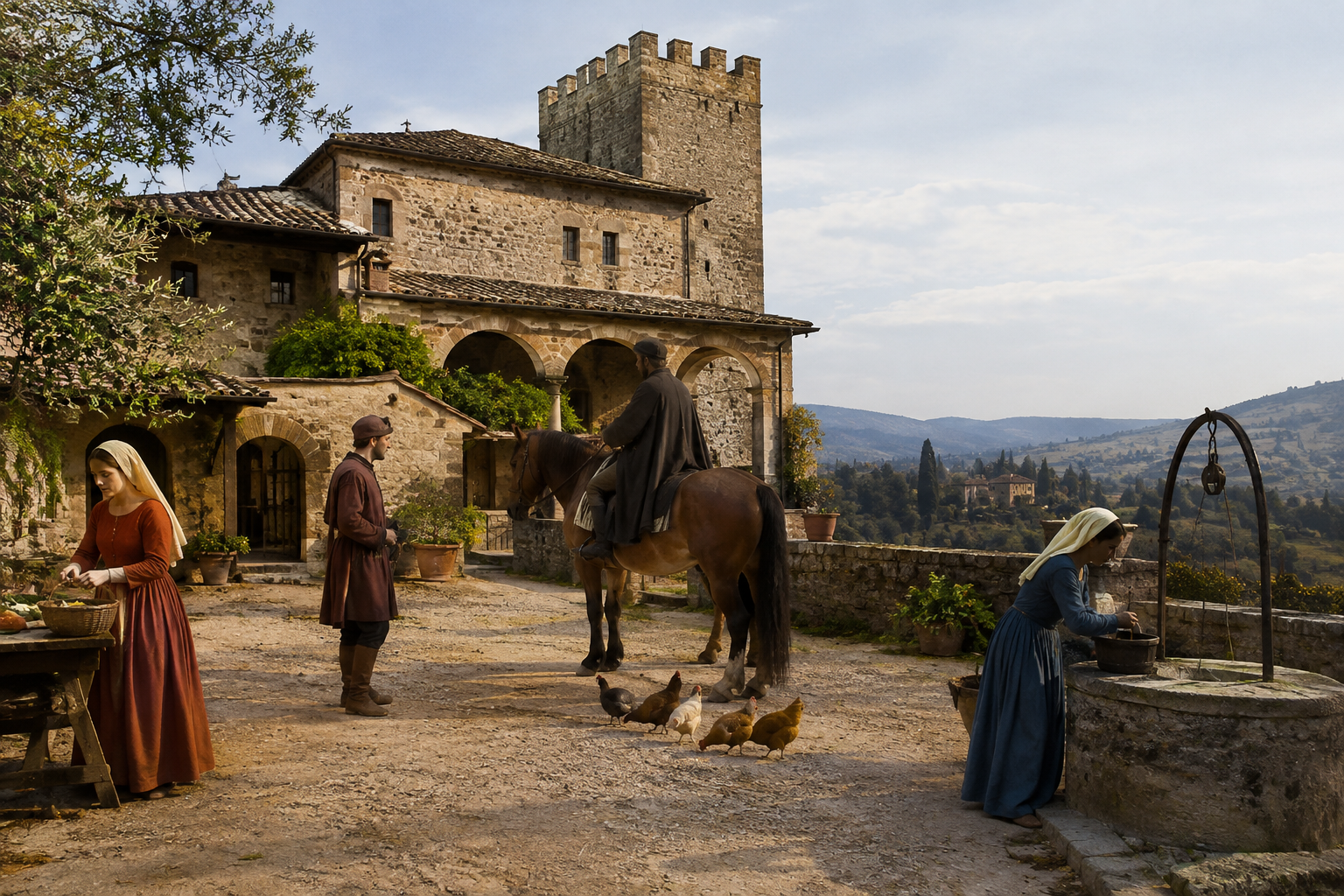
That helps in two ways. First, it confirms that the branch, or a very closely related reported assignment, existed in central Italy during the late Middle Ages. Second, it gives the haplogroup a social setting: not an imagined tribal migration, but a settled agrarian society shaped by long Roman and post-Roman history. There is something bracingly sensible about that. The Y-chromosome here is not attached to a mythic ancestor on horseback, but to a man buried in a community with deep local roots and long entanglements.
It also sits comfortably beside other medieval European studies showing that local burial grounds often contain a mixture of lineages, some with very deep regional histories and others reflecting more recent movement. That broader lesson appears in work on early medieval Germany and the Rhineland as well, where ancient DNA has complicated any simple equation between material culture, language, and paternal descent.
The most responsible way to read G2a2b2a1a1b1a1a2a1b1b1 is as a very narrow branch within a wider paternal family that has deep associations with the spread of farming in Europe, but whose documented appearance here belongs to late medieval Italy. The archaeological interest is not that R55 somehow "proves" an unbroken untouched line from the first farmers. It is that the line endured through all the untidiness of European history and still turns up in a named medieval individual.
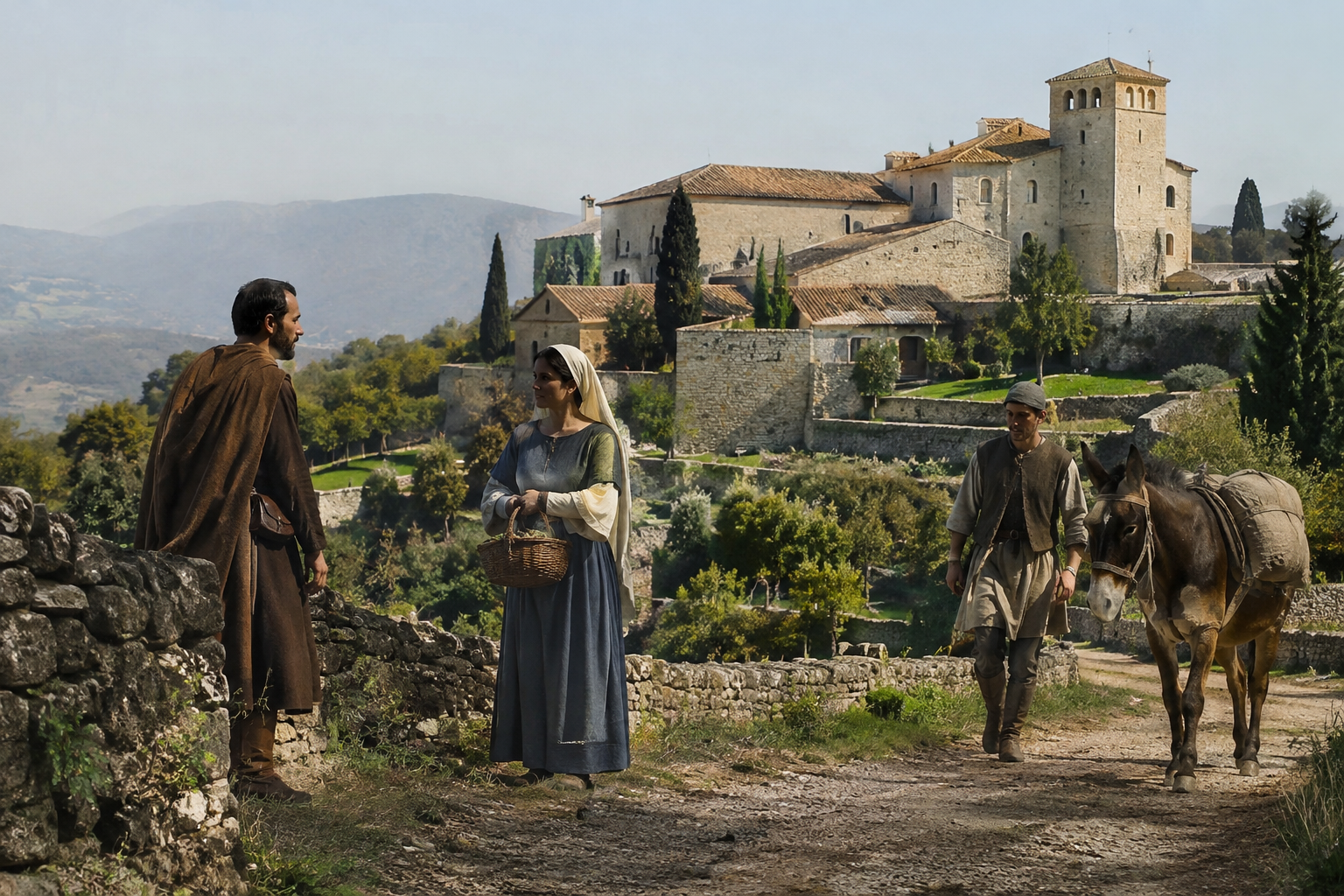
That makes this haplogroup especially appealing for family historians. It hints at a paternal story rooted in old Mediterranean and European strata, yet visible in a concrete historical setting rather than only in remote prehistory. If your own line falls near this branch, the meaningful takeaway is not a claim to a tribe or dynasty, but a connection to the long survival of one male line through centuries of Italian history.
R55 of Villa Magna gives G2a2b2a1a1b1a1a2a1b1b1 something precious: context. This was a living medieval paternal line in Italy, carried by an ordinary man in an extraordinary century. For anyone researching this haplogroup today, that is the real value of the evidence - not fantasy ancestry, but a firmly historical glimpse of where one branch of your direct male line had already arrived by the later Middle Ages.
Comments