Haplogroup E1b1b1a1a1c1b2

– 5 min read


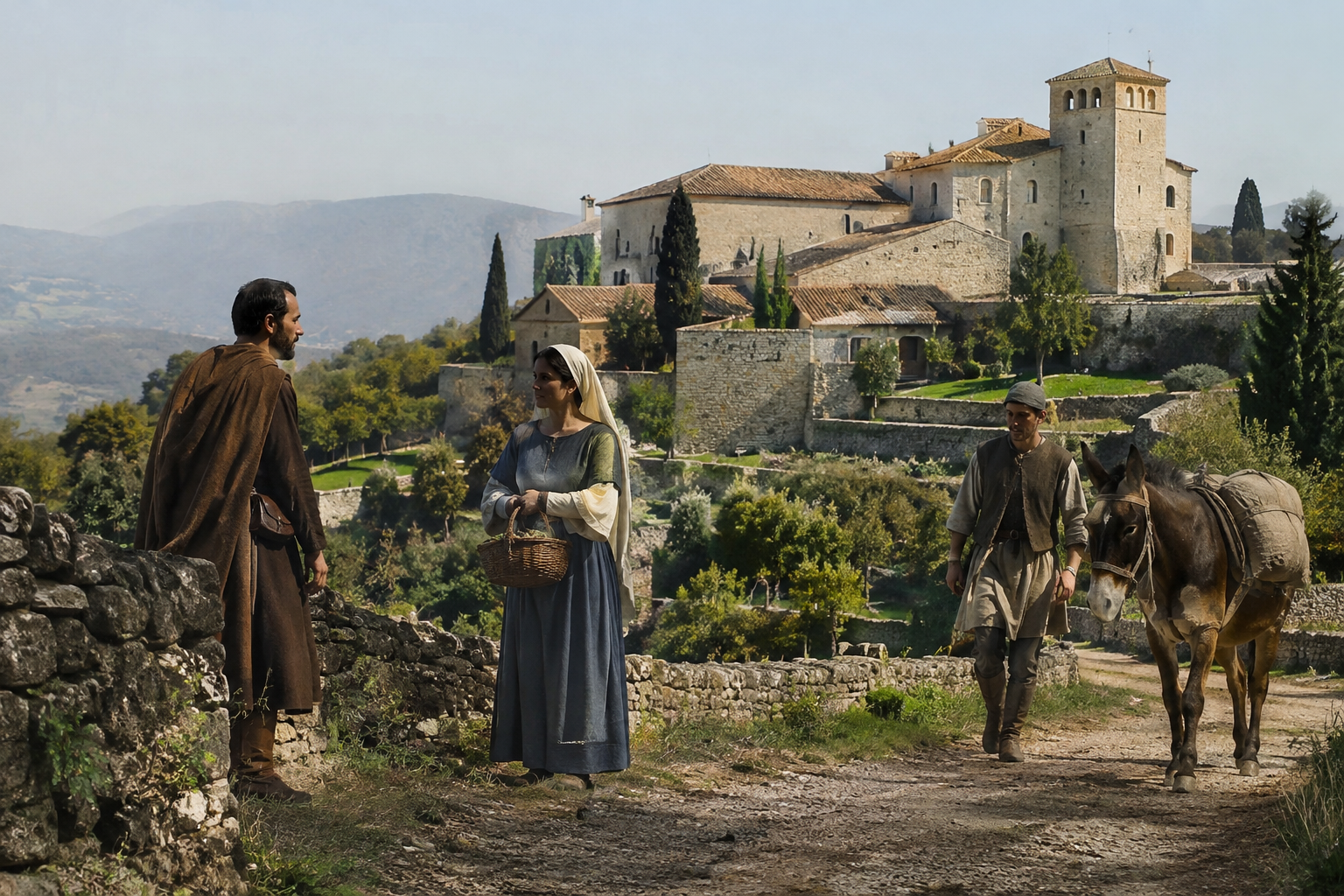
At Villa Magna in Italy, one early medieval man known simply as R59, dated to around AD 905, gives us a very sharp little glimpse of a much bigger historical world. His reported Y-DNA assignment is linked here to E1b1b1a1a1c1b2, a very specific paternal branch found in a landscape that was anything but isolated: central Italy in the centuries after the Roman Empire, when estates, churches, local elites, laborers, migrants, and long-settled families all overlapped on the same ground.
That is why this sample matters. A Y chromosome traces only one direct paternal line, not a whole identity, but even one male lineage placed securely in an excavated medieval setting can help show how older Mediterranean and Balkan-connected paternal branches continued into post-Roman Italy. In this case, the interest lies not in grand conquest stories, but in continuity, mobility, and the ordinary complexity of life at a major Italian estate.
Villa Magna is famous first as a Roman site. Near Anagni in Latium, it began as an elite imperial estate and later developed a long, layered history reaching well beyond the classical period. By the early Middle Ages, places like this were no longer just the polished villas of emperors and senators; they had become working landscapes, tied to agriculture, local power, and Christian institutions.
R59 belongs to that later history. Around AD 905, Italy was politically fragmented, but the countryside still preserved old Roman frameworks of settlement and land use. A man carrying the paternal line E1b1b1a1a1c1b2 in this setting is therefore not a curiosity dropped out of nowhere. He fits the broader picture of central Italy as a region where different strands of ancestry had been mixing for centuries before the medieval period.
A useful parallel for readers following central Italian archaeogenetics is this discussion of Amiternum from Roman to early medieval Italy, another case where local burial evidence helps show how population history does not neatly reset when political regimes change.
The long name can look forbidding, but the important point is straightforward. E1b1b1a1a1c1b2 is a narrow twig on the much wider E1b1b family tree, a major paternal lineage with deep roots outside northern Europe and a long history around the Mediterranean, the Balkans, and parts of northeast Africa and western Asia. The narrower branch in this article should not simply be given the entire history of its parent haplogroup. That would be much too crude.
What we can say more carefully is that a lineage of this kind appearing in medieval central Italy makes historical sense. Italy had already absorbed population movements over many centuries: prehistoric farmers arriving by sea, Iron Age regional communities, Roman-era migration from across the empire, and post-Roman reshaping under Gothic, Lombard, Byzantine, and local powers. A single subclade in one medieval burial does not let us choose one route with confidence, but it does sit comfortably in that deeply connected Mediterranean setting.
Ancient DNA work has repeatedly shown that Italy, especially from the Roman period onward, cannot be understood as genetically sealed off. One broad study often cited in this context is research on ancient populations of Rome and central Italy, which helped demonstrate just how much movement and ancestry change could occur over time in the peninsula. That does not prove the exact life history of R59, but it gives the right historical frame for understanding why such a paternal lineage appears there.
There is a temptation, when looking at an early medieval burial, to ask whether the man was "Roman," "Lombard," "Byzantine," or something else as though these were tidy biological boxes. Archaeology and genetics both make that difficult. Political labels, legal identities, burial communities, and paternal lineages do not map neatly onto one another.
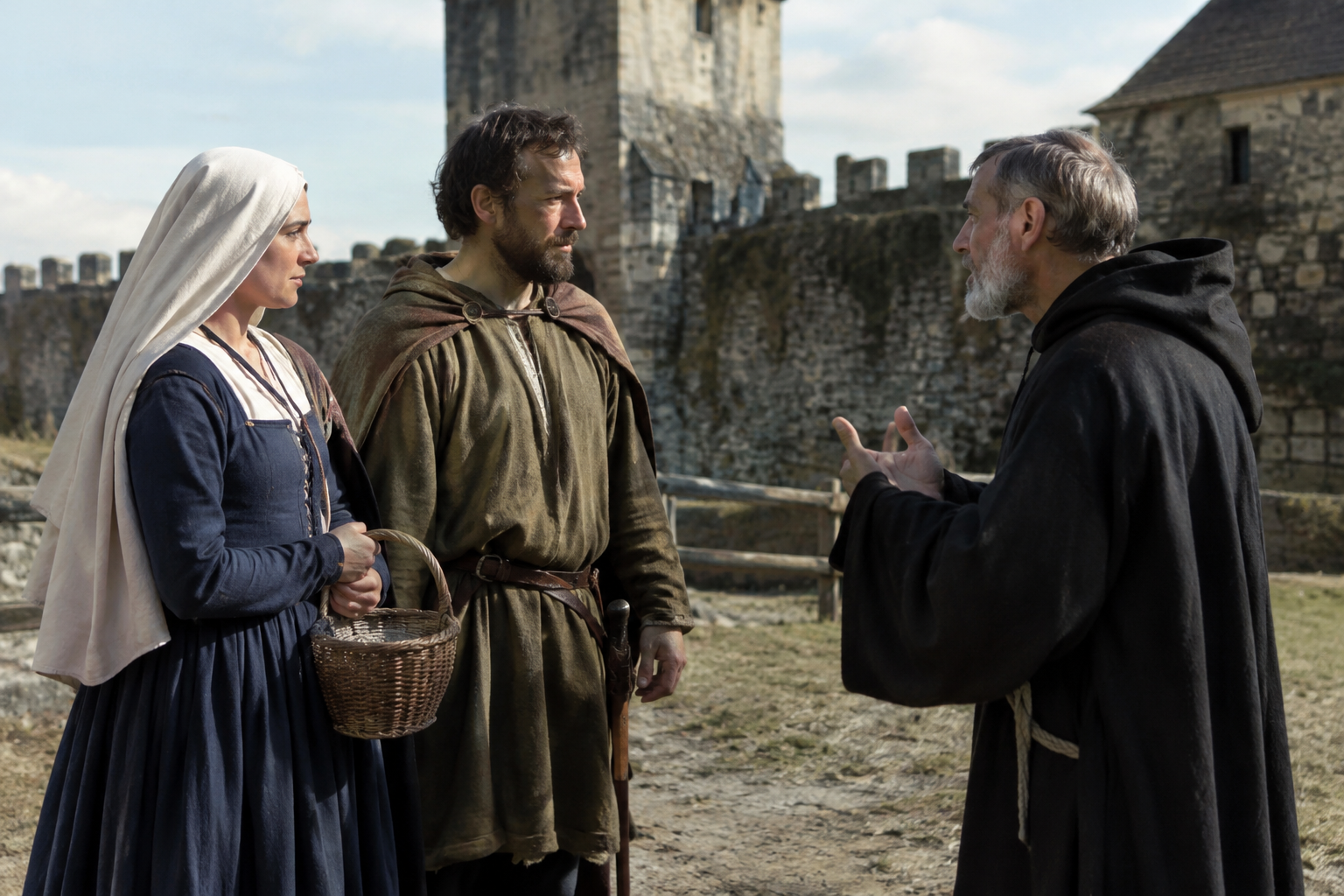
By the 9th and 10th centuries, central Italy had already lived through centuries of imperial integration and post-imperial reordering. Men with different paternal origins could belong to the same village, worship in the same church, farm the same estate, and be buried under the same local customs. The significance of E1b1b1a1a1c1b2 at Villa Magna is therefore not that it identifies one named people, but that it captures the persistence of a lineage characteristic of the wider Mediterranean world within a clearly medieval Italian context.
That wider point is echoed in work on medieval paleogenomics in northern Latium, where the evidence again points toward local populations shaped by long-term mixture rather than neat ethnic replacement.
It is worth pausing on a basic archaeological truth: one sample is not a dynasty, not a census, and not a people. Yet one well-contextualized individual can still be highly informative. R59 anchors this haplogroup in a time and place where documentary history is patchy, and where burial evidence helps fill in the human side of large historical transitions.
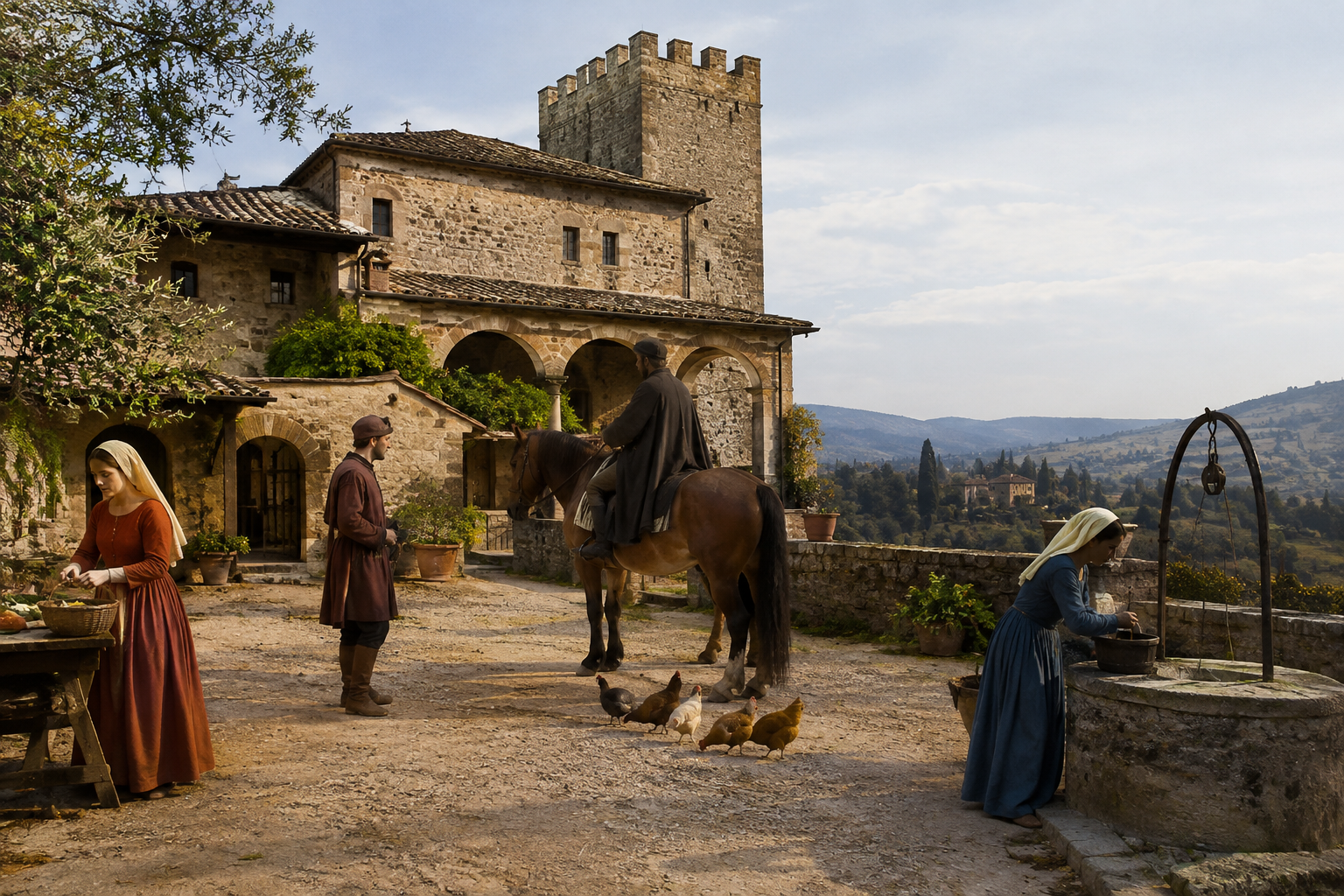
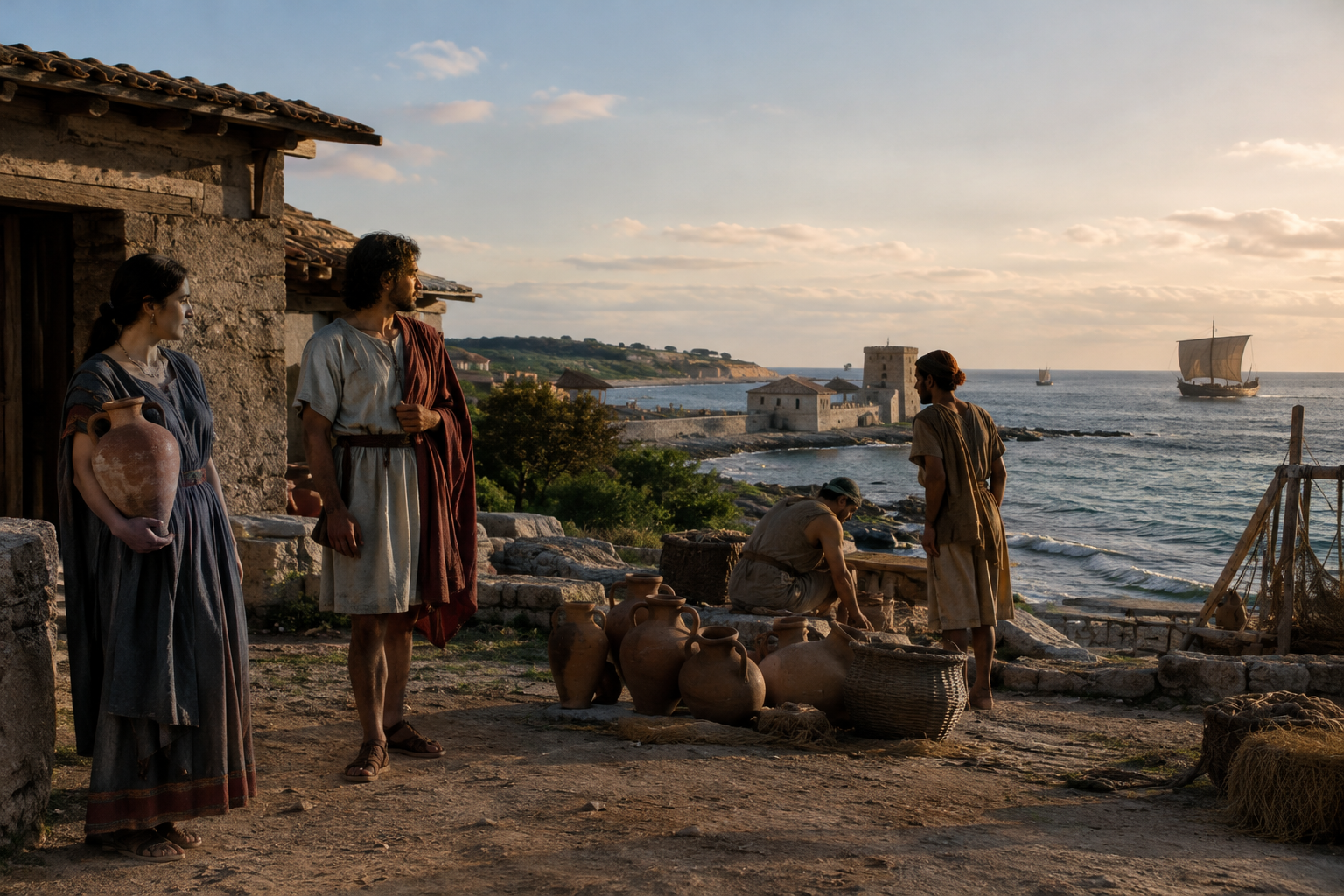
In Roman and post-Roman Italy, estates such as Villa Magna were places where continuity and change met each other every day. Buildings were reused, landscapes stayed productive, and communities adapted to new political masters without abandoning older local worlds. A paternal lineage like E1b1b1a1a1c1b2 in such a setting is a reminder that medieval Europe was built not only from incoming groups, but also from the survival and reshaping of much older regional ancestries.
Readers interested in how this complexity appears elsewhere in the peninsula may want to compare the picture from ancient Italian islands, where insularity did not prevent diverse genetic histories.
E1b1b1-related lineages often attract sweeping migration stories, sometimes far too sweeping. The sensible historical reading is smaller and better. Italy has long been one of the great receiving and redistributing zones of the Mediterranean, and its paternal lineages reflect that. Some arrived in deep prehistory, some through classical mobility, some through later regional contacts. The challenge is not to force one explanation, but to respect the timescale.
That is especially important for a branch as specific as E1b1b1a1a1c1b2. Unless a study explicitly reconstructs its detailed subclade history, we should resist pretending that a single burial can identify its exact point of origin. What R59 does show, clearly enough, is that this paternal line was part of the human fabric of early medieval Italy.
For a broader western Mediterranean comparison, the article on Roman Hispania's lasting genetic legacy is a useful companion, because it explores another former Roman province where imperial-era mixture continued to shape later populations.
If your paternal line falls under E1b1b1a1a1c1b2, the most responsible takeaway from Villa Magna is not a fantasy of one named tribe or noble house. It is something more interesting, really: your direct male line belongs to the long, entangled history of the Mediterranean world, and by around AD 905 that line is documented in central Italy in the person of R59. The archaeology points toward endurance through change, with older lineages still present in a medieval society built on Roman ground but no longer Roman in the old imperial sense.
Comments