Haplogroup I2

– 5 min read


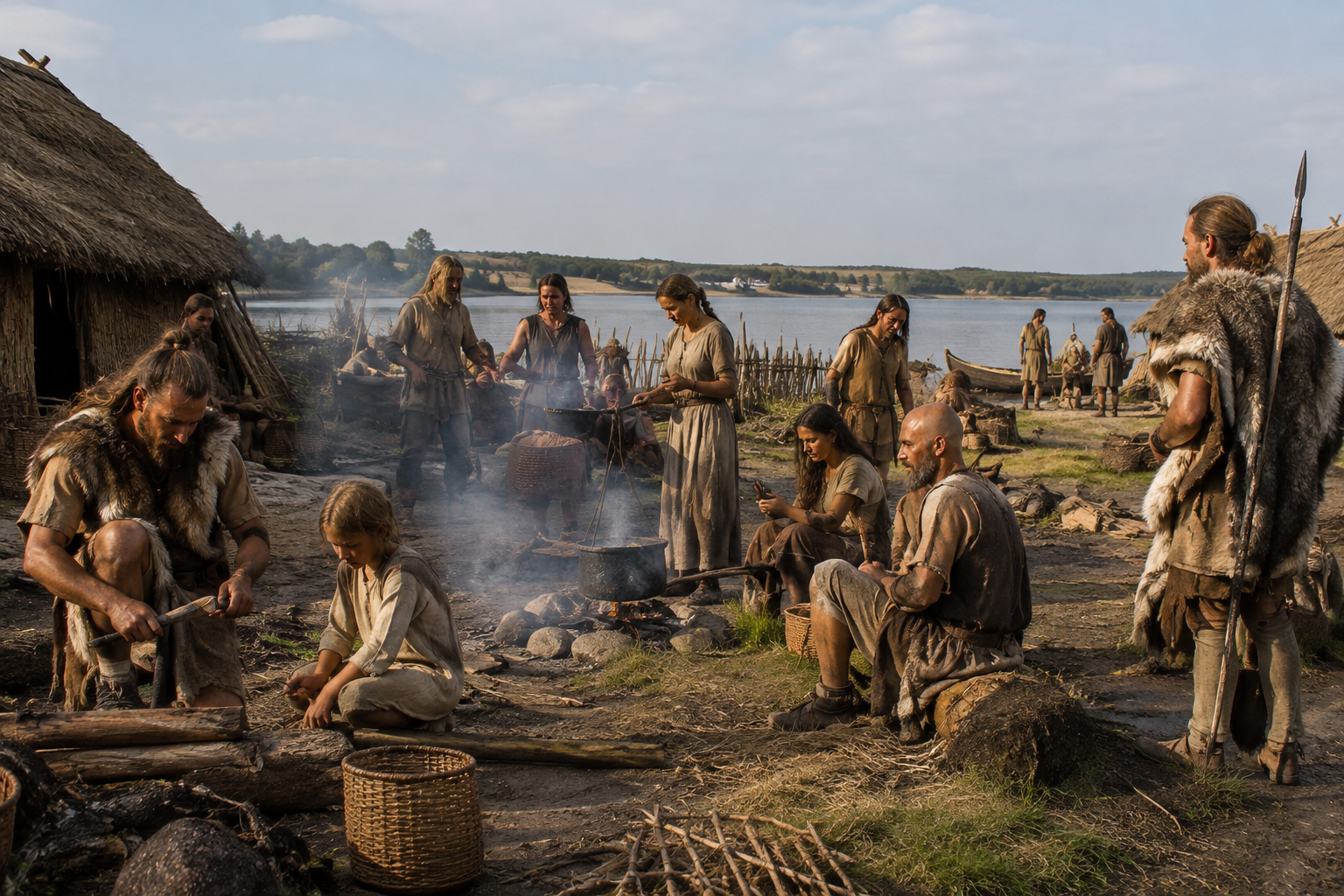
At Sigersdal Mose on Zealand, one of the oldest men in this set lived around 7090 BC. He is recorded here as sample NEO759, an early Mesolithic individual from Denmark, and he matters because he sits very near the beginning of a long European story carried in part by Y-DNA haplogroup I2. That single paternal line does not describe his whole ancestry, culture, or appearance, but it does mark one direct male line that turns up again and again in some of the earliest post-Ice Age Europeans.
That is the striking thing about I2 in the ancient record: before it appears in later farmers, Bronze Age communities, Roman-period burials, and medieval graves, it is already there among hunter-gatherers in northern and eastern Europe. In this sample set, Denmark, Ukraine, Norway, Sweden, Britain, Belgium, Germany, the Balkans, Iberia, and even the Caucasus all contribute pieces of the picture. The result is not a simple tale of one people marching across a map, but a durable paternal lineage repeatedly absorbed into very different archaeological worlds.
The densest cluster here comes from prehistoric Denmark, and that is no accident. Ancient DNA work on Denmark's Mesolithic and Neolithic populations has transformed the old textbook contrast between "foragers" and "farmers" into something more interesting and more human. A major genetic study of the region, published on ancient Danish populations, helped clarify just how much continuity, replacement, and mixture unfolded there over millennia.
Within that broad setting, several Danish males in this list are associated with I2: NEO600 from Sollerod Boldbaner on Zealand around 5865 BC; NEO586 from Koed around 5030 BC; NEO791 from Korsor Nor around 5083 BC; and the Ertebolle-associated Jutland individuals NEO568 and NEO569, both around 4347 BC. Add NEO1 from Holmegard Djursland around 4644 BC, NEO930 from Fannerup D around 4942 BC, and NEO645, the so-called Rodhals Man, around 3886 BC, and a pattern becomes unmistakable: I2 is not a rare stray here, but part of the paternal landscape of northern Europe's forager world.
What makes this especially useful for family historians is that the dates span the period when farming was arriving and spreading. These men do not all belong to one moment or one social group. Some belong to hunter-gatherer settings; some lived during the long and uneven transition when foraging and farming overlapped. So I2 in Denmark is not a badge of one single culture. It is better understood as one old male line that persisted through major economic and social change.
Denmark's Mesolithic-Neolithic DNA
If Denmark shows endurance, Ukraine shows depth. Sample I1763x from Mesolithic Vasilyevka is dated here to around 8282 BC, earlier than the Danish cluster and from a very different landscape: the riverine and steppe-edge worlds of eastern Europe. Another Ukrainian individual, NEO514 from Vovnigi II, dates to around 4666 BC, while I3716 from Neolithic Vilnianka in Zaporizhia belongs around 5397 BC.
These Ukrainian finds matter because they remind us that I2 was not only a Scandinavian or North Sea phenomenon. It also belonged to populations east of the Carpathians, in regions crucial to later European prehistory. That does not mean every later I2-bearing man descended specifically from Vasilyevka or Vovnigi II; archaeology is not that tidy. But it does show that the lineage had a broad postglacial distribution before the great population movements of the Bronze Age changed the genetic map of Europe.
For readers following wider Black Sea and steppe history, this helps place I2 in the deeper background rather than treating it as a late regional curiosity.
The northern spread of this haplogroup is reinforced by very early finds outside Denmark. Sample NEO17 from Hummervikholmen in Norway dates to around 7197 BC. In Sweden, the Mesolithic sample sbj001 from Stora Forvar is listed around 6554 BC, and H26 is recorded from Mesolithic Sweden around 6000 BC. These are not trivial appearances. They place I2 among the male lines present in the far north during the early Holocene, when newly habitable landscapes were being occupied after the retreat of the ice.
By the Neolithic, the story becomes even more interesting because I2 does not vanish with the spread of agriculture. Instead, it appears in contexts tied to farming communities and megalithic landscapes. In Britain, Coldrum_1 from Trottiscliffe Coldrum is dated to around 3405 BC, Jubilee_cave from the Yorkshire Dales to around 3438 BC, and Kelco_cave in England to around 3511 BC. In Scotland, I36022 from Rattar East is dated around 3580 BC, while the Orkney sample NEO630 from Banks Chambered Tomb belongs around 2900 BC.
That combination is historically important. It shows I2 not just in mobile hunter-gatherers, but also in the communities building tombs, using caves for burial, and participating in the varied ceremonial worlds of Neolithic Britain. A study discussing tomb-building and descent in northern Scotland offers useful archaeological context for how such monuments worked as social statements, even if a haplogroup alone cannot explain the whole kinship system at any site: research on Neolithic tomb-building in northern Scotland.
One of the common misunderstandings about ancient European Y-DNA is that once steppe-associated lineages became prominent in many Bronze Age populations, older lineages must have disappeared. The evidence here says otherwise. I2 continues to appear, even if often less dominantly than in earlier forager settings.
Examples include I0804 from Unetice-period Eulau in Germany around 1982 BC, WEZ83 from the Tollense Valley battlefield around 1250 BC, WB16c from Late Neolithic Warburg in Nordrhein-Westfalen around 3000 BC, and I16995 from Bronze Age Vrbicka in Montenegro around 2500 BC. There are also Belgian Neolithic and Late Neolithic samples such as I13629, I13631, I13654, and I13657, plus TGM008 from Neolithic France and I10283 from Cova de la Guineu in Spain.
This spread tells us something very plain but very important: old paternal lines do not necessarily vanish when cultures change. They can persist locally, be absorbed by newcomers, or survive in minority positions for centuries. So an I2 result today should not be forced into a single ethnic label such as "hunter-gatherer," "Celtic," "Germanic," or "Slavic." The archaeological record shows repeated survival through different language zones and cultural horizons.
Foragers and Bell Beaker Survival
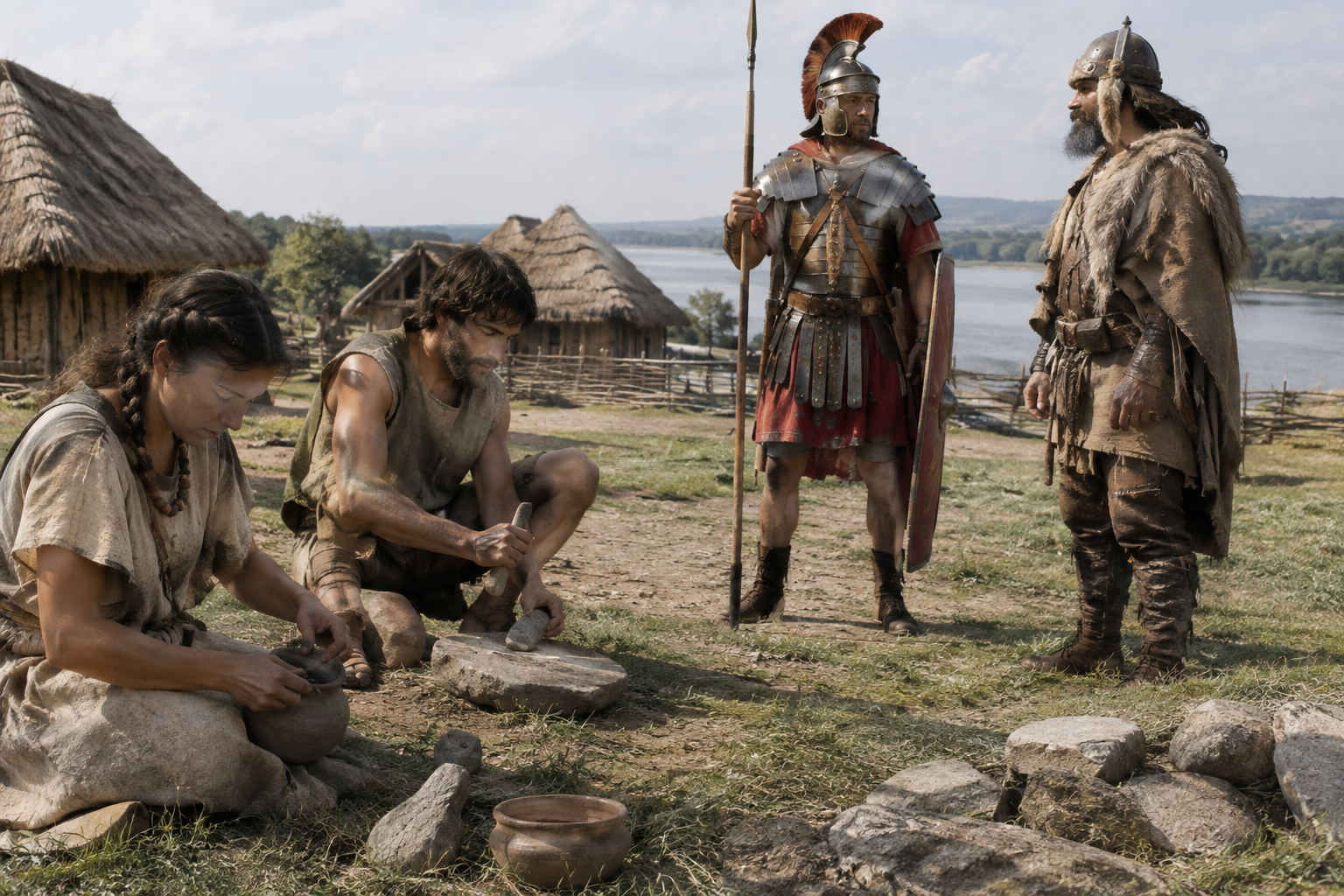
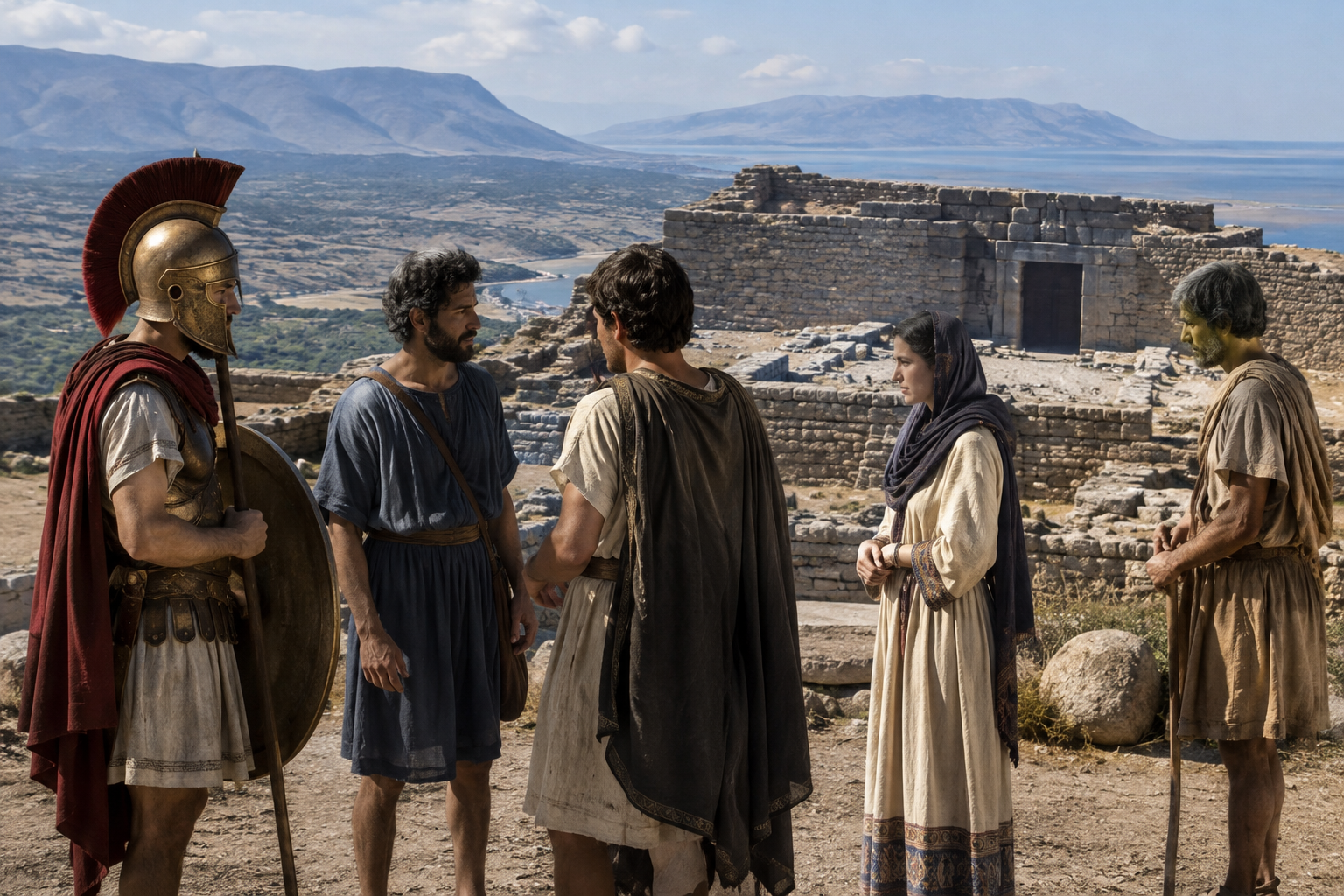
By the first millennium AD, I2 appears in a completely different sort of archive: military frontiers, mixed provincial towns, Migration Period cemeteries, and medieval churchyards. Sample DNA021 from an Alemanni grave at Basel-Waisenhaus in Switzerland is dated around AD 376. I41148 from Late Roman Aquae Calidae in Bulgaria belongs around AD 350. I23169 from Arroyo Vaquero near Estepona in Malaga is dated around AD 558 and is described as North African Early Medieval Spain, an excellent reminder that Iberia in late antiquity and the early Middle Ages was connected to the Mediterranean as much as to inland Europe.
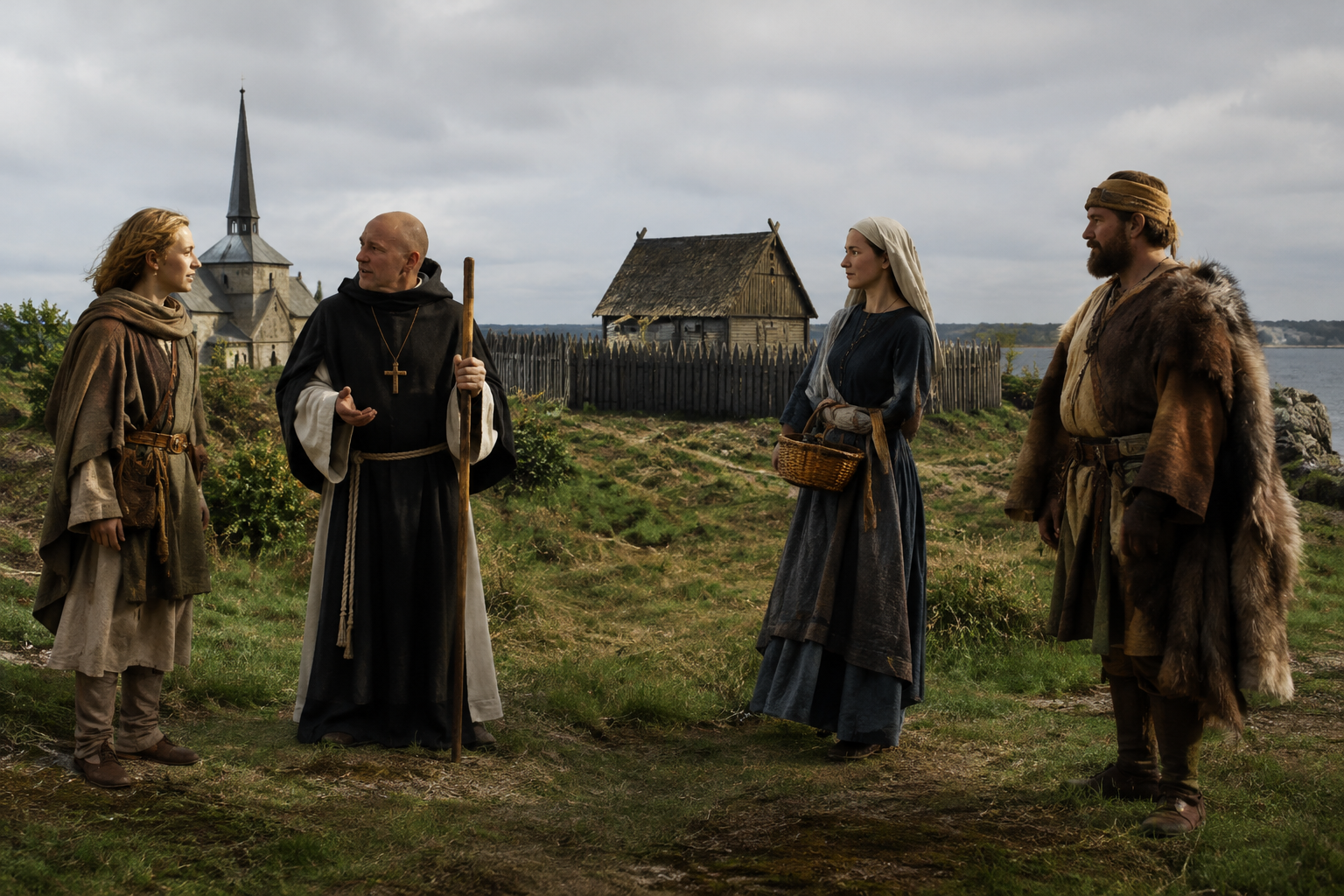
Elsewhere the lineage appears in I20436, an "outsider" Byzantine-era burial from the church at Stratonikeia on the Aegean coast of Anatolia around AD 975, and in ATP_PSN_1274 from late medieval Clopton in Cambridgeshire, dated here to AD 1561. These are widely separated people in very different societies. What unites them is not ethnicity or status, but the persistence of one paternal line through the churn of empires, conversions, migrations, and local marriages.
That long continuity is exactly why ancient DNA has become so useful. It lets us see that a haplogroup can outlast the labels historians use for periods and peoples. Rome falls, kingdoms rise, languages shift, burial customs change, yet some paternal lines remain in circulation all the while.
Roman Hispania's Genetic Legacy
The most distinctive thing about haplogroup I2 in this sample set is not one dramatic migration, but extraordinary longevity. It appears among Mesolithic foragers in places like Sigersdal Mose, Hummervikholmen, Stora Forvar, and Vasilyevka; it continues into Neolithic tomb-building societies in Britain and beyond; and it survives into Bronze Age, Roman, and medieval settings across much of Europe and its neighboring regions.
For someone researching a present-day I2 paternal line, that means your direct male ancestry may connect to one of Europe's deepest surviving postglacial lineages. It does not by itself identify your tribe, language, or recent nationality. But it does place your Y-line in a remarkably old and resilient strand of European prehistory, one that kept being folded into new communities rather than disappearing with the first great upheaval.
Comments