Persistent Forager Ancestry and the Bell Beaker Expansion in the Lower Rhine–Meuse Region
– 6 min read


Persistent Foragers in a Farming World: The Lower Rhine–Meuse Story
The waterlogged landscapes of the Lower Rhine–Meuse region reveal one of prehistoric Europe's most remarkable stories. Here, in the rivers, peat bogs and dunes of the Netherlands, Belgium, and western Germany, people with very high hunter‑gatherer ancestry held their ground right into the 3rd millennium BCE, long after farming had transformed the rest of Europe. This comprehensive study traces their genetic legacy through ancient DNA, revealing how these wetland communities became the unlikely springboard for one of Europe's most significant prehistoric migrations.
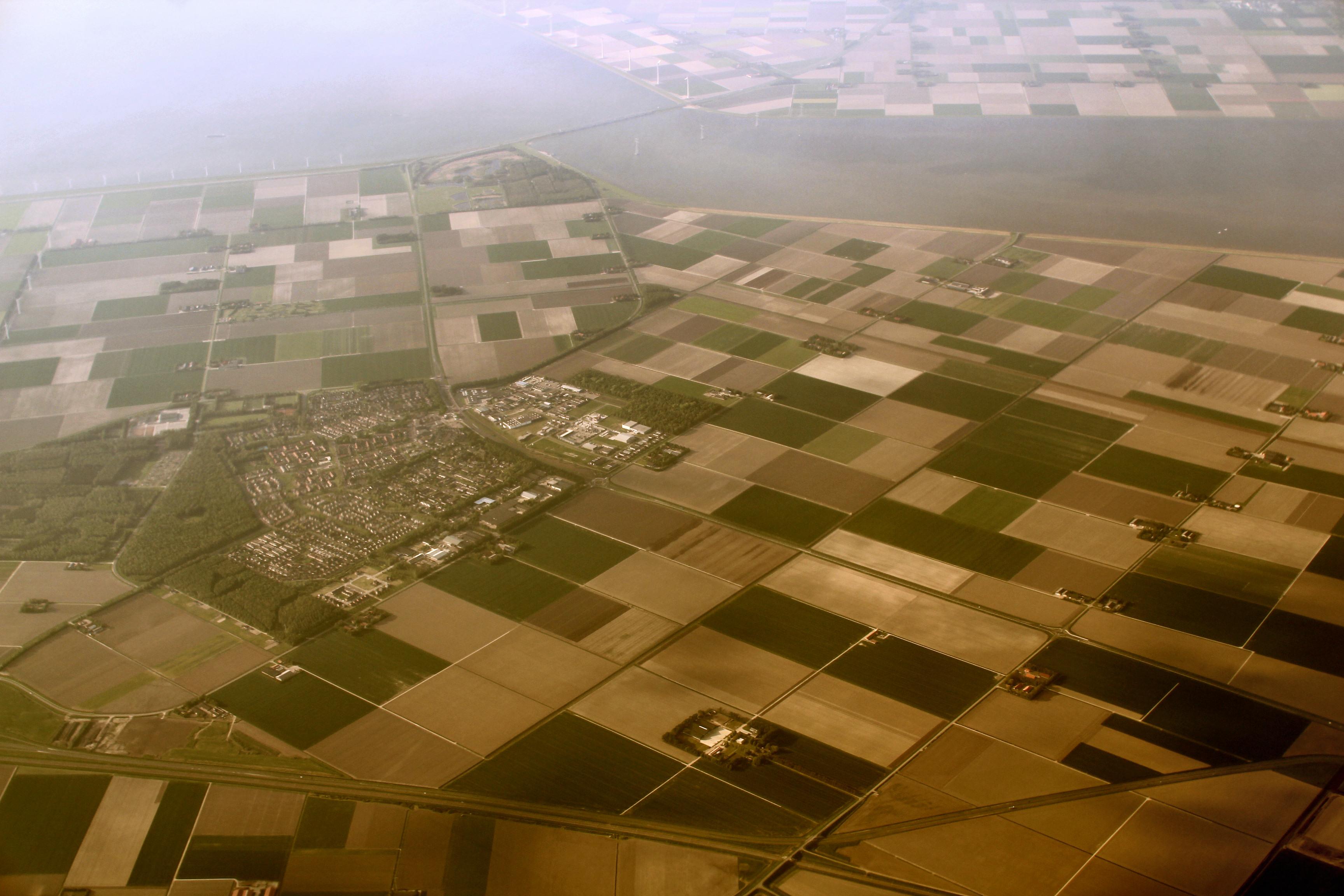
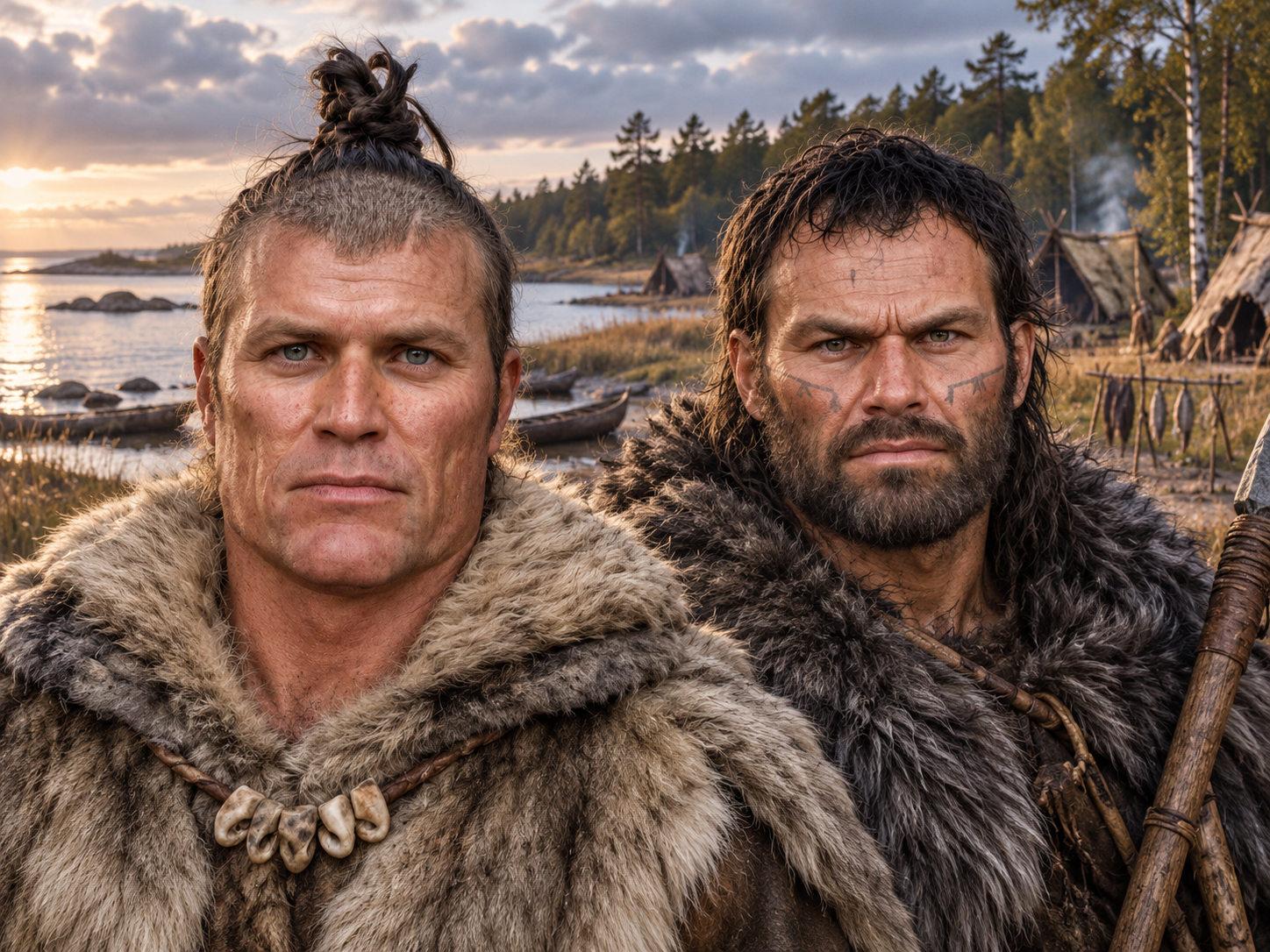
From about 5500 BCE, early farmers arrived on the fertile loess soils in the south, linked to the famous Linearbandkeramik culture. But north of those chalky fields stretched a very different world: tidal flats, river deltas, peat bogs and sandy dunes along the Rhine, Meuse and Scheldt. In this watery maze lived communities archaeologists call Swifterbant, Hazendonk, and later Vlaardingen. Their settlements – perched on river and coastal dunes, natural levees and crevasse splays – are not grand stone villages but low, often damp, sites where people hunted deer and boar, fished rivers and estuaries, gathered wild foods, and also grew some crops and kept animals. Archaeologically, they look like semi‑farmers; genetically, as this analysis shows, they are still half forager.
The study examines DNA from individuals buried at several key sites including Nieuwegein-het Klooster, Swifterbant-S2, Zoelen-de Beldert, and Molenaarsgraaf-24A. Across these sites, researchers find something striking: from roughly 4400 to 3000 BCE, the typical person in the region carries around 40–50% hunter‑gatherer ancestry. This is not an isolated cave or a single odd burial – it is an entire regional pattern that endures for millennia. While most of Neolithic Europe quickly becomes dominated by the descendants of farmers whose roots lie in western Anatolia, these wetland communities maintained their distinctive genetic heritage through complex networks of interaction and intermarriage.
One of the most compelling aspects of this research concerns the specific patterns of genetic exchange. In these Lower Rhine–Meuse Neolithic communities, most of the male Y‑chromosome lineages are the old hunter‑gatherer types such as I2a and related lines, while most of the female mitochondrial lineages resemble those of early farmers from further south and east. In everyday language, this means that local forager-descended men were marrying, or at least partnering with, women from farming backgrounds. Those women did not simply bring their genes; they likely carried with them knowledge of animal husbandry, crop growing, new pottery forms and farming lore.
A vivid example comes from Nieuwegein-het Klooster, where a woman known as I17968, buried in a Swifterbant context around 4300–4200 BCE, carried a mixture of hunter‑gatherer and early farmer ancestry in her overall genome – only about 37 percent was from farming groups. Yet her mitochondrial DNA belonged to a typical early farmer line. This means that her direct maternal line came from farming communities, but she herself lived and died in a wetland settlement whose people still fished, hunted, and farmed in equal measure. The wetlands thus became a frontier of intermarriage and idea‑sharing, rather than a simple story of farmers sweeping away foragers.
The genomes show clear evidence of this pattern on the X chromosome, which women contribute twice as much as men. The proportion of early farming ancestry is significantly higher on the X chromosome than on the rest of the genome, supporting the interpretation that women from farming backgrounds repeatedly joined communities whose men descended mainly from local foragers. This process continued for over a millennium, creating the distinctive genetic signature that would later prove crucial to understanding European prehistoric migrations.
Around 3000 BCE, in many parts of Europe, the arrival of Corded Ware pottery goes hand‑in‑hand with an influx of people with ancestry linked to steppe pastoralists from far to the east. In the Lower Rhine–Meuse lowlands, things looked very different. At sites such as Molenaarsgraaf-24A, Opmeer-Mienakker, and Sijbekarspel-Op de Veken, Corded Ware-style pottery appears in settlement contexts, but the people themselves show overwhelmingly local ancestry. The woman from Molenaarsgraaf-24A shows no detectable steppe ancestry at all, while two men from northern sites carry only 12–16% Corded Ware-related ancestry.
The most intriguing figure among them is the man from Opmeer-Mienakker, I12902. Although his overall ancestry is mostly local, his Y‑chromosome falls in a branch R1b-U106 known from early Corded Ware contexts in Bohemia. He is buried in a wetland settlement, not under the isolated barrows that mark Corded Ware presence in the sandy uplands further east, yet his paternal lineage clearly traces back to the steppe-derived Corded Ware expansion. This mix suggests a scenario in which a small number of incoming men with Corded Ware roots marry into local communities, bringing their Y‑chromosomes – and perhaps some customs and prestige goods – into Vlaardingen-style settlements, while the overall ancestry of the group remains stubbornly, and recognisably, forager‑rich.
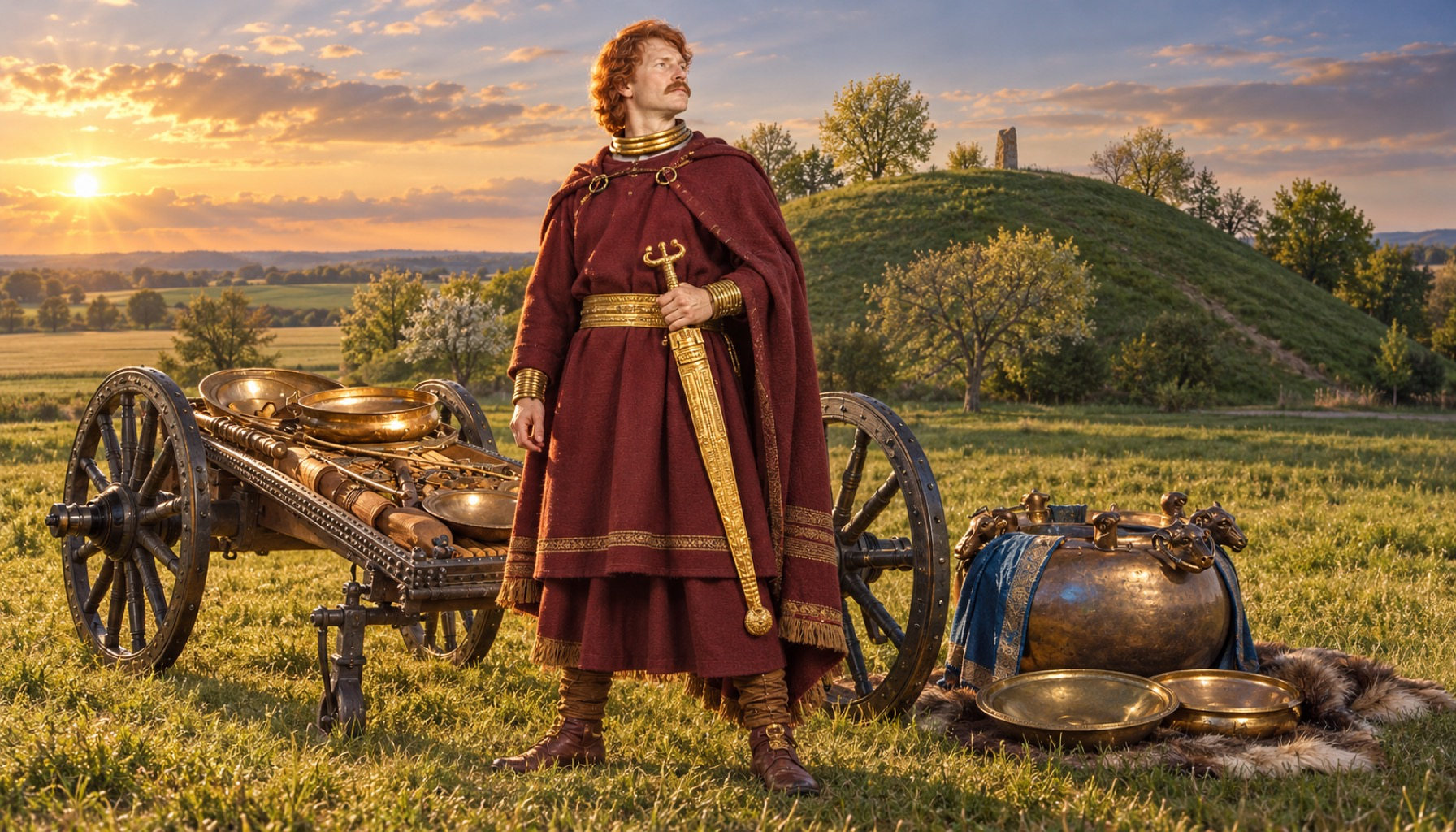
The great turning point comes with the appearance of the Bell Beaker complex after about 2500 BCE. The analysis examines 13 individuals associated with Bell Beaker material at sites such as Oostwoud-Tuithoorn and Ottoland-Kromme Elleboog. In genetic terms, these Bell Beaker users represent a profoundly new population. They now carry a majority of their ancestry – about 82% – from central and eastern European Corded Ware-type groups, and only 13–18% from the old local wetlands population with its high forager component.
Yet that modest 13–18% matters crucially. The Bell Beaker users of the Lower Rhine–Meuse cannot be explained without this local ingredient. Their genetic profile requires mixing with the long-standing forager-rich Neolithic communities, and the study argues that this fusion occurred right there in the region. The graves also speak to a new male-dominated lineage. All examined Bell Beaker men in the region carry a branch of the Y‑chromosome R1b-L151, especially the P312 subtype that becomes hugely important in later western Europe, and which appears first in early Corded Ware men from central Europe.
One Bell Beaker man, I13025, even carries the same R1b-U106 branch seen earlier in the partly steppe‑derived Opmeer-Mienakker man, hinting at a thread of male descent linking the Corded Ware newcomers in the wetlands and the later Bell Beaker communities. This genetic continuity suggests that the same broad group of male lineages, originally carried by Corded Ware‑related migrants, may underlie both phases of cultural change in the delta region.
By the Early Bronze Age, roughly 2000–1700 BCE, the people of the Lower Rhine–Meuse look genetically much like the Bell Beaker groups, with only minor additional input from neighbouring populations. Long-distance genetic links – revealed by shared long stretches of DNA – connect them to Bell Beaker and Early Bronze Age individuals in Bohemia, and even to distant relatives in Britain and Scotland. The research demonstrates that the Lower Rhine–Meuse Bell Beaker population became a springboard for a massive demographic expansion into Britain.
When Bell Beaker-associated people appear in Britain around 2400 BCE, many earlier Neolithic communities there practiced cremation and left little viable DNA, but the newcomers are genetically almost a match for the Lower Rhine–Meuse Bell Beaker groups. The British Bell Beaker population, and the Early Bronze Age people who follow, derive the great majority of their ancestry from this Lower Rhine–Meuse source, carrying with them a diluted echo of the old forager-heavy ancestry nurtured for millennia in the Dutch and Belgian wetlands.
The genetic evidence suggests that British individuals of the Early Bronze Age derive around ninety-two percent of their ancestry from the Lower Rhine–Meuse Beaker population, with at most eight percent from the island's earlier Neolithic inhabitants. This represents one of the most complete population replacements documented in prehistoric Europe, yet it carried forward the distinctive genetic legacy of the wetland foragers who had maintained their identity for thousands of years.
While the genetic story tells of dramatic population changes, the archaeological record reveals important continuities. In both the Lower Rhine–Meuse region and Britain, Bell Beaker communities often settled in the same landscapes and maintained similar economic strategies to their predecessors. In the wetlands, Beaker settlements occupy the same river valleys and dunes as earlier Vlaardingen and Swifterbant sites, suggesting that local knowledge of wetland management was preserved and transmitted.
In Britain, great Late Neolithic monuments such as Stonehenge, Avebury, Woodhenge and Silbury Hill continued to be built, used and modified during the early centuries of Beaker presence. Only in the twenty-third century BCE do more obvious changes in burial practice and landscape use become apparent. This archaeological continuity stands against a background of genetic transformation, indicating that people with Lower Rhine–Meuse Beaker ancestry were participating in, and perhaps directing, monument traditions that had first been established by their predecessors.
The overall picture reveals a complex interplay between cultural transmission and population movement. The riverine and coastal communities of the Lower Rhine–Meuse were not a backwater, but a stubbornly distinctive frontier zone whose people – half forager, half farmer for an astonishingly long time – ultimately helped reshape the genetic landscape of northwestern Europe. Their story demonstrates how peripheral regions can become centres of major historical changes, and how ancient identities can persist through millennia of cultural transformation before contributing to continent-wide demographic shifts that echo through to the present day.
Original source article: https://www.nature.com/articles/s41586-026-10111-8


Comments