Clan Costello
– 3 min read


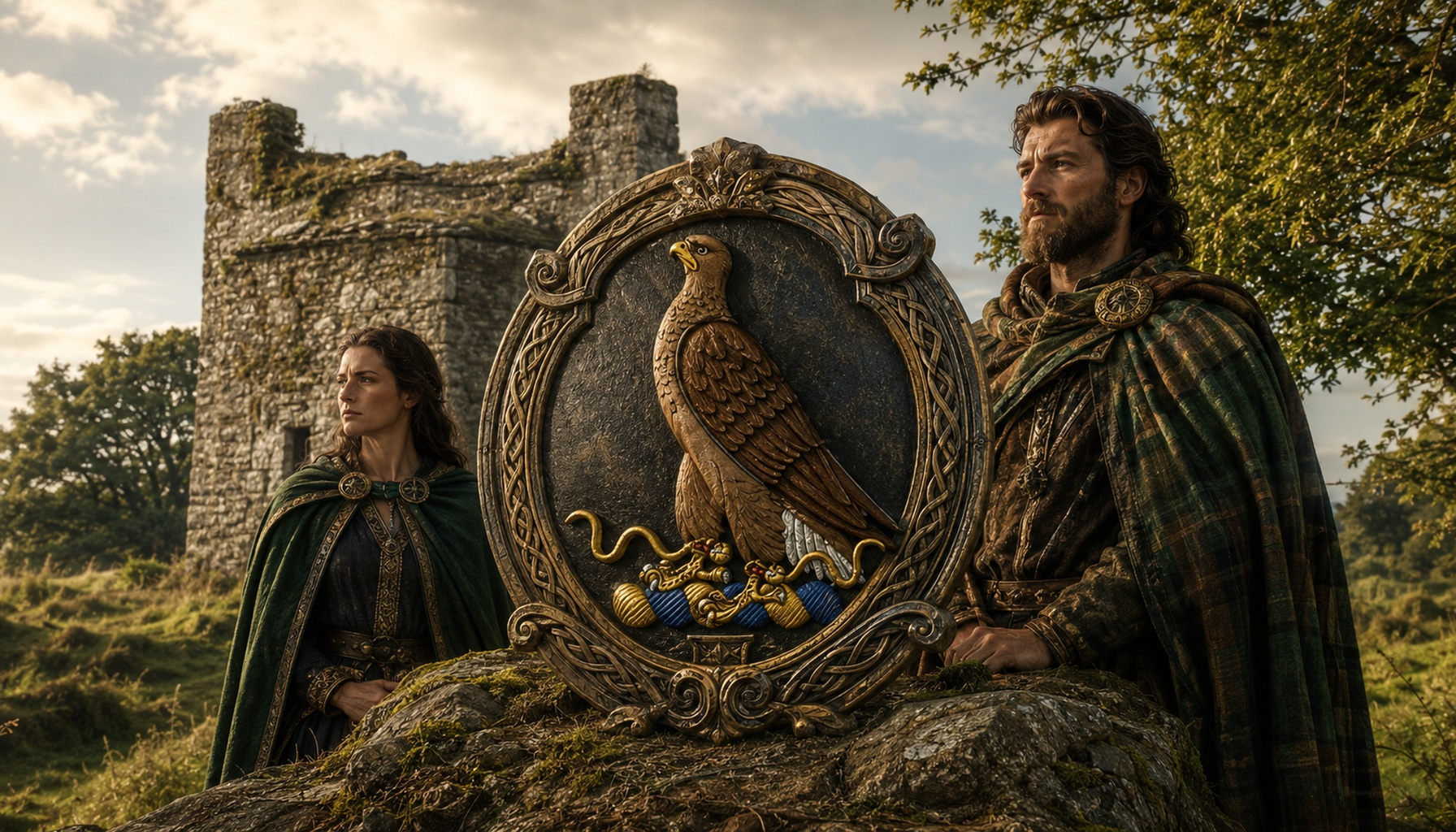
Clan Costello was an Irish family of Norman origin that became deeply rooted in Connacht, especially in what came to be known as the Barony of Costello in County Mayo. Their story begins with the Anglo-Norman expansion into Ireland, but it does not end there. Over generations, the family moved from being frontier newcomers of French-Norman background into one of those strikingly Irish lordly lineages who adapted to local politics, local marriage networks, local war, and local custom. The haplogroup most closely linked here is R1b1a1b1a1a2c1a4b2a1, a paternal line found within a wider Atlantic and western European genetic landscape.
The founder most often brought into view is Gilbert de Nangle, recorded in 1193, a member of the de Nangle family whose descendants in Connacht became the Costellos. This is one of those classic Irish medieval transformations: a Norman surname and power base entering the west, then slowly taking on a Gaelic form, a Gaelic identity, and a local dynastic character. The Costellos built authority through landholding, military service, and regional lordship, and in doing so became part of the fabric of western Ireland rather than simply outsiders planted upon it. Their heritage is bound up with kinship, heraldry, surname continuity, and that fascinating process by which Norman families in Ireland became, in practice and often in feeling, Irish lords.
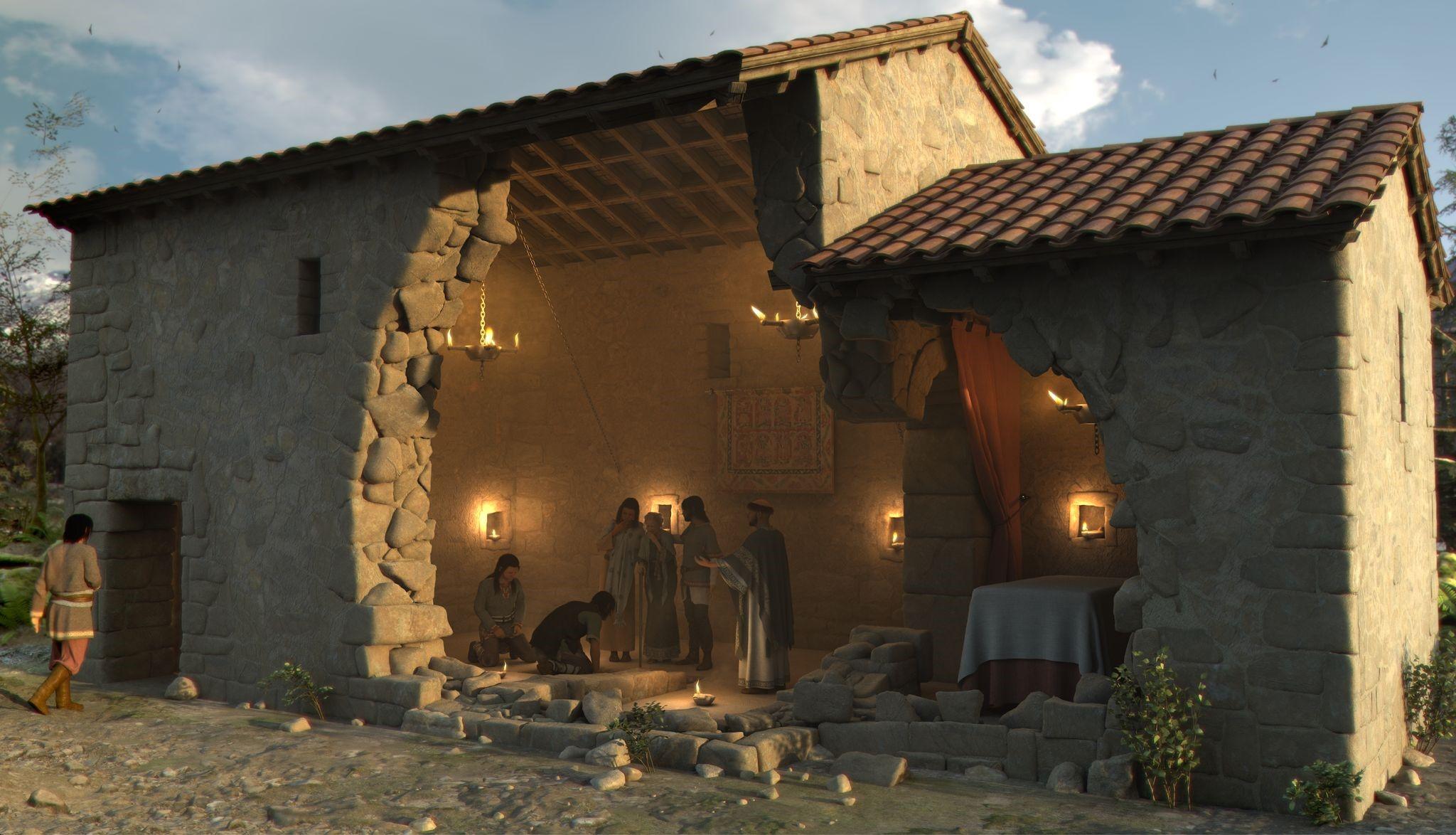
One of the best location anchors for Clan Costello is Castlemore Castle in County Mayo, near the old Costello heartland in Connacht. The site is associated with the MacCostellos and stands as a reminder that this was not merely a surname drifting through records, but a family embedded in a real landscape of fortified residences, local control, and medieval competition. Castlemore is generally described as a tower house, probably dating to the later medieval period, built in stone and positioned as part home, part statement, part defensive structure. In other words, it belongs to that very Irish world of regional lordship where architecture was political theatre as much as domestic space. Though now a ruin, it still gives a vivid sense of the family world: the western countryside, the layered loyalties, and the persistence of lordly memory in stone. Sources describing the site indicate that the remains can still be visited, which makes it one of those places where the abstract history of clan identity suddenly becomes physical and immediate.
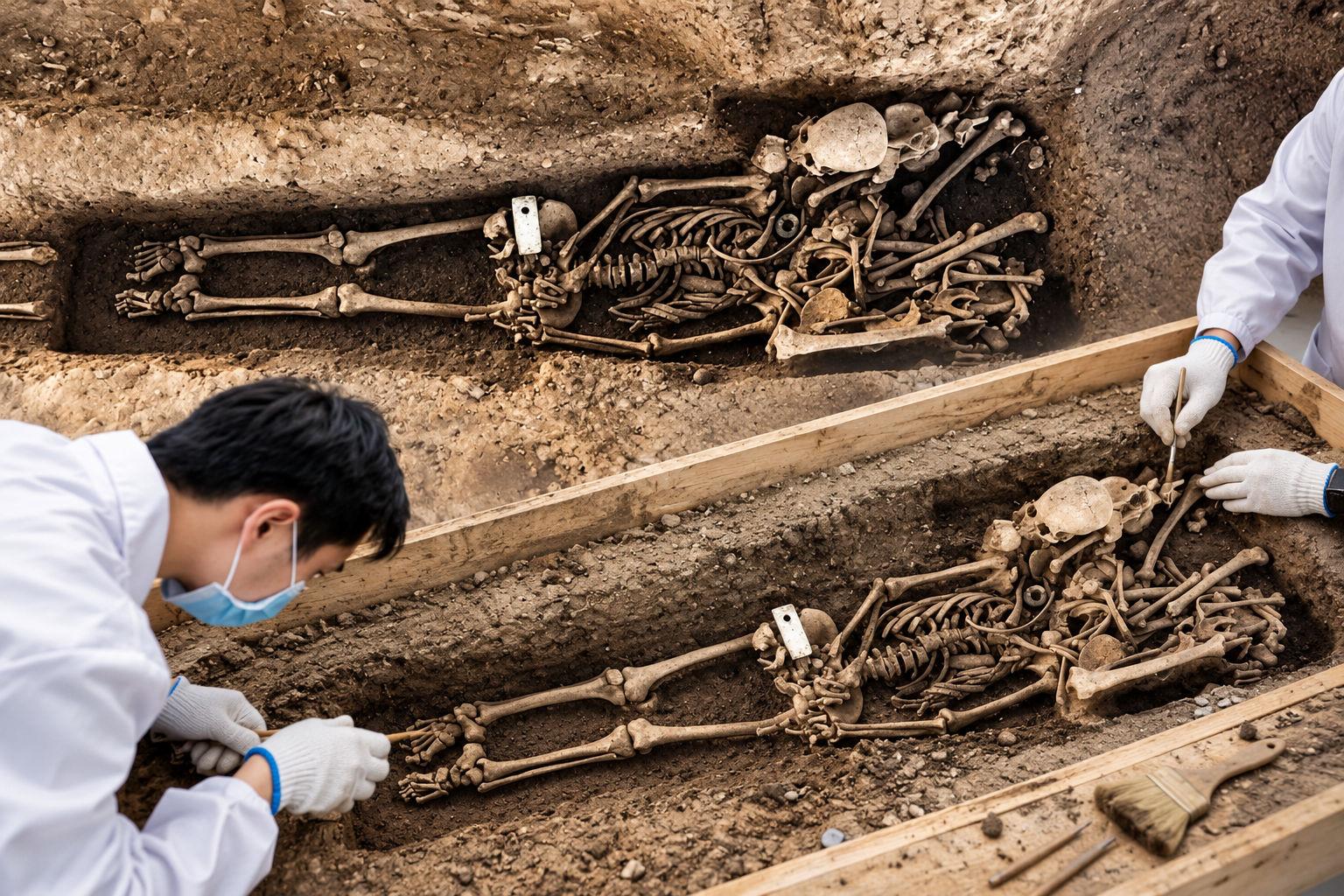
From a DNA point of view, the Costello-linked haplogroup R1b1a1b1a1a2c1a4b2a1 sits within a broad and very old western European story. Related or linked ancient samples associated with this branch include individuals from Iron Age and Roman to medieval contexts across Britain and Europe, such as the Celtic Durotriges burials from Duropolis at Winterborne Kingston in England including WBK12, WBK20, WBK29, WBK41, WBK05, WBK30, WBK43, WBK06, WBK08, WBK18, and WBK191; Medieval England Cambridge St Johns Hospital (ATP_PSN_192); Imperial Roman Era Zadar Croatia (I26776); Bronze Age Orkney Links of Noltland (KD061); Bronze Age Calabria Grotta della Monaca (GMO015); Early Medieval Belgium Sint-Truiden Groenmarkt (ST2025); Medieval Belgium Outsider Sint-Truiden Onze-Lieve-Vrouwekerk (ST1308); Gallic France Parancot (CGG023699); Post Roman Worth Matravers Dorset (I11580); Merovingian Alt-Inden Germany (IND013); Late Roman Klosterneuburg Austria (R10656); Late Roman Conimbriga Portugal (R10488); Iron Age Worlebury Somerset (I11991); Iron Age Battlesbury Bowl (I21309); Bronze Age Trumpington Meadows (I3256); Bronze Age Amesbury Down (I2417); Bell Beaker Upavon (I4950); Bronze Age Bedfordshire (I7576, I7577); Bronze Age Boatbridge Quarry South Lanarkshire (I5473); Celt Hinxton Iron Age (HI2); Early Bronze Age England Thames (I5377); and Ireland Copper Age Rathlin2B. These are not claims of direct descent from any one ancient person to the Costellos. Rather, they show the deeper prehistoric and historic spread of related paternal lines in the same wider genetic family, the sort of long background against which later medieval surnames eventually emerged.
If Clan Costello is part of your family story, or if you are simply curious about how Norman settlers became Irish clans, DNA can add another layer to the history. Upload your DNA to MyTrueAncestry and see whether you match Clan Costello, this linked haplogroup R1b1a1b1a1a2c1a4b2a1, or related ancient DNA samples from Iron Age, Roman, and medieval Europe.
Comments