The Vaughan Family
– 3 min read


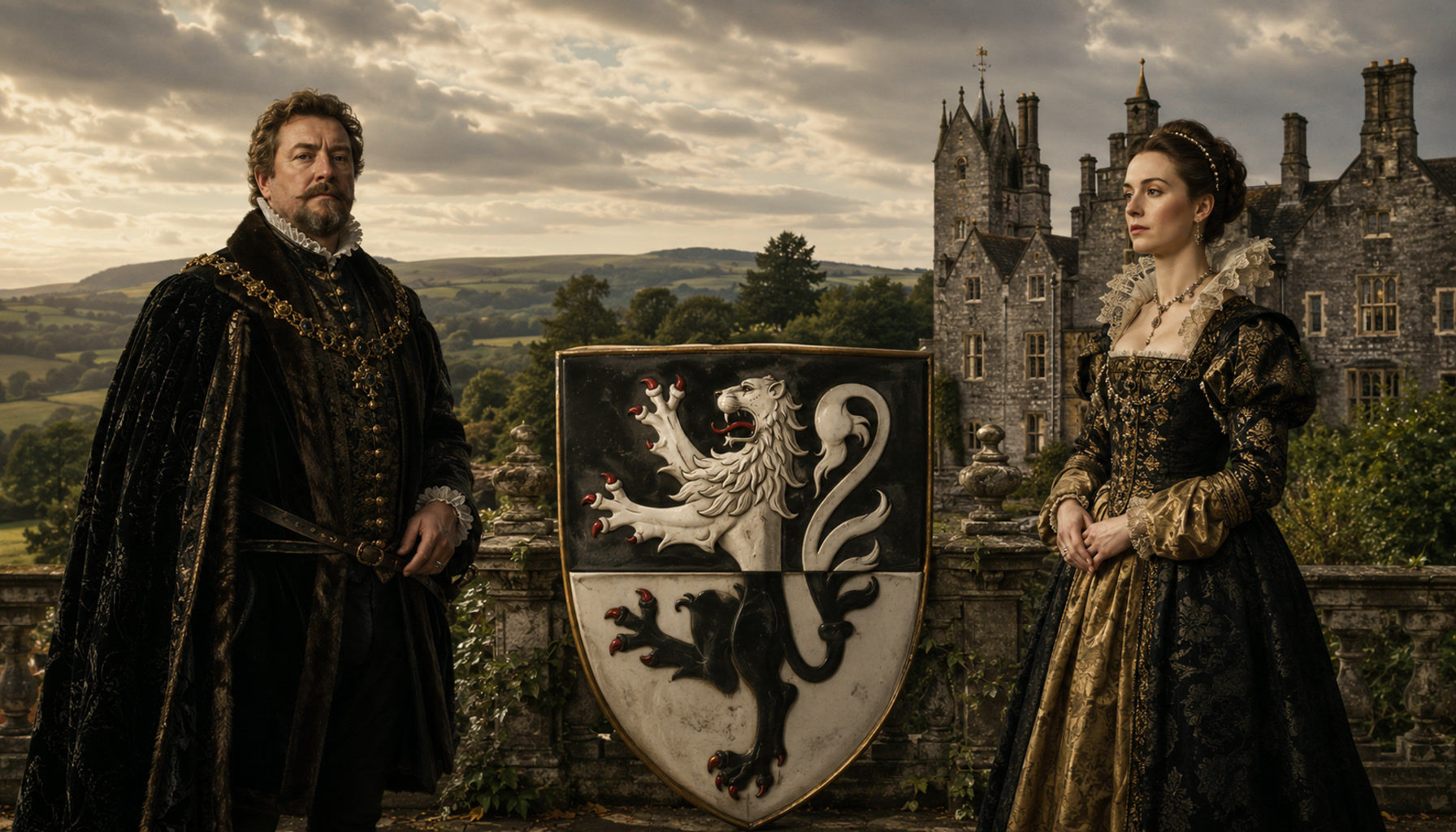
The Vaughan family was one of the notable historic lineages of Wales and the Welsh Marches, rooted above all in Breconshire, Radnorshire, Herefordshire, and the wider border country where Welsh and English worlds met, argued, married, and borrowed from one another for centuries. The surname Vaughan comes from the Welsh word fychan, meaning younger or junior, a reminder that many Welsh family names began not as fixed surnames at all but as descriptions within a living kin network. In genetic terms, the primary family haplogroup linked here is R1b1a1b1a1a1g1, a paternal line found across a wide spread of ancient and medieval European contexts.
What makes the Vaughans so interesting is that they belong to that distinctly borderland story: not simply "Welsh nobles" in a neat textbook sense, but landholding families shaped by native descent, marcher politics, English legal structures, military obligation, heraldry, and church patronage. Their identity was bound up with estates, alliances, and the management of local authority. In that world, ancestry mattered, but so did service. Figures connected with the broader lineage tradition include Bleddyn ap Cynfyn, who died in 1075 and stood at the heart of early medieval Welsh power politics, and Sir Roger Vaughan, active in the late 14th and early 15th centuries, remembered as a soldier of the Wars of the Roses generation before the Tudors remade the political landscape. The Vaughan name survived because it adapted, while still carrying unmistakably Welsh roots.
Read more about the Princely House of Powys
If one place helps anchor the Vaughan story in stone, it is Tretower Court in Powys, near Crickhowell, one of the best-preserved medieval courtly houses in Wales. The site began as part of a defended settlement associated with the Norman and marcher penetration into south-east Wales, but what survives today shows the transformation from military frontier to high-status residence. The house was extensively developed in the late medieval period, especially by the Vaughan family of Tretower, who turned it into a comfortable and prestigious gentry seat with a great hall, private apartments, service rooms, and a strikingly complete enclosed courtyard arrangement. In other words, this was not just somewhere to hide behind walls, but somewhere to perform rank, hospitality, and local power. Tretower Court captures exactly the kind of society the Vaughans inhabited: a Welsh Marcher world in which lineage, lordship, and domestic refinement sat side by side. Better still, it can still be visited today, which means this family history is not just preserved in pedigrees and heraldic manuscripts, but in an actual place you can walk through.
From an ancient DNA perspective, the Vaughan-linked haplogroup R1b1a1b1a1a1g1 sits within a much older European story that long predates the medieval Welsh gentry. Related or linked samples tied to this branch appear across a remarkably wide archaeological map: Celtic Durotriges England Duropolis Winterborne Kingston (WBK106), Pict-era Rosemarkie Cave in Scotland (KD001 and related samples), medieval England at Cherry Hinton (ATP_PSN_944) and Cambridge St Johns Hospital (ATP_PSN_36), medieval northern Spain at Las Gobas (ldo046 and ldo040), Bronze Age and Bell Beaker era contexts in France, Bohemia, Germany, and the Netherlands such as SMGB54, BRE445FK, LEU040, LEU065, LEU007, VLI092, VLI085, STD002, I12902, and I13025, as well as later Iron Age, Roman, Migration Period, Viking Age, and medieval individuals from places as varied as Hallstatt, Ludwigsburg, Viminacium, Sigtuna, Sint-Truiden, Portugal, Denmark, and Saxon England. These are not evidence of direct descent from any one excavated individual to the Vaughan family. Rather, they show that the paternal line associated here belongs to a deep and mobile historical network stretching through Bronze Age Europe, Celtic societies, Roman frontiers, early medieval kingdoms, and the later medieval world from which families like the Vaughans emerged.
Explore ancient DNA and Celtic origins
The Vaughan family story is a splendid reminder that Welsh history is not a side note to British history, but one of its engines: full of contested borders, old lineages, ambitious marriages, military careers, and houses that still speak through their masonry. If you have Vaughan ancestry, Welsh border ancestry, or simply a curiosity about how family history and archaeology meet, you can upload your DNA to MyTrueAncestry and see whether you match the Vaughan family profile or related ancient DNA samples connected to haplogroup R1b1a1b1a1a1g1.
Comments