The Sparre Family

– 3 min read


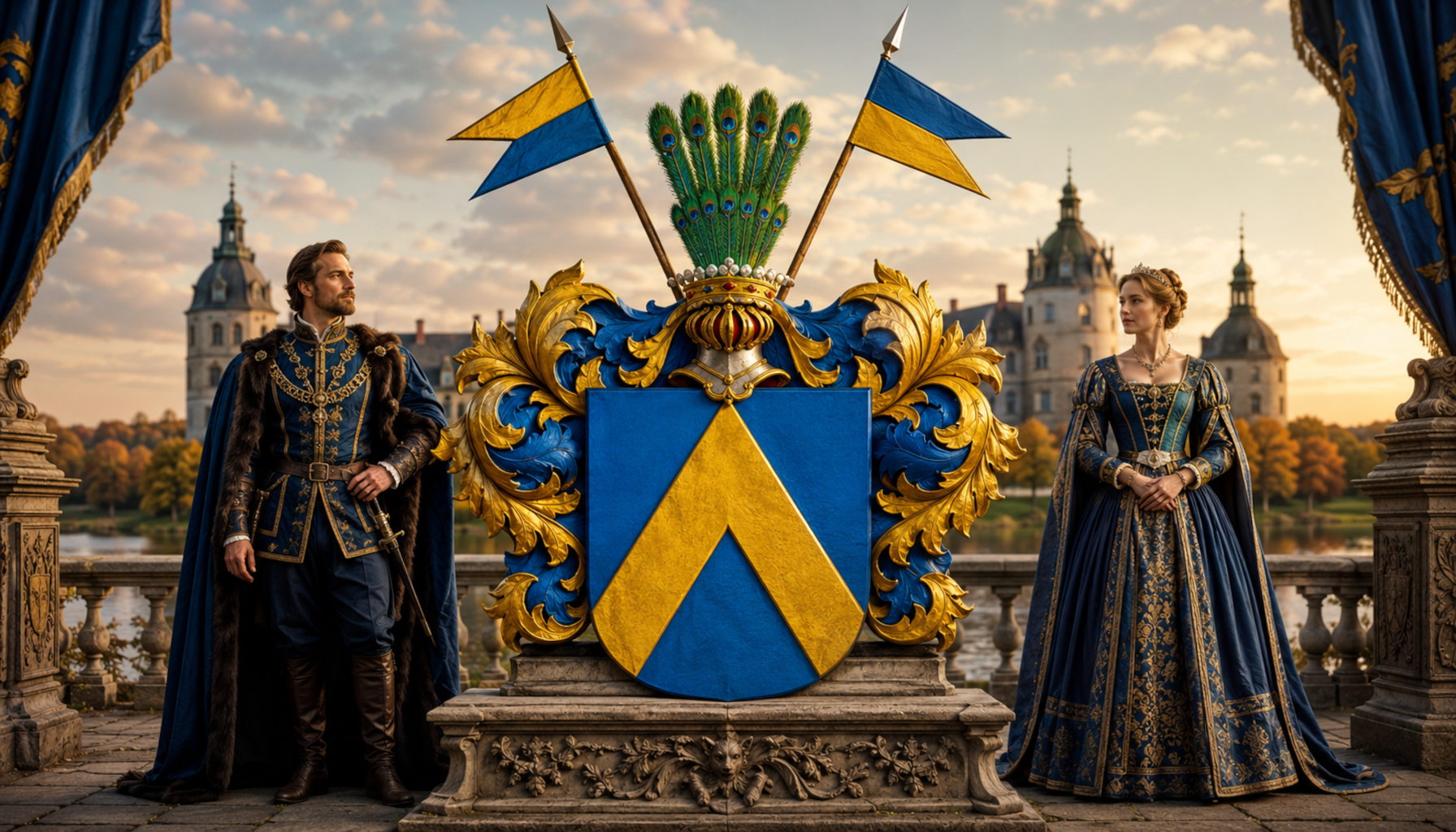
The Sparre family was one of the historic noble families of Sweden, rooted in the medieval aristocratic world of Scandinavia and closely associated with the haplogroup I2a1b1. In historical terms, the name belongs to that long Swedish story of landed power, royal service, marriage alliances, and heraldic self-display that helped knit the kingdom together from the later Middle Ages into the early modern period. The very name Sparre points to the heraldic sparre, or chevron, and that is rather telling: this was a family whose identity was written not only in charters and offices, but in shields, seals, and the visual language of noble memory.
The family was never just one tight little household but a broader lineage with several branches, among them Sparre af Rossvik and Sparre af Sundby, each tied into the political society preserved through Riddarhuset, the Swedish House of Nobility. Their origins belong to the landscape of medieval Sweden, where noble families were anchored in estates, local influence, and service to the crown in war, administration, and diplomacy. By the 16th and 17th centuries, members of the family appear as exactly the sort of people one expects in Swedish state formation: magnates, councillors, soldiers, and officeholders. Erik Larsson Sparre stands out as a statesman and diplomat of the late 1500s, while later figures such as Axel Sparre (1550-1605), Arvid Horn Sparre (1624-1692), and the Field Marshal Axel Sparre (1652-1728) show how the name continued to matter in the great age of Swedish noble power.
Read more about The Stiernhielm Family
A fitting location anchor for the family is Sparreholm Castle in Sodermanland, southwest of Stockholm. The present castle is largely a 17th-century manor environment, with later alterations, and its very name preserves the association with the Sparre lineage. Like so many Scandinavian noble seats, it is less a fairy-tale fortress than a working statement of rank, land, and continuity: a place that tied family reputation to the management of estates, hunting grounds, and regional society. The estate area also became known for its lakeside setting and for the wider cultural landscape around it, which helps us picture the world in which Swedish noble families operated, half political theatre and half agricultural enterprise. Sparreholm Castle and its surroundings are still known today, and the area can reasonably be visited, making it a useful real-world stop for anyone tracing the family through Swedish history rather than merely through a pedigree chart.
Explore the Royal House of Bernadotte
From a DNA perspective, the primary family haplogroup linked here is I2a1b1, a lineage with a deep and wide prehistoric footprint across Europe. That does not mean we can claim direct descent from any specific ancient individual, and it is important not to pretend otherwise. What we can say is that related or linked I2a1b1 samples appear across a remarkably broad archaeological map: Mesolithic and Neolithic foragers and farmers from Sweden, Denmark, Latvia, Ukraine, and Russia, including Motala in Sweden, Zvejnieki in Latvia, Lysa Gora and Vovnigi in Ukraine, Sakhtish II in Russia, and Fralsegarden and Hindby Mosse in Sweden; later appearances include Bronze Age Denmark, Poland, Germany, Orkney, Romania, Hungary, Bulgaria, and even an Etruscan-linked sample from Monteriggioni Colle di Val d'Elsa in Italy known as EV18. In other words, I2a1b1 belongs to one of those old European paternal stories that long predates the historical Sparre family, yet gives useful deep context for understanding how a Swedish noble lineage could sit atop ancestry layers reaching back thousands of years.
Explore Sakhtysh and deep I2a-linked ancestry
If you are exploring the Sparre family, the most interesting question is not simply whether the name appears in a noble register, but how your own story may connect to the wider Scandinavian past behind it. Upload your DNA to MyTrueAncestry to see whether you match the Sparre family context or any of the related ancient DNA samples linked with haplogroup I2a1b1, from Neolithic Sweden and Denmark to later prehistoric Europe.

Comments