The Stiernhielm Family
– 3 min read


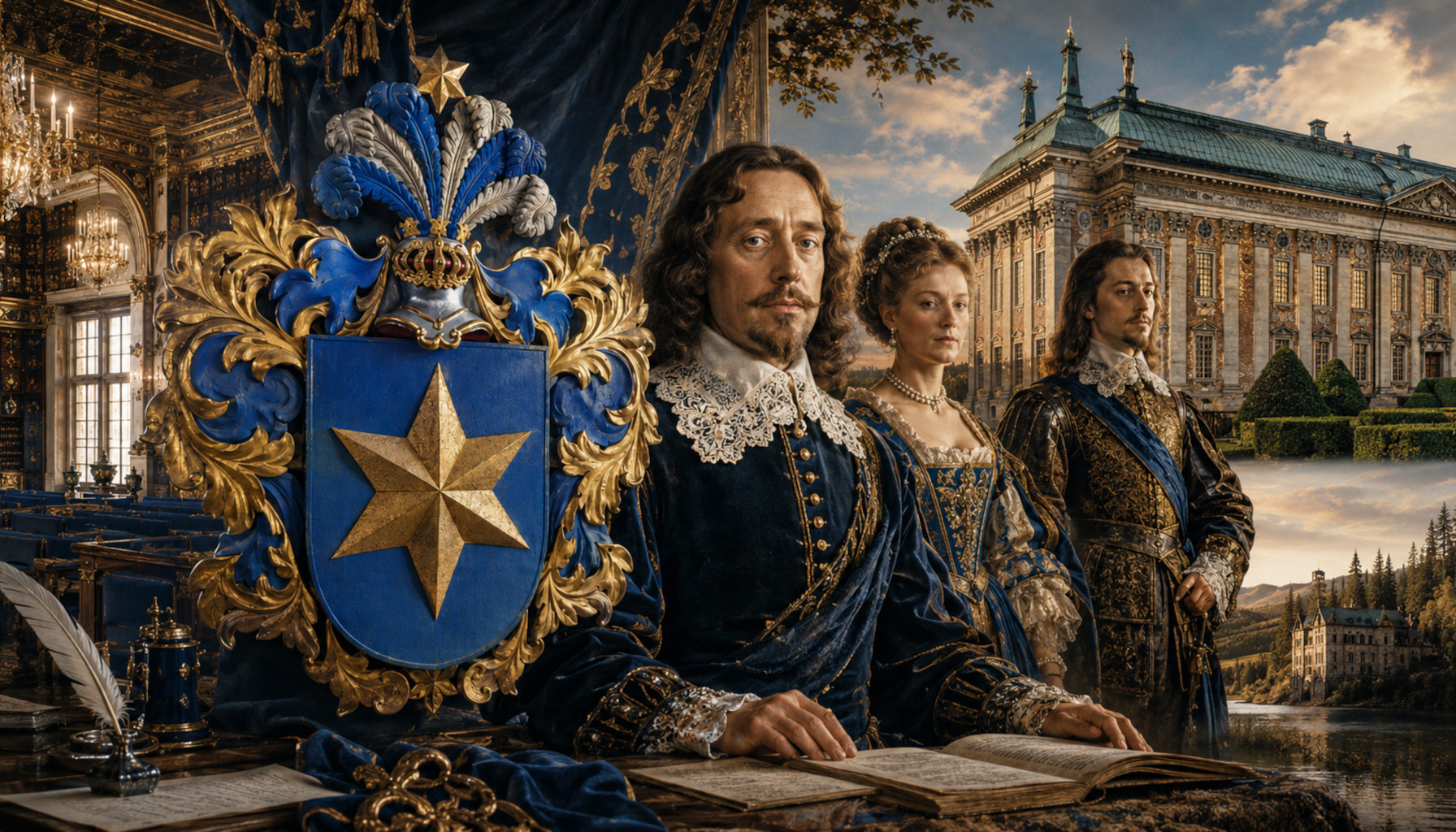
The Stiernhielm family was one of the introduced untitled noble families of Sweden, registered at Riddarhuset as noble family no. 180, and its story begins not in a glittering court but in the mining countryside of Dalarna. The documented line reaches back to Vika parish, where the earliest known ancestor, Olof Nilsson, lived in the mid-1400s as a bergsman, a mining landholder in one of the most economically important regions of late medieval Sweden. The primary family haplogroup linked here is R1a1a1b1a2b3a, placing the Stiernhielms in a wider paternal story seen across parts of northern, central, and eastern Europe.
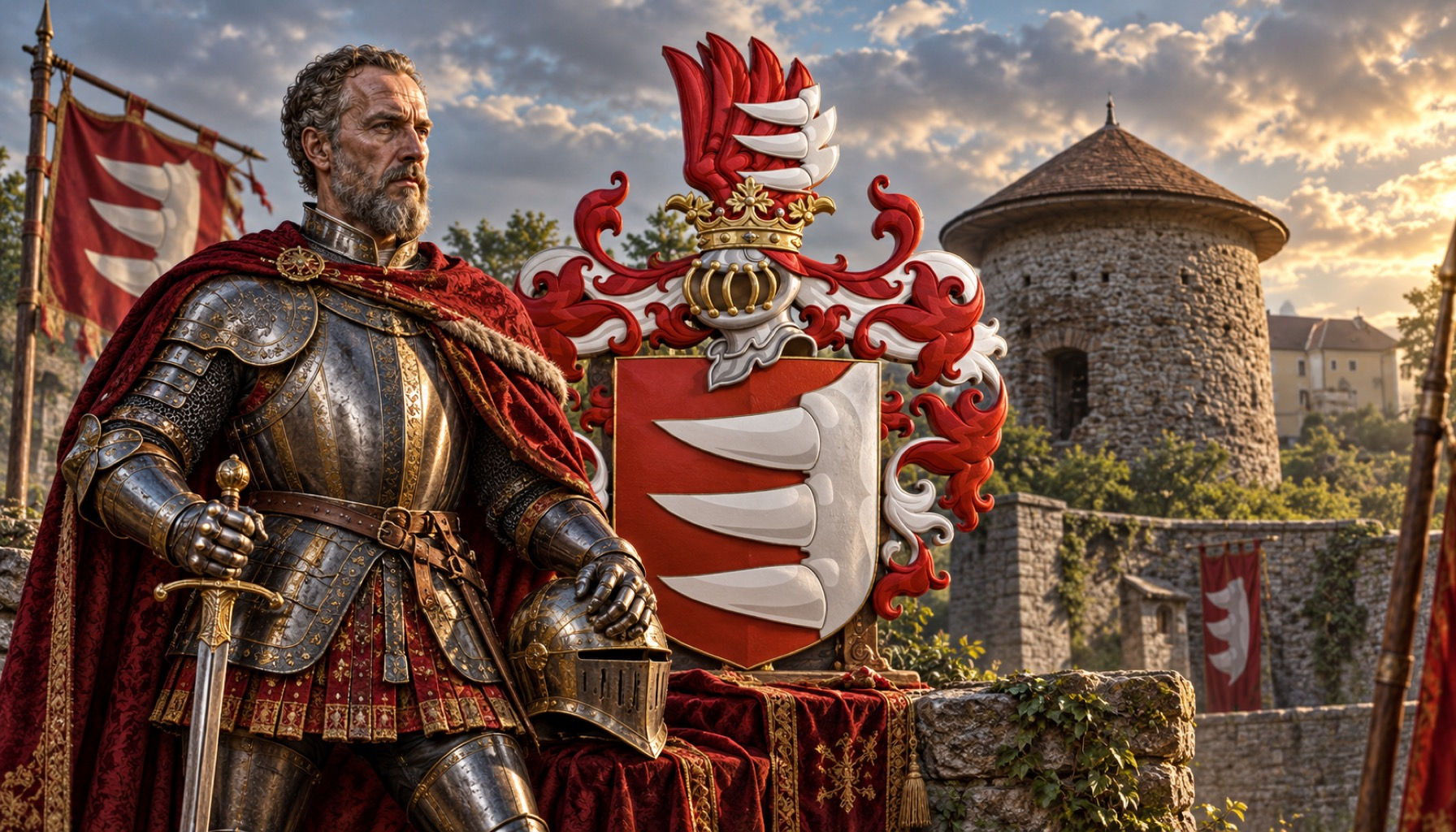
That rise from provincial bergsman roots to formal nobility is, in many ways, a very Swedish one. Families could climb not only by war and landholding, but by service, literacy, scholarship, and usefulness to the Crown. Olof Olofsson (1450-1488) belongs to the earlier documented generations of this Dalecarlian background, while the great turning point came with Georg Stiernhielm (1598-1672), born Joran Olofsson before ennoblement. He became one of the best-known learned men of 17th-century Sweden: scholar, linguist, poet, royal servant, administrator, and national antiquarian. Ennobled by King Gustav II Adolf on 14 August 1631 in the field camp at Werben in Brandenburg, he and his line were introduced at the House of Nobility on 17 February 1632 under the name Stiernhielm, literally "star helmet." The heraldry says the same thing with splendid directness: a blue shield with a golden six-pointed star, a helmet above, another star in the crest, and blue and white feathers, turning name, rank, and memory into a single visual statement.
Read more about the Stierna family
A later Baltic branch continued under the related name von Stjernhjelm, and this is where Vihula Manor becomes a useful anchor for the family story beyond Sweden proper. Vihula Manor, in northern Estonia's Laane-Viru region, belongs to that old Baltic world in which Swedish, German, and Estonian noble histories often overlapped. Today it is known as a carefully restored manor complex with a historic main building, parkland, watermill, and estate setting that gives a real sense of how landed life in the eastern Baltic once looked and functioned. It is not just a name in a genealogy table; it is the sort of place where family memory acquired architecture, landscape, and ceremony. Better still, it can still be visited today, which makes it a rare and useful bridge between paper history and physical experience.
Explore medieval Finland and the Baltic world
The haplogroup R1a1a1b1a2b3a does not prove direct descent from any ancient burial, and it would be quite wrong to pretend otherwise. What it does offer is a set of related or linked points across time. Among relevant ancient samples are HUASper86 from the Hungarian nobility Gothic Vault Royal House of Aba Benedictine Monastary, LEU017 from Bronze Age Unetice Leubingen in Thuringia, KUP015 from a Germanic Avar elite grave at Kunpeszer in Hungary, GYS045 from Late Antique Pannonia at Arrabona, PL046, PL052, and PL066 from Wielbark-associated Gothic contexts in Poland, several Piast-linked and Piast-era Polish samples including PCA0202, PCA0342, PCA0398, PCA0562, and PCA0629, Viking Age and Vendel Age individuals such as VK475 and VK463 from Gotland, VK487 from Salme on Saaremaa, and VK282 from Denmark, along with Baltic Bronze Age and hill-fort linked individuals from Estonia and Latvia such as V9, X08, X13, X14, X15, X17, and the Kivutkalns series. Taken together, these do not draw a neat straight line to the Stiernhielms, but they do place the family's haplogroup within a long northern and central European archaeological landscape shaped by Bronze Age networks, Iron Age mobility, Gothic and Slavic horizons, Baltic connections, and medieval dynastic formation.
Explore the Piast dynasty DNA story
The Stiernhielm family is a reminder that noble history was not always born in palaces. Sometimes it began in a mining parish in Dalarna, passed through scholarship and royal service, and then spread into the Baltic world with a star on its shield. If you have Swedish or Baltic roots, or if your haplogroup points toward R1a1a1b1a2b3a, you may want to see whether your DNA matches this family story or any of the related ancient samples mentioned above. Upload your DNA to MyTrueAncestry and explore where your own line may fit in this much older historical map.


Comments