The House of Lygon
– 3 min read


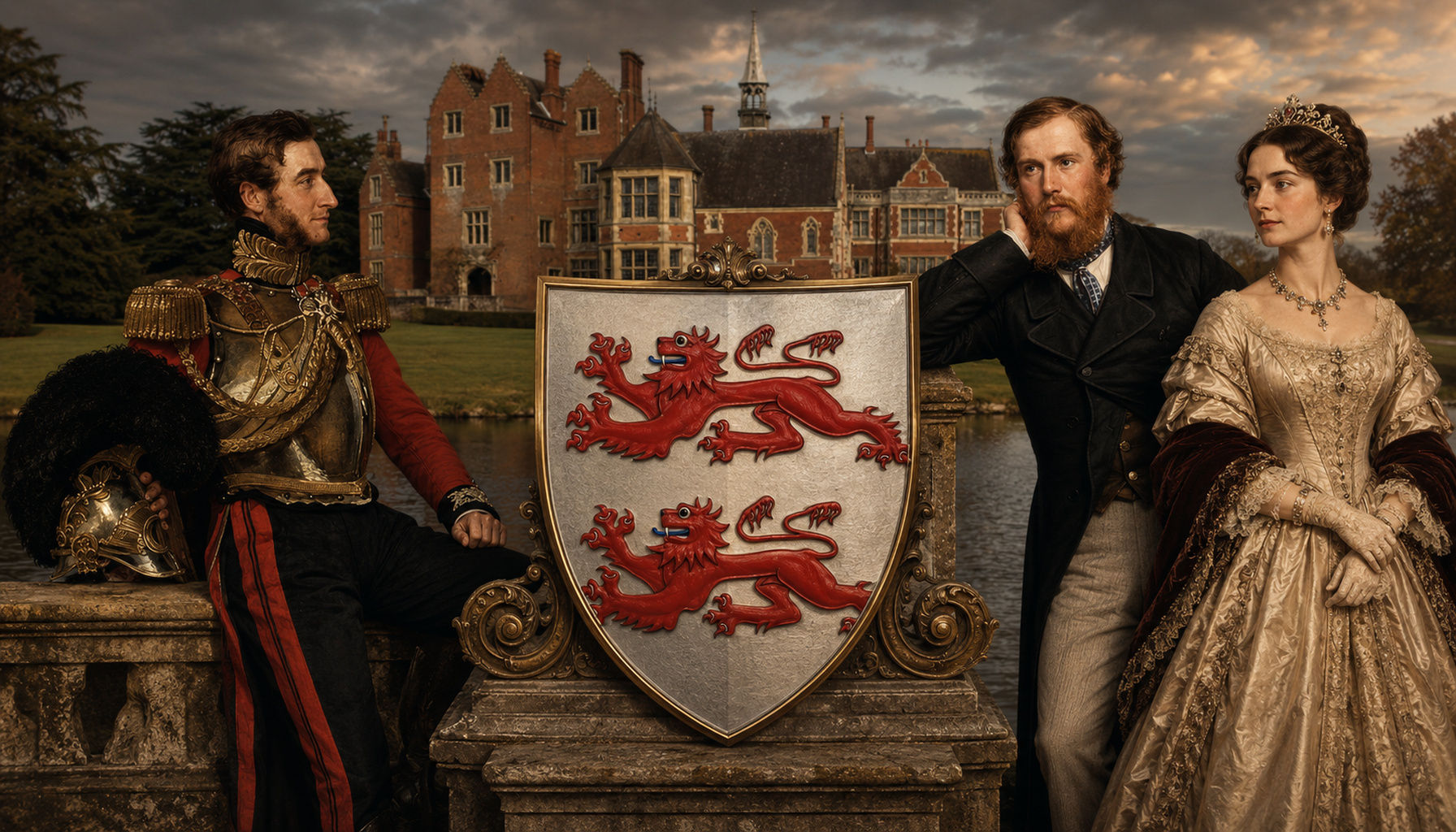
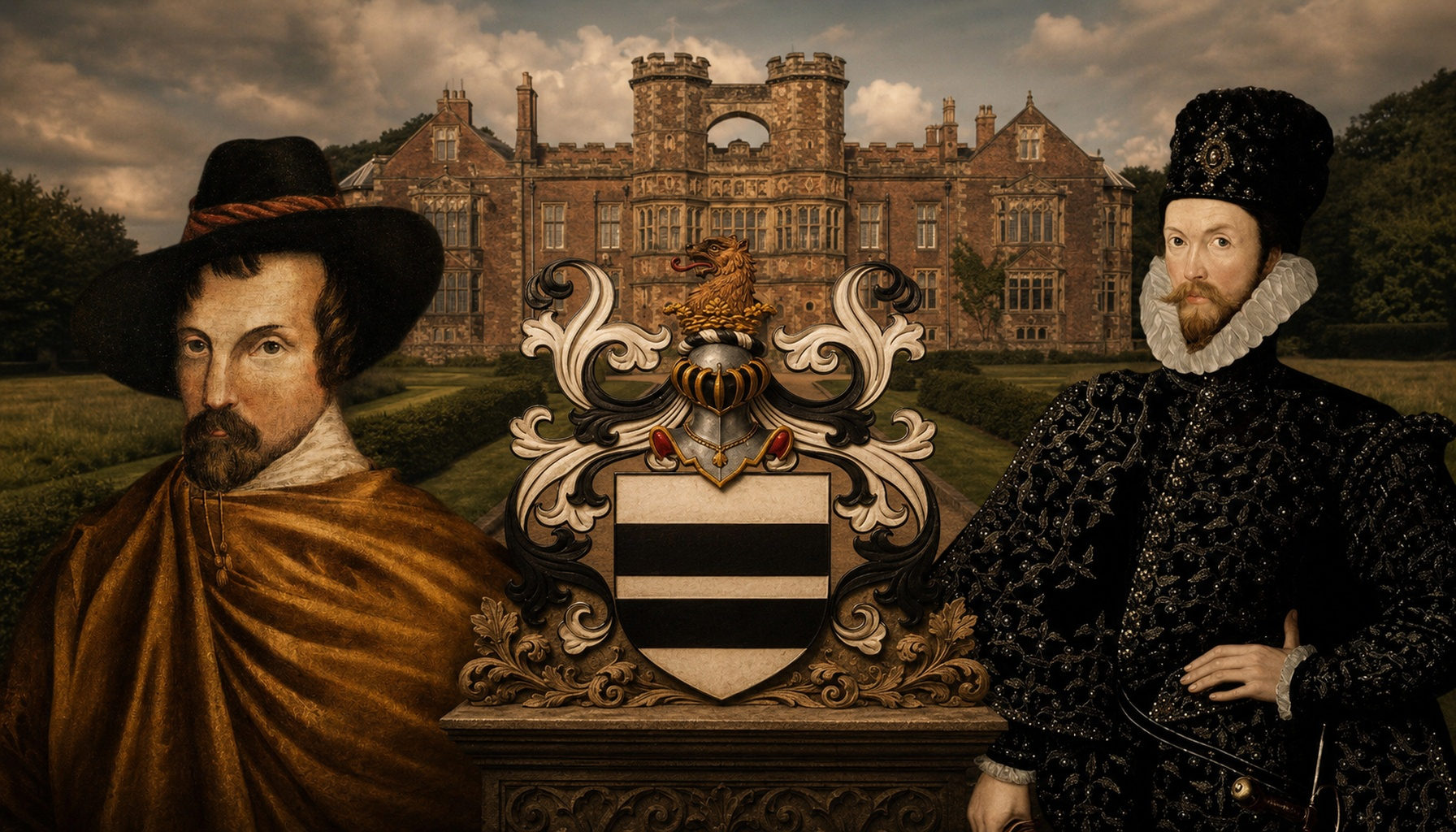
The House of Lygon was an English noble and landed family rooted above all in Worcestershire, with its identity closely tied to Madresfield and to the long traditions of county society, estate management, and public duty. In historical terms, the Lygons fit a very recognisable English pattern: a family whose importance did not rest on one dramatic conquest or a single dazzling court career, but on something more durable - land, marriage alliances, service in Parliament and local office, heraldic continuity, and the careful preservation of family memory across generations. The haplogroup linked here as the primary family haplogroup is R1b1a1b1a1a2c1a1a1a1a1a1a3a.
The surname and family identity emerged within the framework of medieval and later English landed society, where local roots mattered enormously. Worcestershire was not just a backdrop but the stage on which the family's status was made and remade. Over time the Lygons rose through the social machinery of England itself: property, advantageous connections, county influence, and service to crown and state. By the eighteenth century the family had reached the peerage, and figures such as William Lygon, 1st Earl Beauchamp (1747-1816), embodied that ascent. He stands as a good example of how an old landed house could convert regional standing into national rank without ever losing its attachment to place.
Explore the House of Beauchamp
If one wants to understand the Lygons properly, one has to begin at Madresfield Court. This is not simply a house where the family happened to live; it is the physical anchor of the dynasty, the great storehouse of its memory. Madresfield Court, near Malvern in Worcestershire, is a moated country house whose history reaches back to the medieval manor, though much of what visitors recognise today reflects major rebuilding and remodelling, especially in the nineteenth century. It remained, remarkably, in the same family connection for many centuries, which is exactly the sort of continuity that gives an English landed house its peculiar force. The building is also famous for its chapel, redesigned in the Arts and Crafts spirit, and for its association with the world that inspired elements of Brideshead Revisited. In other words, Madresfield is not just architecture; it is an entire cultural landscape of lineage, taste, religion, hospitality, and aristocratic self-presentation. It is still visitable in a limited and organised way through tours and events, so for those interested in the Lygons, it remains a very real point of contact with the family's historic world.
Read more about the House of Howard
From a DNA perspective, the primary haplogroup tag attached here is R1b1a1b1a1a2c1a1a1a1a1a1a3a, and there are a number of ancient samples linked or related to that wider paternal line. These include multiple medieval individuals from Ballyhanna, County Donegal, Ireland, such as Sk197an, Sk197y, Sk197q, Sk197am, Sk197s, Sk197ab, Sk197u, Sk197t, Sk197r, Sk197ad, Sk197x, Sk197n, Sk197aa, Sk197z, Sk197ak, Sk197w, Sk197ai, Sk197m, Sk197ah, Sk197ag, Sk197v, Sk197ac, Sk197al, Sk197af, Sk197ae, Sk197o, Sk197aj, HAN197x, Sk197a through Sk197p, and HAN197, as well as linked medieval Irish samples from Kilteasheen in Roscommon including KIL041, KIL044, KIL033, KIL037, KIL009, and KIL014. These do not prove direct descent from the Lygon family, and it would be quite wrong to pretend otherwise. What they do offer is something more interesting in its own way: a glimpse of how a paternal lineage connected to this haplogroup appears in the wider medieval population of the British Isles, reminding us that noble houses sat within much broader human histories of migration, kinship, and regional continuity.
Explore Ancient DNA in Post-Roman Britain
The story of the House of Lygon is, at heart, the story of how family, place, and memory endure: Worcestershire landscapes, Madresfield continuity, heraldry, office, prestige, and the long afterlife of a landed name. If you want to see whether your own DNA matches the House of Lygon or any of these related ancient DNA samples, upload your DNA to MyTrueAncestry and explore where your lineage may fit into this deeper historical picture.
Comments