The Royal House of Stewart
– 3 min read


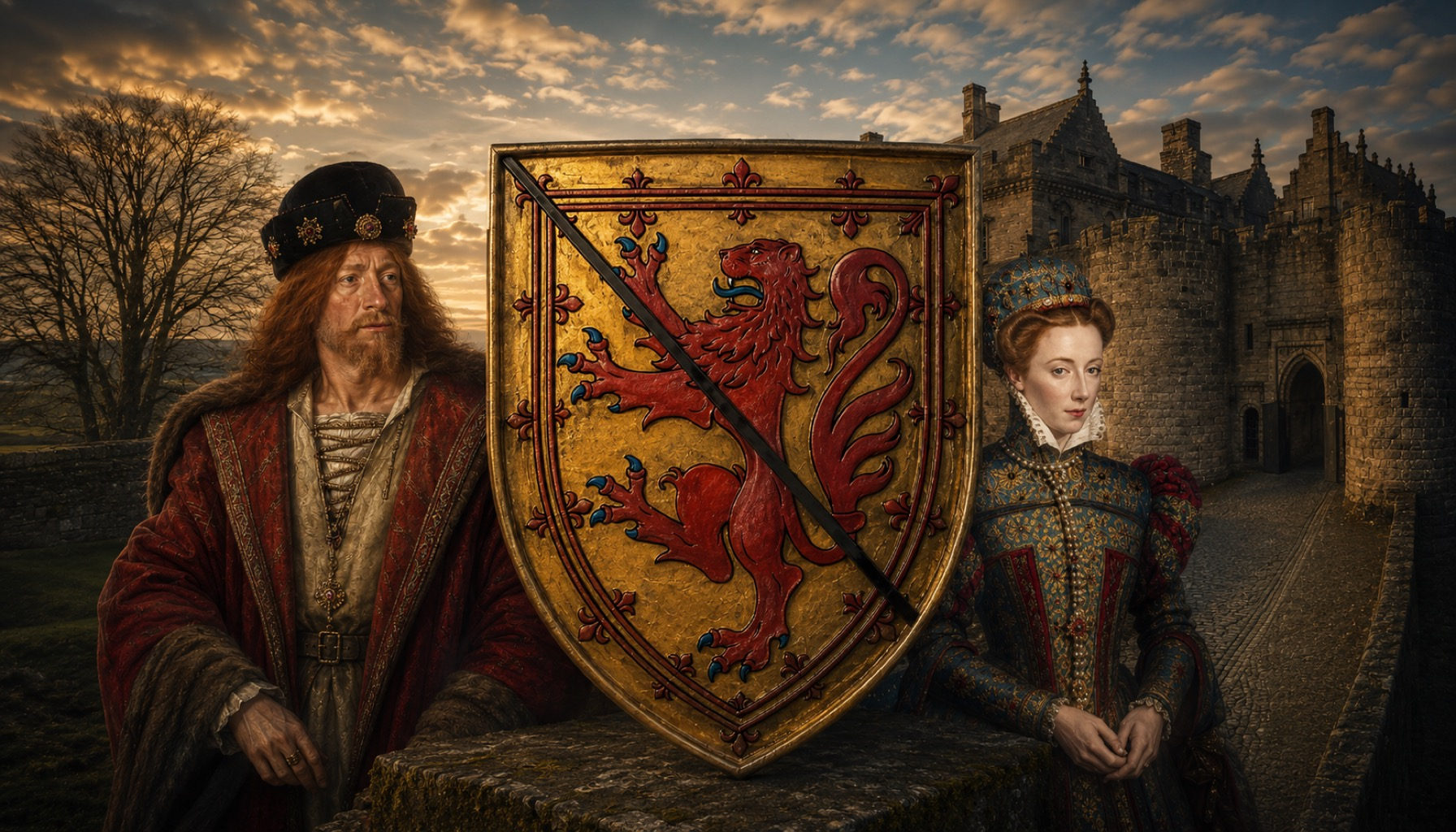
The Royal House of Stewart was the great royal dynasty of Scotland that later came to rule England and Ireland too, a family whose story runs from medieval office-holding to crowned monarchy, from border lordship to the politics of three kingdoms. Their name began as a job title: the hereditary High Steward of Scotland. Over time, that office became a surname, then a dynasty, then one of the most consequential ruling houses in British history. In genetic-tag terms often linked with Stewart lineage studies, the primary family haplogroup is given as R1b1a1b1a1a2c1a1d1a1, a branch within the wider R1b world so common across western Europe.
The Stewarts emerged in the High Middle Ages from a family of Breton origin that settled in the Anglo-Norman and Scottish sphere, rising through service, landholding, and shrewd marriage. Walter fitz Alan, ancestor of the line, came north in the 12th century and established the family in Scotland during the reign of David I, a king busy reshaping his realm through feudal lordship, castle-building, and imported aristocratic networks. From there the Stewarts became woven into the fabric of Scottish sovereignty itself. By the 14th century they had reached the throne through dynastic succession, and later produced figures who still dominate historical memory: Mary, Queen of Scots, James VI and I who united the crowns in 1603, Charles I whose reign ended in civil war and execution, Charles II of Restoration fame, and James VII and II, whose fall helped redraw the constitutional map of Britain. Among earlier named members of the wider family was Sir John Stewart of Bonkyll (1245-1298), a significant noble forebear whose descendants fed into later Stewart branches and alliances.
If one place anchors Stewart power in stone, it is Stirling Castle. Perched dramatically on a volcanic crag above the River Forth, it controlled one of the key gateways between Highlands and Lowlands, which is exactly the sort of strategic geography medieval rulers cared about obsessively. The castle was a major royal residence and one of the most important fortresses in Scotland, repeatedly altered, besieged, celebrated, and staged for monarchy. Several Stewart kings and queens were closely associated with it, and it became a setting for royal childhood, court ceremony, and political theatre. James IV, James V, and Mary, Queen of Scots all loom large here; the Renaissance palace works especially speak to the Stewarts not simply as warriors but as image-makers, patrons, and performers of kingship. In other words, Stirling was not just a fortress. It was a statement. Happily for modern visitors, it can still be visited today, and it remains one of Scotland's great historic sites, where the architecture still does much of the talking if you let it.
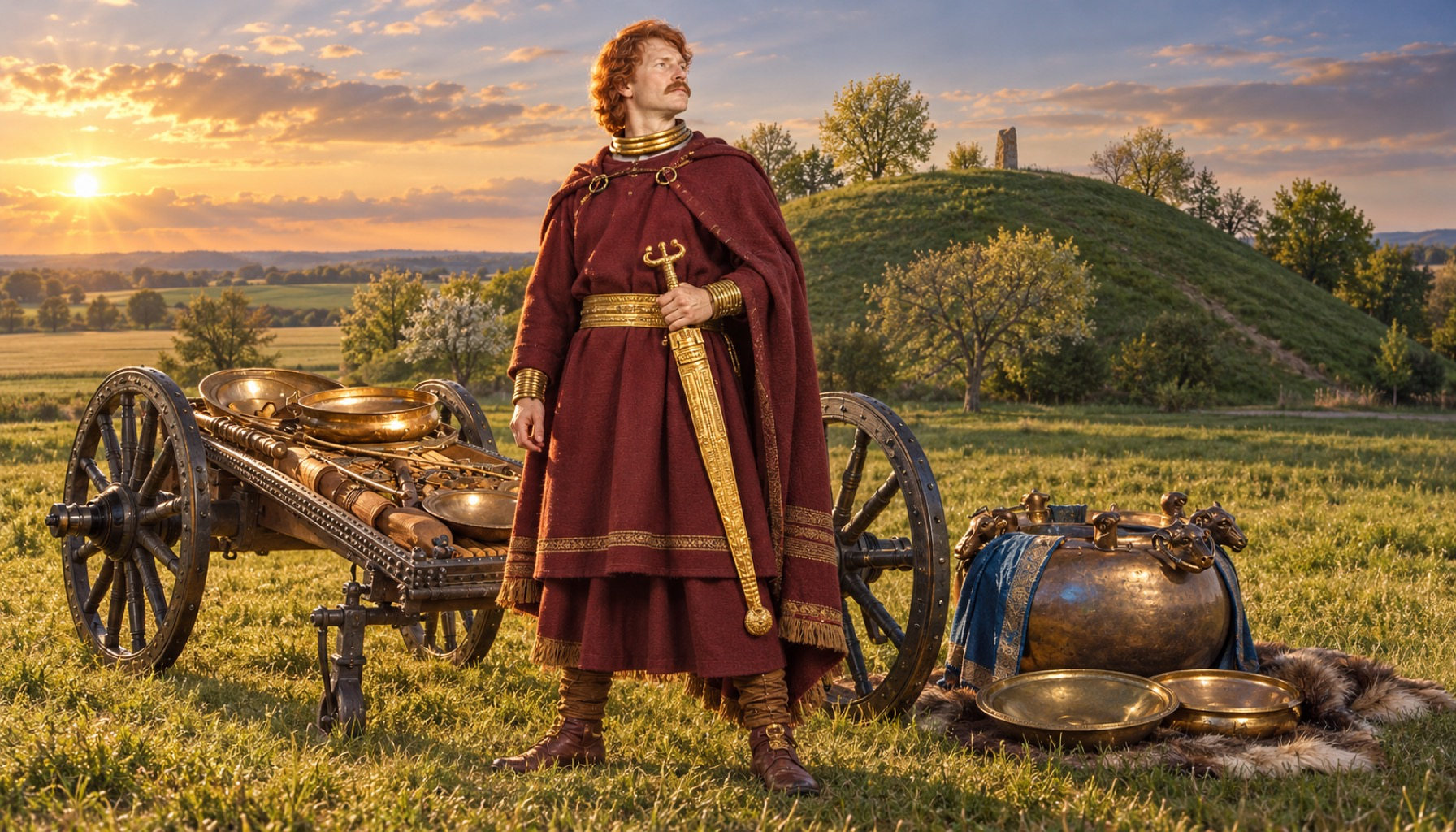
From an ancient-DNA angle, the Stewart-associated haplogroup tag R1b1a1b1a1a2c1a1d1a1 can be placed beside a handful of related or linked samples from northwestern European contexts, though not as proof of direct descent from any one excavated individual. These include Medieval England Augustinian Friars samples ATP_PSN_512 and ATP_PSN_520, Medieval Vasterhus Sweden sample mbv151, the Celtic Briton from Yarnton in Oxfordshire sample I21182, and the Late Bronze Age individual from Raven Scar Cave in North Yorkshire sample I16469. What that gives us is not a neat family tree stretching tidily into prehistory, because history is never that obliging, but a broader picture of paternal-line continuity and relatedness across Britain and nearby northern Europe over long periods of time. It is a useful reminder that royal dynasties sit within much older population histories.
Explore the Royal House of Balliol
If Stewart heritage appears in your family story, or if you are simply curious whether your DNA shows links to this royal house or to related ancient samples from medieval Britain and beyond, you can upload your DNA to MyTrueAncestry and explore the evidence for yourself. It is a lively way to connect genealogy, archaeology, and the long shadow of history.

Comments