The Royal House of Braganza-Saxe-Coburg
– 3 min read


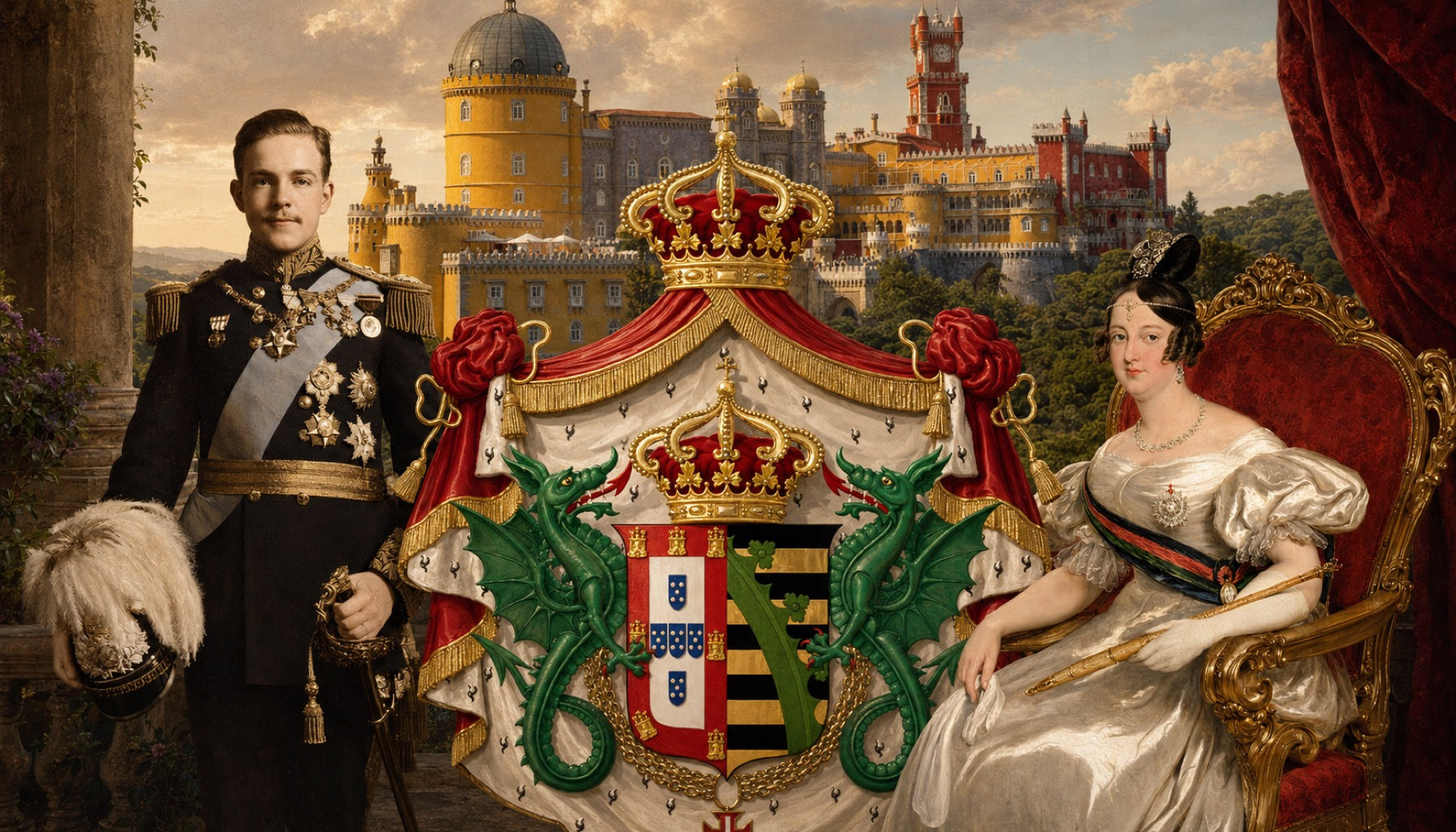
The Braganza-Saxe-Coburg family was the royal house of Portugal in the final age of the monarchy, a dynastic union joining the old Portuguese House of Braganza with the German line of Saxe-Coburg and Gotha. In haplogroup terms, the primary family line is tagged here with R1b1a1b1a1a1a, a branch deeply associated with much of western Europe. Historically, this was a house that stood at the meeting point of Portuguese tradition and European dynastic politics: ancient royal legitimacy on one side, nineteenth-century constitutional monarchy on the other.
The Braganzas themselves had deep roots in Portugal, rising from the ducal house of Braganza into the ruling dynasty of the kingdom in the seventeenth century after the Restoration of 1640. By the nineteenth century, the monarchy had been reshaped by liberal revolutions, constitutions, parliamentary struggle, and the ceaseless diplomatic choreography of Europe's royal families. Out of that world came the Braganza-Saxe-Coburg line, which carried Portugal through its last generations of kingship. Among its best-known figures were Pedro V (1837-1861), remembered for seriousness and reforming spirit; Luis I (1838-1889), associated with a more stable constitutional reign; Carlos I (1863-1908), whose rule ended in crisis and assassination; and Manuel II (1889-1932), the last king of Portugal, swept from the throne when the monarchy fell in 1910.
Explore the Princely House of Saxe-Coburg
If one wants a proper architectural anchor for this dynasty, the Palace of the Dukes of Braganza in Guimaraes is an excellent place to begin. Built in the fifteenth century by Afonso, 1st Duke of Braganza, it stands in one of the most historically charged cities in Portugal, a place closely tied to the formation of the Portuguese kingdom itself. The palace is famous for its striking northern-European-inspired rooflines, long brick chimneys, broad halls, and later restoration, which gave it much of the dignified appearance visitors know today. It is not simply a grand residence but a monument to the rise of the Braganza house from great nobles to royal power. In that sense it tells a longer family story than the nineteenth-century Braganza-Saxe-Coburg branch alone: ambition, lineage, display, and political memory all built into stone and timber. Yes, it can still be visited today, and for anyone interested in Portuguese dynastic history it remains one of the clearest surviving places in which the Braganza story feels tangible.
Read about the Spanish House of Bourbon
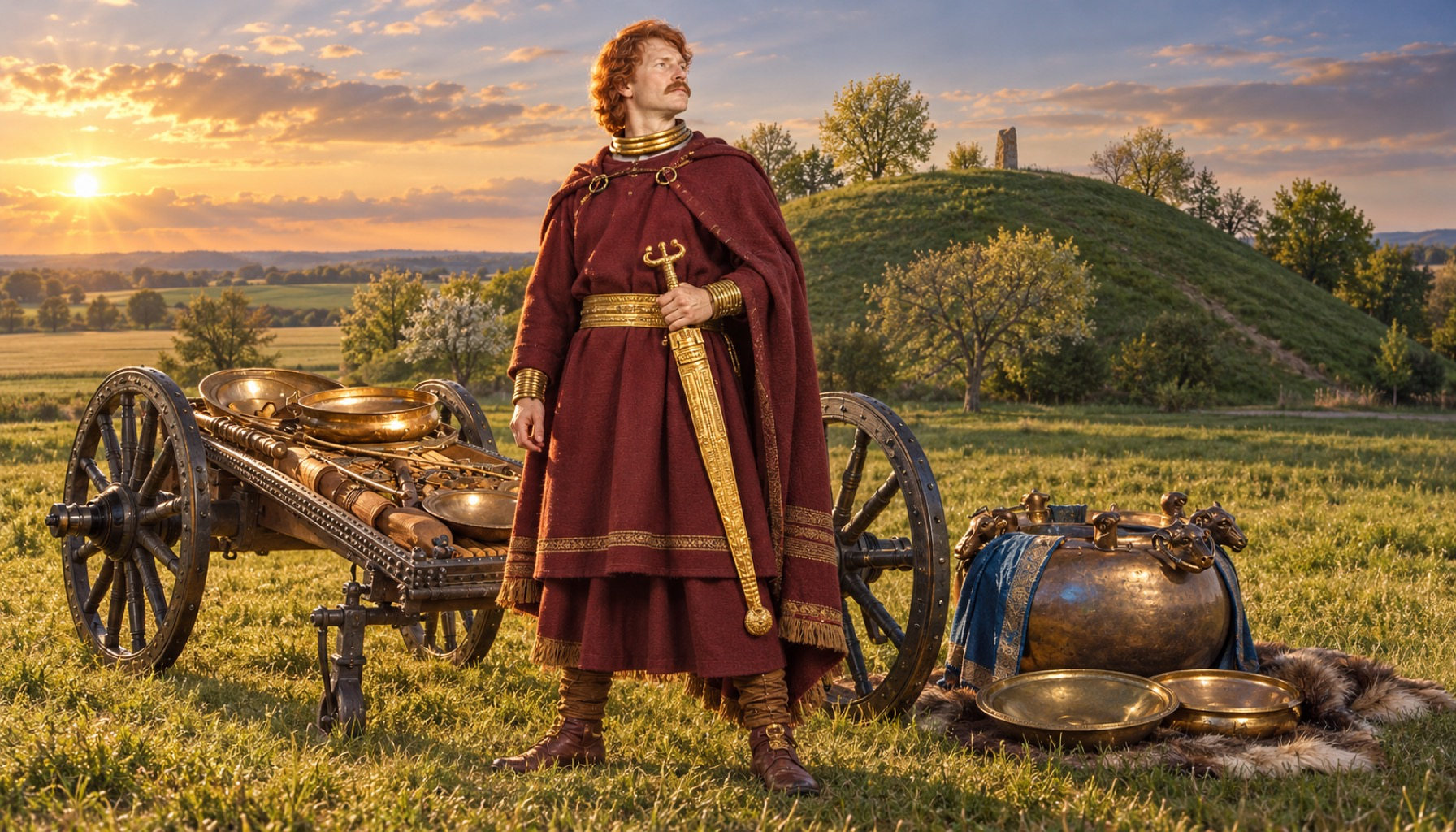
As with most royal houses, one should be cautious: ancient DNA samples linked to haplogroup R1b1a1b1a1a1a are not evidence of direct descent from the Braganza-Saxe-Coburg family, but they do help place that paternal signature in a far wider historical landscape. Related or linked examples appear across Iron Age, Roman, medieval, and Bronze Age Europe, including elite Celtic burials such as Magdalenenberg Villingen-Schweningen (MBG013) and Eberdingen-Hochdorf Biegel (HOC001, HOC001b, HOC001c), Roman-era Britain at Eddington (NWC009) and Arbury (ARB003), the Durotriges of southern England at Winterborne Kingston (WBK106, WBK17, WBK192, WBK10), medieval northern Spain at Las Gobas (ldo046, ldo040), Lombard elite burials at Collegno in northern Italy (COL_150, COL_150b, COL_150x), and several medieval Portuguese contexts such as Santarem Rua dos Barcos (LP117_12, LP117_7, LP123_5), Castro de Avelas Torre Velha (LP117_3, LP117_2, LP112_13), Loule Quinta da Boavista (LP115_5), and Sao Miguel de Odrinhas (LP114_7). What this suggests, in broad terms, is a paternal lineage with a long and varied western European presence, appearing in princely, martial, urban, and local settings long before the constitutional monarchs of modern Portugal.
Explore the Genetic History of Portugal
The Braganza-Saxe-Coburg story is, in the end, about more than crowns. It is about how old dynasties adapted to a modern political world, how Portugal balanced national tradition with European alliances, and how memory outlasted monarchy itself. If you have tested your DNA, you can upload it to MyTrueAncestry and see whether you match the Braganza-Saxe-Coburg haplogroup profile R1b1a1b1a1a1a or related ancient DNA samples from Portugal and across Europe.


Comments