The Noble House of Gray
– 3 min read


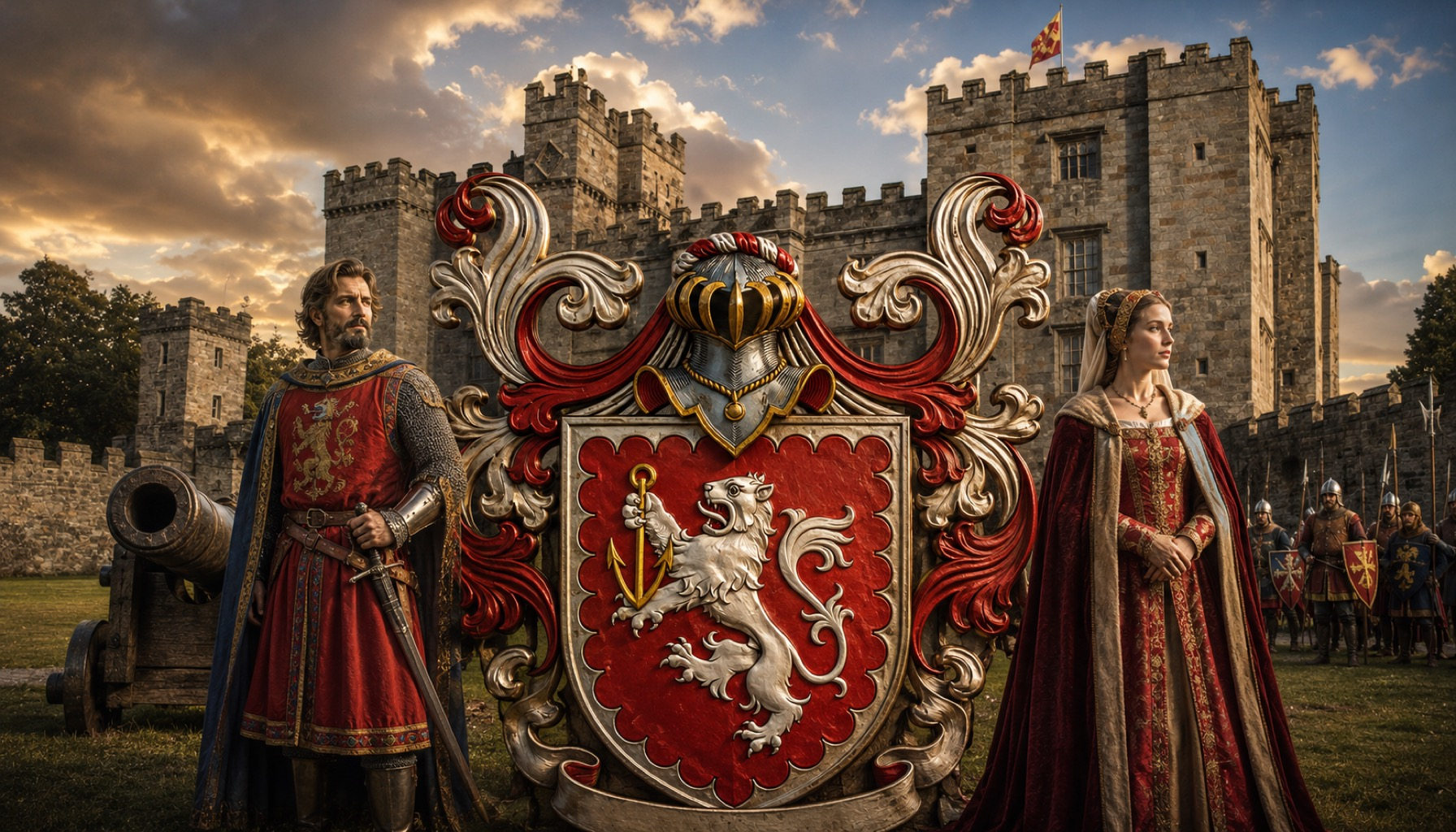
The Noble House of Gray was a Scottish noble family shaped by Lowland landholding, peerage tradition, public service, and heraldic identity, and in genetic tagging terms it is here linked with the Y haplogroup R1b1a1b1a1a2a1b, treated as the primary family haplogroup tag for this heritage profile. This is not the looser story of a clan gathered mainly by surname and sentiment, but the more pointed history of a noble house: estates, titles, offices, alliances, and the careful maintenance of reputation across generations.
The Gray family emerged within the world of medieval and later Scotland where authority rested on land, service, and proximity to power. Their roots belong to the Lowland sphere, where baronial influence, royal administration, military obligation, and strategic marriage all mattered enormously. House Gray fits a very Scottish aristocratic pattern: a family rising through estate ownership, consolidating itself through marriage alliances, taking on military or civic duty, and sustaining its standing through heraldry and public life in both Scotland and, later, Britain. Figures often associated with the wider Gray or Grey historical tradition include Sir Thomas Grey (1359-1400), remembered as a chronicler and man of arms, and Lady Jane Grey (1536-1554), whose tragic place in Tudor politics has made the name unforgettable far beyond its Scottish setting.
A strong location anchor for the wider Gray and Grey story is Chillingham Castle in Northumberland, close to the Anglo-Scottish border, a region where noble identity was never merely decorative. Chillingham began as a monastic site before becoming a fortified manor in the 13th century, and its position mattered immensely: this was border country, a place of watchfulness, diplomacy, raiding, and royal movement. The castle later developed into a substantial medieval fortress with battlements, towers, and a great hall, then gradually into a more comfortable residence while still carrying the air of an old stronghold. It became associated with powerful border families and with the world in which northern English and southern Scottish nobility operated in constant conversation, rivalry, and alliance. In other words, it is exactly the kind of place that helps us understand how a noble house like Gray functioned: through land, defence, display, and continuity. Chillingham Castle still survives and can indeed be visited today, which gives modern visitors the rare pleasure of walking into the material stage set of late medieval and early modern aristocratic life.
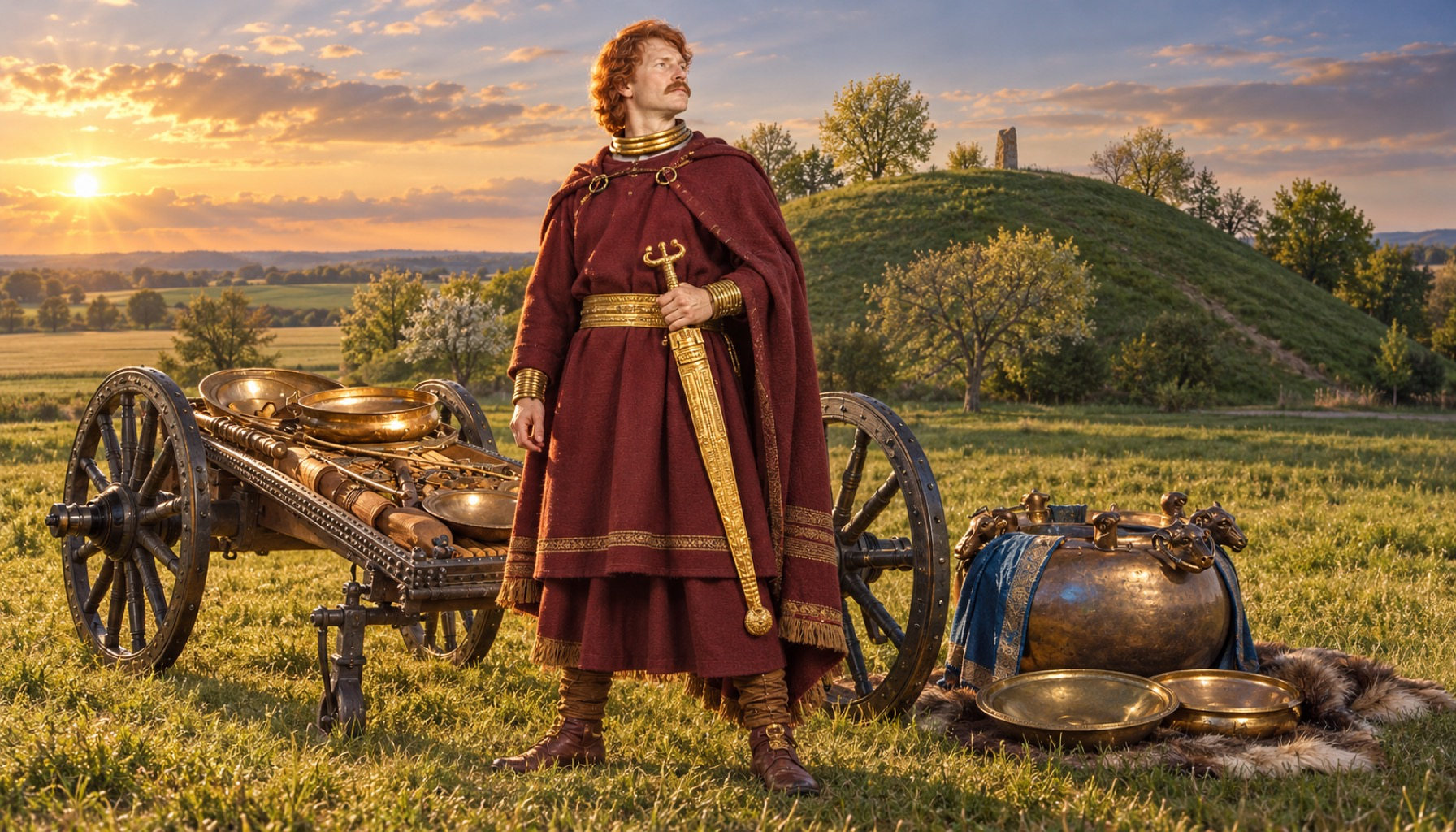
From an ancient DNA perspective, the haplogroup tag R1b1a1b1a1a2a1b connects House Gray to a very broad and deeply rooted west Eurasian story rather than to any provable single medieval pedigree. Related or linked samples carrying this branch appear across a striking range of times and places: Bell Beaker individuals from the Netherlands such as De Tuithoorn and Oostwoud, Bronze Age central European samples including Leubingen in Thuringia, Iron Age and Celtic-linked burials from England, Scotland, and Bohemia such as WBK36 at Winterborne Kingston and Broxmouth in East Lothian, elite Celtic burials from Asperg-Grafenbuehl and Ludwigsburg in Germany, Roman-era cases like FEN008 from Fenstanton in Cambridgeshire and the Metz Lunette Sablon individuals in France, and medieval or post-Roman examples from northern Spain at Las Gobas, England, Ireland, Belgium, and Hungary. The important point is not direct descent from any one of these people, which cannot be claimed here, but that the Gray haplogroup tag sits within a paternal lineage found across the same long historical corridor that fed the populations of Atlantic Europe, Britain, and the medieval borderlands where noble houses such as Gray established themselves.
Explore the Royal House of Stewart
If you carry Gray ancestry, or simply suspect a connection to the old noble houses of Scotland and Britain, uploading your DNA can be a fascinating way to see whether you match the House Gray profile or any of the related ancient DNA samples linked to haplogroup R1b1a1b1a1a2a1b. It is a splendid reminder that family history lives at several levels at once: in charters and coats of arms, in castles and offices, and in the much older biological threads that run beneath recorded history.



Comments