The Royal House of Balliol
– 3 min read


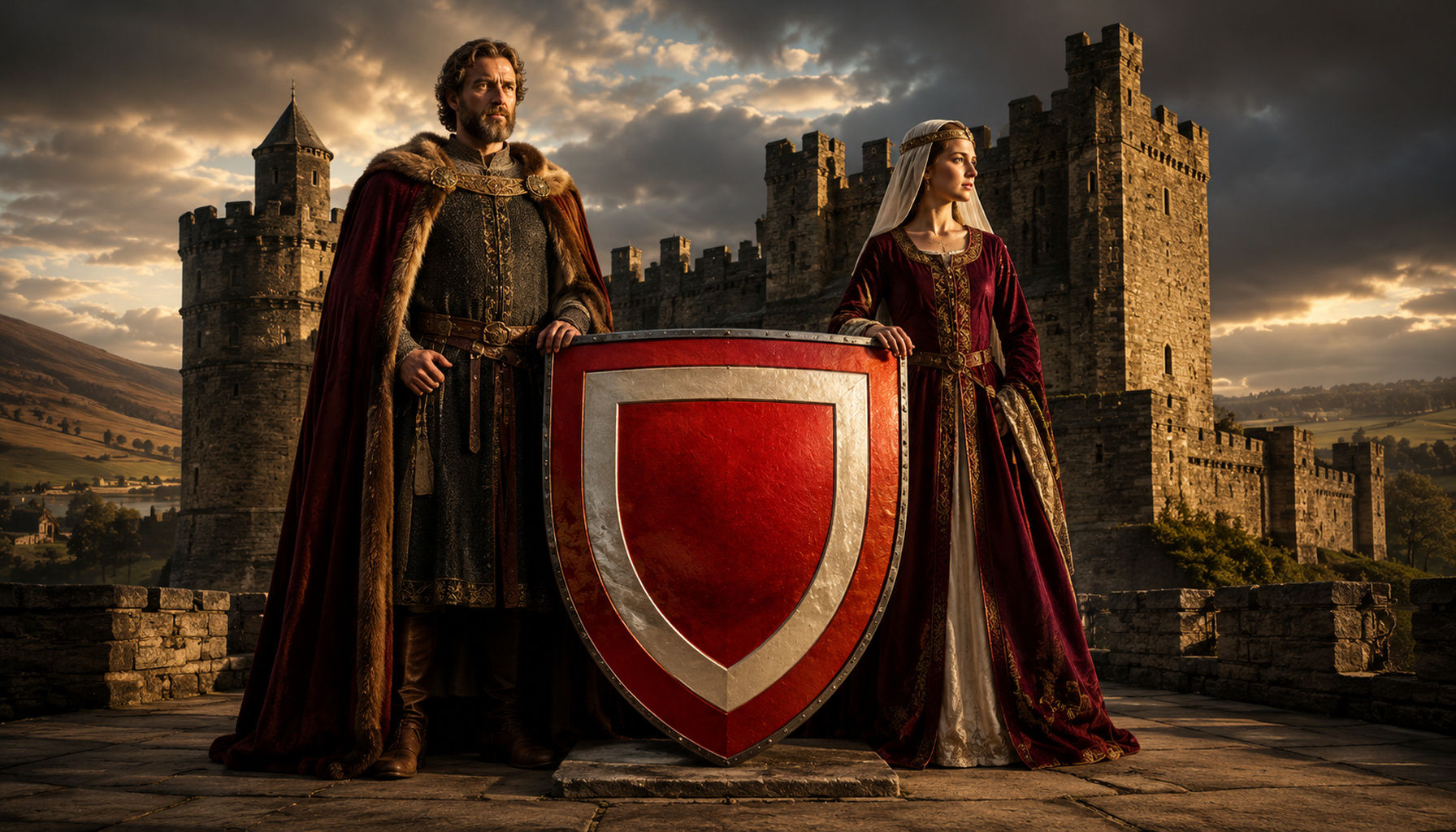
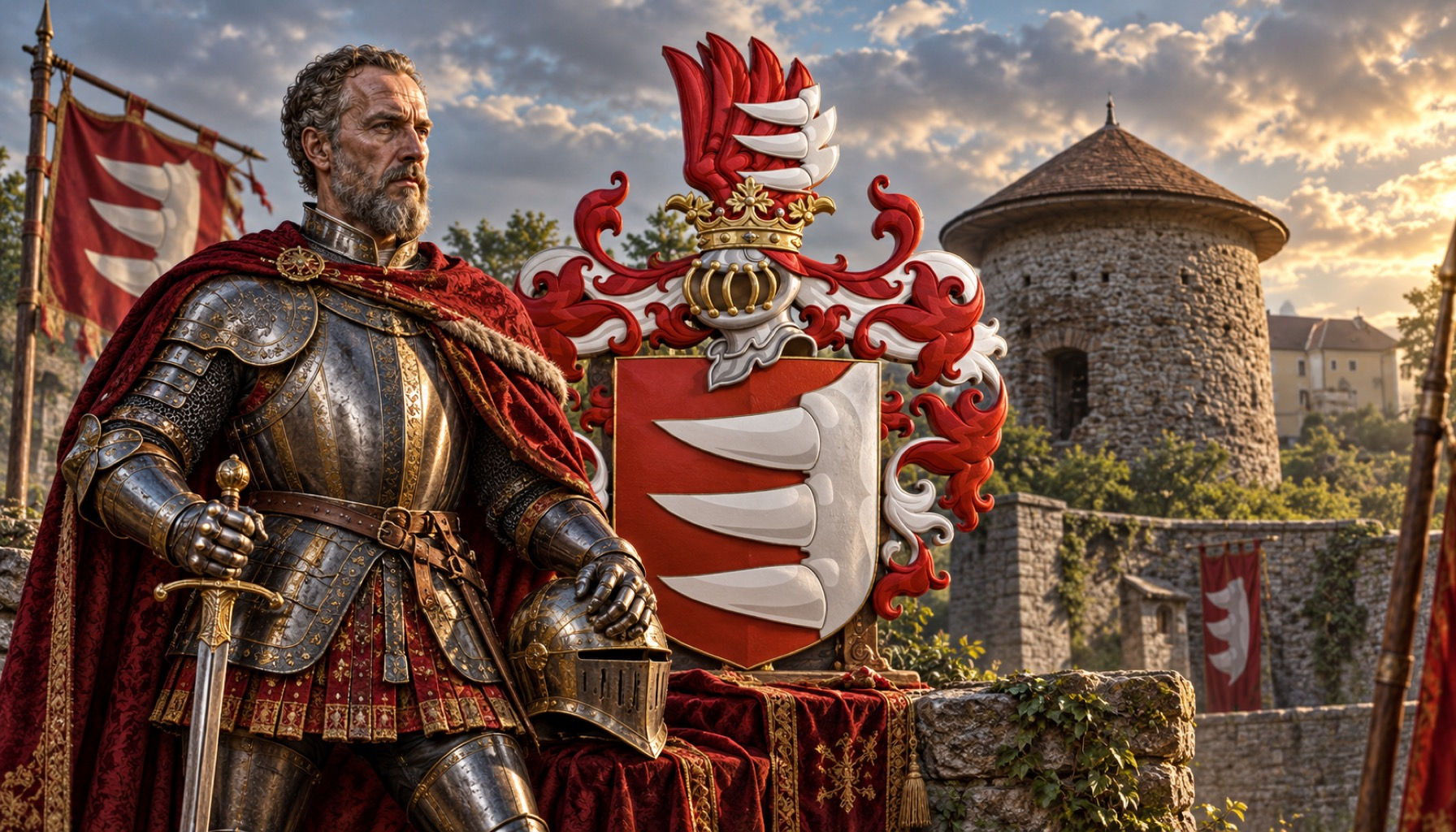
The Balliols were a royal and noble house whose story ran across northern England and medieval Scotland, with roots in the Anglo-Norman world and a destiny tied to one of the great succession crises in British history. Associated here with the haplogroup R1b1a1b1a1a2c1a1a1a1a, the Balliols began as powerful landholders rather than ancient tribal kings, which is precisely what makes them so revealing. In the Middle Ages, kingship was often less a matter of romantic destiny than of charters, marriages, feudal rights, inherited claims, and who could persuade enough magnates to agree. The House of Balliol sits right at the heart of that rather sharp-edged reality.
The family likely took its name from Bailleul in Normandy, part of the wider movement of aristocratic families who spread into England after the Norman Conquest and then into the borderlands of Britain. By the 12th and 13th centuries they had become major barons with estates in both England and Scotland. Bernard de Balliol, active around 1190, helped establish the family's northern standing, and the connection with Barnard Castle became one of their most visible anchors. Later came John de Balliol (1249-1314), remembered as King of Scots in a reign overshadowed by Edward I of England and the fierce dispute over who had the best right to the Scottish throne. His son Edward Balliol (1283-1367) would continue that contested royal claim, keeping the Balliol name alive in the bitter politics of legitimacy, rivalry, and war. The Balliol pattern is wonderfully medieval: noble roots, royal ambition, disputed succession, and a memory that long outlived their brief hold on the crown.
Barnard Castle in County Durham was one of the great Balliol strongholds and remains the family's clearest landscape signature. The site stands above the River Tees, in a commanding defensive position, and the stone fortress that survives today largely took shape in the 12th and 13th centuries, developing from an earlier foundation associated with Bernard de Balliol. It was not simply a private residence with nice views, but a working border lord's castle in a region where power had to be displayed, defended, and negotiated. Control of such a place told everyone who mattered that the Balliols were not minor gentry drifting through the record, but serious players in the politics of northern England and the Scottish frontier. Over time the castle passed through other hands, saw conflict and rebuilding, and became part of the wider story of marcher lordship and medieval warfare. Today its substantial ruins still stand and it can indeed be visited, which gives modern visitors the rare pleasure of walking through a place that genuinely belonged to one of the families who helped shape the crisis of the Scottish crown.
From an ancient DNA perspective, the Balliol-linked haplogroup R1b1a1b1a1a2c1a1a1a1a belongs to a wider paternal landscape seen across Iron Age, Roman, early medieval, and later medieval Europe. Related or linked samples assigned within this broad line include individuals from the Gallic Cenomani horse co-burial at Verona Seminario Vescovile in Italy (3232s), Medieval Jutland at Vor Frue Kirkegard in Aalborg, Denmark (CGG100512), the Thuringii world at Deersheim in Saxony-Anhalt, Germany (DRH026), Carolingian-era Groningen in the Netherlands (GRO005), Medieval Ireland at Kilteasheen in Roscommon (KIL043), a Merovingian grave at Alt-Inden in North Rhine-Westphalia (IND007), Anglo-Saxon Sedgeford in Norfolk (SED005), Late Iron Age Wattle Syke in West Yorkshire (I14347), Iron Age Long Bredy in Dorset (I27382), Viking Age Hofstadir in Iceland (VK95), the Medieval Faroe Islands at Sandoy Church (VK44), Aquitani Pech-Maho in France (PECH8), and later Atlantic world examples such as Philip Calvert and his son in Maryland (2099 and I2097), alongside Viking Iceland sample FOV-A1. None of this proves direct descent from the Balliols, of course, but it does place their tagged paternal line within a very recognisable web of northwestern European mobility, lordship, settlement, and continuity across centuries.
Read more about the Royal House of Stewart
If the Balliols catch your imagination, they are a splendid reminder that family history is not just about surnames, but about landscapes, claims, alliances, and the strange durability of memory. Uploading your DNA can help you explore whether you match the Balliol-associated profile or any of the related ancient samples linked to this broader R1b1a1b1a1a2c1a1a1a1a network across Britain and Europe.

Comments