The House of Telford
– 3 min read


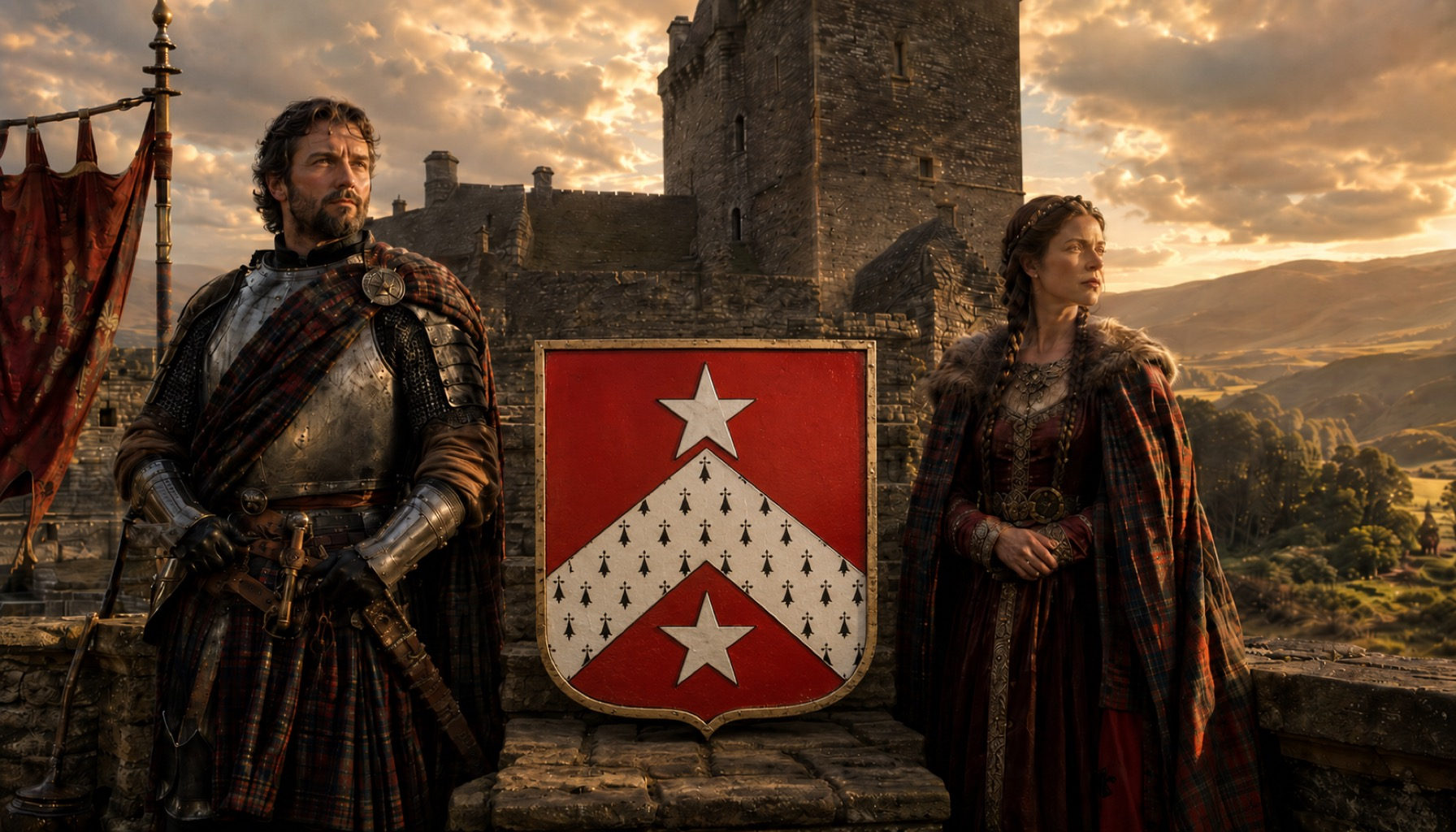
The House of Telford is best understood not as a single grand princely line, but as a Scottish and Border family house rooted in the long, hard-worked landscapes of northern Britain. The Telford name belongs to that distinctive world of Border surnames shaped by place, community, migration, and continuity across generations. In that setting, families built their standing through service, trade, landholding, local reputation, and the stubborn preservation of name. Tagged here with the primary family haplogroup R1b1a1b1a1a2b1, the Telford story sits comfortably within an old western European paternal lineage found across Britain and the wider Celtic and post-Roman world.
Historically, the surname is associated with the Anglo-Scottish Border zone and with the wider Scottish pattern of family identity anchored in region rather than courtly spectacle. That matters, because Border history was rarely tidy. It was a world of shifting allegiances, cross-border movement, military duty, market ties, church networks, and family memory that outlasted political drama. The name Telford is often linked to place-based origins, very likely emerging from a local geographic designation before becoming hereditary. And while the family identity is not defined by one crowned founder, the wider martial and northern tradition into which it fits allows mention of figures such as Taillefer of Normandy, remembered in connection with 1066 and the martial culture that helped reshape Britain after the Norman Conquest. The point is not direct descent without evidence, but historical atmosphere: names, loyalties, and lineages in Britain were repeatedly touched by movements from the Continent and recast in local soil.
A fitting location anchor for the House of Telford is Shrewsbury Castle, standing above the River Severn in Shropshire, not far from the marches that linked England, Wales, and the Border world. Originally begun as a Norman motte-and-bailey fortification soon after the Conquest, the castle was established in red sandstone and developed over centuries as both military stronghold and administrative center. It guarded an important frontier town, and that frontier quality is exactly why it belongs in the Telford story: this was a region where identity was practical, strategic, and deeply local. The castle later saw medieval rebuilding, Civil War use, and substantial restoration in the 18th and 19th centuries, especially under Thomas Telford, the famous engineer whose surname itself reminds us how names endure and gather meaning over time. Today Shrewsbury Castle still stands and can be visited, serving as a vivid reminder that Border and marchland history was never abstract. It was built in stone, defended in anxiety, and remembered in family names.
From an ancient DNA perspective, the Telford haplogroup tag R1b1a1b1a1a2b1 belongs to a very broad and historically mobile paternal network rather than to one single family trail. Related or linked ancient samples carrying this lineage appear across a striking range of places and periods: Pict-era Rosemarkie Cave in Scotland, Celtic Durotriges burials at Winterborne Kingston in England, Roman-era Fenstanton in Cambridgeshire, medieval individuals from Cherry Hinton and St John's Hospital in Cambridge, and further afield in Gallo-Celtic Switzerland, medieval Las Gobas in northern Spain, Bell Beaker Netherlands, Bronze Age France, and elite Celtic burials in southern Germany such as Asperg-Grafenbuehl and Ludwigsburg Roemerhuegel. That is precisely the sort of pattern one expects for a lineage deeply woven into the long population history of Atlantic and northwestern Europe. These are not claims of direct descent from any one excavated individual, only evidence that the Telford-associated haplogroup sits within an old and well-traveled paternal branch present among Celtic, Romano-British, post-Roman, medieval, and Border-facing populations.
Explore Ancient DNA in Post-Roman Britain
If the House of Telford speaks to your own family story, the next step is to test it against the deeper record. Upload your DNA to MyTrueAncestry and see whether you match the Telford family profile or related ancient DNA samples from Britain, Scotland, the Borderlands, and the wider R1b1a1b1a1a2b1 world.
Comments