The Noble House of Schwerin

– 3 min read


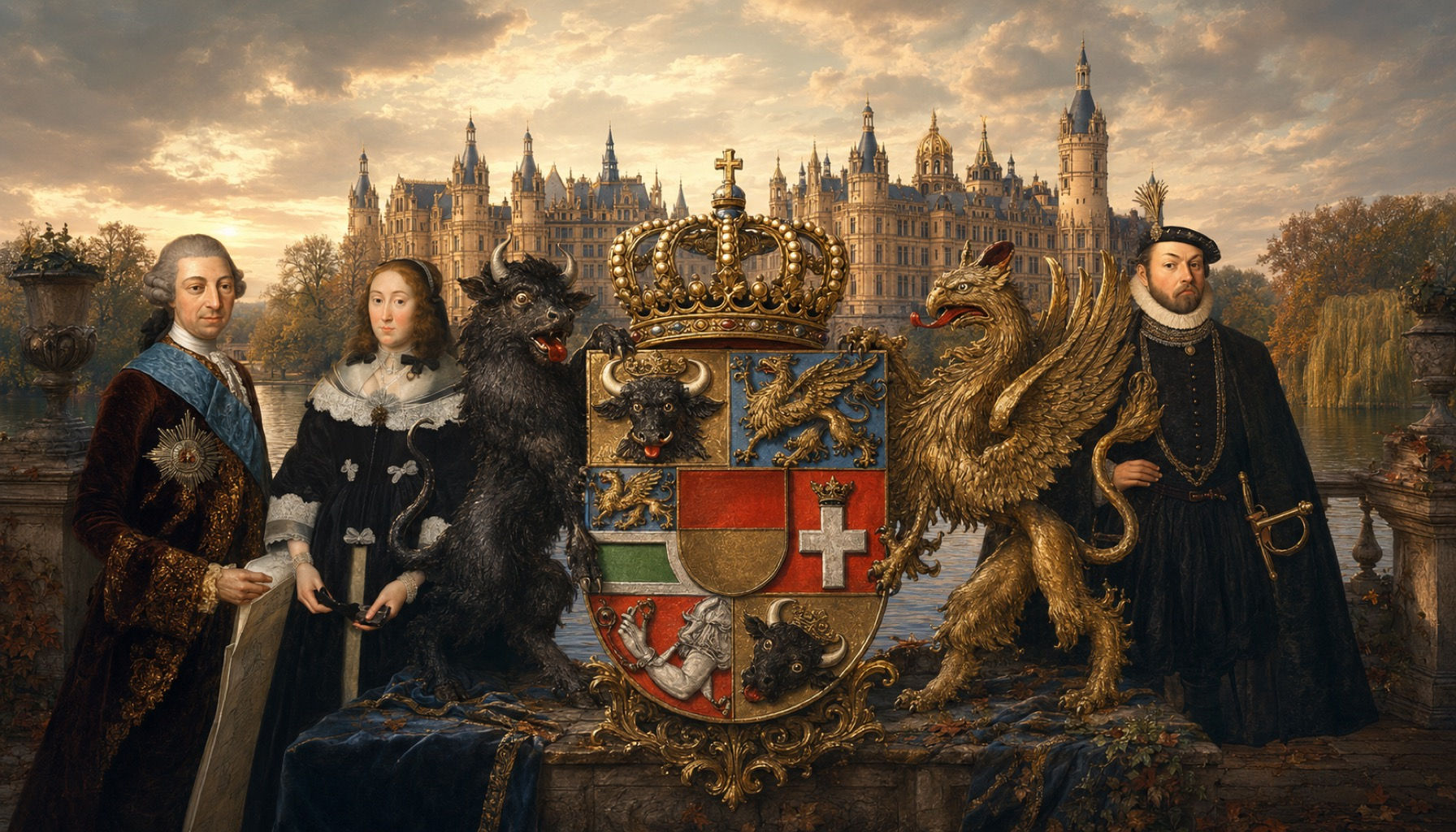
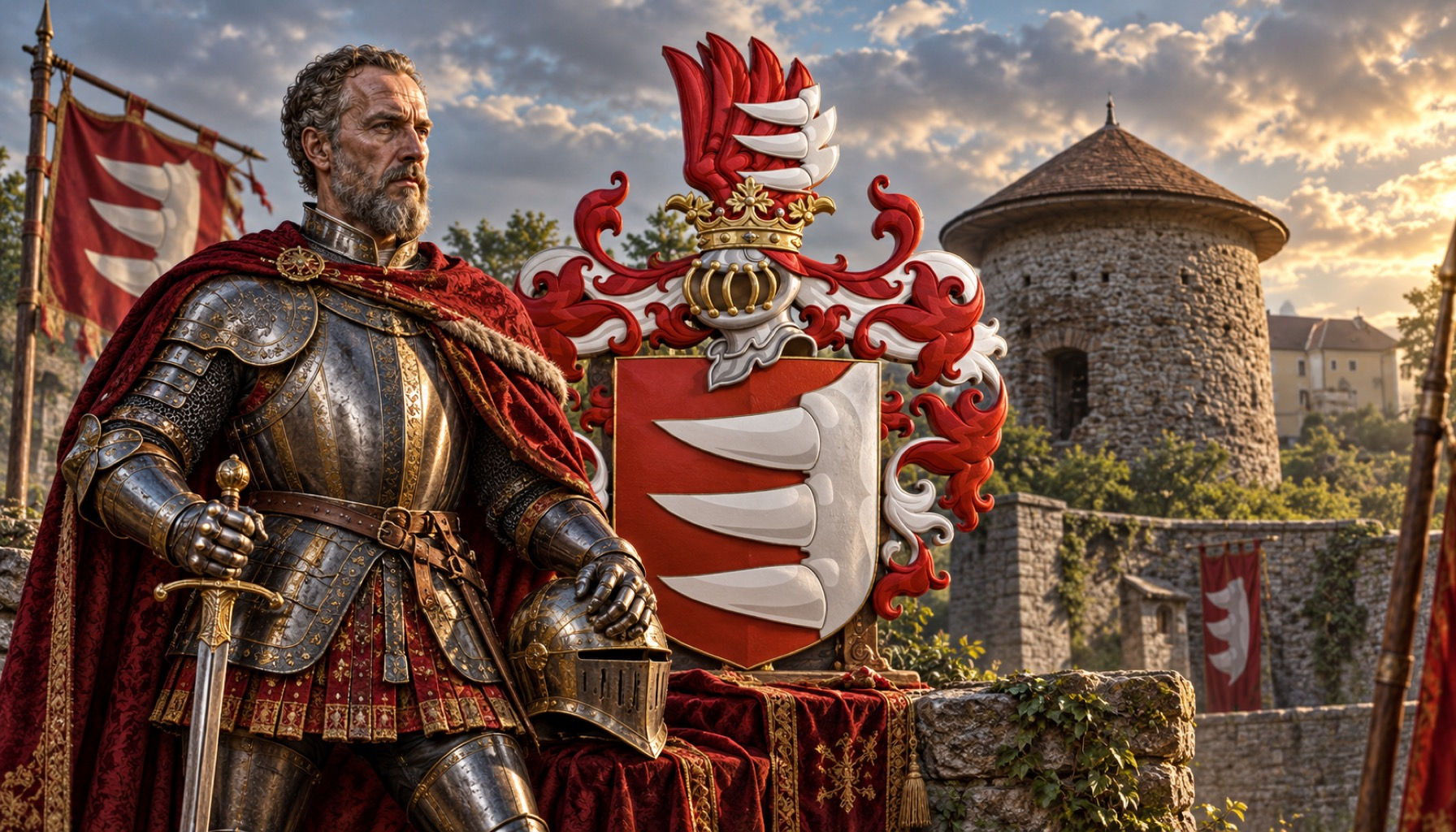
The Schwerin family was a German noble house of the north, rooted above all in Mecklenburg and closely tied to Pomerania and the wider aristocratic world of northern Germany. In historical terms, they belong to that durable pattern of old German nobility built not on one dramatic moment, but on generations of landholding, lordship, office, military service, heraldry, and careful marriage alliances. Their primary family haplogroup is tagged as I1a2a1a1a1, a lineage often associated with northern European paternal history, and so the House of Schwerin can be placed not only in the documentary record of medieval and early modern Germany, but also within a broader genetic story of the Baltic and North Sea world.
Their background sits in a region that was never static. Medieval Mecklenburg and neighboring Pomerania were frontier zones of power, where Slavic polities, German lordship, Christianization, dynastic ambition, and estate-building all overlapped. That is the world in which names such as Niklot, Prince of the Obotrites, remembered in 1160, Pribislav of Mecklenburg, associated with 1178, and Henry Brown I, Lord of Mecklenburg, 1150 to 1227, belong: figures who stand at the political and dynastic dawn of the region's later noble order. The Schwerins emerged within this long northern landscape of authority, where castles, landed rights, military followings, and service to greater princes turned local families into enduring noble houses.
Read more about the House of Moltke
No discussion of Schwerin heritage is complete without Schwerin Castle, the great architectural anchor of the city of Schwerin and one of the most famous historic sites in Mecklenburg-Vorpommern. Set dramatically on an island in the Schweriner See, the castle is the result of many building phases, with medieval origins later transformed into the grand 19th-century palace that visitors know today. Its towers, gilded details, ceremonial rooms, and waterside setting make it look almost theatrical, though it sits on a very old seat of rulership tied to the dukes and grand dukes of Mecklenburg. In other words, this is not just a pretty backdrop for photographs but a place where regional authority, court culture, and aristocratic memory were staged in stone. It remains a powerful symbol of the noble and dynastic world in which families such as the Schwerins moved, and yes, it can still be visited today as one of northern Germany's best-known heritage landmarks.
Explore the Royal House of Wettin
From an ancient-DNA point of view, the Schwerin family's tagged paternal line I1a2a1a1a1 fits into a strikingly wide northern and Germanic arc. Related or linked samples under this branch appear in contexts including Imperial Roman Serbia at Svilos Krusevlje (R6693), Gothic period Serbia at Timacum Kuline Ravna Village (I15549) and Timacum Slog Necropolis (I15545), Longobard-period Pannonia at Savaria Szeleste Barbaricum in Hungary (SZL028), the Thuringii context of German Obermoellern (OBM005), and several Danish and Scandinavian settings such as Southern Sjaelland Praesto Endegaarde (CGG107416), Kalundborg Simonsborg (CGG106721), Vester Egesborg Vordingborg (CGG107507), Espe (CGG107515), Strandlunden II Gerlev (CGG106515), Trundholm Mose (CGG106734), and Viking Age Bogovej (CGG106777). Further linked examples stretch to Viking Age Sweden at Stockholm Gorla (gor164) and Oland (VK337, VK357), Anglo-Saxon Norfolk at Sedgeford (SED014), Migration Period Scitarjevo in Croatia (R3660), Gothic Hungary at Kecskemet-Mindszenti Transtisza (A181015, A181016), medieval Tarquinia in Lazio (TAQ009), and even Bronze Age southwest Ukraine at Bereminay Komarow (poz643). None of this proves direct descent from any one excavated individual, of course, but it does place the Schwerin haplogroup within a deep and well-traveled northern European story that runs from the Bronze Age through Goths, Danes, Thuringians, Lombards, Anglo-Saxons, and Vikings.
Read more about the Noble House von Eltz
If you are exploring Schwerin roots, northern German nobility, or the deeper genetic history behind haplogroup I1a2a1a1a1, you can upload your DNA to MyTrueAncestry and see whether you match the family profile or any of the related ancient DNA samples. It is a fascinating way to connect heraldry, documents, archaeology, and genetics into one longer family story.

Comments