The Royal House of Wettin

– 3 min read


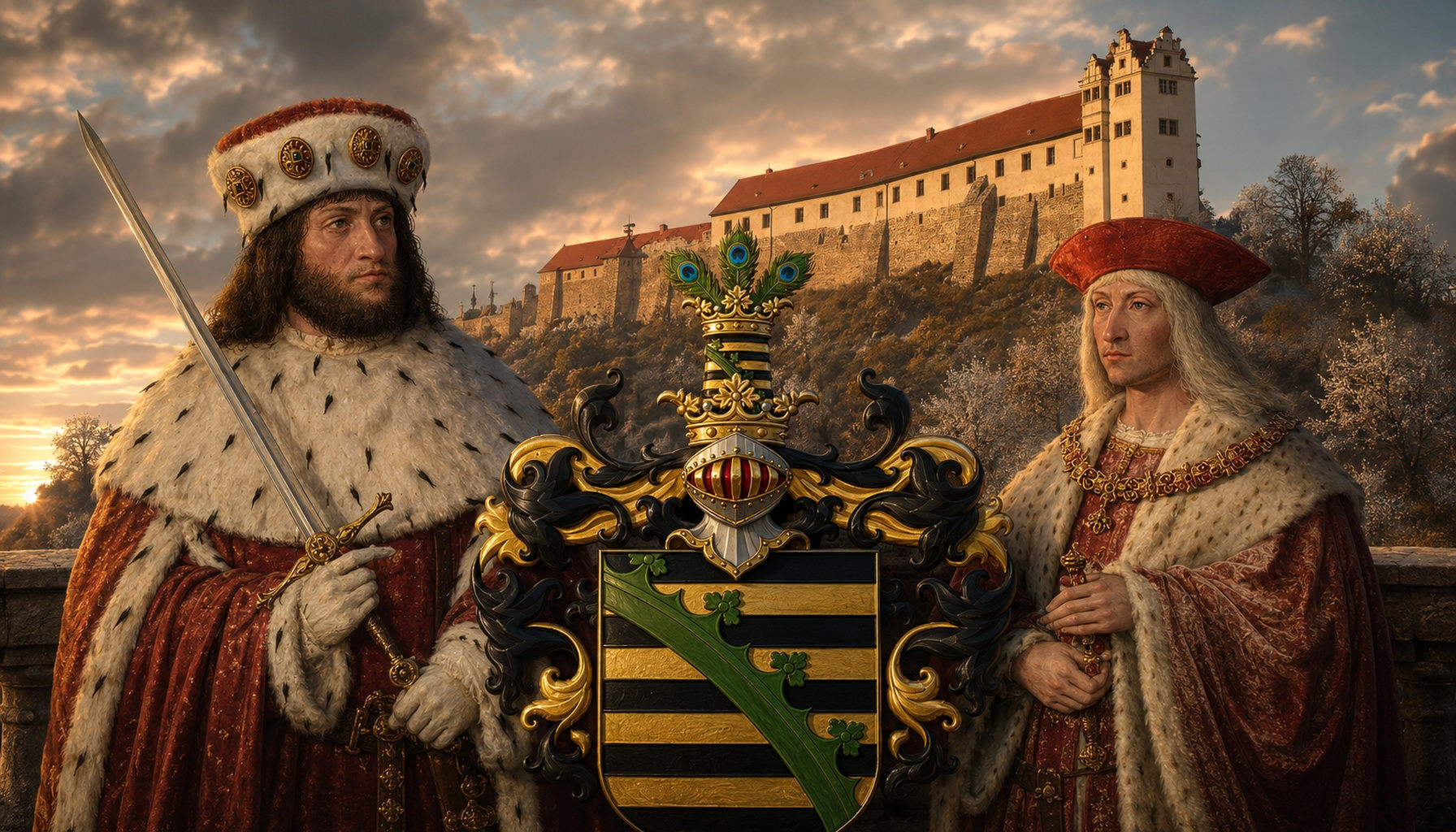
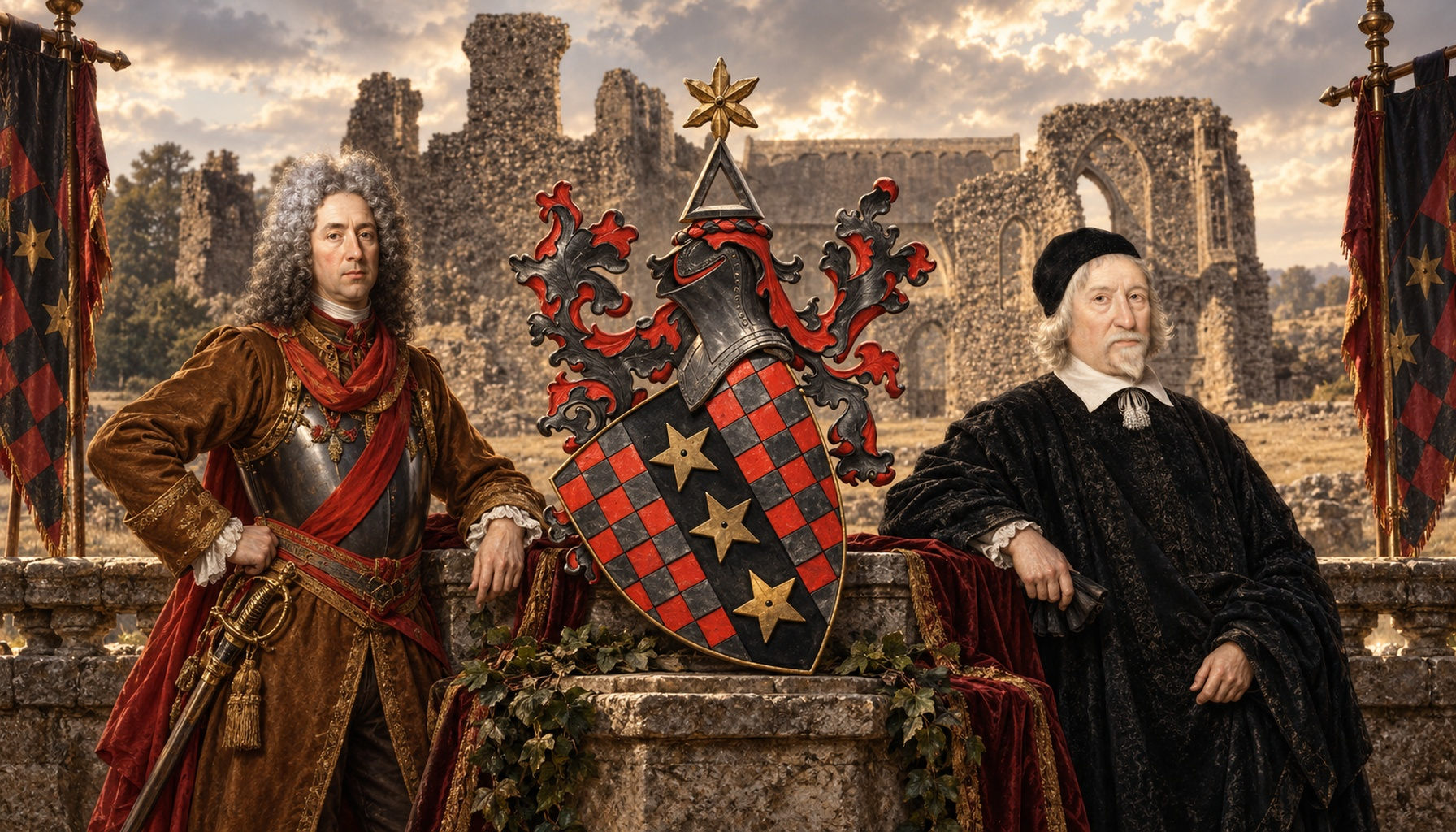
The House of Wettin was one of the great ruling dynasties of Germany, rooted above all in Saxony and carried forward through a long, almost stubborn continuity of lordship, marriage, inheritance, and political survival. Their primary family haplogroup is linked here as R1b1a1b1a1a1c1a1, a paternal line found in a wide spread of ancient and medieval European contexts. The family took its name from Wettin, near the Saale River in what is now Saxony-Anhalt, and from this fairly modest territorial beginning it grew into a dynasty of margraves, electors, dukes, and kings whose branches would eventually reach far beyond Germany into the royal houses of Europe.
What makes the Wettins so historically interesting is that they are not simply a story of crowns appearing by magic on noble heads. They rose in the medieval world of the Holy Roman Empire, where power depended on land, fortresses, loyalties, church patronage, and the careful management of kin. Figures such as Conrad the Great, Margrave of Meissen (1097-1157), helped establish the family as a serious regional force. Henry III (1215-1288) belonged to the period when Wettin authority was being consolidated through territorial politics. Frederick I the Brave (1370-1428) marked the family’s advance into electoral rank, while Albert III, Duke of Saxony (1443-1500), stands for the branching and reshaping of Wettin power that would define later Saxon and European dynastic history. In many ways, the Wettins embody the classic German princely pattern: regional strength first, then dynastic expansion, and finally international royal significance.
Read more about the Royal House of Hohenzollern
The family’s great location anchor is Wettin Castle, perched above the town of Wettin-Lobejun on the Saale. This was not just an ornamental residence but part of the landscape of frontier lordship in medieval east-central Germany, a world shaped by contested borders, expanding authority, and the gradual building of territorial states. The castle is documented from the early Middle Ages and became associated with the comital family from which the dynasty took its name. Over the centuries it was altered, rebuilt, and reused, so what survives is the product of many historical layers rather than one frozen medieval moment. That, really, is part of its charm: it reflects the long life of the site, from fortress to administrative and educational use, while still preserving the memory of the dynasty that made its name famous. Yes, it can still be visited, and for anyone interested in dynastic origins there is something wonderfully grounding about standing at the place from which so much later royal history unfurled.
Explore the Princely House of Saxe-Coburg
The haplogroup linked here with the House of Wettin, R1b1a1b1a1a1c1a1, appears in a striking range of ancient DNA samples across Europe. These include related or linked finds such as Lombard Warrior Elite Collegno Northern Italy (COL_069, COL_069b, COL_069x), the Hungarian knightly samples Elek Bathory Pericei (PER01) and Ferenc Bathory Pericei (PER03-1), Medieval Jutland Denmark Vor Frue Kirkegard Aalborg (CGG100493), several Medieval Belgium Sint-Truiden samples (ST0052, ST1232, ST0632, ST3006), Belgic Suessiones and Gallic samples from Bucy-le-Long in France (CGG022456, CGG022463, CGG022431, CGG022425, CGG022438, CGG022419), Batavi samples from Valkenburg Marktveld in the Netherlands (CGG107745, CGG107754), Medieval Poland Piast Dynasty Lad (PCA0193), Early Anglo-Saxon individuals from West Heslerton and Buckland Dover (I20644, I20671, I20677, BUK059, BUK027), Saxon Coast Lower Saxony Germany Dunum (DUN010), Longobard Haeven Mecklenburg-Vorpommern (HVN005), Norman Invasion Lincoln Castle (S3044), Roman and pre-Roman samples such as Tarquinii Italy (R10339), Klosterneuburg Lower Austria (R10659), Late Bronze Age Teplice Bohemia (I13788), Germanic Iron Age Teplice Radosevice Bohemia (I15950), Iron Age Briton Cambridgeshire (I11149), Middle Bronze Age Westwoud-Binnenwijzend (I11972), Early Iron Age Vlaardingen-Krabbeplas (I17019), Late Iron Age Frisian Boy (I12907), Elite Germanic Tribe Warrior Bavaria (AED106), Post Medieval Ellwangen Germany (ELW003), Bell Beaker De Tuithoorn North Holland (I4070), and Medieval Villa Magna Italy (R58). None of this proves direct descent from any one sample to the Wettins, of course, but it does place the family’s tagged paternal line within a deep and rather fascinating European background stretching from Iron Age tribal communities to medieval warrior and noble settings.
Explore the medieval Piast rulers
If the House of Wettin interests you, the next question is the obvious one: could your own DNA show a connection to this wider world of Saxon dynasties, medieval elites, and related ancient samples? Upload your DNA to MyTrueAncestry to see whether you match the House of Wettin profile or any of the linked ancient DNA individuals connected with haplogroup R1b1a1b1a1a1c1a1.
Comments