The Royal House of Hohenzollern
– 3 min read


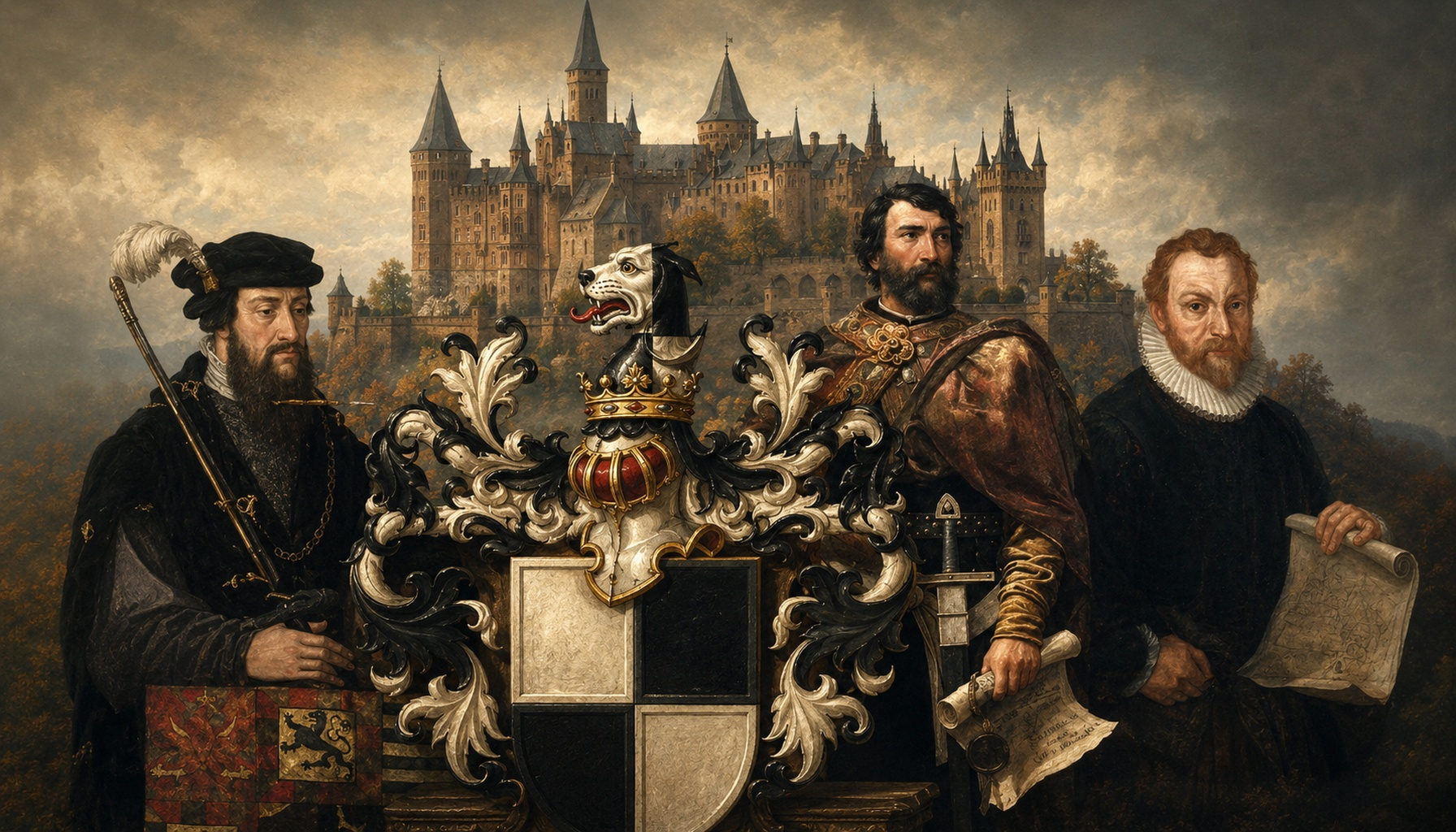
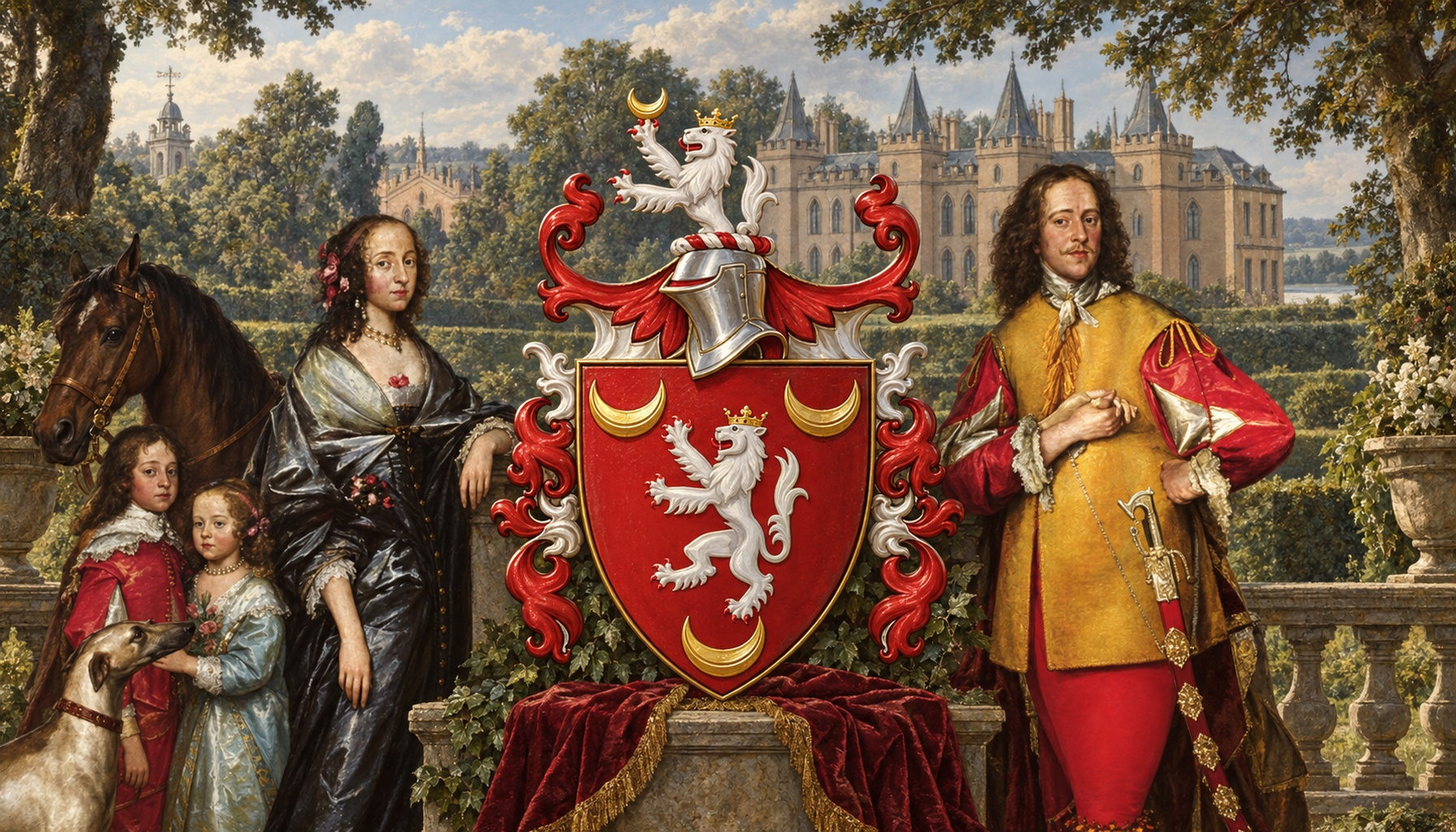
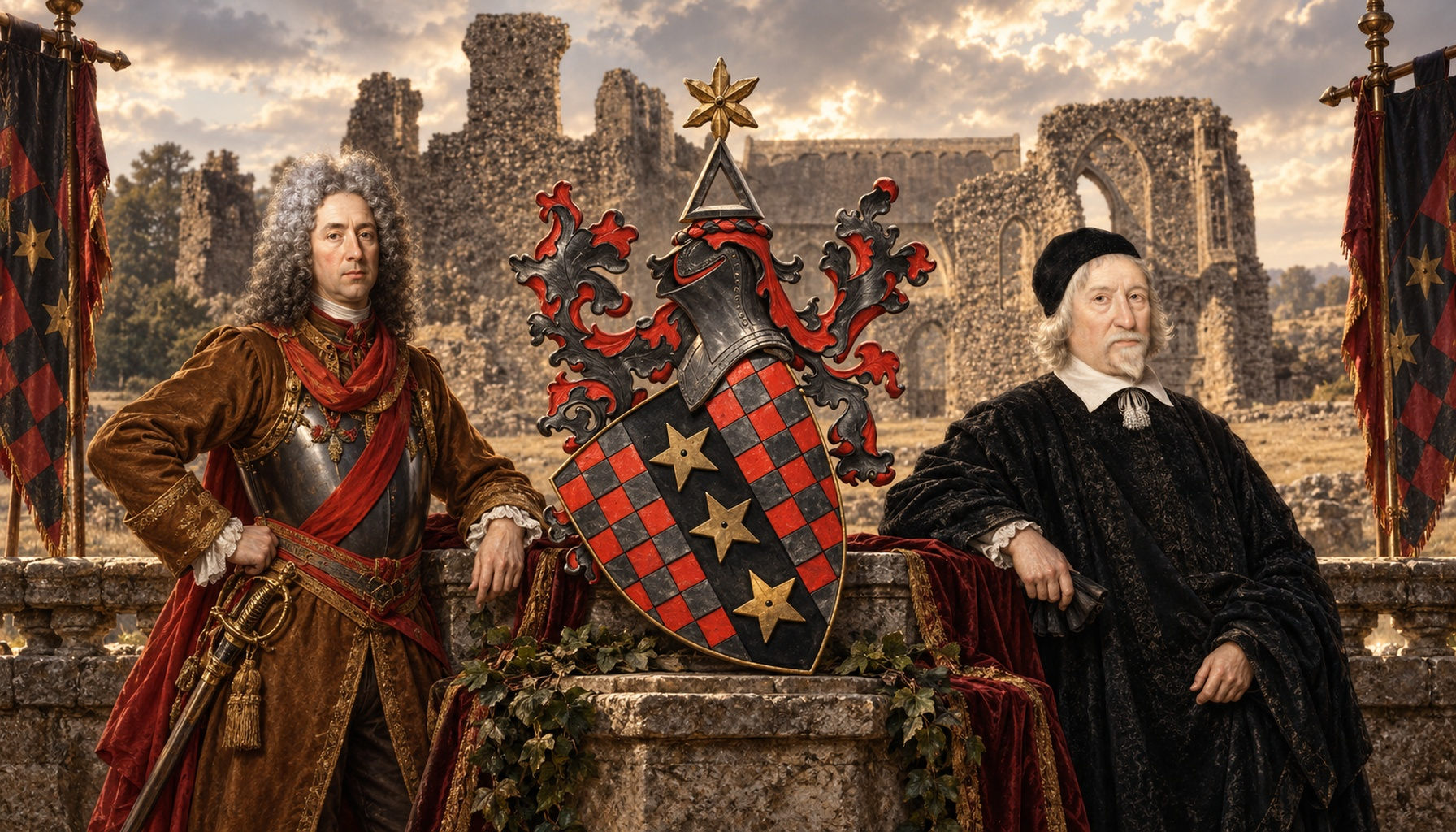
The House of Hohenzollern was one of the great ruling dynasties of German history, a family that began in the noble world of southwestern Germany and rose, over centuries, into the political heart of Brandenburg, Prussia, and finally the German Empire. In haplogroup terms, the primary family line is linked here with I2a1b1a2a1b, a paternal branch with a deep and wide ancient presence across Europe. The Hohenzollerns are a striking example of how a regional lordly house could, through land, warfare, service, marriage, and relentless political calculation, turn itself into a royal and imperial power.
Their earliest roots are tied to the region around Zollern in Swabia, in what is now Baden-Wurttemberg, where the family emerged in the medieval landscape of castles, rival nobles, bishops, and imperial loyalties that made up the Holy Roman Empire. This was not yet the age of Prussian drill and imperial pomp. It was a world of hilltop fortresses, local influence, and careful survival. From those beginnings came figures such as Frederick I Burgrave of Nuremberg (1139-1200), who helped anchor the family further north in Franconia; Albert of Prussia (1490-1568), who secularized the Teutonic Order's state and became the first Duke of Prussia; Frederick I King in Prussia (1657-1713), who turned dynastic ambition into crowned monarchy; and William I Emperor and King of Prussia (1797-1888), the first German Emperor of the new empire founded in 1871. Across these generations, the Hohenzollerns came to embody a recognizably German dynastic pattern: territorial ascent, military authority, monarchy, and a memory that long outlasted the throne itself.
Explore the Royal House of Wettin
Nothing captures the family’s origin story quite like Hohenzollern Castle, the great ancestral seat perched dramatically on Mount Hohenzollern in the Swabian Jura. The present castle is not simply a medieval survival untouched by time, but largely a 19th-century reconstruction built in a romantic historicist style on the site of earlier fortresses associated with the dynasty. That matters, because it tells us something revealing about the Hohenzollerns: they did not just inherit memory, they carefully staged it. The castle became a monument to lineage, legitimacy, and noble antiquity, filled with dynastic treasures and symbols of Prussian and imperial identity. It stands in the district of Zollernalb near Hechingen, and yes, it can still be visited today, which makes it one of those rare places where the long arc from medieval lordship to modern heritage tourism is visible in stone.
Read about Ottonian emperors and ancient DNA
From an ancient DNA perspective, I2a1b1a2a1b is best understood not as a claim of direct descent from any one excavated individual, but as a lineage with related and linked appearances across very different places and periods. Among the relevant samples are Middle Bronze Age Caucasus Kurgan Grave Ipatovo (IV3008), Neolithic Romania Giurgiu Pietrele Magura Gorgana (PIE060 and PIE061), Neolithic Holm of Papa Westray North Scotland (I36003), Late Roman Era Aquae Calidae Bulgaria (I40571), Late Roman Hungary Rakoczifalva Szolnok (RKF242), Migration Period Hungary Rakoczifalva Szolnok (RKF261), Roman-period Warrior Mursa Croatia Third Century Crisis (OSIJ004), Neolithic Alpine Italy Madonna Bianca (MAD01), Iron Age Denmark Jutland Hamahus Outlier (CGG106811), Hellenic Individual Carthaginian-Era Mozia Western Sicily (I7648), Medieval Belgium Sint-Truiden Onze-Lieve-Vrouwekerk (ST2390), Urziceni Bodrogkeresztur Neolithic Romania (I18113), Bronze Age Bulgaria Tell Kran Yasanovo (I19452), Bronze Age Bosnia-Herzegovina Klakar (I19561), Early Bronze Age Izmir Aegean Anatolia (I5737), Bronze Age Romania Moneoru Culture Arman Carlomanesti (I10480 and I10559), and Ancient Dorian Halikarnassos Aegean Coast (I3311). Taken together, these linked samples remind us that the deeper story behind a later royal house is not a neat straight line, but a vast prehistoric and historic web of movement, settlement, and continuity across Europe and beyond.
Explore medieval DNA from early Berlin
If the Hohenzollerns are part of your family story, or if you are simply curious whether your DNA connects with this dynasty or with the wider I2a1b1a2a1b-linked ancient world around it, you can dig deeper. Upload your DNA to MyTrueAncestry and see whether you match the family or related ancient DNA samples.
Comments